
One of the first things you learn messing around in a home garage is that mild steel doesn’t always hold up the way you want. I found that out fast when a simple pry bar I made started bending like warm butter the moment I put real pressure on it.
That’s when I started experimenting with hardening techniques you can actually do at home—no fancy furnace, no industrial setup, just heat, patience, and the right steps.
When you know how to harden mild steel at home, suddenly your DIY tools, brackets, blades, and small parts last longer and stand up to real use. It’s a huge boost in durability and performance, and it saves you money by turning low-cost steel into something tougher and more reliable.
If you’re ready to give your mild steel some real backbone, let me show you the methods that consistently work outside a full machine shop. Let’s get your metal toughened up the right way.
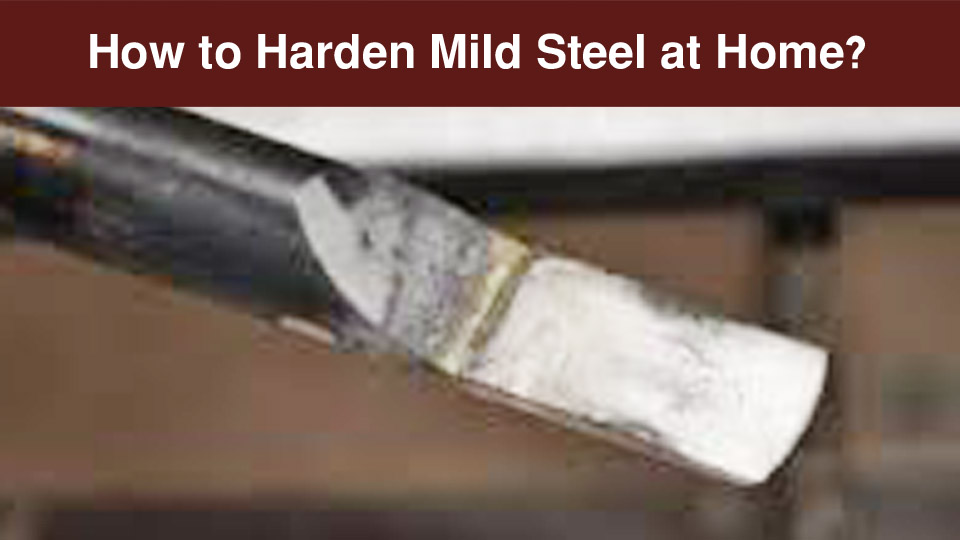
Image by turnedwoodenbowls
Why Is Hardening Mild Steel Tricky?
Mild steel is low-carbon steel, typically with less than 0.3% carbon, like A36 or 1018. The low carbon content makes it soft, easy to weld, and great for shaping, but it also means it doesn’t harden well on its own.
I tried heating and quenching mild steel early on, hoping it would get tough like a knife blade, but it stayed soft no matter what I did. That’s because hardening relies on carbon to form a hard structure called martensite, and mild steel just doesn’t have enough.
To harden mild steel, you need to add carbon to the surface through a process called case hardening. This creates a thin, hard outer layer while leaving the core soft and tough.
It’s not the same as through-hardening high-carbon steel, but it’s perfect for parts that need a durable surface, like pins or small machine components. The catch? It takes time, patience, and the right setup.
Case Hardening for Mild Steel
Case hardening is the key to making mild steel tougher. It involves adding carbon to the steel’s surface and then quenching it to lock in the hardness. The result is a hard outer shell—usually 0.01 to 0.08 inches thick—that resists wear, while the core stays flexible to handle stress. I’ve used case hardening to make mild steel parts for homemade tools, and it’s amazing how much stronger they become.
The process works by heating the steel in a carbon-rich environment, letting the surface absorb carbon, and then quenching it in a medium like oil or water.
I prefer oil because it cools slower, reducing the risk of cracking. You can do this at home with basic tools, but it requires careful heat control and safety precautions. Let’s talk about picking the right steel and tools to get started.
Choosing the Right Mild Steel
Not all mild steel is the same, but most low-carbon steels can be case hardened. Here’s what I’ve learned about choosing the right material.
Common Mild Steel Grades
Mild steel grades like 1018, 1020, or A36 are great for case hardening. They have low carbon content (0.18-0.20% for 1018, for example), which makes them soft but ideal for adding a hard case.
I’ve used 1018 for small parts like brackets and pins because it’s cheap and easy to find at hardware stores or metal suppliers.
You can also use scrap mild steel, like old structural beams or plates, as long as it’s low-carbon. I’ve repurposed old mild steel bars from a junkyard for case hardening projects, and they worked fine after a good cleaning.
Checking Steel Type
If you’re using scrap or unmarked steel, a spark test can help confirm it’s low-carbon. Grind the steel and watch the sparks—low-carbon steel produces long, straight sparks with few forks. High-carbon steel gives short, bushy sparks with lots of forks. If you’re buying new, ask for 1018 or 1020 to be safe.
I once tried case hardening a piece of unknown scrap that turned out to be high-carbon steel—it cracked because it wasn’t suited for the process.
Avoiding High-Carbon Steel
High-carbon steel (0.6-1.5% carbon), like 1095 or O1, isn’t ideal for case hardening because it’s already hardenable throughout. Adding more carbon can make it too brittle. Stick with low-carbon mild steel for case hardening to get the right balance of a hard surface and a tough core.
Tools and Materials You’ll Need
Case hardening mild steel at home doesn’t require a fancy setup, but you need the right tools to do it safely and effectively. Here’s what I keep in my shop.
Torch or Forge: A propane or oxy-acetylene torch for small parts, or a forge for larger ones. I use a propane torch for small projects and oxy-acetylene for bigger pieces because it’s hotter.
Carburizing Compound: A commercial compound like Kasenit or cherry red, or a homemade mix of charcoal and bone meal. I’ve used Kasenit for consistent results.
Quenching Oil: Used motor oil or commercial quenching oil like Parks 50. I use a metal bucket with about a gallon of oil.
Tongs or Pliers: Long-handled tongs to handle hot steel safely. My pair has saved my hands from burns.
Fireproof Surface: Firebricks or a steel table to work on. My workbench is beat up from years of heat treatment.
Safety Gear: Welding gloves, tinted safety glasses, and a flame-resistant jacket. Sparks and hot oil are serious hazards.
Temp Sticks or Magnet: To check the steel’s temperature. Temp sticks melt at specific temperatures, and a magnet checks for non-magnetic steel.
Grinder or Sandpaper: To clean the steel before hardening.
Metal Container: For oil quenching to avoid fire risks.
Fire Extinguisher: Oil can ignite, so I keep a Class B extinguisher nearby.
Oven or Torch for Tempering: A kitchen oven for precise tempering, or a torch for small parts.
Step-by-Step Process to Case Harden Mild Steel with Oil
Here’s how I case harden mild steel at home, based on what’s worked for me in the garage.
Step 1: Clean the Steel
Start with a clean piece of steel. Rust, grease, or dirt can block carbon absorption or cause uneven hardening. I use a wire brush or grinder to get a shiny surface. For small parts, I wipe with acetone to remove oils. I once skipped cleaning a rusty part, and the case was weak and spotty—cleaning is non-negotiable.
Make sure the steel is dry before heating. Water can cause dangerous steam bursts near a torch or forge.
Step 2: Apply the Carburizing Compound
To case harden, you need to add carbon to the steel’s surface. I use a commercial carburizing compound like Kasenit, which is a powder you sprinkle on the steel. Coat the area you want to harden or wrap the part in steel foil to hold the compound in place. I’ve also tried a homemade mix of powdered charcoal and bone meal, but it’s messier and less reliable.
Heat the steel to 1600-1700°F (870-925°C)—a bright orange glow—in a forge or with a torch. Hold it at this temperature for 1-4 hours, depending on how deep you want the case. Longer times create a thicker case, up to about 0.08 inches.
I use a forge for this step because it maintains steady heat, but a torch works for small parts. The steel absorbs carbon from the compound, creating a high-carbon surface layer.
Step 3: Set Up Your Workspace
Safety is critical. I work in a well-ventilated area, away from flammable materials. My quenching tank—a metal bucket with about a gallon of used motor oil—is right next to my workbench. I use firebricks or a steel table to handle the heat. Oil quenching produces smoke, so I work outside or use a fan to keep the air clear.
Wear your safety gear: gloves, tinted glasses, and a jacket. I’ve had hot steel spit sparks at me, and good gear saved my skin. Keep a fire extinguisher nearby in case the oil catches fire.
Step 4: Reheat the Steel
After carburizing, the steel has a carbon-rich surface. Reheat the area you want to harden to the critical temperature, around 1400-1500°F (760-815°C). This is a cherry red to bright orange glow, when the steel becomes non-magnetic. I check with a magnet—if it doesn’t stick, it’s ready. Temp sticks that melt at 1450°F are great for precision.
Move the torch or forge heat evenly to avoid hot spots. I’ve overheated steel before, and it caused scaling or a brittle case. Don’t go past bright orange, or you’ll weaken the surface.
Step 5: Quench in Oil
When the steel hits the critical temperature, quench it immediately. Using tongs, plunge the hot steel into the motor oil and move it slightly to prevent steam bubbles from forming. I use a deep metal bucket to ensure the steel is fully submerged. The oil will bubble and smoke—normal, but stay alert.
Keep the steel in the oil until it’s cool to the touch, about 10-20 seconds. Motor oil cools slower than water, which reduces the risk of cracking the thin case layer. I’ve used it for small parts like pins and brackets with great results. Never use a plastic container—hot oil can ignite or melt it.
Step 6: Test the Hardness
After quenching, the steel’s surface should be hard. I test it by running a file across the surface. If the file slides off without biting, the case is hardened. If it cuts into the metal, you didn’t heat it enough or the steel didn’t absorb enough carbon. The core should stay softer, giving the part flexibility.
Step 7: Clean the Steel
Quenched steel often has scale or oil residue. I clean it with a grinder or sandpaper to check for cracks or uneven hardening. If the case is too thin, you may need to repeat the carburizing process for longer.
Tempering After Case Hardening
Case hardening makes the surface hard but brittle, so tempering is essential to add toughness. Here’s how I do it.
Why Temper?
Without tempering, the hardened case can crack or chip under stress. I made a small tool once and skipped tempering—it chipped the first time I used it. Tempering reheats the steel to a lower temperature (300-600°F or 150-315°C) and cools it slowly, reducing brittleness while keeping the surface hard.
Tempering with an Oven
For precise tempering, I use a kitchen oven. Set it to the desired temperature based on the part’s purpose:
- Light straw yellow (400°F/204°C): High hardness for tools or small gears.
- Blue (600°F/315°C): More toughness for parts like pins or brackets.
Place the steel in the oven for 1-2 hours, then let it cool slowly in air. I temper most of my case-hardened parts this way because it’s consistent.
Tempering with a Torch
If you don’t have an oven, a torch works for small parts. Heat the steel gently, moving the flame to avoid hot spots, until it reaches the right color (straw yellow or blue). I use a temp stick to confirm the temperature. Let it cool naturally in air—don’t quench it.
Checking the Result
After tempering, the surface should be hard but not brittle. I tap the part lightly with a hammer—if it rings and doesn’t chip, it’s good. You can also try scratching the surface with a file to ensure it’s still hard.
Why Motor Oil for Quenching?
Motor oil is a great quenching medium for case hardening mild steel because it cools at a moderate rate—slower than water but faster than air. This reduces the risk of cracking the thin, carbon-rich surface layer.
I use used motor oil from my car because it’s cheap and readily available. It’s not as clean as commercial quenching oils like Parks 50, but it gets the job done for home projects.
The downside? Motor oil is messy and produces a lot of smoke. It can also catch fire if you’re not careful, so I always use a metal container and keep a fire extinguisher nearby. Filtering the oil before use helps ensure even cooling.
Here’s a quick comparison of quenching mediums:
| Medium | Cooling Speed | Best For | Pros | Cons |
|---|---|---|---|---|
| Motor Oil | Moderate | Mild steel, case hardening | Cheap, easy to find | Messy, smoky, fire risk |
| Commercial Oil | Fast | High-carbon steel, precise work | Consistent, cleaner | Expensive |
| Water | Very fast | High-carbon steel, simple shapes | Maximum hardness | Risk of cracking, warping |
Common Mistakes to Avoid
I’ve made plenty of mistakes case hardening mild steel, and I want you to avoid them. Here are the big ones:
- Wrong Steel: High-carbon steel isn’t suited for case hardening—it gets too brittle. Use mild steel like 1018 or 1020.
- Insufficient Carburizing: Not heating long enough or using too little carbon compound results in a thin case. Aim for 1-4 hours at 1600-1700°F.
- Overheating: Heating past bright orange (above 1700°F) causes scaling or a weak case. Use a magnet or temp stick to stay in range.
- Dirty Oil: Contaminated oil causes uneven cooling. I filter my motor oil through a cloth to remove debris.
- Skipping Tempering: A brittle case can crack without tempering. Always temper after quenching.
- Poor Safety: Hot oil and steel can cause fires or burns. Wear gear and keep a fire extinguisher nearby.
Safety Tips for Case Hardening at Home
Case hardening with motor oil is safe if you’re careful, but it’s easy to get hurt if you’re not. Here’s how I stay safe:
- Wear Safety Gear: Welding gloves, tinted safety glasses, and a flame-resistant jacket protect against sparks and heat.
- Use a Metal Container: Never quench in plastic—hot oil can melt it or start a fire. I use a steel bucket.
- Work in a Ventilated Area: Oil quenching and carburizing produce fumes and smoke. I work outside or use a fan.
- Keep a Fire Extinguisher: Oil fires are a risk. I keep a Class B extinguisher within reach.
- Use Tongs: Handle hot steel with long-handled tongs to avoid burns.
- Clear Flammables: Keep paper, wood, or other flammables away from your workspace.
Suggestions for Case Hardening Mild Steel at Home
Here are some tips I’ve picked up to make case hardening with motor oil easier and more effective:
Test on Scrap: Practice on a scrap piece of mild steel to perfect your technique before the main project.
Use a Good Carburizing Compound: Commercial compounds like Kasenit are reliable and easy to use.
Filter Motor Oil: Strain used motor oil through a cloth to remove debris for cleaner quenching.
Temper Immediately: Temper right after quenching to reduce the risk of cracking.
Start with Simple Parts: Case harden flat pieces or small tools before trying complex shapes like gears.
Use Temp Sticks: They’re affordable and ensure you hit the right temperature for carburizing and hardening.
Keep a Log: Note the steel type, carburizing time, and results for each project to repeat successes.
Practice Heat Control: Move the heat source evenly and watch the steel’s color to avoid overheating.
Conclusion
Case hardening mild steel at home with motor oil is a rewarding way to make soft steel tougher and more durable. It’s a process that takes patience, but when you get it right, it’s like giving your steel a superhero upgrade. I still remember the first time I case hardened a mild steel punch—it held up to heavy use without a scratch, and I felt like I’d cracked a code.
By choosing the right steel, using a good carburizing compound, and following these steps, you can achieve the same results. So, set up your quench tank, and start case hardening. You’re on your way to creating parts that are tough, reliable, and ready for action, and I’m rooting for you to nail it!
FAQs
Can I harden mild steel without case hardening?
No, mild steel has too little carbon (less than 0.3%) to harden on its own. Case hardening adds carbon to the surface for a hard outer layer.
What’s the best oil for case hardening mild steel?
Used motor oil works well for mild steel because it’s cheap and cools at a moderate rate. Commercial oils like Parks 50 are cleaner but more expensive.
How long should I carburize mild steel?
Carburize at 1600-1700°F for 1-4 hours, depending on how deep you want the case. Longer times create a thicker hard layer.
How do I know if the steel is hot enough to quench?
Heat until it’s cherry red to bright orange (1400-1500°F) and non-magnetic. A magnet or temp stick confirms the right temperature.
Why is tempering necessary after case hardening?
Tempering reduces brittleness in the hardened case, preventing cracks or chipping. It balances hardness and toughness for practical use.


