
When I first got my hands on a Miller suitcase welder, I thought it would be plug-and-play. Spoiler alert — it wasn’t. Between setting wire tension, dialing in voltage, and figuring out lead polarity, I learned real quick that knowing how to set up a Miller suitcase welder makes the difference between a smooth-running bead and a sputtering mess of wire and frustration.
I picked up those lessons the hard way on a pipeline job, trying to keep production rolling while troubleshooting one bad arc after another. Once I nailed the right setup, that same machine became my go-to for field work — reliable, portable, and built to handle anything I threw at it.
If you’ve just unpacked your welder or want to fine-tune your setup for cleaner results, stick with me. I’ll walk you through the steps that actually matter — from hookups to settings — so you can fire up your Miller like a pro and keep your welds steady from the first spark to the final pass.
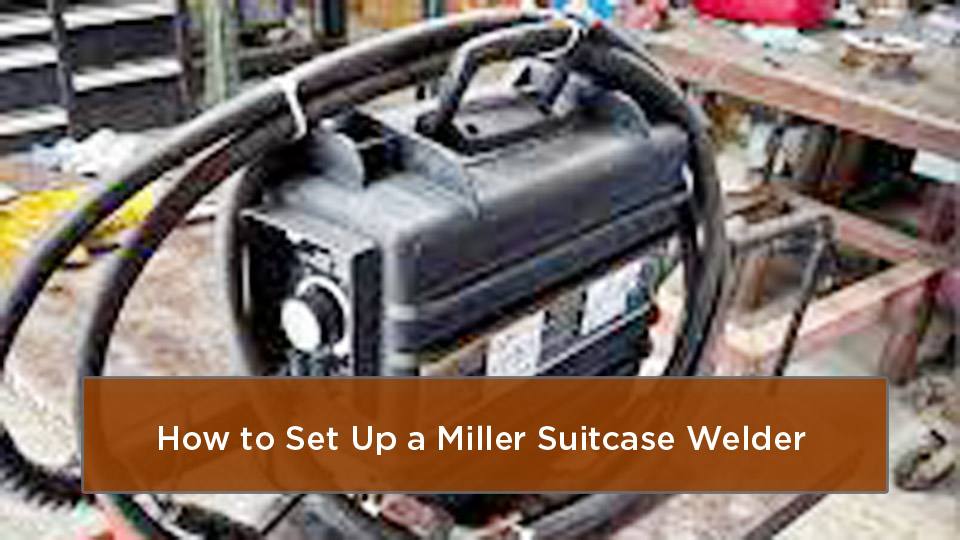
Image by steven_welding_shop
What Is a Miller Suitcase Welder and Why Should You Care?
A compact, rugged box that houses your wire feeder, ready to hook up to a constant current or voltage power source for MIG or flux-cored welding. That’s the essence of a Miller Suitcase welder—portable, reliable, and versatile for everything from auto body repairs to pipeline work. I’ve used mine on farm equipment fixes where dragging a full rig wasn’t feasible, and it saved my bacon every time.
Why bother with one? For starters, they’re game-changers for mobility. No more lugging heavy carts; just grab the handle and go. They shine in maintaining weld quality on the fly—proper setup means consistent arc stability, which translates to better penetration and fewer defects like porosity or undercut.
In the real world, that means safer structures, whether you’re building a gate for your homestead or reinforcing beams on a construction site. Plus, they’re cost-efficient; dialing in the right settings reduces wire waste and gas consumption, keeping your wallet happy.
From a practical standpoint, these feeders handle a range of wire diameters, from .023-inch solid wire for thin sheet metal to 5/64-inch flux-cored for thicker plates. They’re IP23-rated for outdoor use, but always shelter them from heavy rain to avoid electrical gremlins.
If you’re a student or hobbyist, starting with one teaches you core skills like joint preparation and filler metal selection without overwhelming complexity.
Safety First: Key Precautions Before You Start
Before we touch a single cable, let’s talk safety—I’ve seen too many close calls in shops where folks skipped this step. Welding isn’t forgiving; one loose connection can mean shocks, burns, or fumes that knock you out.
Always gear up with PPE: a good auto-darkening helmet, flame-resistant gloves, long sleeves, and leather boots. I once had a spark fly into my shirt cuff—lesson learned, always button up.
Ground everything properly; connect the work clamp to clean, bare metal to prevent stray arcs. Ventilate your space—use fans or exhaust systems, especially with flux-cored wires that produce more fumes.
Check your power source: it should be a DC constant current or voltage unit, 14-110 volts. Avoid wet areas; if you must, use GFCI protection. Inspect cables for frays—I’ve replaced more than a few that looked fine but had hidden damage.
And remember, arc rays can fry your eyes, so shield bystanders too. Following ANSI Z49.1 standards isn’t just legalese; it’s what keeps you welding another day.
Gathering Your Tools and Equipment for Setup
Let’s round up what you’ll need—think of this as prepping for a road trip; miss something, and you’re stranded. Your Miller Suitcase comes with the basics, but grab these extras from your toolkit.
First, the power source: something like a Big Blue engine-driven welder or an inverter stick machine. Weld cables—size them right for amperage; for 250 amps over 200 feet, go 1/0 AWG to minimize voltage drop. A welding gun, like a Bernard Q-Gun, with liners matched to your wire type.
Shielding gas cylinder—75/25 argon/CO2 for MIG on mild steel, or straight CO2 for flux-cored if you’re pinching pennies. Regulator with a flowmeter, set to 20-25 CFH initially.
Wire spool: pick based on your job; ER70S-6 solid wire for clean indoor work, or E71T-1 flux-cored for windy outdoors.
Tools: wire brush for cleaning grooves, pliers for adjustments, and a multimeter to check voltages. Don’t forget drive rolls—V-groove for solid, knurled for flux-cored. I’ve forgotten the right rolls before and ended up with bird-nesting wire everywhere; stock extras.
Step-by-Step Guide to Installing Your Miller Suitcase Welder
Now we’re getting to the meat—setting up step by step. I’ll break it down so you can follow along, pausing to test as you go. Power everything off first; no sense risking a zap.
Start by placing the suitcase on a stable, dry surface. Open the side panel—familiarize yourself with the internals: drive assembly, spool hub, and control boards. If it’s new, remove any shipping restraints.
Installing the Drive Rolls
Drive rolls are the heart of wire feeding; get this wrong, and your welds suffer from inconsistent speed.
Match rolls to your wire: for .035-inch solid, use V-groove. Slide the roll onto the carrier, align the key, and tighten the nut just past the click—too tight, and it binds. Clean grooves with a brush; I’ve skipped this and paid with slipped wire mid-weld.
Test by jogging the wire later; adjust pressure knob half a turn past where it slips. For flux-cored, knurled rolls grip better on the softer sheath.
Connecting the Welding Gun and Voltage Sensing Clamp
The gun is your extension—hook it up solid.
Insert the gun’s power pin into the block, align the tab, and tighten the knob. Plug in the trigger lead; it should click securely. Attach the voltage sensing clamp to the work piece—clean metal contact is key for accurate sensing.
I’ve had arcs fizzle because the clamp was on painted steel; grind it bare every time. This setup lets the feeder “sense” voltage drop and adjust, keeping your arc steady even with long cables.
Setting Up Shielding Gas Connections
Gas protects your weld pool from contamination—skip it with self-shielded wire, but for most jobs, it’s essential.
Thread the hose to the 5/8-18 fitting on the feeder, torque to 100 inch-pounds. Connect to your regulator; set pressure under 100 psi. Purge the line by holding the jog button—listen for steady flow.
For MIG, 75/25 mix gives a smooth arc; too much argon, and you get spatter. I’ve tweaked flows on windy days to 30 CFH to combat porosity—experiment, but start low to save gas.
Connecting Weld Cables and Power Source
Cables carry the juice—size and polarity matter.
Connect the weld cable from the feeder to your power source’s positive or negative stud, based on wire: DCEP for most MIG, DCEN for some flux-cored. Use the table in your manual for sizing—undersized cables overheat and drop voltage.
Hook the work cable to the workpiece. For engine-driven like Big Blue, set to CV mode; the suitcase senses it. I’ve run 150-foot extensions without issues, but always check for hot spots.
Loading the Wire Spool and Threading
Wire loading can be finicky, but take your time.
Install the spool with the hub pin aligned—adjust tension for slight drag; too loose, and it uncoils wildly. Thread through inlet guides, past alignment pins, into drive rolls, and out the gun liner.
Jog the wire until it protrudes 2 inches from the tip. Trim straight, and adjust pressure to avoid crushing soft wires. I’ve bird-nested spools by rushing—slow and steady wins.
Adjusting DIP Switches and Initial Controls
DIP switches customize your setup—don’t ignore them.
On the motor board (PC1), set for your motor type—positions 1 and 2 down usually. Meter board (PC20) for IPM or MPM display, and hold functions.
Flip the CC/CV switch to match your source—CV for most inverters. Set wire speed range: low for precise thin work, high for heavy beads. Power on; LED should blink four times if all’s good.
Optimal Settings for Your Welding Projects
Settings aren’t one-size-fits-all; they depend on material, position, and process. I’ll share what works in my experience, but test on scrap.
Start with manufacturer charts, then tweak. For .035 ER70S-6 on 1/4-inch mild steel, aim 200-300 IPM wire speed, 24-28 volts, 200-250 amps. Arc sound should sizzle like bacon, not pop.
Best Settings for MIG Welding with Solid Wire
MIG excels on clean metals—prep joints by grinding oxides.
For horizontal fillets, 25-28 volts, 250 IPM, 20 CFH gas. Push technique for better penetration. On thin gauge, drop to 18-22 volts to avoid burn-through. I’ve welded exhaust systems this way—smooth beads every time.
Disable soft start for inverters; it prevents sluggish arcs. Dual schedule? Use it to switch heat inputs mid-job without stopping.
Settings for Flux-Cored Arc Welding
Flux-cored shines outdoors—no gas needed for self-shielded.
For E71T-1 .045 wire, DCEN polarity, 22-26 volts, 300-400 IPM on CC mode. Drag technique reduces slag inclusions. Vertical up? Lower speed to 200 IPM, angle gun down to control the pool.
Common pitfall: running on CV when CC smooths the arc. I’ve fixed “runs” in vertical welds by dropping amps—practice on plate edges.
Comparing MIG vs. Flux-Cored: Pros and Cons
Let’s break it down in a table for quick reference—I’ve switched processes mid-project based on conditions.
| Process | Pros | Cons | Best For |
|---|---|---|---|
| MIG (Solid Wire) | Cleaner welds, less spatter, better for indoors | Needs shielding gas, sensitive to wind | Auto repairs, thin sheets, aesthetic work |
| Flux-Cored | No gas required, deeper penetration, good for dirty metal | More fumes and slag, rougher finish | Outdoor fabrication, thick plates, structural |
MIG saves cleanup time, but flux-cored cuts costs on gas—choose based on your environment.
Common Mistakes New Welders Make and How to Fix Them
Even pros slip up—here’s what I’ve seen and fixed.
Mistake one: Wrong polarity. Solid wire needs DCEP; reverse it, and you get globular transfer. Fix: Double-check labels.
Poor voltage sensing contact—clamp on rust, arc erratic. Grind clean, every time.
Over-tight drive pressure crushes wire; back off to half-turn past slip. Bird-nesting? Loosen spool tension.
Forgetting to purge gas lines leads to porosity—jog purge before striking. I’ve salvaged porous welds by grinding out and re-welding, but prevention’s better.
Troubleshooting Tips Straight from the Job Site
When things go south, stay calm—most issues are simple.
Wire not feeding? Check CB1 protector; reset if tripped. Erratic arc? Clean contact tip, replace if worn.
Motor slow? Soft start might be on—toggle off for small wires. No gas? Clear hose blockages.
Overheat LED? Let it cool; duty cycle’s 60% at 425 amps. I’ve troubleshot blank screens by cycling power—often a voltage glitch between 24-27 volts.
Log errors: HLP codes on LED point to triggers or overloads. Keep a notebook; patterns emerge.
Keeping Your Miller Suitcase Welder Running Strong: Maintenance Essentials
Maintenance isn’t glamorous, but it extends life—I’ve got units pushing 10 years.
Clean drive rolls every six months; brush grooves. Replace gas hoses if cracked.
Inspect labels quarterly; faded warnings mean trouble. Store dry; moisture kills boards.
Lube moving parts sparingly—overdo it, and it attracts grit. Annual deep clean: blow out dust with compressed air.
Wrapping It Up: You’re Ready to Weld with Confidence
From unboxing to laying perfect beads, setting up your Miller Suitcase welder is about patience and practice. You’ve got the steps for solid connections, optimal settings for MIG or flux-cored, and fixes for common hiccups.
This knowledge boosts your weld integrity, keeps you safe, and saves on materials—whether you’re a hobbyist tackling a BBQ pit or a pro on pipeline repairs, you’re now equipped to choose the right process and tackle jobs head-on.
Always prioritize safety with proper PPE and grounding, match settings to your wire and material, and test everything on scrap. With this setup dialed in, your welds will hold strong, reducing rework and building your skills. Invest in quick-disconnect fittings for cables—they make swapping setups a breeze on multi-job days.
FAQs
Can I Use a Miller Suitcase Welder with Any Power Source?
Absolutely, as long as it’s a DC constant current or voltage source between 14-110 volts. Match the CC/CV switch accordingly for best results.
What Wire Sizes Does the Miller Suitcase Support?
It handles solid wires from .023 to .052 inches and flux-cored from .030 to 5/64 inches. Always use the right drive rolls to avoid feeding issues.
How Do I Switch Between High and Low Wire Speed Ranges?
Use the HI/LO switch on the front panel—low for 25-200 IPM on delicate work, high for 100-800 IPM on heavier jobs.
What’s the Best Shielding Gas for MIG with This Feeder?
A 75/25 argon/CO2 mix at 20-25 CFH works great for mild steel—adjust higher in wind to prevent porosity.
Why Is My Arc Erratic After Setup?
Check the voltage sensing clamp for clean contact, ensure correct polarity, and verify drive roll pressure isn’t too tight or loose.


