
The stainless plate was clamped down on the bench, and everything looked ready to go. I struck an arc with a stick welder, expecting a smooth bead—but instead got stubborn spatter and a weld that didn’t look anything like the clean stainless joints I’d seen before.
That moment pushed me to really learn how to weld stainless steel with arc welder settings and techniques that actually work in the shop.
Stainless steel behaves differently than mild steel. It holds heat longer, can warp easily, and if you pick the wrong rod or settings, the weld can lose corrosion resistance or crack later. Getting it right isn’t just about appearance—it’s about strength, durability, and making sure the joint survives real-world use.
In this guide, I’ll walk through the exact steps I use in the workshop—choosing the right electrodes, setting the amperage, controlling heat, and running a clean bead—so you can weld stainless steel with a stick welder confidently and avoid the common mistakes most beginners run into.
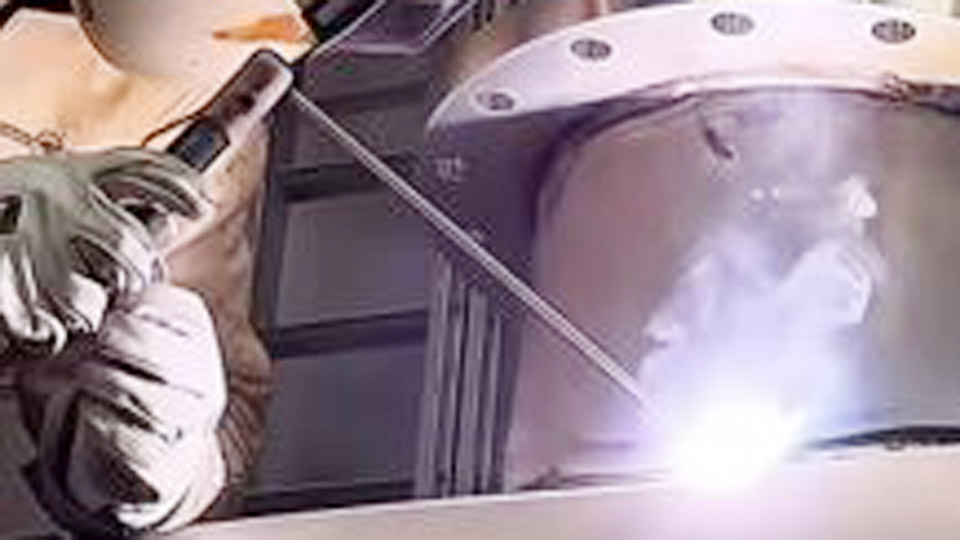
Image yeswelder
Understanding Stick Welding for Stainless Steel
Stick welding involves using an electric current to create an arc between a consumable electrode and the workpiece. The electrode melts, forming the weld pool, while its coating generates slag and gas to shield the molten metal from atmospheric contamination.
For stainless steel, this process is effective because the electrodes are formulated to match the alloy’s composition, preserving properties like chromium content for corrosion resistance.
Unlike mild steel, stainless steel has lower thermal conductivity, meaning heat builds up quickly in the weld area. It also expands more when heated and contracts sharply upon cooling, increasing the risk of warping.
Stick welding’s self-shielding nature makes it wind-resistant and cost-effective compared to MIG or TIG methods, which require gas cylinders. It’s suitable for thicknesses starting from about 1/8 inch upward, though thinner sheets demand careful control to avoid burn-through.
This approach shines in maintenance and field applications where setup simplicity is key. Electrodes come in various alloys to suit different stainless grades, ensuring compatibility and weld quality. Always prioritize cleanliness, as even minor contaminants can cause porosity or weak bonds.
Selecting the Right Electrodes
Choosing the correct electrode is foundational to successful stainless steel welding. Electrodes are classified by their alloy match and coating type, which influence arc stability, slag behavior, and positional versatility.
Common electrodes for austenitic stainless steels—the most prevalent types like 304, 316, and their variants—include:
E308L: Suited for 304-grade stainless and lower, including 200-series alloys. It provides good corrosion resistance in general environments.
E316L: Ideal for 316-grade stainless, often used in marine or chemical applications due to added molybdenum for pitting resistance.
E309L: Best for joining stainless to mild steel or other dissimilar metals, offering high crack resistance.
Coating types determine usability:
Lime-coated (suffix -15): Designed for all positions, including vertical and overhead. Produces thin, fast-freezing slag but requires DCEP polarity only. Slag removal can be challenging, risking inclusions if not cleaned properly.
Titania-coated (suffix -16): Excellent for flat and horizontal welds. Offers a stable arc and easy slag removal, with slag that freezes slowly for better bead appearance.
Silica-titania-coated (suffix -17): Provides smooth, concave welds with minimal cleanup. Suitable for flat/horizontal and limited vertical/overhead, preferring DCEP.
Electrode diameter should be smaller than the base metal thickness to control heat input. For example, use a 3/32-inch rod for 1/4-inch material. Smaller sizes (up to 5/32 inch) are essential for out-of-position welding to create manageable puddles.
| Electrode Type | Suitable Grades | Coating Options | Recommended Positions | Diameter Examples |
|---|---|---|---|---|
| E308L | 304, 200-series | -15, -16, -17 | All (varies by coating) | 3/32″, 1/8″ |
| E316L | 316, cast steels | -15, -16, -17 | All (varies by coating) | 3/32″, 1/8″ |
| E309L | Dissimilar joints | -15, -16, -17 | All (varies by coating) | 1/8″, 5/32″ |
Store electrodes in a rod oven after opening to prevent moisture absorption, which can lead to hydrogen-induced cracking. Limit exposure to two hours at a time.
Equipment and Setup
Your arc welder must support the required polarity and amperage. Most stainless electrodes perform best on direct current electrode positive (DCEP), where the electrode connects to the positive terminal for deeper penetration. Some titania-coated rods can work with alternating current (AC), but DCEP is preferred for stability.
Amperage settings depend on electrode diameter and position. Start about one-third lower than for mild steel to minimize heat. For a 1/8-inch E308L-16 rod in flat position, aim for 90-120 amps.
Vertical welds may need 10-20% higher to maintain arc without sticking. Test on scrap: If the electrode turns red to the stub after use, reduce amps to avoid overheating.
Other essentials include:
- A chipping hammer and wire brush made exclusively for stainless to avoid cross-contamination.
- Copper backing bars to absorb heat and prevent oxidation on the root side.
- Personal protective equipment: Welding helmet with shade 10-12 lens, leather gloves, flame-resistant jacket, and respirator for fumes.
Set your machine with arc force control turned up slightly for a focused arc, aiding in tight spaces or vertical runs. Ensure cables are in good condition to maintain consistent current.
Material Preparation
Proper preparation prevents defects and ensures fusion. Begin by cleaning the stainless steel thoroughly. Remove oils, grease, dirt, and oxides using a solvent that leaves no residue, followed by a dedicated stainless steel wire brush. Avoid carbon steel tools, as they can embed particles leading to rust.
For joint design, use standard configurations like butt, tee, or lap. On materials thicker than 3/16 inch, bevel edges to a 60-degree included angle with a 1/16- to 1/8-inch root face. Match the root opening to the root face size. For thin sheets, a slight gap helps with penetration without burn-through.
Clamp pieces securely to minimize movement during welding. Use copper chill bars behind the joint on thin sections to dissipate heat rapidly. Preheating is rarely needed for austenitic stainless but can help with thicker or high-carbon equivalents to reduce cracking risks—aim for 200-300°F if required.
Welding Techniques
Approach the weld with a short arc length: Keep the electrode tip close to the puddle without touching to control spatter and voltage. A long arc increases porosity and alloy loss.
For flat or horizontal positions:
- Strike the arc by scratching or tapping the electrode on the workpiece.
- Hold at a 90-degree angle with a slight drag (10-15 degrees toward travel direction).
- Use stringer beads—straight lines without weaving—for thin material to limit heat. On thicker pieces, apply a slight “J” weave in multi-pass welds to tie in toes.
- Maintain travel speed so the bead is flat or slightly convex, avoiding undercuts.
- End beads by reversing the arc briefly to fill craters, preventing cracks.
Vertical welding demands experience. Prefer downhill on thin stainless: Increase amps slightly, drag the electrode down quickly for shallow penetration. For uphill, use lime-coated electrodes without weaving; opt for triangle patterns if needed. Limit vertical to 10 degrees max for best control.
Overhead requires small electrodes and fast-freezing slag from -15 coatings. Work in short bursts to manage puddle sag.
Multi-pass strategy: Clean slag completely after each pass using a stainless chipping hammer and brush. Overlap beads by 50% for full coverage. Aim for penetration no deeper than 1/8 inch beyond the root for flush finishes.
Practice maintaining consistent speed—influence bead width and reinforcement. Too slow causes excessive heat; too fast leads to lack of fusion.
Managing Heat and Distortion
Stainless steel’s properties amplify heat-related issues. Low conductivity concentrates energy, while high expansion causes warping. Counter this by using the lowest viable amps, short beads (no longer than 6-8 inches on thin stock), and intermittent welding—alternate sides or sections to allow cooling.
Employ copper backing to draw heat away, reducing sugaring (granular oxidation on the back side). Monitor interpass temperature: Keep below 350°F for austenitic grades to preserve corrosion resistance and avoid sensitization, where chromium carbides form and deplete protective layers.
If distortion occurs, use clamps or fixtures during welding. Post-weld straightening may be needed but avoid hammering hot metal, as it can induce cracks.
Post-Weld Cleaning and Inspection
Immediately after welding, allow cooling before removing slag—it can pop off forcefully in stainless due to rapid contraction. Chip gently with a stainless hammer, then brush vigorously to eliminate residues.
Address heat tint (discoloration from oxidation): Light straw colors are acceptable, but darker blues or blacks indicate thick oxide layers that compromise corrosion resistance.
Remove via mechanical brushing, pickling paste (nitric-hydrofluoric acid mix applied for 15-30 minutes), or electrochemical cleaning for polished finishes.
Inspect welds visually for cracks, undercuts, or porosity. Use dye penetrant testing for surface defects or ultrasonic for internal ones in critical applications. Ensure beads are uniform, with good fusion at toes.
Troubleshooting Common Issues
Porosity often stems from moisture in electrodes or contaminants—dry rods properly and clean meticulously. Cracking results from high heat or restraint; mitigate with low amps and proper joint gaps.
Slag inclusions arise from incomplete cleaning between passes or poor technique—ensure full removal and tight arcs. Burn-through on thin material? Reduce amps and speed up travel. Discoloration signals excessive heat; shorten arc and use chill bars.
Warping is inevitable in long welds; break into segments and alternate. If beads are convex with poor wetting, check polarity or try a different coating.
Grasping these fixes builds reliable outcomes, turning potential flaws into preventable steps.
Conclusion
Stick welding stainless steel equips you with a versatile skill for creating robust, enduring joints that leverage the material’s strengths in corrosion-prone settings. By focusing on electrode selection, precise setup, clean preparation, and controlled techniques, you achieve welds that fuse seamlessly without compromising integrity.
Remember, success hinges on minimizing heat to preserve chromium levels and prevent distortion, ensuring the final product withstands real-world demands.
This understanding empowers DIY enthusiasts and professionals alike to tackle projects confidently, from repairs to custom fabrications. As an advanced insight, consider buttering techniques for dissimilar joints: Apply a layer of E309L on the carbon steel side first to buffer dilution, enhancing crack resistance in high-stress applications without needing full preheat.
FAQs
Can I use AC for stick welding stainless steel?
Yes, but only with compatible electrodes like titania-coated (-16) types. DCEP is preferred for better arc stability and penetration, especially in all positions. AC may increase spatter, so test on scrap for your setup.
What amperage should I use for 1/8-inch stainless electrodes?
For a 1/8-inch E308L-16 in flat position, start at 90-120 amps, adjusting lower for thin material to control heat. Vertical may require 100-140 amps. Always dial in based on electrode behavior—avoid redness indicating overheat.
How do I prevent cracking in stainless steel welds?
Minimize heat input with low amps, short beads, and chill bars. Ensure proper joint preparation with adequate gaps, and clean thoroughly to avoid contaminants. For high-restraint setups, use E309L electrodes for added ductility.
Is preheating necessary for stainless steel?
Rarely for austenitic grades, but preheat to 200-300°F on thicker sections or high-carbon equivalents to reduce thermal shock and cracking risks. Avoid over 350°F interpass to prevent sensitization.
What causes sugaring on the back side of welds?
Sugaring, or granular oxidation, occurs from excessive heat without protection. Use copper backing bars to shield and cool the root, or apply argon purge if accessible, though stick welding typically relies on front-side shielding.


