
I’ve been asked this question more times than I can count—”Can I JB Weld a titanium tube?” Honestly, I get why so many folks are curious. Titanium is one of those materials that feels a little intimidating.
It’s expensive, exotic, and not something most people work with every day. When a titanium tube cracks or needs a repair, the first thing many people reach for is a tube of JB Weld.
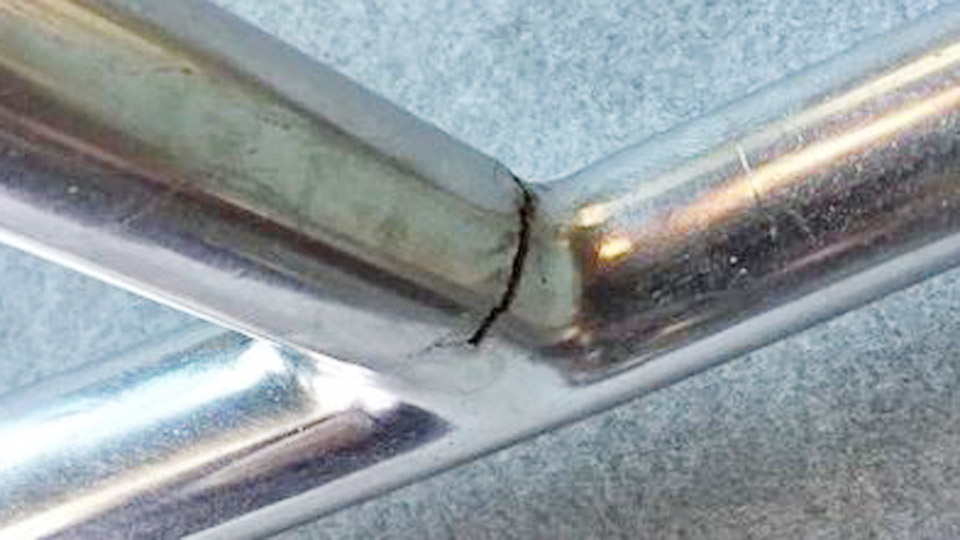
Photo by sailnet
I’ve worked with titanium for years, both in high-performance builds and tricky repair jobs. And I’ve also experimented with JB Weld in places where traditional welding wasn’t an option. I’m going to give you a full, honest breakdown of what you can expect when trying to JB Weld a titanium tube.
We’ll talk about how JB Weld works, whether it actually bonds to titanium, the pros and cons, and the right (and wrong) times to use it.
I’ll even walk you through how to do it properly if it’s your only option. If you’re holding a cracked titanium tube in one hand and a JB Weld tube in the other, let’s talk about what you need to know.
Titanium and Its Properties
Before deciding if JB Weld will do the trick, we need to understand what makes titanium special—and tricky.
Titanium is known for:
- High strength-to-weight ratio
- Excellent corrosion resistance
- Inertness (doesn’t react easily with other substances)
- Difficulty bonding with adhesives due to its smooth, passive oxide layer
This oxide layer is why titanium doesn’t rust, but it’s also why adhesives like JB Weld struggle to grip it unless you prepare the surface properly. Titanium is stubborn like that—it doesn’t just stick to anything.
While JB Weld can adhere to a variety of metals, titanium requires extra effort if you want a decent bond.
What Is JB Weld, and How Does It Work?
If you’ve ever done any DIY repair work, you’ve probably used JB Weld before. But let’s take a moment to really understand what it is and how it functions.
JB Weld is a two-part epoxy adhesive. When the resin and hardener are mixed, they create a chemical bond that, once cured, forms a strong, heat-resistant, and water-resistant connection. It’s designed for:
- Temporary or semi-permanent repairs
- Filling cracks or voids in metal
- Bonding non-load-bearing parts
There are several types of JB Weld, including:
| JB Weld Product | Cure Time | Max Temp | Strength (PSI) | Water Resistant | Notes |
|---|---|---|---|---|---|
| Original JB Weld | 15–24 hrs | 550°F | 3960 | Yes | General purpose use |
| JB KwikWeld | 6 hrs | 300°F | 2424 | Yes | Faster, but slightly weaker |
| JB Weld ExtremeHeat | 24 hrs | 2400°F | N/A | Yes | Designed for extreme temps |
| JB MarineWeld | 15 hrs | 287°F | 5020 | Yes | Better for wet conditions |
Most people reach for the Original JB Weld, but depending on your titanium tube’s environment, the other versions might be a better match.
Does JB Weld Stick to Titanium?
Here’s the big question—does JB Weld actually stick to titanium? The short answer is: yes, but conditionally.
JB Weld can stick to titanium, but only if the surface is prepared very well. Titanium’s oxide layer resists bonding, so without surface prep, the epoxy will likely peel off after some time, especially under stress or temperature changes.
The key is surface roughness and cleanliness. You’ve got to give JB Weld something to bite into. Otherwise, it just sits on top like butter on a nonstick pan.
When Can You JB Weld a Titanium Tube?
Let’s talk about when JB Weld actually makes sense for repairing a titanium tube. Here are situations where it can work:
Low-stress repairs: If the tube isn’t under pressure, tension, or high temperature—JB Weld might be enough. Think decorative items or non-structural tubing.
Temporary fixes: It can buy you time until a proper weld repair is done. Great for emergencies or roadside situations.
Internal use: Inside housings, shells, or assemblies where strength is less critical and corrosion is more of a concern.
Cosmetic repairs: Filling small pits or dents that aren’t load-bearing.
If the titanium tube is used in aerospace, automotive suspension, or anything that moves, carries pressure, or supports weight—don’t risk it. That’s a job for TIG welding with proper shielding.
When You Shouldn’t Use JB Weld on Titanium
Let me be clear—JB Weld is not a replacement for real welding in critical applications.
Do not use JB Weld for:
- High-pressure tubing (like coolant or exhaust systems)
- Structural parts (bicycle frames, aircraft, load-bearing supports)
- High heat areas (engine components, manifolds)
- Any place where failure could be dangerous
Titanium is often chosen for extreme performance. If that’s the case, stick with real welding. JB Weld has limits, and you don’t want to push them when safety’s on the line.
How to Apply JB Weld to a Titanium Tube (Step-by-Step)
If you decide to go ahead with JB Weld on a titanium tube, preparation is everything. Here’s the method I’ve had the most success with:
Step 1: Clean the Area
Use isopropyl alcohol or acetone to clean any oil, dirt, or residue from the surface. Make sure it’s completely dry before moving on.
Step 2: Roughen the Surface
Use sandpaper (around 80–120 grit) or a small grinder to roughen the titanium in the bonding area. You want visible scratch marks to help the epoxy grip.
Step 3: Clean Again
Blow off dust, and wipe it again with alcohol. It needs to be clean, dry, and oil-free.
Step 4: Mix the JB Weld
Squeeze out equal parts of resin and hardener. Mix thoroughly until you get a consistent gray color.
Step 5: Apply the Epoxy
Use a wooden stick or plastic applicator to apply a layer of JB Weld to the roughened area. Make sure it fills any cracks or voids completely.
Step 6: Clamp or Hold in Place
Hold the parts together firmly. You can use tape, a clamp, or even a zip tie depending on the shape.
Step 7: Let It Cure
Don’t rush this part. Let it sit undisturbed for 15–24 hours (depending on the product). Warmer environments help it cure faster.
Pros and Cons of JB Welding Titanium Tube
To make it clearer, here’s a quick breakdown of the ups and downs:
| Pros | Cons |
|---|---|
| Easy to apply | Not suitable for structural repairs |
| No special tools required | Limited heat resistance |
| Affordable | Can peel off if surface isn’t prepared |
| Temporary fix option | Weak bond compared to real welding |
Think of JB Weld as a patch, not a permanent fix—especially when working with high-end metals like titanium.
Alternative Repair Methods
If JB Weld isn’t cutting it, here are a few better (but more advanced) options:
- TIG Welding: The gold standard for titanium. Needs inert gas shielding and proper filler rod.
- Titanium Brazing: Less common, but suitable in some niche scenarios.
- Threaded Inserts or Mechanical Joints: If you’re dealing with a break or hole, mechanical repairs might be better.
- Welding Services: Local machine or aerospace shops may offer certified titanium repair.
Sometimes it’s worth handing the job over to someone with the right tools and setup.
Real-Life Experience Using JB Weld on Titanium
Let me share one story. I had a customer come in with a small titanium overflow tube from a custom-built motorcycle. It had developed a tiny hairline crack near a mounting point. The guy was mid-trip and couldn’t afford to ship it out for welding.
We roughed it up, cleaned it thoroughly, applied JB Weld, and let it cure overnight in a warm, dry shop.
You know what? It held just fine—for a few months. But when summer rolled around and the temperatures spiked, the JB Weld finally let go. Not because it was bad, but because the thermal expansion of titanium and the epoxy bond weren’t matched.
So yes, it worked—temporarily. It reinforced the point: JB Weld is a patch, not a solution for high-performance titanium.
Conclusion
So, can you JB Weld a titanium tube? Yes—you can. But should you? That depends.
If you’re looking for a quick patch on a low-stress part, or just trying to make something functional again until a proper repair, JB Weld can get you out of a bind. It’s cheap, easy to use, and sometimes surprisingly effective.
If your titanium tube is part of a performance system, under pressure, or exposed to high heat—don’t take the shortcut. Weld it properly or get it repaired by someone who can.
Titanium deserves the right touch, and sometimes, that means going beyond a tube of epoxy.
Frequently Asked Questions
Will JB Weld stick to titanium without sanding it?
Not well. Titanium has a smooth oxide layer that resists bonding. You must sand or grind the surface for a strong hold.
Can JB Weld handle high temperatures on titanium?
Most JB Weld products max out at 550°F. For anything hotter, you’ll need ExtremeHeat or another solution.
Is JB Weld waterproof on titanium tubes?
Yes, once cured, JB Weld is waterproof. But sealing depends on proper prep and no gaps.
Can JB Weld fix a crack in a titanium exhaust tube?
Temporarily, maybe—but it won’t last under heat cycles and vibration. TIG welding is the better fix.
What’s better than JB Weld for titanium?
For strength, nothing beats proper TIG welding with argon shielding and matched filler rod.
How long will a JB Weld repair on titanium last?
It can last a few months in low-stress settings, but expect it to fail eventually due to stress or heat.
Does JB Weld work on polished titanium?
No. Polished titanium has poor adhesion. Always roughen the surface for the epoxy to work.


