
Two steel pieces on the bench, both looking similar at first glance—but one has higher carbon and behaves very differently once the heat goes in.
I’ve joined carbon steel to mild steel on repair jobs and fabrication work, and it’s one of those tasks that seems simple until cracking or hard zones show up after cooling. Treat them exactly the same, and you can run into trouble fast.
When people ask if you can weld carbon steel to mild steel, the real answer depends on carbon content, filler choice, and how you control heat.
I’ve learned that with the right rod or wire, proper prep, and sometimes a bit of preheat, the joint can be strong and reliable. Skip those steps, and the weld may look fine but fail later under stress.
If you want to join these steels without risking brittleness or hidden cracks, let me walk you through what actually works in the shop and how to set the job up properly from the start.
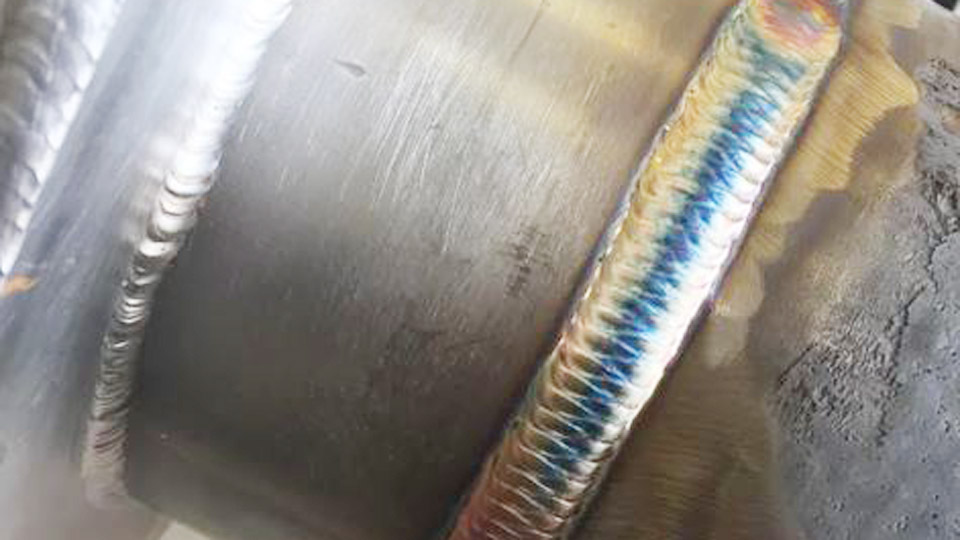
Image reddit
What Exactly Are Carbon Steel and Mild Steel?
Let’s cut through the confusion right away. Mild steel is basically low-carbon steel – think 0.05% to 0.25% carbon. It’s the workhorse: A36 plate, 1018 round bar, the stuff in your truck frame. It’s forgiving, welds like a dream, and costs next to nothing.
Carbon steel, on the other hand, covers a wider range. When welders say “carbon steel,” they often mean medium-carbon (0.30% to 0.60% C) or even high-carbon (0.60% to 1.5% C) like 1045 or 1095. These are harder, stronger, but trickier to weld because the extra carbon makes the heat-affected zone (HAZ) prone to hardening and cracking.
In my shop, I see this mismatch all the time: welding a mild steel bracket to a carbon steel axle shaft from an old John Deere. The mild side flows easy, but the carbon side wants to cool fast and turn brittle. The good news? They weld just fine if you treat the higher-carbon piece with respect.
Why does this matter on the floor? Penetration, distortion, and cost. Weld carbon to mild without preheating, and you risk hydrogen cracking in the HAZ. Use the wrong filler, and the weld might look pretty but shear off under vibration. I’ve seen $500 repairs turn into $2,000 nightmares because someone skipped the basics.
Can You Really Weld Them? The Straight Answer from the Bench
Yes, you can weld carbon steel to mild steel – and do it successfully every time. But “success” depends on the carbon levels. Low to medium carbon to mild? Piece of cake with standard mild steel processes. High carbon? You’ll need preheat, low-hydrogen rods, and maybe a stress-relief pass.
From my experience, 90% of shop jobs fall into the easy category. Take a recent one: A customer brought in a carbon steel plow blade (around 0.45% C) to weld to a mild steel frame.
I used E7018 stick at 110 amps on 1/4-inch material. No preheat on the mild side, but I warmed the blade to 300°F. The weld passed a bend test and took 50,000 pounds of pull before the base metal gave way.
The real question isn’t “can you?” It’s “how do you do it without rework?” That’s where process choice, filler, and prep come in. Skip those, and you’ll chase porosity or lack of fusion all day.
Picking the Right Welding Process for Carbon-to-Mild Joints
Not all processes are created equal here. In my 15 years running a fab shop, I’ve settled on three that shine for these dissimilar welds: SMAW for portability, MIG for speed, and TIG for precision.
Stick Welding (SMAW) – The Go-To for Field Repairs
Stick is king when you’re out in the elements or on thick stuff. It’s what I grab first for carbon-to-mild because low-hydrogen rods like E7018 handle the carbon’s sensitivity to moisture and cracking.
Why it works: The flux shields the puddle from air, and you control heat input manually. For 3/16-inch to 1/2-inch plate, it beats MIG on windy days.
Shop tip: Always run E7018 on DC+. Bake your rods at 250°F for two hours if they’ve been sitting – I’ve seen wet 7018 cause underbead cracks on 1045 steel.
MIG Welding – Fast and Clean for Production
MIG (GMAW) is my daily driver for indoor work. ER70S-6 wire with 75/25 argon/CO2 gives great penetration without burning through the mild side.
It’s forgiving on thin-to-thick transitions – say, 1/8-inch mild sheet to 3/8-inch carbon plate. The spray transfer mode lays down beads that wet out beautifully.
Pro move: Short-circuit mode for verticals on thinner stuff. I set my Lincoln Power MIG 210 at 18-20 volts and 200-250 IPM wire speed for 1/4-inch carbon-to-mild. No spatter, no cleanup.
TIG Welding – For When You Need Perfection
TIG shines on clean, visible welds like custom bike frames or pressure vessels. Use ER70S-2 filler rod – the deoxidizers in it handle mill scale on carbon steel better.
It’s slower, but the control is unmatched. Preheat the carbon side to 200-400°F, and you’ll avoid the hard spots that ruin a TIG bead.
Anecdote: Last summer, I TIG’d a 4130 carbon tube to mild steel flanges for a race car roll cage. 120 amps, 15 CFH argon, 3/32″ 2% thoriated tungsten. The inspector called it the cleanest dissimilar weld he’d seen.
Filler Metals That Make the Difference
This is where beginners (and even some pros) blow it. Don’t just grab whatever’s in the drawer. Match the filler to the weaker material – usually the mild steel – to avoid overmatching strength that causes cracks.
Here’s a quick comparison table I keep taped to my welder:
| Process | Filler Recommendation | Diameter | Why It Works for Carbon-to-Mild |
|---|---|---|---|
| SMAW | E7018 | 1/8″ | Low hydrogen, all-position, strong on medium carbon |
| SMAW | E6010 (root) | 3/32″ | Deep penetration for dirty carbon steel |
| MIG | ER70S-6 | 0.030″ | Silicon for deoxidizing, smooth on mixed joints |
| MIG | ER70S-3 | 0.035″ | Cleaner for thin mild to thick carbon |
| TIG | ER70S-2 | 1/16″ | Triple deoxidized, handles impurities from carbon |
For higher carbon (over 0.40%), bump to E8018 or ER80S-D2. I’ve used 309L stainless rod on extreme mismatches, but that’s overkill for most jobs.
Lesson learned the hard way: Once, I used plain E6013 on 0.50% carbon to mild. The weld looked good, but it cracked after a week of vibration. Switched to 7018 – problem solved.
Joint Prep: The Step No One Skips (But Everyone Should)
Bad prep is the #1 killer of these welds. Carbon steel loves to hide scale and oil, and mild steel forgives nothing.
Start with a grinder. Hit both sides with a 40-grit flap disc – 2 inches back from the joint. For carbon, go further; it holds more crud.
Bevel it right: 30-35 degrees on both edges for a V-groove, 1/16″ root face. On thicker stuff (over 3/8″), add a backing strip of mild steel to control distortion.
Clean with acetone, then a wire wheel. I preheat the carbon piece with a rosebud torch to 250-350°F – cherry red on the back side – to drive out hydrogen.
Pro tip: Clamp everything tight. Carbon shrinks more on cooling, so tack welds every 4 inches, alternating sides.
Dialing in the Perfect Settings
Settings make or break it. Here’s what I run on my Miller Dynasty 280 for 1/4-inch joints:
SMAW Amperage Chart (DC+):
- 3/32″ E7018: 70-90A
- 1/8″ E7018: 110-130A
- 5/32″ E7018: 140-170A
For MIG on a Hobart Handler 210: 19V, 250 IPM wire, 20 CFH gas. Travel speed: 10-12 IPM.
TIG: 110-140A, 12-15 CFH argon, 1/16″ rod dipped every 1/2 inch.
Rule of thumb: 1 amp per 0.001″ thickness, but back off 10-20% on the carbon side to prevent burn-through.
I test every setup on scrap first. Saved me from blowing a $300 plate last month.
Step-by-Step: Welding Carbon Steel to Mild Steel Like a Pro
- Assess and Plan: Measure carbon content if possible (spark test: carbon throws bushy yellow sparks). Assume medium unless proven otherwise.
- Prep the Pieces: Grind, bevel, clean, preheat carbon to 300°F.
- Tack It Up: Three tacks per side, peen them flat.
- Root Pass: Low amps, slow travel. Backstep if distortion starts.
- Fill and Cap: Build layers, interpass temp under 500°F. Stringer beads for strength.
- Cool and Inspect: Let air cool slowly. Dye penetrant test if critical.
- Post-Weld: For high carbon, wrap in insulation to slow cool – prevents hardening.
I’ve done this hundreds of times on everything from gate hinges to skid steer buckets. Takes 10 minutes once you’re in the groove.
Common Pitfalls and How to Fix Them Fast
- Cracking in the HAZ: Too much heat or no preheat. Fix: Grind it out, preheat higher, use smaller rod.
- Porosity: Dirty metal or damp rods. Fix: Acetone wipe, rod oven.
- Lack of Fusion: Wrong angle or speed. Fix: 10-15° drag, slower travel.
- Distortion: Uneven heating. Fix: Backstep welding, clamps.
One time, a trainee welded 1095 carbon to mild without preheat. The bead popped off like a zipper. We fixed it with preheat and E8018 – now it’s bulletproof.
Safety Gear and Shop Smarts
Don’t skimp here. Carbon steel fumes are no joke – manganese and such. Full-face shield, leather sleeves, respirator if indoors. Ground everything; poor grounds cause arc blow on dissimilar metals.
Ventilation: My shop fan pulls 1,000 CFM. Keep a fire watch for 30 minutes after – sparks love to hide in carbon scale.
When to Say No (and What to Do Instead)
Rare, but high-carbon (over 0.60%) to thin mild? Consider brazing with silicon bronze. Or, for structural, use a transition piece of low-carbon.
In repairs, I’ve buttered the carbon edge with a nickel rod first, then welded mild over it. Saves the day.
Real-World Wins from the Shop Floor
Take the time I welded carbon steel grader blades to mild steel arms for a county road crew. 1/2-inch thick, outdoors in 40°F. Preheated to 400°F, E7018 at 150A. Those joints are still plowing snow two winters later.
Or the hobbyist who brought a custom knife: High-carbon edge to mild tang. TIG with ER70S-2, 80A. Heat treat after, and it held an edge like a razor.
These aren’t hypotheticals. They’re the jobs that pay the bills and teach you what books can’t.
Wrapping It Up
After grinding through all this, the big takeaway is simple: Carbon and mild steel are weldable buddies when you respect their differences. Know your carbon content, preheat the tough stuff, use low-hydrogen fillers, and control your heat. Do that, and your welds will outlast the steel around them.
Next time you’re staring at that mismatched joint, remember: You’ve got the tools now. Fire up the machine, dial it in, and lay down a bead that makes the old-timers nod.
FAQ
Can I weld high-carbon steel to mild steel without preheat?
Not if you want it to last. For anything over 0.40% carbon, preheat to 300°F minimum. I’ve skipped it on thin stuff and regretted it every time – cracks show up days later.
What’s the best rod for welding 1045 carbon to A36 mild?
E7018 hands down. 1/8″ at 120A on 1/4″ material. It handles the carbon’s hardenability without over-strengthening the mild side.
Does MIG work as well as stick for these welds?
Better for production, but stick wins for dirty or outdoor jobs. Use ER70S-6 and you’ll get 95% of the strength with half the cleanup.
How do I prevent distortion when welding thick carbon to thin mild?
Tack frequently, weld in short passes, and clamp with copper backing. I use a water-cooled fixture for critical parts – zero warp.
Is post-weld heat treatment necessary?
For high-stress jobs like pressure vessels, yes – 1100°F for an hour. For shop repairs, slow air cooling in a blanket does the trick 80% of the time.


