
I first ran into stud welding when I needed to attach a bunch of bolts to a thin metal panel without drilling holes. Watching a pro shoot studs straight onto the surface in seconds was a game-changer. That’s when I realized how versatile and time-saving stud welding can be.
Stud welding is used wherever strong, permanent connections are needed—think construction, automotive work, shipbuilding, or even metal furniture. It saves time, avoids weakening the base material, and creates clean, reliable joints. In this guide, I’ll show you what stud welding is used for and how it can make your projects faster, stronger, and more precise.
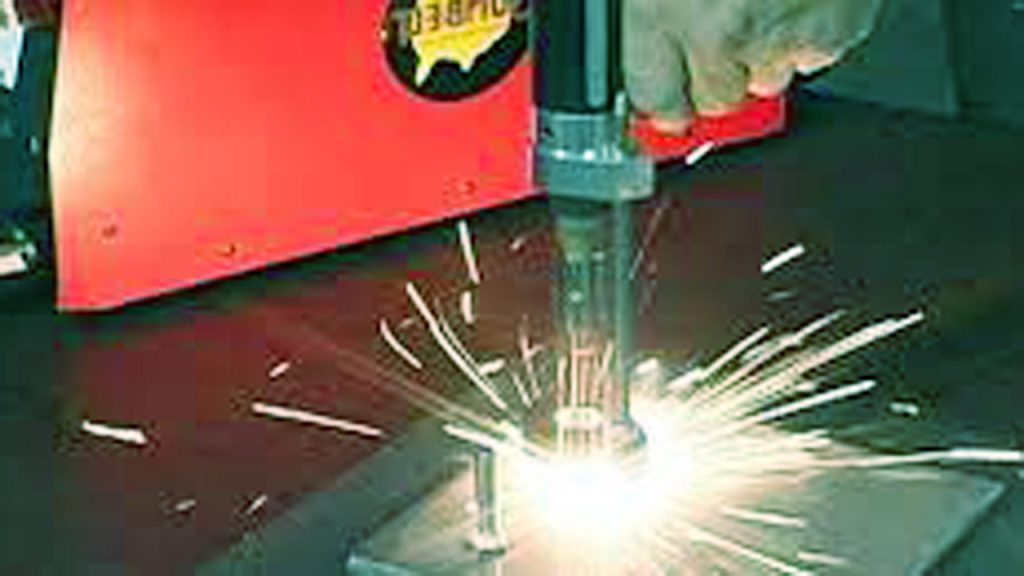
Image by sunbeltstudwelding
How Stud Welding Actually Works (And Why It’s So Damn Fast)
At its core, stud welding is an arc welding process that uses a timed electrical pulse to melt the end of a stud and the base metal at the same time, then plunges the stud home while the metal is molten. The whole cycle usually takes 0.05 to 1 second depending on diameter.
There are two main flavors you’ll see in the States:
- Capacitor Discharge (CD) – my go-to for thin sheet metal and stainless. No ferrule, no shielding gas, almost zero backside marking.
- Drawn Arc (DA) – the heavy hitter for anything 3/16″ diameter and up. Uses a ceramic ferrule to contain the molten pool and shield the weld.
I keep both guns in the truck because the job dictates the tool, not the other way around.
Real-World Jobs Where Stud Welding Pays the Rent
Structural Steel and Bridge Work
Every time you drive over an interstate bridge with shear studs sticking out of the top flange, that’s drawn-arc stud welding. Those studs tie the concrete deck to the steel beam so the whole system acts composite—way stronger and lighter than old-school bolted connections.
I’ve shot 3/4″ x 6″ A108 studs all day long on I-70 retrofits. One guy with a stud gun can outruns three guys drilling and torquing bolts.
Shipbuilding and Offshore Platforms
Aluminum CD studs on decking, stainless studs for pipe hangers, insulation pins everywhere. Salt water hates threaded connections—stud welding gives you a sealed, corrosion-resistant attachment that won’t loosen from vibration.
HVAC and Commercial Kitchen Builds
Ever notice those threaded rods hanging ductwork or grease hoods? 90% of them are CD welded. You can weld to the bottom of a beam without scaffolding on the floor below. Huge time saver.
Automotive and Trailer Manufacturing
Ground studs, bracket studs, exhaust hanger studs—production lines love stud welding because robots can do it 24/7 with zero spatter cleanup.
Food-Grade and Sanitary Applications
316L stainless CD studs leave no burn marks on the backside of tanks or hoppers. I’ve done dairy plants where the inspector would have shut us down if we’d tried to MIG anything from the milk touches.
DIY and Fabrication Shops
This is where it gets fun. Want to bolt a winch plate to your trailer frame without drilling holes that weaken it? Four 1/2″ studs, welded in 30 seconds each. Done. I built my 16-foot flatbed with nothing but stud-welded D-rings and stake pockets.
When You Should Pick Stud Welding Over Bolting or Traditional Welding
Ask yourself three questions:
- Can I only access one side of the material?
- Do I need full-strength fusion (not just tack)?
- Am I trying to avoid distortion or burn-through on thin metal?
If you answer yes to two or more, grab the stud gun.
I once had a customer who spent three days drilling and tapping 200 holes in 12-gauge stainless for a brewery tank—then called me because half the taps stripped. I re-did the job with CD studs in four hours. He still sends me Christmas cards.
Common Stud Welding Mistakes I See Every Week (And How to Avoid Them)
- Wrong tip design – CD studs must have the tiny pip on the end. If it’s missing or damaged, you get no arc initiation.
- Dirty base metal – Mill scale, rust, paint, galvanizing—any of that will cause porosity or no fusion. Hit it with a flap disc first.
- Wrong plunge setting – Too little plunge and the stud sits proud with a cold lap. Too much and you hammer the gun apart.
- Forgetting to change ferrules on drawn-arc jobs – Reuse a cracked ferrule and you’ll get undercut city.
- Welding galvanized without ventilation – Zinc fumes will put you on your knees. I keep a big shop fan pointed at the weld zone anytime I’m on galv.
Step-by-Step: How I Weld 1/2″ Drawn-Arc Studs (The Way That Passes AWS D1.1 Every Time)
- Clean the spot with a 40-grit flap disc until it’s shiny.
- Set the gun: 450 amps, 0.45-second weld time, 1/8″ plunge, lift set to 1/16″.
- Load a new ferrule (I like the tapered ones for plate).
- Hold the gun dead perpendicular—90° is non-negotiable.
- Pull the trigger, hear the “thunk,” wait for the gun to release.
- Break the ferrule with a small hammer and check for 360° collar and no undercut.
- Ring test with a 2-lb hammer—if it rings like a bell, you’re golden.
Do that ten times in a row and you can outrun any bolting crew.
Capacitor Discharge Stud Welding Settings I Actually Use
| Stud Diameter | Material | Gun Model Example | Voltage | Gap | Typical Base Metal Thickness |
|---|---|---|---|---|---|
| #8 – 1/4″ | Mild Steel | TRW Nelson N1500i | 120-140V | 0.060″ | 20 ga – 1/4″ |
| #10 – 5/16″ | Stainless | Same | 160-180V | 0.070″ | 16 ga – 3/16″ |
| 1/4″ | Aluminum | Same | 180-200V | 0.090″ | 1/8″ – 1/4″ |
These are starting points. Every CD gun is a little different—dial it in on scrap first.
Pros and Cons (Because Nothing’s Perfect)
Pros
- Lightning fast
- One-sided access
- Minimal distortion
- No hole weakening
- Cleaner than MIG nutserts
Cons
- Upfront cost of the gun
- Consumables add up on big jobs
- Limited to ferrous and some non-ferrous
- Learning curve on setup
I still think the speed wins every time.
Maintenance Tips That Keep My Guns Running 10+ Years
- Blow out the gun with compressed air after every shift—spatter builds up in the chuck.
- Replace the foot and legs when they get pitted—cheap insurance.
- Grease the plunger lightly with high-temp anti-seize.
- Store CD guns with the capacitor discharged (most do it automatically).
The Pro Tip You Didn’t Know You Needed
When you’re welding studs to the underside of a beam overhead, flip the polarity on drawn-arc guns to electrode-negative. It throws less spatter in your face and still gives full penetration. Old-timer taught me that on a power-plant job in 2009 and I’ve never gone back.
Conclusion – Why You’re Ready to Pull the Trigger on Stud Welding
Now you know exactly what stud welding is used for—from skyscraper steel to your next trailer project. You understand the difference between CD and drawn-arc, you’ve got real settings that work, and you won’t make the rookie mistakes that cost time and material.
Next time you’re staring at a job that needs strong, fast, one-sided fasteners, you’ll reach for the stud gun with confidence—and probably finish before the bolting crew even gets their torque wrenches calibrated.
The most expensive tool is the one you don’t own when you need it. A decent CD gun pays for itself after two or three decent-sized jobs. Stop drilling holes you don’t have to.
FAQ
Can you stud weld aluminum to steel?
Not reliably with standard equipment. The vastly different melting points cause problems. Use aluminum studs on aluminum base or steel studs on steel base. Transition joints need explosion bonding or friction welding.
How strong is a welded stud compared to a bolted connection?
A properly welded 1/2″ mild-steel stud in tension routinely hits 12,000–15,000 lbs—often stronger than the Grade 5 bolt you’d use in the same hole.
Do welded studs need to be removed for galvanizing?
No. Hot-dip galvanizing flows right around the weld collar. Just make sure the studs are clean and not stainless (different specs.
What’s the thinnest metal you can stud weld to?
With capacitor-discharge and a skilled hand, I’ve gone down to 24-gauge stainless for commercial kitchen panels. Drawn-arc needs at least 1/8″ or you’ll burn right through.
Is stud welding considered structural welding under AWS D1.1?
Yes—Section 7 covers it completely. Shear studs, deformed bar anchors, pretty much anything welded with the process has prequalified procedures if you follow the tables.


