
If you’ve ever peeked behind the scenes of plumbing, metalwork, or home repairs, you might have come across the term “butt weld” and wondered what it actually means. A butt weld is a common type of joint where two pieces of metal are joined end-to-end, creating a seamless, strong connection that’s essential for durability and safety.
For homeowners, renters, or DIY enthusiasts, understanding butt welds can help you tackle minor repairs, maintain metal fixtures, or even safely clean welded surfaces without causing damage.
Proper maintenance and cleaning tips for welded joints, including rust prevention and stain removal, ensure your metal structures stay sturdy and hygienic. By knowing the basics of butt welds, you can make smarter decisions about home repairs, cleaning, and long-term care.
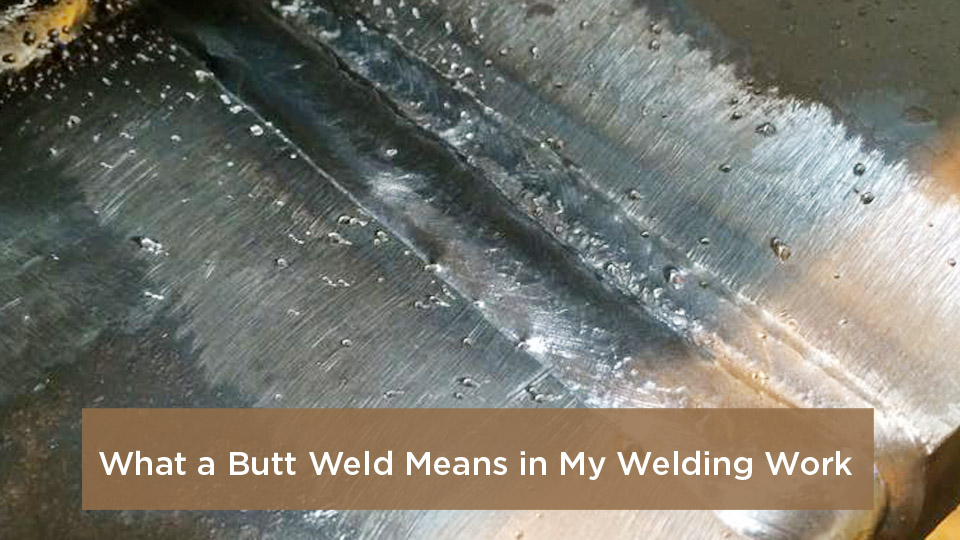
Image by mig-welding.co.uk
Types of Butt Weld Joints
Let’s break down the family of butt welds, because not all joints are created equal. Depending on your material thickness and the load it’s bearing, you’ll pick a style that fits like a glove. I’ve welded everything from thin sheet metal for custom bike frames to beefy plates for pressure vessels, and choosing the right type is half the battle.
Square Butt Welds
Start simple with square butt welds—they’re the entry-level champ for thinner stuff, say up to 3/16-inch thick. You just square off the edges, butt ’em together, and lay down the bead without any beveling. No groove prep means less hassle, which is gold for quick jobs like fabricating trailer hitches or patching up farm equipment.
But here’s the practical know-how: Leave a root gap of about 1/8 inch. I learned that the hard way on a rainy afternoon in the field—too tight, and your molten puddle sits on top like a lazy river, no penetration.
Too wide, and you’ve got a bulky root that weakens the tie-in. For super-thin sheets, like 20-gauge, go closed—no gap—and use fusion welding without filler to dodge burn-through.
Pro tip from the shop floor: Tack weld every couple inches to hold alignment; it’ll save you from that frustrating drift mid-pass.
V-Groove Butt Welds
Step up to V-groove when you’re dealing with medium-thick plates, around 1/4 inch or so. You bevel each edge at 30-45 degrees, forming a V shape that opens up for better filler access. Single V is your go-to for one-sided welds, like on pipes where you can’t flip it over.
Double V? That’s for when you can hit both sides, spreading the heat to cut down on distortion—crucial for long seams on structural beams.
In my experience, V-grooves shine in shop settings with a steady hand. I once welded a series of double V joints on a conveyor frame; the even heat distribution kept everything flat, no warpage headaches. Common mistake? Beveling too shallow—your root pass won’t penetrate fully, leading to inclusions.
Fix it by grinding a clean 1/16-inch root opening and starting with a hot root pass using E6010 rods at 90-110 amps. It’s all about that balance for weld integrity.
Bevel and J-Groove Butt Welds
Bevel grooves are like the V’s laid-back cousin—one side beveled, the other square—for when access is tricky, say welding a flange to pipe. Single bevel works for lighter loads; double for heavy hitters. Then there’s J-groove, a tighter radius bevel that saves filler metal and reduces passes—perfect for thicker stock over 1/2 inch.
I swear by J-grooves for efficiency in tight spots, like retrofitting boiler tubes. They minimize the groove volume, so less slag cleanup and faster cooldown. But watch the radius; too tight, and your torch won’t fit without gouging the edge.
Prep tip: Use a grinder or plasma cutter for smooth bevels, aiming for a 20-degree included angle. And always check your AWS D1.1 code for spec’d dimensions—skipping that invites inspection fails.
U-Groove Butt Welds
U-grooves are the premium pick for heavy plates, over 3/4 inch, where you want max penetration with minimal distortion. The U shape—curved bottom, straight sides—holds more filler but distributes heat evenly, ideal for high-stress apps like ship hulls.
From my days on a Gulf Coast rig, U-grooves were lifesavers for offshore platforms. They let you run fewer passes than a wide V, cutting labor by 20%.
Pitfall: Undercut at the toe if your travel speed’s off. Dial in 120-140 amps on your 7018 fill rods, weave gently, and preheat to 150°F on high-carbon steels to avoid hydrogen cracking. It’s that attention to material compatibility that keeps things solid.
| Type of Butt Joint | Best For | Thickness Range | Prep Needed | Passes Typical |
|---|---|---|---|---|
| Square | Quick, low-load | Up to 3/16″ | Minimal gap | 1-2 |
| Single V | One-sided access | 1/4″ – 1/2″ | 30-45° bevels | 2-4 |
| Double V | Balanced heat | 1/4″ – 3/4″ | Both sides beveled | 3-5 |
| Single Bevel/J | Tight spaces | 1/2″ + | One-side curve/bevel | 2-4 |
| Double U | Heavy structural | 3/4″ + | Curved groove both sides | 4-6 |
How to Prepare for a Butt Weld
Prep work isn’t glamorous, but it’s where 80% of your weld quality lives or dies. I’ve scrapped more parts from lazy edges than I care to count—think oily residue causing porosity or uneven bevels leading to lack of fusion. For butt welds, it’s all about clean, aligned edges that play nice with your filler.
First, clean like your paycheck depends on it—degrease with acetone, wire brush to bright metal, and grind away mill scale. For thicker joints, edge prep is non-negotiable: Plasma or oxy-fuel for bevels, ensuring a land of 1/16 inch at the root. Set your root gap to 1/8 inch; it’s the sweet spot for letting filler wick in without bridging.
Tack it up: Three to five tacks, spaced evenly, burned in hot to match your run. I always tack from both sides if possible—it prevents the “banana bend” from uneven cooling. Safety note: Gloves, hood down, and good ventilation—fumes from prepped steel can sneak up on you in enclosed shops.
Material matters too. Matching filler to base—like ER70S-6 wire for mild steel—ensures compatibility. Preheat if your code calls for it; 100-200°F on alloy steels wards off cracks. And don’t forget backing bars for root support on open roots—they’re a game-changer for clean penetration without blow-through.
Best Welding Processes for Butt Welds
Butt welds flex across processes, but picking the right one boils down to your setup, metal, and speed needs. I’ve switched from stick to MIG mid-project more times than I can tally, chasing that perfect bead.
MIG Welding for Butt Joints
MIG’s my daily driver for shop butt welds—fast, forgiving, and great for carbon steels. Spray transfer at 18-22 volts, 150-250 inches per minute wire speed for 1/4-inch plate. It pushes filler deep into the groove, ideal for V-joints.
On a rush job for a custom trailer, MIG saved the day—flat position, no spatter mess, done in under an hour. Mistake to dodge: Too much gas flow (over 25 CFH) causes turbulence and porosity. Tip: Shorten your stick-out to 1/2 inch for tighter arc control.
TIG Welding for Butt Joints
TIG’s the precision tool for thin or exotic metals like aluminum or stainless. AC for aluminum at 100-150 amps, DCEN for steel. It’s slower but gives you god-like control over the puddle—perfect for square butts on sheet.
I used TIG for a stainless exhaust repair once; the clean root pass was invisible. Common error: Overheating the tungsten—keep it 1/4 inch off the work. Filler tip: 4043 rod for aluminum, matching diameter to your gap.
Stick Welding for Butt Joints
Stick (SMAW) is rugged, portable—think field repairs on pipelines. E6010 for root (digging arc, 80-120 amps), E7018 for fill (smooth, low-hydrogen, 110-140 amps). Great for dirty steel.
Field story: Welding butt joints on a busted rig in the mud—stick didn’t flinch. Fix for undercut: Slow your travel, feather the sides. Always bake your rods at 250°F to kill moisture.
Step-by-Step Guide to Welding a Butt Joint
Let’s walk through a basic V-groove butt on 3/8-inch mild steel with MIG. Grab your gear: Welder, clamps, angle grinder, chipping hammer, and wire brush. Safety first—leathers on, clear the zone.
- Prep the Edges: Measure, cut square, bevel to 37.5 degrees each side for a 75-degree included angle. Clean to bare metal, set 1/8-inch gap.
- Tack Weld: Clamp in place, tack top, bottom, and sides. Check alignment with a straightedge—adjust before they cool.
- Root Pass: Fire up MIG at 19 volts, 200 IPM wire. Weave side-to-side, 1/2-inch steps, slow enough for penetration but no burn-through. Aim for a slight convex bead.
- Fill Passes: Bump voltage to 20-21, layer in 2-3 passes. Weave wider now, overlapping 50%. Chip slag if switching processes, but MIG’s continuous.
- Cap Pass: Final layer, flatter profile for aesthetics. Grind high spots if needed for flush.
- Inspect and Cool: Visual check for cracks, then UT or dye penetrant per code. Let it air cool—no quenching unless specified.
Takes 20-30 minutes per foot once you’re dialed. For vertical? Uphill travel, reduce amps 10-20% to fight gravity.
Common Mistakes in Butt Welding and How to Fix Them
Blue smoke rolling, and you know it’s wrong before the hood flips. Top culprit: Incomplete penetration. Cause? Weak root pass or too-wide gap. Fix: Dial up amps 10%, linger on the root.
Distortion’s another beast—heat warps long joints like a bad breakup. I warped a 10-foot beam once; lesson learned—alternate sides, clamp rigidly, or use a strongback. Preheat helps too.
Porosity from contamination: Oil, rust, or wet electrodes. Blast it clean, store rods dry. And undercut? Too fast travel—slow down, angle your gun 10-15 degrees push.
Overheating thin stock leads to burn-through; drop amps, use pulse MIG if your machine’s got it. Quick fix for most: Practice on scrap. Builds muscle memory faster than any book.
Butt Welds in Different Positions
Position changes everything—flat’s a breeze, overhead’s a workout. 1G flat: Gravity pulls your puddle in; crank the heat, no holding back.
2G horizontal: Plate vertical, weld horizontal—favor the top toe, weave downhill to fill. Reduce voltage 1-2 points to counter sag.
3G vertical: Uphill for control, start low. Stringer beads, not weaves, or it’ll drip like candle wax. Amps down 15%.
4G overhead: Toughest—whip fast, minimal weave, low amps to keep the molten mess from raining down. Backing strips help contain it.
From pipeline crawls to ceiling beams, adapt or fail. My trick: Dry runs with soapstone to map your path.
Applications of Butt Welds in Real-World Projects
Butt welds are everywhere you need seamless strength. Pipelines? Double U-grooves for girth welds, holding 2,000 PSI without a whimper. Structural fab: V-bevels on I-beams for skyscrapers, per AISC codes.
Automotive: Square butts on chassis frames—light, quick, no weight penalty. Pressure vessels in refineries: Full-pen J-grooves, inspected to ASME Section VIII.
Hobby side: Custom gates or trailers—simple squares keep it DIY-friendly. In shipyards, they’re hull seams fighting ocean torque. Cost-efficient? Absolutely—less material, faster than bolting.
Butt Weld vs. Fillet Weld: Which to Choose?
Butt vs. fillet—it’s alignment that decides. Butt’s for flush, end-to-end strength, full pen matching parent metal. Fillet’s triangular, 90-degree corners, easier prep but weaker under tension.
Use butt for pipelines (leak-proof), fillet for brackets (quick tie). I’ve mixed ’em on frames—butt for mains, fillet for gussets. Fillet distorts less but can’t take axial loads like butt. Choose based on stress: Butt for shear/tension, fillet for convenience.
| Aspect | Butt Weld | Fillet Weld |
|---|---|---|
| Geometry | End-to-end, same plane | 90° angle, triangular |
| Strength | Full penetration, high | Good shear, lower tension |
| Prep | Bevel/groove often | Minimal, no bevel |
| Applications | Pipes, structures | Brackets, laps |
| Difficulty | Moderate (positions vary) | Easier, more forgiving |
Pros and Cons of Butt Welding
Pros: Bulletproof strength—full fusion means no weak links. Aesthetic win: Flush finish screams pro. Versatile across metals, positions, and thicknesses. Efficient for production; gravity helps in flat. Easy inspect—straight shot for NDT.
Cons: Prep time eats hours on thick stock. Distortion risk high without balance. Access issues in tight spots—no double-side? Partial pen. Sensitive to gaps—goldilocks zone or bust. Not ideal for thin without fusion skills.
Weigh ’em: For critical loads, pros dominate. Hobby? Start square to build confidence.
Conclusion
It’s all about that clean prep, right gap, and process match for welds that hold under fire. You’re now geared to pick the joint that fits your project, whether patching a fence or certifying a tank. Confidence comes from doing—grab some scrap and lay beads till it clicks.
Always document your settings (amps, voltage, speed) on a cheat sheet taped to your machine. It’ll shave trial-and-error next time, keeping you efficient and code-compliant.
FAQs
What’s the Ideal Root Gap for a Butt Weld?
Aim for 1/8 inch on most square or V-grooves. It lets filler penetrate without excess buildup. Too small? Surface sit. Too big? Weak root. Adjust down to 1/16 for thin stuff.
Can You Butt Weld Aluminum?
Absolutely, but TIG’s your best bet with 4043 filler and AC balance at 70% electrode negative. Clean ruthlessly—oxide loves to contaminate. Preheat to 200°F for thicker pieces to avoid cracking.
How Do You Avoid Distortion in Long Butt Welds?
Tack frequently, alternate sides, and use skips—weld 6 inches, skip 6, loop back. Clamps or strongbacks hold it straight. Preheat evens heat; post-weld stress relief if it’s code-required.
What Rods Should I Use for Stick Butt Welding?
E6010 for root—digs deep, 80-100 amps. Switch to E7018 for fill/cap, 110-130 amps, low-hydrogen to fight cracks. Match to your base metal; always bake ’em dry.
Is a Butt Weld Stronger Than a Bolted Joint?
In tension or shear, yes—full pen butt hits parent metal strength, no holes weakening it. Bolts are faster for disassembly, but welds win on permanence and load transfer. Depends on your app.


