Probe pressed firmly against the plate, couplant spread thin, and the screen flickering with signals—that’s a typical moment during manual ultrasonic testing. But I’ve seen inspectors struggle when the material is simply too thin. The readings get messy, back-wall echoes overlap, and it becomes hard to tell what’s a real indication and what’s just noise.
That’s why understanding the minimum thickness limit for manual UT is so important. Go below a certain thickness, and the sound waves don’t have enough travel distance to separate clearly, which can compromise inspection accuracy. In critical welds or structural components, that’s not a risk you want to take.
Knowing where manual UT works best—and where another inspection method might be smarter—can save time, prevent false calls, and ensure reliable results.
Let me walk you through what affects that minimum thickness and how to determine the right approach for your inspection job.

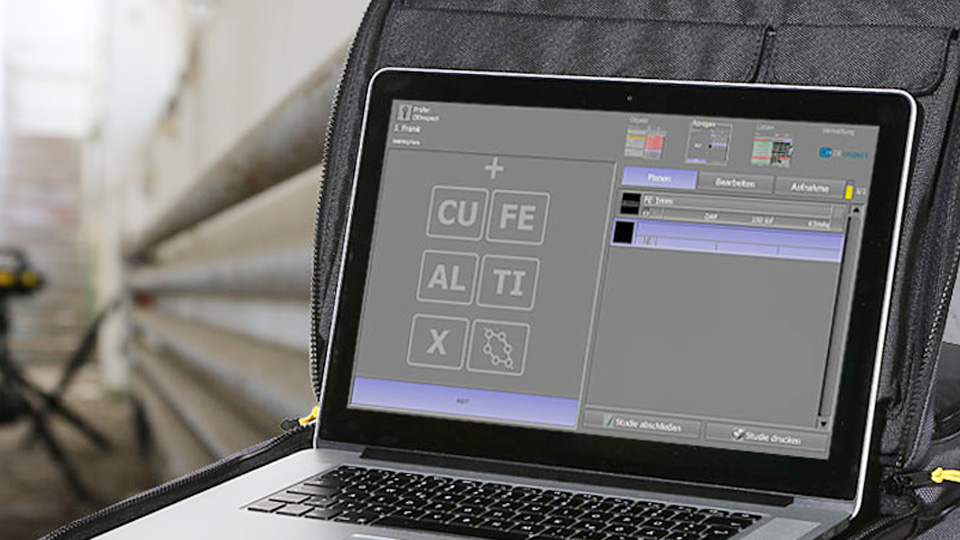
Image by linshangtech
Manual Ultrasonic Testing in Welding
Manual UT might sound high-tech, but it’s basically your eyes inside the metal—sending sound waves to hunt for hidden gremlins like porosity or lack of fusion. As someone who’s lugged a UT kit across muddy job sites, I can tell you it’s one of the most versatile non-destructive testing tools in a welder’s arsenal.
How Does Manual UT Work for Weld Inspections?
At its core, manual UT fires high-frequency sound pulses into the material using a handheld probe. These waves bounce off boundaries—like the back wall of your weld or a sneaky defect—and echo back to the probe. Your UT machine times that round trip and displays it as a spike on the screen, kinda like sonar pinging a submarine.
Think of it this way: the probe’s crystal vibrates to create the waves, and a couplant—like that goopy gel you squeeze on—helps transmit them without air gaps messing things up. Frequency matters here; lower ones (2-5 MHz) punch through thicker stuff, while higher (5-10 MHz) sharpen up for finer details in thinner joints.
In welding, we scan the heat-affected zone and root pass, angling the probe to catch shear waves that hug the weld toe. I’ve used it on everything from carbon steel beams to stainless tubing, and it shines when you need volumetric coverage without the radiation hassle of X-rays.
When Should You Use Manual UT Over Other Methods?
Pull out manual UT when you want quick, portable flaw detection on-site—perfect for hobbyists checking a garage-built gate or pros verifying pipeline girth welds. It’s ideal for ferrous metals under tension, like in ASME pressure vessels, where you need to size defects down to the millimeter.
But it’s not a one-size-fits-all. Skip it for super-fine castings (go magnetic particle instead) or painted surfaces with bubbles (those kill the signal). Why use it? Cost efficiency— one UT setup runs $2,000-$5,000 and pays for itself after a dozen inspections, versus recurring film costs for RT.
Pro tip from the trenches: Always pair it with visual inspection first. I once chased a “defect” signal for hours, only to find it was mill scale. Lesson learned—prep your surface like it’s date night.
What Is the Minimum Thickness Limit for Manual UT?
Alright, straight to the heart of it: the minimum thickness limit for manual UT hovers around 6mm (about 1/4 inch) in most standard setups. That’s the sweet spot where sound waves have enough material to travel, reflect clearly, and give you trustworthy data on flaw location and size.
Below that, things get fuzzy. The waves scatter too much in ultra-thin stock, dropping your probability of detection (POD) to under 80%—not great when safety’s on the line. For US welders, this ties directly into codes like AWS D1.1 for structural steel, where anything under 6mm pushes you toward alternatives like dye penetrant.
But here’s the real-world rub: I’ve pushed it to 4mm on thin-wall exhaust manifolds using a high-frequency probe, and it worked—but only after dialing in the gain just right. It’s doable, but expect more false calls and longer scan times.
Factors Influencing the Thickness Limit
Your limit isn’t carved in stone; it bends with probe type, material, and setup. Dual-element contact probes handle 6mm minimums like champs, but for thinner, switch to immersion or delay-line transducers that delay the initial pulse for cleaner back echoes.
Material plays huge—aluminum scatters waves more than steel, shrinking your effective limit by 1-2mm. And don’t get me started on cast iron; its graphite flakes turn the signal into noise below 8mm.
Common mistake? Ignoring attenuation. Sound loses oomph in rough-grained HAZs, so calibrate on a block matching your job’s thickness. I botched a tank inspection once by using a 25mm calibrator on 7mm plate—echoes overlapped, and I nearly signed off on a slag inclusion.
Standards and Codes Governing UT Thickness Limits
In the US, we live by the book—ASME, AWS, API—to keep things legal and litigious-proof. These codes set the floor for when manual UT is kosher, blending safety with practicality.
Key Guidelines from ASME and AWS
ASME Section V spells it out: for welds over 6mm, UT’s your go-to for volumetric exams, but under that, it’s supplemental at best. Section VIII for pressure vessels caps unacceptable indications at 1/3t for thicknesses 19-57mm, scaling down for thinner stuff—meaning a 5mm weld can’t tolerate more than a 1.7mm linear flaw.
AWS D1.1 echoes this for bridges and buildings: minimum 4mm for some configs, but recommends 6mm+ for full credit. They use side-drilled hole standards (like 2mm holes at 50% FSH) to set sensitivity, ensuring you catch cracks that RT might miss.
Out in the field, API 1104 for pipelines nods to 6mm mins, with tweaks for girth welds. These aren’t arbitrary; they’re battle-tested from decades of failures turned into fixes.
How Codes Impact Your Shop Practices
Following these keeps your CWI happy and your insurance premiums low. For students or hobbyists, start with AWS basics—grab their UT handbook for $50 and practice on scrap. Pros, audit your procedure quals yearly; I’ve seen tickets pulled for ignoring thickness variances.
One anecdote: On a refinery turnaround, we hit a 5.5mm elbow weld. Code said borderline, so we bumped to phased array UT. Saved a shutdown delay, but taught me—know your code cold, or it bites.
Techniques for Manual UT on Thin Materials
Pushing manual UT below 6mm? It’s like welding blind—possible, but demands finesse. We’re talking specialized setups to tame the chaos of short sound paths.
High-Frequency Probes and Delay Lines
Swap your standard 2.25 MHz probe for a 7.5-10 MHz beast; shorter wavelengths hug thin sections better, spotting laminar flaws that bulkier waves gloss over. Add a delay line (that skinny standoff) to shift the entry echo off-screen, uncluttering your A-scan for backwall clarity.
For immersion testing—dunking the part in water—you can dip to 3mm reliably. It’s slower for big jobs but gold for aerospace fab or thin tubing. I rigged a shop sink setup once for aluminum bike frames; waves propagated clean, defects popped like fireworks.
Calibration Tricks for Borderline Thicknesses
Calibrate on the thinnest block you got—IIW blocks go down to 5mm notches. Set velocity to your material (5900 m/s for steel), then tweak V-path for angled shots. Gain? Start at 40-50 dB, but watch for grass (random noise) in thin stuff—dial back or you’ll chase ghosts.
Practical know-how: Use a straight-beam probe first for thickness gauging, then shear for weld profiling. And always scan bidirectional; thin walls hide toe cracks sneaky-like.
Common fix for coupling woes: If gel dries mid-scan (hello, hot Texas sun), mist with water. Saved a whole batch of heat exchanger tubes from rescans.
Common Mistakes in Manual UT and How to Avoid Them
We’ve all been the greenhorn who misreads a signal—me included, back when I fried my first UT screen by over-gaining on rusty plate.
Overlooking Surface Prep and Couplant Issues
Dirty welds are UT’s kryptonite. Mill scale or spatter scatters waves like buckshot, inflating false positives. Fix: Grind to a 1/16-inch smoothness, per AWS. And couplant? Too little, and you get dead zones; too much, and it drips into readings. Squeeze a pea-sized dollop, spread even—reapply every 6 inches of scan.
Anecdote time: Trainee once scanned a fresh MIG bead without cleaning flux residue. Echoes screamed “porosity city,” but it was just slag echoes. We rewelded half the run—lesson in prep over haste.
Misinterpreting Signals in Thin Sections
In sub-6mm territory, backwall and defect echoes mush together. Mistake: Calling every blip a crack. Avoid by plotting your DAC curve (distance-amplitude correction) religiously—it compensates for attenuation, keeping your calls sharp.
Another pitfall: Forgetting probe index—off by 2mm, and your flaw location’s toast. Use a calibration ridge to zero it every session.
Equipment and Settings for Effective Manual UT
Your UT rig is only as good as your setup—I’ve hauled Epoch 650s and Krautkramers from dawn till dusk, tweaking knobs like a DJ.
Choosing the Right Probes and Machines
For everyday welding, a contact straight-beam probe (0.5-inch dia, 5 MHz) handles 6-50mm thicknesses. Thin work? Go miniature focused (1/4-inch, 10 MHz) for pinpoint accuracy.
Machine-wise, entry-level like the Olympus 38DL Plus ($3k) gauges thickness fine; upgrade to a flaw detector like the OmniScan for weld mapping. Batteries? Always double-charge—nothing kills momentum like a dead unit mid-inspection.
Settings snapshot: Pulse width narrow for resolution, PRF 50-100 Hz to avoid ringing. Filter? Low-pass at 5 MHz for clean thin reads.
Machine Settings for Different Thickness Ranges
Here’s a quick cheat sheet from my notebook—adapt for your alloy.
| Thickness Range | Probe Freq (MHz) | Gain (dB) | Angle | Couplant Type |
|---|---|---|---|---|
| 3-6mm (Thin) | 7.5-10 | 50-60 | 45° | High-vis gel |
| 6-20mm (Std) | 4-5 | 40-50 | 60° | Standard gel |
| 20mm+ (Thick) | 2-2.25 | 30-40 | 70° | Water-based |
This table’s saved me hours—print it, laminate it, live by it.
Step-by-Step Guide to Performing Manual UT
Let’s walk through a full inspection on a 7mm butt weld, step by greasy step. Grab your gear, and follow along.
- Prep the Joint: Clean the weld and 2 inches either side—wire brush, acetone wipe. No pits deeper than 1mm, or grind ’em out.
- Calibrate the Unit: Hook up to a IIW block. Set zero on the 100mm radius, adjust velocity, plot DAC with 3-5mm holes. Aim for 80% FSH on reference reflectors.
- Apply Couplant and Probe: Squirt gel, place probe at 0° for thickness check—should read steady at 7mm. Switch to 45°/60° for shear scan.
- Scan the Weld: Move probe in raster pattern, 10% overlap, speed under 6 inches/sec. Mark hot spots (over 20% DAC) with chalk.
- Evaluate Signals: Size flaws with 6dB drop—length via half-skip. Record A-scan screenshots, note coords.
- Report and Verify: Log per code (e.g., ASME form). If iffy, cross-check with RT. Clean up—wipe gel, store probe.
Took me 20 minutes on that pipe; first-timers, double to 45. Practice on known-good scrap to build speed.
Comparing Manual UT to Other NDT Methods for Thin Materials
UT’s king for depth sizing, but thin welds? Let’s stack it against the competition.
Pros and Cons Table: UT vs. Alternatives
| Method | Pros for Thin (<6mm) | Cons for Thin (<6mm) | Best For |
|---|---|---|---|
| Manual UT | Portable, sizes depth accurately | Low POD, needs special probes | Weld profiling, on-site |
| Radiography (RT) | Detects volumetric flaws clearly | Radiation safety, film costs add up | Volumetric checks, codes |
| Magnetic Particle (MT) | Fast, cheap for surface breaks | Misses subsurface, ferrous only | Surface cracks, fab shops |
| Dye Penetrant (PT) | Simple, no power needed | Surface-only, messy cleanup | DIY quick checks |
UT edges out for buried flaws, but PT’s your buddy for hobbyist thin sheets—dries fast, shows leaks like a roadmap.
In my shop days, we UT’d thicker structural, PT’d the thin brackets. Hybrid approach wins.
Safety Considerations in Ultrasonic Testing
UT’s low-risk—no rads or chems—but complacency bites. High-voltage probes can zap if wet; always glove up, check cables for frays.
Ergo-wise, scanning overhead welds wrecks shoulders—use extensions or stands. And gel? Non-toxic, but wash hands; allergies sneak up.
For students: Eye pro mandatory—splashed couplant stings. Pros, lock out gear post-use; I’ve zapped a thumb learning that.
One close call: Slippery floor from spilled gel led to a probe drop—cracked crystal, $500 lesson. Dry mats, folks.
Advanced Tips for Professional Welders and Hobbyists
Stepping up? Try TOFD for automated thin scans—pairs transmit/receive probes for diffraction edges, nailing roots under 4mm. Or phased array: electronic beam steering, like UT on steroids for complex geometries.
For fab hobbyists, apps like UT simulators on your phone practice signals without hardware. And joint prep? Bevel thin edges at 30° for better fusion—less slag, cleaner UT reads.
Cost efficiency hack: Rent UT kits from Grainger for one-offs; beats buying for sporadic use.
Conclusion
We’ve covered a lot of ground—from the 6mm baseline minimum thickness limit for manual UT to hacking thin welds with high-freq probes and dodging those pesky signal mix-ups. Whether you’re a student sketching your first weld symbol or a grizzled pipeline vet chasing API stamps, grasping these limits arms you with the know-how to inspect smarter, not harder.
Stick to codes for compliance, calibrate religiously for accuracy, and remember: UT’s about confidence in your work, not perfection. You’re now geared to tackle borderline thicknesses without second-guessing, saving time, dough, and maybe a lawsuit.
Go forth and scan boldly—your next weld’s integrity is waiting. Pro tip: Keep a “flaw journal” of your UT calls; patterns emerge, and you’ll level up faster than a fresh-outta-welding-school kid.
FAQ’s
What Is the Minimum Thickness for Manual UT in Steel Welds?
For carbon steel, it’s reliably 6mm per AWS and ASME standards. Below that, POD drops, so consider PT or RT instead unless using specialized probes.
Can Manual UT Detect Flaws in 4mm Aluminum?
Yes, but with high-frequency (10 MHz) immersion setups—expect 70% POD max. Clean surfaces and slow scans help; great for aero fab but not pipelines.
What’s the Best Probe for Thin Weld UT?
A 1/4-inch diameter, 7.5 MHz focused contact probe with delay line. Pairs with gel couplant for 3-6mm reads—under $300 online.
How Do I Calibrate UT for Borderline Thicknesses?
Use a step block matching your thinnest (e.g., 5mm steps). Set zero offset, plot DAC curve with notches, and verify on a known-good sample. Takes 10 minutes, saves hours.
Is Manual UT Cheaper Than RT for Thin Materials?
Upfront? Yes—$2k kit vs. $500 per RT shot. Long-term, UT wins for portability and no rad disposal. For hobbyists, it’s a no-brainer after five jobs.