
High-frequency welding (HFW) might sound technical, but it’s actually a fascinating and efficient process used to join materials together. It’s a technique that uses high-frequency electrical current to generate heat, fusing two pieces of material at their contact points.
The process is primarily used with thermoplastic materials and metals, especially steel, and can be found in various industries, such as automotive, construction, and even medical device manufacturing.

Image by shahab-co
You might be wondering, what makes high-frequency welding different from other types of welding or joining techniques? The secret lies in the speed, precision, and quality of the bonds it creates. Let me break down the key aspects of this process and show you why it’s become such a popular choice for manufacturers.
How Does High-Frequency Welding Work?
The basic idea behind high-frequency welding is that it uses an alternating electrical current to heat the materials at their contact surfaces. This current typically operates at frequencies between 10 kHz and 100 MHz, which is much higher than the standard household electricity frequency of 60 Hz.
When the high-frequency current passes through the materials, it generates heat because of the resistance at the contact area. This causes the material to melt slightly, and then pressure is applied to fuse the parts together. The heat is generated internally, which allows for a very controlled and precise welding process.
The process typically involves these steps:
Preparation: The materials are aligned in a way that ensures a consistent weld. Clean and smooth surfaces are essential for a good bond.
Application of High-Frequency Current: The high-frequency electrical current is applied, heating the materials at their contact points.
Pressure Application: Once the materials reach the right temperature, pressure is applied to bond them together.
Cooling: The pressure is maintained as the welded joint cools, solidifying the bond.
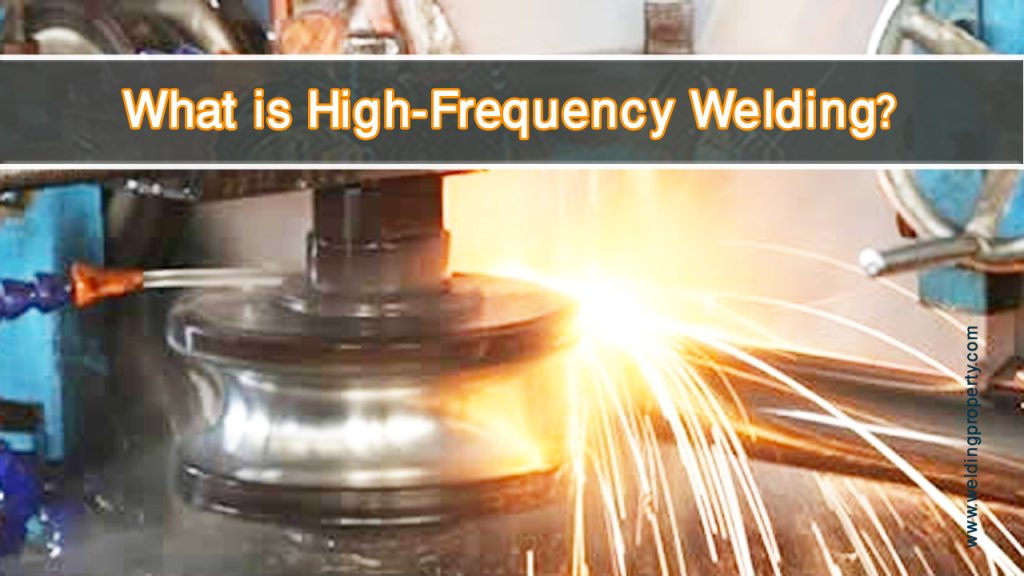
Image by permanentsteel
Types of High-Frequency Welding
There are two main types of high-frequency welding: induction welding and contact welding. Each has its own strengths and applications.
High-Frequency Induction Welding
In high-frequency induction welding, an induction coil generates an electromagnetic field that induces electrical currents in the material.
The material itself becomes a conductor, and the heat generated by the resistance of the material causes it to weld. This type is often used for metal pipes and tubes, particularly steel.
High-Frequency Contact Welding
High-frequency contact welding involves direct electrical contact between the materials and electrodes. The electrodes supply the high-frequency current, which generates heat at the contact points. This technique is typically used for materials like thermoplastics.
What Makes High-Frequency Welding Different?
You might be thinking, “Isn’t welding just welding?” Well, not quite. High-frequency welding offers some unique advantages over traditional methods like arc welding or resistance welding. Here’s how they compare:
| Feature | High-Frequency Welding | Traditional Welding (e.g., Arc, Resistance) |
|---|---|---|
| Heat Generation | Internal heating through electrical resistance | External heating through an open flame or electrode |
| Speed | Fast, efficient, and ideal for automated processes | Slower, often requires manual operation |
| Control | Precise control over heat and pressure | More challenging to achieve consistent results |
| Material Compatibility | Works well with thin materials like plastics and metals | More suitable for thicker metals |
| Joint Quality | Produces high-quality, consistent joints | May require post-processing to clean up welds |
| Energy Efficiency | High energy efficiency due to targeted heating | Less efficient because of heat loss |
Benefits of High-Frequency Welding
Now that we’ve covered what high-frequency welding is and how it works, let’s talk about why you’d choose it over other methods. Here are some of the key benefits that come with this technique:
Speed and Efficiency
Because high-frequency welding generates heat internally and focuses it precisely where it’s needed, the process can be completed quickly. This makes it ideal for high-volume production settings where speed is crucial.
When manufacturing steel pipes, it can be done at a rate of several feet per second, which is much faster than conventional welding methods.
Strong and Reliable Joints
The bonds created by high-frequency welding are not only strong but also consistent. The process minimizes the potential for defects such as porosity or cracks, which can occur in other welding methods.
This makes it a reliable choice for industries where the integrity of the weld is critical, such as in automotive components or pressure vessels.
Versatility Across Different Materials
High-frequency welding is particularly suited for joining thin materials, which can be tricky with other welding methods. It works well with both metals and plastics, making it a versatile choice for manufacturers who work with a range of materials. Whether you’re welding PVC, polyester, or steel, high-frequency welding can handle the job.
Clean and Aesthetic Welds
Since the heat is generated internally, the process avoids the messy appearance often associated with traditional welding, like splatter and discoloration. This results in cleaner, more aesthetically pleasing welds that may not need additional finishing. That’s a huge benefit when the appearance of the final product matters.
Energy Efficiency
High-frequency welding is considered an energy-efficient process because it only heats the specific areas where the weld is needed. There’s no wasted energy heating up the surrounding material or the air, which makes it a more environmentally friendly choice.
Applications of High-Frequency Welding
High-frequency welding is used across a range of industries. Let me give you some examples to show how versatile this technique really is:
Automotive Industry
In automotive manufacturing, high-frequency welding is commonly used to produce various components, such as fuel lines, air conditioning tubes, and exhaust systems. The speed and precision of the technique make it perfect for the mass production demands of the automotive sector.
Pipe and Tube Manufacturing
For steel pipe and tube production, high-frequency welding is almost a default choice. The process ensures strong, defect-free welds that can withstand high pressures. It’s often used for oil and gas pipelines, water pipes, and structural tubing.
Medical Devices
High-frequency welding is used to create medical devices like blood bags, IV tubes, and inflatable products such as air mattresses. Since the process can weld delicate materials without causing damage, it’s ideal for these applications.
Packaging Industry
In the packaging industry, especially for sealing blister packs and clamshells, high-frequency welding provides a durable bond that helps keep products safe and secure. It’s also used for creating waterproof seams in items like tarpaulins, shower curtains, and inflatable rafts.
Construction
For roofing membranes, flooring materials, and even window frames, high-frequency welding is employed to ensure the materials are sealed tightly. Its use in construction helps create durable, weather-resistant seals that are essential in building applications.
Challenges in High-Frequency Welding
Even though high-frequency welding has plenty of advantages, it’s not without its challenges. Understanding these limitations can help you decide whether it’s the right technique for your specific needs.
Material Limitations
While high-frequency welding works well with certain materials like thermoplastics and metals, it isn’t suitable for all types.
Some ceramics and high-temperature plastics may not respond well to this process. It’s essential to know the material properties and ensure compatibility with high-frequency welding.
Equipment Costs
The equipment used for high-frequency welding can be more expensive than standard welding tools. The cost can be justified for high-volume production, but for smaller-scale operations, the investment might not be practical.
Electrical Safety
Since high-frequency welding uses electrical currents, there is always a need for proper safety measures to protect operators from electrical hazards. Proper grounding, shielding, and training are essential to maintain a safe working environment.
Need for Skilled Operators
Although high-frequency welding can be automated, setting up and maintaining the equipment requires skilled operators. They need to understand the intricacies of the process, including adjusting parameters like frequency, current, and pressure, to achieve optimal results.
How to Choose Between High-Frequency Welding and Other Techniques
Choosing the right welding method depends on various factors, including the materials involved, the production volume, and the desired properties of the final joint. Here’s a quick guide to help you decide:
If speed and volume are your priorities: High-frequency welding is a top choice, especially for continuous production processes like pipe manufacturing.
If you’re working with thin materials: High-frequency welding excels at joining thin plastics and metals without damaging them.
If you need an aesthetically pleasing weld: Because high-frequency welding produces clean joints, it’s ideal for applications where the appearance of the weld is important.
If cost is a concern: For small-scale operations, the higher upfront costs of high-frequency welding equipment might make traditional methods more appealing.
If working with non-metallic materials: Techniques like ultrasonic welding might be a better choice, particularly for rigid plastics and ceramics.
Tips for Successful High-Frequency Welding
To get the best results from high-frequency welding, there are a few best practices to keep in mind:
Choose the Right Frequency: The frequency you use will depend on the material. Lower frequencies are better for metals, while higher frequencies are more suitable for plastics.
Ensure Material Compatibility: Not all materials are suited for high-frequency welding, so make sure you’re working with compatible materials.
Maintain Clean Surfaces: Any dirt, grease, or oxide layers on the surfaces can interfere with the welding process, so always start with clean materials.
Optimize Parameters: Fine-tuning the frequency, current, pressure, and cooling time can make a big difference in the quality of the weld.
Invest in Quality Equipment: While the upfront cost might be high, using reliable, high-quality welding equipment will help ensure consistent results.
Final Thoughts
High-frequency welding is a fantastic technique that offers numerous advantages, especially in terms of speed, efficiency, and joint quality. If you’re working with metals or plastics, the process can be a game-changer for your manufacturing needs. It does come with some considerations, such as the cost of equipment and the need for skilled operators.
Understanding when and how to use high-frequency welding effectively can give you a significant edge in various industries. The key is knowing the specifics of your materials and your project requirements so you can optimize the process for the best possible outcomes.


