I was halfway through a long overhead weld when my old auto-darkening helmet suddenly flickered — and for a split second, that arc flash lit up my whole face. Not fun. That’s when I first started digging into what is a passive welding helmet and why so many seasoned welders still swear by them.
Unlike the fancy electronic ones, a passive helmet keeps things simple — fixed shade lens, no batteries to fail, and rock-solid reliability when you’re deep in a tight joint or working outdoors. I learned the hard way that sometimes “basic” gear can actually save your eyes, your time, and your sanity.
If you’ve ever struggled with flashing, lens delay, or poor visibility mid-weld, this is one piece of gear worth understanding. Let’s break down how passive helmets work, why they still matter, and when they might be the smarter choice for your next project.
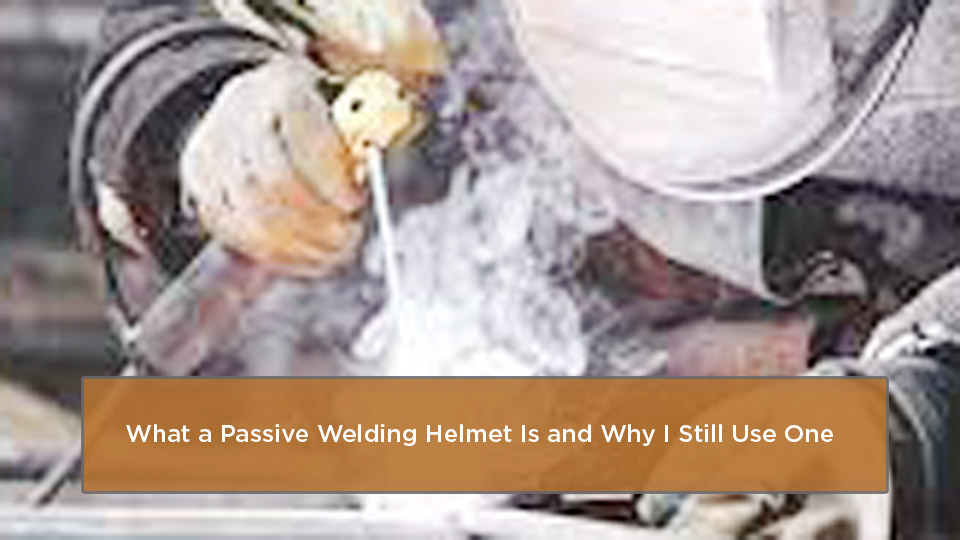
Image by sri
How Does a Passive Welding Helmet Work?
A passive welding helmet is basically your classic flip-up shield—think of it as the original eyewear for welders. Unlike those high-tech auto-darkening models that react to the arc like some sci-fi gadget, a passive helmet uses a fixed-tint lens.
That lens is usually a shade 10 green-tinted glass plate, baked with UV and IR filters to block out the harmful stuff without any electronics getting in the way.
Here’s the workflow in action: You prep your joint—say, a butt weld on some 1/4-inch mild steel with 6010 rod. You flip the helmet up to eyeball your setup, strike the arc, and snap it down over your face in one smooth motion. Boom—the fixed shade kicks in instantly, no delay, no batteries to fuss with. When you’re done with that pass, flip it up to inspect the bead.
It’s all manual, relying on your rhythm and reflexes. I remember my first foreman barking at me during a shipyard gig: “Kid, your flip better be faster than your trigger finger, or you’ll be blinking spots till Tuesday.” That stuck—it’s not just gear; it’s muscle memory.
But why does this matter for weld integrity? That consistent shade means no surprises in light filtering, so your eyes stay protected bead after bead. No flickering sensors to glitch out in a dusty fab shop. And for material compatibility? It’s versatile across processes like stick (SMAW) or even basic oxy-acetylene cutting, as long as you’re not jumping shades mid-job. Just swap the lens plate if you’re switching from low-amp TIG to heavy MIG—easy peasy, costs pennies.
One quick tip from the trenches: Always keep a spare lens in your pouch. I’ve been mid-repair on a customer’s trailer axle, lens pitted from slag splatter, and flipping to a fresh one saved the day. No downtime, no drama.
Passive vs. Auto-Darkening Welding Helmets: What’s the Real Difference?
If you’re standing in the welding supply aisle, helmet in each hand, you’re not alone—that’s the eternal debate. I’ve flipped between both on jobsites, from hobbyist garage builds to union hall certifications, and the differences boil down to convenience versus reliability. Let’s hash it out.
A passive helmet, as we covered, is manual and fixed-shade—your eyes get that steady green view once you’re hooded up. Auto-darkening? It’s got liquid crystal tech and sensors that snap the lens from light (shade 3-4) to dark (up to 13) in a millisecond when the arc flashes. No flipping required; you keep it down the whole time, peeking at your work puddle like it’s clear glass.
From a safety angle, both block 99.9% of UV/IR, meeting ANSI Z87.1 standards we all swear by in the States. But passive wins on simplicity—no dead batteries stranding you during a 12-hour shift. Auto-darkening shines for precision work, like TIG on aluminum where you need to watch filler rod entry without breaking rhythm.
Here’s a quick comparison table to visualize it—I’ve sketched this out on napkins for apprentices more times than I can recall:
| Feature | Passive Welding Helmet | Auto-Darkening Welding Helmet |
|---|---|---|
| Lens Type | Fixed shade (usually #10) | Variable shade (3-13, adjustable) |
| Operation | Manual flip up/down | Automatic sensor-triggered |
| Cost | $20-50 (budget-friendly) | $100-500+ (investment piece) |
| Weight | Lightweight (under 2 lbs) | Slightly heavier due to electronics |
| Battery Needed? | No—pure mechanical | Yes (solar-assisted options available) |
| Best For | Beginners, occasional use, stick welding | Pros, MIG/TIG, high-volume jobs |
| Durability | High—tough shell, easy lens swaps | Good, but sensors can fail in grime |
Pros of passive? Dirt cheap, no tech to break, and that optical clarity is crisp—like looking through high-end sunglasses. Cons? The flip can lead to neck strain on long runs, and newbies often strike arcs blind, scorching the tungsten or rod tip. Auto-darkening flips the script on ease but watch for solar-fail in low-light shops—I’ve seen ’em ghost out mid-weld.
If you’re a DIYer fabricating a gate in your driveway, passive keeps it simple. Pros chasing AWS D1.1 code compliance on structural steel? Auto might edge it for speed. Me? I pack both—one for the truck, one for the bench.
Pros and Cons of Using a Passive Welding Helmet
Let’s get real about what you’re signing up for. In my early days, apprenticing on oil rig repairs off the Gulf Coast, passive helmets were all we had. They taught me discipline, but man, they exposed every lazy habit. Here’s the unvarnished truth.
Pros That Keep You Coming Back:
Affordability Hits Hard: At under 50 bucks, it’s entry-level gold. I outfitted my first garage setup with one from Harbor Freight—did the trick for years of bracket builds.
Bulletproof Reliability: No circuits, no fuss. Drop it in the mud during a field weld on a tractor frame? Wipe it off, swap the lens, back to business. Perfect for rugged sites where gear takes a beating.
Superior Clarity for the Price: That German glass (or gold-tinted alternatives) gives a sharper view than some budget auto lenses. Great for spotting porosity in your 7018 bead without squinting.
Lightweight and Balanced: Easier on the neck for all-day wear, especially if you’re tacking overhead on I-beams.
Cons That’ll Test Your Patience:
The Flip Factor: Constant up-down wears on you. I once tallied 200 flips on a single exhaust manifold job—neck like a rusty hinge by quitting time.
Beginner Blues: Striking an arc hooded up? It’s like threading a needle blindfolded. Common mistake: Hesitate, and you burn holes in your workpiece. Fix: Practice dry runs with the hood down, rod off.
Limited Versatility: Stuck at one shade means swapping lenses for plasma cutting (shade 5) versus heavy stick (shade 12). Annoying in multi-process shops.
Safety Speed Bump: That split-second flip window risks flash exposure if your timing’s off. Always prioritize—better a slow start than scorched retinas.
Weighing it? For hobbyists or students on a shoestring, pros outweigh cons every time. Pros might scoff, but I’ve seen passive helmets outlast flashy gear in harsh environments.
When Should You Choose a Passive Welding Helmet?
Timing is everything in welding, right? Same goes for gear picks. I’ve advised countless buddies—from vo-tech kids to burnout fabricators—on this. Grab a passive if you’re dipping toes into shielded metal arc welding (SMAW) on carbon steel, or if your budget’s tighter than a bad fillet weld.
Ideal scenarios:
- Hobbyist Heaven: Building a fire pit or trailer hitch in the weekend warrior mode? Passive keeps costs low, no learning curve beyond the flip.
- Rough-and-Tumble Jobs: Construction sites, farm repairs—where dust kills sensors. I used one exclusively during hurricane cleanup welds; zero failures.
- Training Grounds: Schools like Lincoln Tech swear by them for basics. Builds hand-eye sync before tech distractions.
- Backup Beast: Even if you’re auto-darkening all day, stash a passive for battery blackouts or lens cracks.
Steer clear if you’re MIG gunning aluminum all shift—precision demands no interruptions. Or if neck issues plague you; that’s when auto’s ergonomic edge shines.
Pro know-how: Pair it with proper joint prep. For a T-joint in 3/16 plate, bevel edges 30 degrees, tack with 1/16 land—your passive view will thank you with cleaner beads.
Step-by-Step Guide to Setting Up and Using a Passive Welding Helmet
Nothing beats a walkthrough, so let’s run through it like we’re side-by-side at the vise. This is for your first stick weld on mild steel plate—adapt as needed.
- Gear Check: Inspect the helmet shell for cracks (OSHA no-go). Slot in a fresh shade 10 lens—align the tabs, snap secure. Adjust headgear straps for a snug but not squeezing fit; top strap over crown, side ones at temples.
- Workspace Prep: Clamp your 1/4-inch plate flat. Grind edges clean—no mill scale. Set your Lincoln Idealarc at 100 amps DCEN for 6010 rod, 1/8-inch diameter. Drag angle 10-15 degrees.
- Position and Flip: Stand square, hood up. Sight your start point. Whip the rod in—arc strikes. Instant flip down, chin tuck, eyes locked on puddle.
- Weld Rhythm: Travel steady, 1/2-inch per second. Watch for ripples; if it freezes, amp up 10. Pause? Kill arc, flip up quick for inspection—check penetration.
- Cool Down: Chip slag with your chipping hammer. Flip up, assess: Good tie-in? Feather ends for next pass.
Common pitfall: Rushing the flip, exposing eyes. Fix: Count “one-Mississippi” before striking—builds habit. I botched a trailer frame that way once; lesson learned, no burns since.
For filler compatibility, stick to E6013 for flat runs—flows forgiving under fixed shade.
Tips for Getting the Most Out of Your Passive Welding Helmet
Want to squeeze pro-level performance from basic gear? These hacks come from a decade of tweaks.
- Lens Longevity Hack: Spray lenses with anti-fog before installs—WD-40 wipe-down. Cuts sweat blur in humid shops.
- Comfort Mods: Add foam padding to the headband; Harbor Freight sells kits for $5. Saved my migraines on vertical ups.
- Shade Swapping Smarts: Keep a wallet of lenses (5-14 shades). For oxy-fuel, drop to 4-6; plasma jumps to 12. Mark ’em with Sharpie.
- Ergo Upgrade: Use a ratchet headgear model—twist-adjust beats clips. My Miller 200 does 360 without pinching.
- Machine Sync Tip: For DC stick, dial voltage to match amps (25-30V). Helps visibility through the tint—no guessing puddle shape.
On a rush bridge repair in Philly, my auto helmet’s battery died mid-beam. Swapped to passive, adjusted amps down 5, finished under deadline. Moral: Versatility’s in the welder, not just the hood.
For safety, always layer up—leathers, gloves. And ground your rig proper; stray arcs fry lenses fast.
Common Mistakes with Passive Welding Helmets and How to Fix Them
Green behind the ears, or just having an off day. Spotting these saves headaches.
- Mistake 1: Slow Flip Timing. Leads to flash burns. Fix: Drill with a buddy calling “down!” 50 reps daily. Builds lightning reflexes.
- Mistake 2: Dirty Lenses. Spatter buildup warps your view, causing undercut. Fix: Clean post-shift with microfiber and lens spray—never paper towels.
- Mistake 3: Wrong Shade for Process. Too dark for TIG? You chase ghosts. Fix: Consult AWS charts—shade 10 for 100-200A stick; 9 for lighter.
- Mistake 4: Loose Fit. Shifts mid-weld, bangs your noggin. Fix: Torque straps weekly; test with head shakes.
- Mistake 5: Ignoring Neck Strain. Flips add up to RSI. Fix: Stretch every hour—chin tucks, shoulder rolls. Or alternate with auto for variety.
I learned #3 the hard way on a go-kart frame—shade 12 on 80A, couldn’t see squat. Dialed to 9, bead popped like butter.
Choosing the Best Passive Welding Helmet for Your Welding Needs
Overwhelmed by options? Let’s narrow it. For DIYers, Lincoln Viking 1740—$40, poly shell, comfy straps. Hobby fab? Sellstrom 880—light, impact-rated.
Students: Opt for Jackson WH-27—meets school specs, lens holders galore. Pros on structural? 3M Speedglas passive—ANSI-approved, gold lens for clarity.
Factors to weigh:
- Material: Fiberglass for heat; plastic for weight.
- Viewing Window: 4×2-inch standard; bigger for overhead.
- Certifications: Z87.1+ for US jobsites.
- Add-Ons: Flip-front for grind mode.
Budget under $30? Fibre-Metal Panther. Test fit—your melon varies. I swear by used ones from estate sales—inspect, haggle, weld on.
For US practices, align with ASME Section IX—passive works fine for qualified procedures.
Maintenance and Care for Your Passive Welding Helmet
Treat it right, and it’ll outlast your truck. Post-weld ritual: Chip residue, wipe shell with damp rag. Lenses? Microfiber only—store in pouch.
Annual deep clean: Disassemble straps, soak in mild soap. Check shell flex—no cracks. Replace headgear if frayed; $10 fix.
Storage smarts: Hang in dry spot, away from solvents. In humid Florida gigs, I silica-gel pack mine.
Pro tip: Log usage—every 100 hours, full inspect. Caught a hairline crack once; dodged a hazard.
Why Passive Welding Helmets Still Rule in Modern Shops
Even with auto everywhere, passives hold court in niches. Cost efficiency? Unbeatable for fleets. Training? Forces fundamentals. And in EMP-prone spots (kidding, but grid-down preppers love ’em).
Real-world win: During a Midwest factory outage, my passive kept production humming while autos sat dead. It’s about backup, not backward.
Conclusion: Gear Up Smart and Weld with Confidence
We’ve covered the gamut—from flipping that first arc to spotting pitfalls that trip up even vets. A passive welding helmet isn’t flashy, but it’s the foundation of safe, solid welding. It teaches patience, hones skills, and delivers when tech falters.
Now you’re armed to pick one that fits your setup, whether you’re a garage tinkerer or code-chasing fabricator. You’re more prepared because you get the why behind the flip: It’s not just protection; it’s part of the craft that builds better welds and fewer regrets.
Go hit the supply house, snag that shade 10 spare, and fire up a test bead. You’ll feel the difference. And one pro tip to seal it: Before every job, do a “hood check”—flip down, strike a match under it (safely), ensure no light leaks. Eyes safe, mind easy—weld on, friend.
FAQs
What Shade Lens Do I Need for Stick Welding?
For most SMAW on mild steel at 100-150 amps, shade 10 is your go-to—balances visibility and protection. Bump to 11-12 for hotter arcs over 200 amps.
Can I Use a Passive Helmet for MIG Welding?
Absolutely, especially short runs. Just ensure shade 10-11; the fixed tint works, but flips interrupt flow—great starter, upgrade for volume.
How Often Should I Replace the Lens in a Passive Helmet?
Swap every 50-100 hours or when pitted/scratched—whichever hits first. Cheap insurance against slag blindness.
Are Passive Helmets Safe for Beginners?
Safer than no helmet, hands down. They build flip discipline, but pair with low amps (80-100) to ease arc strikes. Progress to auto for finesse.
What’s the Difference Between Passive and Fixed-Shade Helmets?
They’re the same beast— “passive” just means no auto features. Fixed-shade is the core tech, manual everything.