
Walking into a shop full of Lincoln Electric welders can be overwhelming—machines of every size, price, and feature staring back at you. Prices range from a few hundred to several thousand dollars, and choosing the right one isn’t just about cost—it’s about getting a welder that matches your skill level, your projects, and your budget.
I’ve tested everything from compact MIGs to heavy-duty multi-process machines, and I’ve learned which models deliver reliable performance without breaking the bank. In this guide, I’ll break down real-world prices, what you actually get for each welder, and which options are worth every penny—so you can make a confident choice for your welding projects.
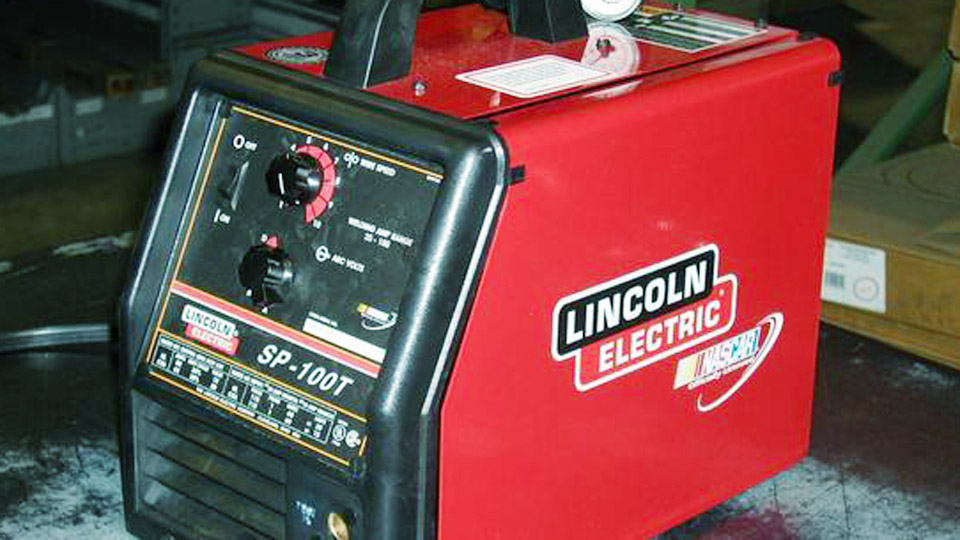
Image by weldingtipsandtricks
What Makes Lincoln Electric Welders Worth the Investment?
Let’s kick this off with why Lincoln’s gear isn’t just another tool on the shelf. Back in my early days as a pipefitter apprentice in Chicago, I inherited a beat-up old Miller that’d trip breakers on a good day. Switched to a Lincoln Power MIG, and it was night and day—smoother arc, less spatter, and it handled the rusty rebar we dealt with without flinching.
Lincoln’s been cranking out welders since 1893, and their stuff is engineered for American shops: rugged, reliable, and compliant with OSHA and AWS standards right out of the box.
These machines shine in real-world grit. Take the duty cycle— that’s how long you can weld without the thing cooking itself. A cheap import might give you 20% at 100 amps, but a Lincoln often hits 60% or more, meaning you can run beads all shift without babysitting cooldowns.
And material compatibility? Spot on for mild steel, stainless, or aluminum, with wire feeders that push .030-inch wire like butter. Safety’s baked in too—think thermal overload protection and clear ground clamp setups that cut shock risks.
But prices? They vary wild because Lincoln covers every angle: flux-core for no-gas jobs, MIG for clean shop work, TIG for precision on bikes or railings, and engine-driven for remote sites. Factor in amps (90 to 500+), voltage (120V for garage, 230V for shop), and extras like spool guns for aluminum.
Common mistake I see? Newbies grab the cheapest without matching it to their metal thickness—ends up with burn-through or cold laps.
Pro tip: always check the output curve chart in the manual; it’ll show you exactly what amps you need for your joint prep.
Breaking Down Lincoln Electric Welder Prices by Type
Diving into costs, I’ve pulled from what I’ve seen at suppliers like Tractor Supply and online spots—prices fluctuate with steel tariffs and promos, but these are ballpark as of October 2025. Expect 5-10% swings, and hunt for bundles with carts or helmets to shave bucks.
Entry-Level Lincoln Welders Under $1,000
If you’re dipping toes into welding—maybe patching a trailer or building a fire pit—these are your sweet spot. They’re portable, plug into household outlets, and handle up to 1/4-inch steel without drama.
Take the Lincoln Electric SP-140T, hovering around $650-$700. It’s a flux-core champ, no gas needed, perfect for outdoors. I loaned one to a neighbor for fence repairs; he ran 10-foot beads on 14-gauge wire without a hiccup. Settings? Start at 18 volts and 40-60 wire speed for .030 flux wire—adjust up if it sputters.
Or the Weld-Pak 180 at about $800, a step up with MIG capability if you add a tank. Duty cycle’s 20% at 180 amps, but that’s plenty for hobby bursts.
Anecdote time: On a slow winter day, I used a similar model to fab a custom grille for my ’72 Chevy. Prepped the joints with a grinder, tacked with 90 amps, then filled at 140—flawless chrome-ready finish.
| Model | Price Range | Amps | Best For | Pros | Cons |
|---|---|---|---|---|---|
| SP-140T | $650-$700 | 140 max | DIY flux-core | Lightweight (40 lbs), no gas | Limited to DC only, no TIG |
| Weld-Pak 180 | $750-$850 | 180 max | Home MIG/flux | Easy wire changes, auto settings | Needs 230V for full power |
| FC-90 | $550-$650 | 90 max | Beginner no-gas | Ultra-portable, includes gloves | Low amps for thin stuff only |
Watch for used ones on Craigslist—$300-$400 if it’s clean, but test the drive rolls first. Mistake fix: If wire birds-nests, clean the liner and set tension just snug.
Mid-Range Lincoln Multi-Process Welders $1,000 to $3,000
This is where hobbyists level up to pro-lite. Multi-process means MIG, stick, and sometimes DC TIG in one box—versatile for fab shops or auto restoration.
The POWER MIG 210 MP runs $1,200-$1,400. It’s my go-to for teaching apprentices; switches from MIG to stick seamlessly. For 3/16-inch plate, set MIG at 22 volts, 150-200 inches per minute wire speed. Why use it? Saves space—no swapping machines mid-job. I remember a rush order for stainless handrails; flipped to stick with E7018 rods for root passes, then MIG capped it. Saved hours.
Bump to the POWER MIG 215 MPi at $2,100-$2,300—pulsed MIG for less heat distortion on cars. Around $2,500 with aluminum pak. Duty cycle jumps to 40% at 215 amps. Practical know-how: For aluminum, use 100% argon, .035 wire, and 18-20 volts to avoid cracking. Common error? Forgetting to clean oxide—always scotch-brite and degrease.
| Model | Price Range | Processes | Amps | Pros | Cons |
|---|---|---|---|---|---|
| POWER MIG 210 MP | $1,200-$1,400 | MIG/Stick/TIG | 210 max | Color-match tech for settings | Heavier (70 lbs) |
| POWER MIG 215 MPi | $2,100-$2,300 | MIG/Pulsed/Stick | 215 max | Aluminum ready, digital display | Learning curve for pulse |
| Square Wave 205 TIG | $1,400-$1,600 | AC/DC TIG/Stick | 205 max | Pro TIG arc, lift start | No MIG, needs torch separate |
These hit the sweet spot for cost efficiency—pay once, weld forever. Tip: Match your breaker; 50-amp circuit for 230V models to avoid trips.
High-End Lincoln Welders Over $3,000 for Pros and Heavy Duty
For fab shops, pipelines, or structural work, these are tanks. Engine-driven like the Ranger 305 G at $5,000-$6,000 run off gas/diesel, generating power too—no extension cords needed.
The POWER MIG 360 MP? $8,000-$9,000, multi-process monster up to 500 amps. Handles 1/2-inch steel all day, 60% duty. I welded on a bridge repair crew with a similar setup—set at 280 amps, 25 volts for 045 wire on ER70S-6. Weld integrity was code-perfect, no porosity.
For pulsed pros, the POWER MIG 262 at $3,800-$4,200 offers synergic controls. Why? Reduces training time; auto-adjusts voltage as amps change. Anecdote: During a plant shutdown, we pulsed thin stainless tubing—zero warping, saved rework costs.
| Model | Price Range | Processes | Amps | Pros | Cons |
|---|---|---|---|---|---|
| POWER MIG 262 | $3,800-$4,200 | MIG/Pulsed/Stick | 380 max | High deposition, low spatter | Pricey consumables |
| Ranger 305 G | $5,000-$6,000 | Stick/MIG (engine) | 305 max | On-site power gen | Noisy, fuel costs |
| POWER MIG 360 MP | $8,000-$9,000 | All-process | 500 max | Industrial duty, remote control | Needs 3-phase option |
Big bucks, but ROI’s quick—fewer defects mean more bids won. Safety note: Ground properly on gensets to dodge stray voltage.
How to Choose the Right Lincoln Electric Welder for Your Welding Needs
Picking ain’t about the flashiest—it’s matching to your metals, power, and workflow. I’ve botched buys by chasing amps I didn’t need, so here’s the rundown.
Best Lincoln Welders for DIY and Hobbyists
For garage tinkerers, prioritize portability and ease. Under 50 lbs, 120V input, and flux-core to skip gas hassles. The SP-140T’s your buddy—$700 gets you welding 18-gauge to 1/4-inch.
Step-by-step to start:
- Assess power: Got a 20-amp outlet? Stick to 140-amp max.
- Pick process: Flux for outdoors, MIG for indoors.
- Prep work: Clean metal to bright, bevel thick joints 30 degrees.
- Settings: Voltage matches wire diameter—16V for .023, 19V for .035.
- Test bead: Run on scrap; too flat? Up volts.
Mistake I made? Undercutting from high amps—dial back 10% and weave. For students, grab the education paks; they include leads and save 10%.
Top Lincoln Picks for Professional Welders and Fabrication Shops
Pros need duty cycle over 40%, multi-process, and expandability. The 215 MPi at $2,200 fits light fab; scale to 360 for heavy.
Joint prep’s key: For butt welds, V-groove to 60 degrees, tack every 4 inches. Filler: ER70S-6 for carbon steel, 308L for stainless. Settings example: 200 amps, 24V, 300 IPM for 3/16 plate—yields 1/4-inch penetration.
Anecdote: On a custom trailer build, we used a 262 for pulsed aluminum frames—heat input low, no distortion, passed DOT inspection easy. Common fix: Spatter? Shorten stickout to 1/2 inch.
Safety first: Leather sleeves, auto-dark hood (shade 10-12), and clear the area. Codes? Follow D1.1 for structural.
Engine-Driven Lincoln Welders: When and Why for Field Work
Remote jobs scream for these. The Ranger 250 at $4,500-$5,000 idles quiet, aux power for grinders.
How it works: Gasoline engine spins the generator, outputs CC/CV for stick or MIG. Use when? Pipeline, farms—no 240V available.
Tips: Run E6010 rods vertical down at 120 amps for pipe. Fuel mix: 87 octane, change oil every 100 hours. Pro know-how: Warm-up 5 minutes to avoid wet stacking.
Step-by-Step Guide to Setting Up Your New Lincoln Welder
Unboxing day—exciting, right? Here’s how I do it, from my home shop to the field.
- Inspect and Ground: Unpack, check for dents. Bolt ground clamp to chassis—OSHA mandates it.
- Power Up: Plug in (use GFCI for 120V). Hit power; fan should spin smooth.
- Wire the Feeder: Load .030 ER70S-6, trim 1/2 inch, set tension till it grips without slipping.
- Gas and Torch: For MIG, hook CO2/argon mix (75/25), flow 20-25 CFH. Light test—blue flame, no leaks.
- Dial Settings: Use the chart: For 1/8 steel, 18-20V, 150-200 IPM. Trigger test—no birdnest.
- First Weld: Scrap plate, 1/8-inch gap. Travel 10-15 degrees, steady hand.
Troubleshoot: Porosity? Check gas coverage. Arc wander? Clean contacts. Takes 10 minutes to master.
Common Mistakes with Lincoln Welders and How to Fix Them
I’ve melted tips and fried wires—lessons hard-won.
- Overheating: Run too long? Pause at 60% duty. Fix: Add a fan or upgrade model.
- Poor Penetration: Low amps on thick metal. Up 20 amps, slow travel.
- Spatter City: Wrong polarity (DCEP for MIG). Flip it, add anti-spatter spray.
- Wire Feed Issues: Kinked liner. Straighten or replace every 6 months.
For rod types in stick mode: E7018 for low-hydrogen, all-position. Store in 250°F oven to dodge cracks.
Pros and Cons of Lincoln Electric vs. Other Brands
Lincoln’s premium, but fair’s fair.
Pros: Bulletproof build (cast aluminum cases), intuitive controls, US support network. Cons: Higher upfront cost, heavier than imports.
Vs. Hobart: Lincoln edges on duty cycle; Hobart’s lighter for portables. Miller? Neck-and-neck, but Lincoln’s synergic MIG wins for speed.
In my book, for longevity, Lincoln’s the pick—I’ve seen 30-year-old units still humming.
Real-World Applications: Welding with Lincoln Machines in the USA
From Detroit auto lines to Texas oil rigs, these power American trades.
Auto body: Pulsed MIG on panels—minimal grinding. Settings: 150 amps, 18V.
Farm repair: Flux-core on gates—E71T-1 wire, 110 amps.
Shop fab: TIG on exhausts—AC balance 60% for aluminum.
Aligns with ASME codes: Document WPS, qualify per Section IX.
Maintenance Tips to Keep Your Lincoln Welder Running Strong
Don’t neglect—weekly checks save downtime.
- Clean vents with compressed air.
- Lubricate drive rolls quarterly.
- Test output with a clamp meter.
- Store dry; silica packs in cases.
My routine: After 100 hours, full teardown—catches wear early.
Why Cost Efficiency Matters in Welding Equipment Choices
Upfront hit, but Lincolns pay back in uptime. A $2,000 machine vs. $800 import? The cheap one fails twice a year—lost jobs add up.
Calculate: Factor labor ($50/hr), materials waste. ROI in months for pros.
Conclusion
We’ve covered the spread—from $600 starters to $9,000 pros, all tuned to your needs. Match amps to metal, prioritize duty cycle for your pace, and always prep like it’s inspected. You’re now armed to snag a Lincoln that welds strong, stays safe, and fits your wallet—whether sparking in the garage or grinding on-site.
Head to your local supplier, test a demo, and lay that first bead knowing you’ve got the edge. Before buying, weld a sample joint on their floor—feel the arc, and you’ll know it’s right.
FAQs
How Much Does a Basic Lincoln Welder Cost for Home Use?
Around $600-$800 gets you a reliable flux-core model like the SP-140T, perfect for 120V garages and light repairs without gas.
What’s the Best Lincoln Welder Under $1,000?
The Weld-Pak 180 at $800—handles MIG and flux up to 180 amps, great for hobbyists tackling trailers or furniture.
Do Lincoln Welders Come with Warranties?
Yes, most carry 3-5 years on the power source, plus 1 year on torches—register online for full coverage.
Can I Use a Lincoln Welder for Aluminum?
Absolutely, with models like the POWER MIG 215 MPi and a spool gun—use 100% argon and .035 wire for clean beads.
How Do I Know What Amps I Need for My Lincoln Welder?
For 1/8-inch steel, aim 100-140 amps; double for thicker. Check the manual’s chart and test on scrap to dial it in.


