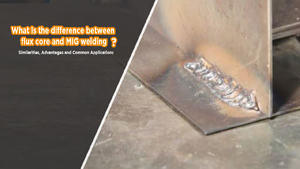
You can set up two machines side by side—one running flux-cored wire, the other set for MIG—and they’ll still give you completely different welds. I’ve switched between the two on the same project before: flux-cored digging in hard on dirty steel, then MIG laying down a clean, smooth bead the moment conditions calmed down. That contrast is what made me pay attention to how each process really works.
Flux-cored brings raw power, deeper penetration, and the ability to weld when the wind or rust is fighting you. MIG delivers cleaner results, easier control, and way less cleanup when the metal is prepped right.
Understanding those differences doesn’t just help you pick the right setup—it saves time, improves weld quality, and keeps you from fighting the wrong process. Let’s break down exactly how they differ and when each one is the smarter choice.

Image by red-d-arc
What Is MIG Welding?
Let’s start with MIG welding, or Metal Inert Gas welding as it’s formally known—though most of us just call it MIG. It’s one of the most popular processes out there, especially for beginners and pros alike who need quick, clean results.
In MIG welding, you feed a solid wire electrode through a welding gun, and it melts into the joint as you go. The key here is the shielding gas that comes out of the nozzle, protecting the molten weld pool from air contaminants like oxygen and nitrogen.
Without that gas, your weld would end up porous and brittle—think of it like baking a cake without covering it, letting all the bad stuff in.
How it works is pretty straightforward: you hook up a gas cylinder, usually a mix of argon and CO2, to your welder. The machine pushes the wire at a set speed, and you control the voltage and amperage to match your material. I’ve used MIG on everything from auto body panels to custom furniture frames, and it’s forgiving if your technique isn’t perfect yet.
You’ll want to use MIG when you’re working indoors on clean, thin metals like mild steel or aluminum sheets. Why? It gives you that smooth, spatter-free bead that’s easy to finish. For DIYers, it’s great for patching up a trailer hitch or building a workbench.
Professionals love it for production work where appearance counts, like in automotive shops following US standards like those from the American Welding Society.
Always check your gas flow rate—around 20-25 cubic feet per hour is a sweet spot for most jobs. Too low, and you’ll get porosity; too high, and you’re wasting gas. I once skimped on gas during a rush job and ended up grinding out bubbly welds—lesson learned, always test on scrap first.
What Is Flux Cored Welding?
Now, flux cored welding, or FCAW for Flux Cored Arc Welding, is like MIG’s rugged cousin that’s ready for the tough stuff. Instead of a solid wire, you use a tubular wire filled with flux—a powdery mix that does the shielding job when it burns.
Here’s how it rolls: as the wire melts, the flux inside vaporizes and creates a gas shield plus a slag layer that protects the weld from the atmosphere. No need for an external gas tank in the self-shielded version, which makes it a go-to for outdoor work. There’s also gas-shielded flux cored, where you add gas for extra protection, but I mostly stick to self-shielded for portability.
It works by feeding that flux-filled wire through the same kind of gun as MIG, but you often run it on DC electrode negative polarity for better penetration. I’ve pulled off flux cored welds on windy job sites where MIG would have been a nightmare, like repairing heavy equipment in the field.
Use it when you’re dealing with thicker metals, dirty surfaces, or outdoor conditions. For hobbyists, it’s perfect for building gates or fixing rusty fences without prepping every inch. Students learning the ropes appreciate how it handles imperfections, and industry workers rely on it for structural steel that meets US building codes.
A quick anecdote: early in my career, I tried flux cored on a rainy day for a bridge repair mockup— no gas hassles, and the weld held strong despite the weather. But watch for slag; always chip it off between passes to avoid inclusions. Common mistake? Running too hot and burning through—dial your voltage down to 18-22 volts for starters on 1/8-inch steel.
Key Differences Between Flux Cored and MIG Welding
Let’s get to the heart of it—the main differences that’ll help you decide which to fire up next. Both are wire-feed processes, so the equipment overlaps a lot, but they shine in different scenarios.
First off, the wire: MIG uses solid wire, plain and simple, while flux cored has that hollow tube stuffed with flux. This changes everything about shielding—MIG needs a gas bottle, flux cored generates its own from the flux.
Polarity is another biggie. MIG typically runs on DC electrode positive, putting more heat in the work for cleaner beads. Flux cored often flips to DC electrode negative, concentrating heat in the wire for deeper penetration on thick stuff.
Then there’s the environment. MIG hates wind; even a breeze can blow away your gas shield, leading to crappy welds. Flux cored laughs at that—I’ve welded in 20 mph gusts without issues.
Weld quality differs too. MIG gives a neat, slag-free finish with less cleanup, ideal for visible joints. Flux cored leaves slag you have to remove, but it penetrates deeper and forgives dirty metal.
Cost-wise, MIG wire is cheaper per pound, but add gas expenses. Flux cored wire costs more upfront but skips the tank, saving on portability.
In terms of strength, both can hit 70 ksi tensile per AWS specs if done right, but flux cored edges out on thick, contaminated stock.
One tip: if your machine supports both, switch polarity and drive rolls when changing wires—smooth ones for solid, knurled for flux to grip without crushing.
| Aspect | MIG Welding | Flux Cored Welding |
|---|---|---|
| Wire Type | Solid wire | Tubular wire with flux core |
| Shielding | External gas (e.g., Argon/CO2 mix) | Self-generated from flux (or added gas) |
| Polarity | DC electrode positive (DCEP) | Often DC electrode negative (DCEN) |
| Best For | Thin, clean metals indoors | Thick, dirty metals outdoors |
| Penetration | Good for lighter work | Deeper for heavy-duty |
| Cleanup | Minimal slag/spatter | Requires slag removal |
| Cost | Lower wire, higher with gas | Higher wire, no gas needed |
| Portability | Less due to gas tank | High, no tank required |
Pros and Cons of MIG Welding
MIG has a lot going for it, especially if you’re after efficiency and a polished look.
Pros: It’s fast— you can lay down beads quickly without stopping for rod changes like in stick welding. The clean welds mean less grinding, saving time in the shop. Great for beginners since the continuous wire feed lets you focus on travel speed. Handles thin materials down to 24 gauge without burn-through if you keep amps low, around 90-120 for 1/16-inch wire.
I’ve used it on aluminum bike frames with pure argon gas, getting that stack-of-dimes appearance pros love. Versatile too—switch gases for stainless or mild steel.
Cons: That gas dependency is a pain outdoors; wind over 5 mph ruins everything. Setup takes longer with flow meters and regulators. More expensive long-term if you’re gassing up often. Not as forgiving on rusty or painted surfaces— you gotta grind clean or risk porosity.
Common fix for mistakes: if you see black spots in the weld, bump up your gas flow or check for drafts. I once had a leaky hose that caused issues—always inspect your setup.
Pros and Cons of Flux Cored Welding
Flux cored is my pick for rough-and-tumble jobs where perfection isn’t the goal.
Pros: No gas means ultimate portability—grab your welder and go, perfect for field repairs. Deeper penetration tackles 1/4-inch-plus steel easily. Tolerates dirt, rust, and even light paint, cutting prep time. Higher deposition rates let you build up welds faster. Cost-effective for occasional use since wire is all you buy.
In my workshop, I’ve fixed cracked excavator buckets with flux cored, no cleaning needed beyond a quick wire brush. Works in all positions, though vertical up takes practice.
Cons: Slag cleanup is mandatory, or your multi-pass welds will trap junk. More spatter than MIG, so wear your gear. Wire is pricier and can absorb moisture if not stored dry, leading to hydrogen cracking. Not great for thin sheets—burn-through is common if voltage creeps up.
Tip: For better control, pull the gun instead of pushing like in MIG; it helps with visibility through the smoke. Mistake I see newbies make: not chipping slag fully, causing weak spots—use a chipping hammer and brush every layer.
When to Use Flux Cored Welding
Flux cored shines when conditions are less than ideal. Think outdoor fabrication, like building a steel shed in your backyard or repairing farm machinery on-site. It’s your friend for thick materials over 1/8-inch, where deep penetration ensures strong joints that meet US structural codes.
For DIY welders, use it on projects like custom trailers or gates where wind might pick up. Hobbyists love it for quick fixes without hauling gas. Professionals in construction or shipyards rely on it for heavy plate work.
Prep work: Wire brush the joint, but don’t sweat perfection. Settings suggestion: For .030-inch wire on 3/16 steel, try 18 volts and 200 inches per minute wire speed. Why use it? Safety in windy spots—no gas blowout means consistent shields, reducing defect risks.
Anecdote: On a job site in Texas, wind knocked out my MIG attempts, but switching to flux cored saved the day for beam repairs. Just remember, ventilate well—fumes are heavier.
When to Use MIG Welding
MIG is the way to go for controlled environments and finer work. Indoor shops, auto restoration, or furniture making where you want that clean, professional finish.
It’s ideal for thin metals like car panels or exhaust systems, preventing distortion from excess heat. Students practicing in class get quick feedback with its ease. Industry workers use it for precision assemblies in manufacturing.
Joint prep: Grind to bright metal for best results. Machine settings: On mild steel sheet, 16-18 volts with 150-200 amps works well. Gas mix: 75/25 argon/CO2 for general use.
Why choose it? Better weld integrity on clean setups, lower spatter for safety, and cost efficiency on high-volume jobs. I recall MIG-ing a custom exhaust—smooth beads, no rework needed.
Mistake to avoid: Overheating thin stock—pulse mode if your machine has it helps.
Equipment Needed for Flux Cored and MIG Welding
Both processes use similar welders, but let’s break down the must-haves.
For MIG: A MIG welder with constant voltage output, gas regulator, and cylinder. Wire spool, drive rolls (smooth for solid wire), and contact tips. Helmet, gloves, and a good ground clamp.
Flux cored: Same welder if it switches polarity—look for models like the Lincoln or Miller multimode ones common in US shops. Knurled drive rolls to grip the softer wire without flattening it.
Compatibility: Many machines do both; just swap wire and settings. For filler, match to base metal—ER70S-6 for mild steel MIG, E71T-1 for flux cored.
Tip: Invest in a cart for portability, especially with gas. Safety gear is non-negotiable—auto-darkening helmet for eye protection.
Step-by-Step Guide to MIG Welding
Ready to try MIG? Here’s how I walk new trainees through it.
First, set up your machine: Connect gas, load solid wire, set polarity to DCEP.
Prep the joint: Clean to bare metal, clamp pieces for fit-up.
Settings: For 1/8-inch mild steel, 18 volts, 300 IPM wire speed, 20 CFH gas.
Strike the arc: Hold gun at 15-degree angle, push technique, 3/8-inch stickout.
Weld: Move steadily, watch the puddle—too fast, no penetration; too slow, burn-through.
Finish: Let cool, inspect for defects. Chip any spatter.
Practice on scrap— I burned through plenty before getting consistent.
Step-by-Step Guide to Flux Cored Welding
Flux cored is similar but with tweaks.
Setup: Load flux wire, set DCEN polarity, no gas for self-shielded.
Prep: Brush off loose rust, but it’s forgiving.
Settings: 20 volts, 250 IPM for .035 wire on 1/4-inch steel.
Arc: Pull the gun at 10-15 degrees, 1/2-inch stickout to reduce spatter.
Weld: Steady speed, listen for that bacon sizzle sound.
Post-weld: Chip slag thoroughly, wire brush.
Common fix: If porous, check wire dryness—store in oven if humid.
Common Mistakes in Flux Cored and MIG Welding
We all mess up, but here’s how to avoid it.
In MIG: Insufficient gas leads to porosity—always test flow. Wrong angle causes undercut; keep it perpendicular.
Flux cored: Ignoring slag removal traps inclusions. Too much stickout increases spatter—keep it short.
Both: Poor ground connection arcs badly. Rushing prep on MIG or overamping on flux burns holes.
Early on, I MIG-ed rusty steel without cleaning—weld failed under load. Now, I always prep.
Tips for Better Welds in Both Processes
For MIG: Use anti-spatter spray on the nozzle. Practice stringer beads first.
Flux cored: Ventilate—fumes are intense. Use drag technique for flat welds.
General: Test settings on scrap. Maintain equipment—clean liners weekly.
For US codes, document parameters if certified.
Pro tip: Hybrid approach—use flux for root pass on thick joints, MIG for cap.
Safety Considerations in Welding
Safety first, always. Both processes involve arcs hotter than the sun’s surface, so PPE is key: leather gloves, jacket, helmet with proper shade.
Fumes: MIG gas can displace oxygen; flux produces more smoke—use exhaust fans.
Electrical: Ground properly to avoid shocks. Fire watch for spatter.
In my shop, I keep a fire extinguisher handy and never weld alone on big jobs.
Real-World Applications for DIY and Pros
For DIYers: MIG for garage projects like bike racks; flux for outdoor fences.
Hobbyists: Flux on sculptures with recycled steel; MIG for precise models.
Pros: MIG in auto shops; flux in construction for beams.
Students: Start with MIG for basics, flux for advanced outdoor sims.
Industry: Flux for pipelines meeting API standards; MIG for aerospace parts.
Conclusion
The big takeaway is that MIG welding excels in clean, controlled settings for thin, precise work with its gas-shielded solid wire, while flux cored dominates outdoors on thick, imperfect metals thanks to its self-shielding flux core. Understanding these differences— from wire types and polarity to penetration and portability—means you’ll pick the right one for safety, strength, and efficiency every time.
You’re now better equipped to tackle that next project, whether it’s a quick fix or a full build, without second-guessing. Go ahead, fire up your welder with confidence; you’ve got the know-how. Always keep a log of your settings for each job—it’ll save you headaches on repeats and help troubleshoot faster.
Is Flux Cored Welding Stronger Than MIG?
Not necessarily stronger, but it often provides deeper penetration on thicker materials, making it feel more robust in heavy-duty apps. Both can achieve similar tensile strengths around 70 ksi if technique and filler match the job—it’s more about the application than inherent strength.
Can I Use the Same Machine for Both Flux Cored and MIG?
Absolutely, many modern welders are multimode and let you switch with a flip of polarity and wire change. Just ensure it has the right drive rolls and check the manual for gas setups—it’s a cost-saver for versatile shops.
Which Is Better for Beginners, Flux Cored or MIG?
MIG is often easier for starters due to cleaner operation and less slag hassle, but flux cored is forgiving on prep. Try both on scrap; if you’re outdoors a lot, start with flux to build confidence without gas worries.
Does Flux Cored Welding Require Gas?
Not for self-shielded types—the flux does the job. But gas-shielded flux cored adds external gas for even better protection on certain metals; it’s optional based on your needs.
How Do I Choose Wire Size for Flux Cored or MIG?
Match it to material thickness—.030-inch for thin stuff up to 1/8-inch, .035 or .045 for heavier. Thicker wire handles more amps for deeper welds; always consult the wire’s spec sheet for best results.