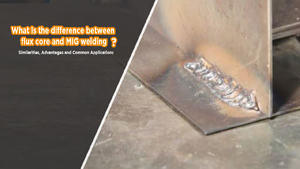
Let’s dive into flux-cored arc welding (FCAW) and get a solid grasp on what it is, how it works, and where it’s most useful. This welding technique has a lot to offer, especially when it comes to outdoor projects or work involving thick materials.

Image by Adobestock
So, let me walk you through everything you need to know about FCAW in a way that’s easy to understand.
What is Flux Cored Arc Welding?
Flux-cored arc welding, or FCAW, is a welding process that uses a unique type of electrode, or filler material, with a hollow core filled with flux. This flux is what makes FCAW different from other welding methods.
When heated, the flux inside the core produces a gas that shields the weld, protecting it from contaminants in the air, like oxygen and nitrogen. This results in a cleaner and stronger weld.
Why is FCAW Popular?
FCAW is often chosen for heavy-duty welding projects because it’s versatile, powerful, and works well in outdoor settings. Unlike some other methods that need extra shielding gas, FCAW can generate its own, which makes it highly adaptable.
It’s especially popular in construction, shipbuilding, and other industrial applications that require strong, reliable welds on thick materials.
How Does Flux Cored Arc Welding Work?
Understanding the mechanics of FCAW gives insight into why it’s so effective. Let’s break down the working process of FCAW in a simple way.
Step 1: Preparing the Equipment and Materials
To start, the welder sets up a machine that provides a continuous wire feed. This wire is actually the flux-cored electrode, which melts to form the weld.
The setup involves adjusting the machine for wire feed speed, voltage, and amperage based on the thickness of the material and the desired weld quality.
Step 2: Creating the Arc
Once everything is set up, the welder strikes an arc between the workpiece and the electrode. This arc is what generates the heat necessary to melt both the wire and the base metal, creating a molten pool.
Step 3: Shielding and Molten Pool Formation
Here’s where FCAW stands out. As the wire heats up, the flux inside the core vaporizes, creating a shielding gas around the weld pool.
This gas protects the molten pool from contamination, which is critical for producing a strong weld. At the same time, the flux creates a layer of slag that covers and protects the weld as it cools.
Step 4: Solidification and Cleanup
As the weld cools, the slag on top solidifies and must be removed. This slag layer helps slow down the cooling process, which can prevent cracks. After the welding is complete, the slag is chipped or brushed away to reveal the finished weld.
Types of Flux Cored Arc Welding
There are two main types of FCAW, each with its own unique strengths and best-use scenarios. Here’s a quick breakdown:
Self-Shielded Flux Cored Arc Welding (FCAW-S)
In FCAW-S, the flux core itself generates all the shielding gas needed, meaning there’s no need for an external gas cylinder.
This type of FCAW is particularly useful for outdoor projects or locations where it’s difficult to use shielding gas due to wind or space constraints. It’s a preferred choice for construction sites and field repairs.
Gas-Shielded Flux Cored Arc Welding (FCAW-G)
With FCAW-G, an external gas supply, such as CO₂ or a mix of argon and CO₂, is used along with the flux-cored wire. This method produces cleaner welds and reduces the amount of slag, making it more suitable for indoor work or applications requiring high-quality, aesthetically pleasing welds.
| Type | Shielding Method | Best For |
|---|---|---|
| Self-Shielded FCAW | Generated by flux inside the core | Outdoor work, windy conditions, repairs |
| Gas-Shielded FCAW | External gas supply | Indoor work, high-quality welds |
Advantages of Flux Cored Arc Welding
FCAW offers several advantages, making it a valuable choice for a wide range of welding tasks. Let’s take a look at some of the main benefits of using this method.
High Deposition Rate
One of the key benefits of FCAW is its high deposition rate, which refers to the amount of filler material deposited into the weld per unit of time. This high rate allows welders to cover large areas or thick sections more quickly, saving time and boosting productivity on bigger projects.
Excellent for Thick Metals
FCAW is ideal for welding thicker materials, which can be challenging for methods like MIG or TIG welding. The intense heat generated by FCAW ensures deep penetration, resulting in a strong, durable bond even on heavy-duty steel or other thick materials.
Works Well Outdoors
Because self-shielded FCAW doesn’t require an external shielding gas, it performs well outdoors or in conditions where wind could disrupt other welding methods. This makes FCAW especially handy for construction projects, bridges, and other open-air applications.
Less Cleanup Required
Although FCAW produces slag, it generally requires less post-weld cleanup compared to methods like stick welding. The slag layer is relatively easy to remove, and FCAW-G, in particular, produces minimal spatter, resulting in a smoother weld finish.
Disadvantages of Flux Cored Arc Welding
While FCAW has plenty of benefits, it’s not without its drawbacks. Here are a few challenges associated with this welding method.
Higher Costs
The specialized equipment and flux-cored wire can make FCAW a more expensive option compared to other welding techniques, especially for smaller projects where the high deposition rate isn’t as necessary. For large industrial applications, however, this cost is often offset by the efficiency gained.
Slag Removal Required
While FCAW produces less spatter, the slag produced during welding must still be removed after the weld cools. This step adds extra time and effort to the process, especially when neat, aesthetic welds are required.
Limited for Thin Materials
FCAW is generally not recommended for thin metals. The intense heat generated by FCAW can cause warping, burning, or other damage to thin workpieces. Other welding methods like TIG or MIG are often more suitable for projects involving thin metals.
Uses of Flux Cored Arc Welding
FCAW is versatile and sees widespread use across various industries. Let’s explore some of the areas where FCAW is commonly applied.
Construction Industry
In construction, FCAW is widely used for its strength and durability. It’s ideal for welding structural steel, building frameworks, and constructing heavy equipment. The process is efficient for large-scale projects and can withstand the demanding conditions often found on construction sites.
Shipbuilding and Marine Applications
Shipbuilding relies on FCAW for creating robust, watertight welds that can withstand corrosion, pressure, and harsh marine environments. Self-shielded FCAW is particularly useful for outdoor work on ship decks or docks, where wind might make using shielding gas difficult.
Heavy Manufacturing
FCAW is a go-to choice in heavy manufacturing industries like mining, railroads, and equipment production. Its high deposition rate allows for faster welding on thick metals, which is crucial in applications involving large machinery or parts that must endure significant stress and wear.
Pipeline Welding
FCAW is also commonly used in pipeline construction and repair. The method’s deep penetration and ability to create strong, reliable bonds make it ideal for pipeline joints. In this application, FCAW ensures a high-integrity weld that can handle the pressure and flow demands of pipeline systems.
FCAW vs Other Welding Processes
To get a clearer picture of where FCAW fits among other welding methods, here’s a comparison with some popular techniques like MIG, TIG, and Stick welding.
| Process | Strengths | Weaknesses |
|---|---|---|
| FCAW | High deposition, works outdoors, ideal for thick metals | Higher cost, slag cleanup required, limited for thin materials |
| MIG | Clean welds, versatile, good for thin materials | Limited for outdoor work without gas shielding |
| TIG | Precise, high-quality welds, great for thin metals | Slower, more skill needed, not ideal for thick metals |
| Stick | Portable, versatile, low cost | More spatter, not as efficient for heavy production |
Is Flux Cored Arc Welding the Right Choice for You?
So, is FCAW right for your project? Here are some things to consider.
Consider FCAW If:
- Your project involves thick materials: FCAW is excellent for thick metals where deep penetration and high-strength welds are required.
- You need to weld outdoors: FCAW, especially the self-shielded version, performs well outdoors in windy or challenging conditions.
- Speed and efficiency are a priority: FCAW’s high deposition rate makes it a great choice for high-volume, time-sensitive projects.
Alternative Options for Thin or Detailed Work
If you’re working with thin metals or require highly precise welds, other methods like TIG or MIG may be a better fit. FCAW’s intense heat can cause warping on thin materials, so for more delicate work, consider these alternative options.
Conclusion
Flux Cored Arc Welding is a powerful, versatile welding method that offers high strength, deep penetration, and efficiency for large-scale and outdoor applications.
While it may not be the best choice for thin or delicate materials, it shines in construction, shipbuilding, and heavy manufacturing. If your project involves thick materials and you need reliable welds in challenging conditions, FCAW could be the ideal solution.