
Running a bead that looks clean on the surface can give you a false sense of confidence—until the joint fails under stress. You grind it back or cut a test piece, and that’s when you notice areas where the weld metal never properly bonded with the base metal.
That’s exactly what is incomplete fusion in welding, and it’s one of those defects that can quietly weaken an otherwise decent-looking weld.
This issue usually shows up when heat input is too low, travel speed is off, or the weld angle doesn’t let the arc reach both sides of the joint.
It’s easy to miss during welding, especially if the bead appearance looks smooth from the outside. I’ve seen parts pass a visual check but fail later because fusion just wasn’t there where it mattered.
Understanding this defect is critical for both strength and safety. If you don’t catch it early, it can lead to costly rework or even structural failure. I’ll break down what incomplete fusion really is, why it happens, and the practical ways to prevent it in your day-to-day welding work.
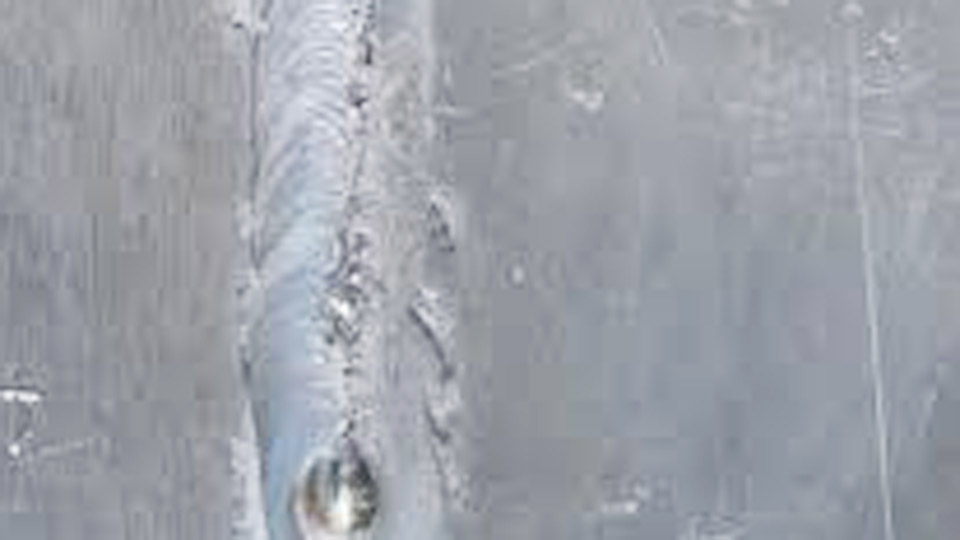
Image by researchgate
What Exactly Is Incomplete Fusion and How Does It Happen?
In the simplest terms, incomplete fusion occurs when the welding arc fails to melt the base metal or the previous weld bead sufficiently, preventing the filler metal from fusing with it. Think of it like pouring hot candle wax onto a cold plate—the wax stays in its own shape rather than soaking into the surface.
How it Works in the Puddle
When you strike an arc, you create a localized molten pool. For a proper weld, the edges of your base metal must reach their melting point at the same time the filler metal enters the pool.
If the base metal is too cold, or if there is a barrier like mill scale or heavy oxide, the filler metal just rolls over the cold surface. This creates a microscopic gap or a “cold shut” that acts as a stress riser.
When and Why This Becomes a Problem
This typically crops up during high-production TIG or MIG work where travel speeds are pushed too fast, or in SMAW (Stick) when a welder tries to “bridge” a gap without digging into the root. It’s a mechanical failure waiting to happen because the joint lacks the throat thickness required to carry the load.
Why Is My Puddle Not “Wetting Out” Properly?
If you find that your bead looks “ropey” or tall instead of flat and transitioned, you’re likely fighting fusion issues. Here are the common culprits I see in the workshop.
Insufficient Heat Input (Amperage)
This is the most common mistake for beginners. If your amperage is too low for the thickness of the material, the arc won’t have the “punch” to penetrate the surface tension of the base metal.
- The Shop Reality: You might see a beautiful arc, but the base metal isn’t turning liquid.
- Practical Tip: Check your machine’s door chart, but don’t be afraid to bump it up 5–10 amps if you see the puddle refusing to spread (wet out).
Improper Torch or Electrode Angle
If you point your torch too far ahead of the puddle or at too steep an angle, you’re pre-melting the filler wire before the base metal is ready.
- The Fix: For most flat-position welds, keep a 10 to 15-degree drag angle. This ensures the arc force is pushing the heat into the joint rather than just skating over the top.
Travel Speed Issues
Moving too fast is an obvious cause, but moving too slow can actually cause incomplete fusion too. This is known as “puddle shielding,” where the molten pool gets so large that it rolls ahead of the arc, acting as an insulator that prevents the arc from hitting the base metal directly.
The Role of Joint Preparation and Cleanliness
You can’t weld through “the crunch.” In US shops, we often deal with hot-rolled steel covered in mill scale—that dark, flaky layer from the factory. Mill scale has a higher melting point than the steel underneath it.
How to Prep Like a Pro
Grind to Bright Metal: Take a flap disc or a hard stone and grind at least 1 inch back from the weld zone. If it isn’t shiny, it isn’t ready.
Remove Hydrocarbons: Use acetone or a dedicated degreaser. Oils from the mill or even your fingerprints can cause the arc to wander or create a gas pocket that prevents fusion.
Tack Integrity: Ensure your tacks are small and ground to a feather edge. A bulky tack is a prime spot for a “cold start” lack of fusion.
Process-Specific Solutions: SMAW, GMAW, and GTAW
Different machines require different strategies to ensure you’re getting deep, structural fusion.
Stick Welding (SMAW) and Rod Selection
If you’re using a Lincoln Tombstone or a Miller Thunderbolt in your garage, your rod choice is your first line of defense.
6010/6011 Electrodes: These are “fast-freeze,” deep-penetration rods. They are the kings of ensuring root fusion because the arc is aggressive and digs through light rust.
7018 Electrodes: These are “low-hydrogen” rods. They produce a beautiful, strong weld, but they are prone to “cold starts.”
Pro Tip: To avoid lack of fusion at the start of a 7018 bead, strike your arc about an inch ahead of where you want to start, then quickly move back to the beginning to “pre-heat” the path.
Suggested Amperage Ranges for Common Rods (1/8″ Diameter)
| Electrode | Current Type | Range (Amps) | Best Use |
| 6010 | DCEP | 80 – 120 | Root passes, dirty metal |
| 6011 | AC/DCEP | 75 – 110 | Farm repair, deep dig |
| 7018 | DCEP | 110 – 150 | Structural, high strength |
MIG Welding (GMAW) and the “Short Circuit” Trap
MIG is the most common process for incomplete fusion because it feels so easy. Beginners often “glue” the metal together without melting it.
- The Problem: Using “Short Circuit” transfer on plate thicker than 1/4 inch.
- The Solution: If you’re welding heavy plate, switch to “Spray Transfer” if your machine and gas (90/10 Argon/CO2) allow it. If stuck with short-circuit, use a slight weaving motion to ensure the arc hits both sidewalls of the joint.
Step-by-Step Guide: Ensuring Root Fusion in a V-Groove Joint
When you’re doing a structural repair, like a trailer tongue or a heavy bracket, a V-groove is mandatory. Here is how I handle it to ensure zero incomplete fusion.
Step 1: The Bevel
Grind a 30 to 37.5-degree bevel on both pieces. Leave a “land” (a flat blunt edge) about the thickness of a nickel.
Step 2: The Root Gap
Space the plates about 3/32″ to 1/8″ apart. This allows the arc to actually pass through the plates, ensuring the back side fuses.
Step 3: The Root Pass
Using a 6010 rod or TIG, keep the arc at the leading edge of the puddle. You want to see a small hole (the “keyhole”) forming and being filled as you move. That keyhole is your visual confirmation of 100% fusion.
Step 4: Cleaning Between Passes
If using Stick or Flux-Core, use a chipping hammer and a wire wheel to remove every speck of slag. Slag trapped in the corners is a primary cause of sidewall incomplete fusion in multi-pass welds.
Pros and Cons of High-Penetration Settings
| Pros | Cons |
| Guaranteed Fusion: Higher heat ensures the base metal is fully liquid. | Warpage: Too much heat can distort thin sheets (oil canning). |
| Cleaner X-rays: Eliminates the “cold lap” voids. | Burn-through: Harder to manage on out-of-position welds (overhead). |
| Structural Integrity: The joint is as strong as the parent metal. | Increased Spatter: Especially in MIG and Stick. |
Safety and Structural Integrity Check
A weld with incomplete fusion is a “fused” joint in name only. It’s a crack waiting to happen.
Visual Warning Signs: If the toe of the weld (the edge where the bead meets the plate) looks like it’s “rolling over” rather than blending smoothly, you have incomplete fusion.
The Hammer Test: For hobbyist projects, a simple “bend test” in a vise will tell the truth. If the weld snaps off and the base metal looks untouched underneath, you had no fusion.
Safety Gear: Never forget that ensuring fusion often means running hotter. Ensure your gloves have no holes and your hood’s shade is set correctly (usually 10-12 for high-amp work) to prevent arc eye.
Troubleshooting Incomplete Fusion: A Shop Reflection
After years of troubleshooting these issues on the floor, I’ve realized that incomplete fusion is usually a mental hurdle rather than a mechanical one. It happens when we get complacent or try to move too fast to meet a deadline. I’ve seen million-dollar projects stalled because a hand-welded sub-assembly had “cold lap” in the corners.
Whether you’re using a high-end Miller Dynasty or a budget-friendly buzz box, the physics of the arc remain the same. You are the master of the puddle. If the metal isn’t flowing together like water, don’t just keep going.
Stop, adjust your settings, clean your material again, and try a different angle. The difference between a “glue job” and a structural weld is the intentionality of the person holding the stinger.
The goal is always to see that base metal melt away just before the filler takes its place. When you see that happen consistently, you’ve moved from “sticking metal together” to actually welding.
If you’re TIG welding and struggling with fusion on thick aluminum or stainless, try “pumping” the foot pedal. Give it a burst of high amperage to break the surface tension and establish the puddle, then back off to your cruising amperage once the fusion is established. It’s a “kickstart” for your weld bead.
Frequently Asked Questions
Can you see incomplete fusion from the outside?
Not always. While “cold lapping” at the edges of the bead is a visible sign, incomplete fusion inside a multi-pass weld or at the root of a groove is often hidden. This is why following proper procedures and settings is more important than just looking at the finished bead.
Does mill scale really cause lack of fusion?
Absolutely. Mill scale is an oxide layer that doesn’t melt until it reaches a much higher temperature than the steel. If you don’t grind it off, the arc might melt the scale superficially, but the steel underneath stays solid, leading to a weld that can literally be peeled off with a pry bar.
Is incomplete fusion the same as porosity?
No. Porosity is caused by trapped gas (bubbles) in the weld. Incomplete fusion is a mechanical lack of bonding. However, both are serious defects that can cause a weld to fail inspection and lose its structural rating.
Why does my MIG weld look like it’s just sitting on top of the metal?
This is likely because your voltage is too low or your wire feed speed is too high. If the wire is hitting the plate and “pushing” your hand back rather than melting smoothly into a puddle, you aren’t getting fusion. Turn up the heat (voltage) and watch for the puddle to flatten out.

