
I’ve welded more trailer safety chains than I can count over the years, from backyard utility haulers to heavier equipment trailers that see real miles on the interstate. When that hitch fails at 55 mph, those chains are the last line of defense keeping the trailer from becoming a deadly projectile. That’s why getting the attachment right matters more than almost anything else on the rig.
How to weld safety chains on a trailer isn’t just about laying down a bead. It’s about understanding load dynamics, material compatibility, heat effects on high-strength chain, and building something that will hold when everything else lets go.
In this guide, I’ll walk you through exactly what I’ve learned from real jobs—settings that work on common US machines, joint prep that prevents cracks, and the mistakes that send chains to the scrap pile.
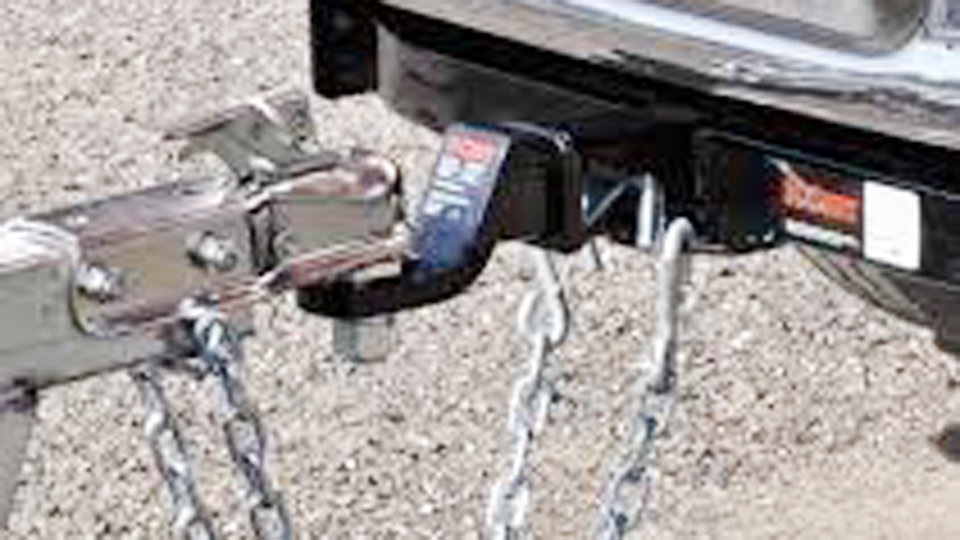
Image by curtmfg
Why Proper Safety Chain Attachment Is Non-Negotiable
Safety chains must keep the trailer tongue from dropping to the pavement if the coupler separates. Federal and state regs require them to match or exceed the trailer’s Gross Vehicle Weight Rating (GVWR). More importantly, they need to work in the worst-case scenario—twisted angles, sudden stops, and road vibration.
I’ve seen trailers where chains were the only thing preventing disaster. One job involved a 7,000-lb boat trailer that lost its ball mount on the highway. The properly attached chains caught it and let the driver ease to the shoulder. Poor welds or wrong attachment methods turn that success story into a lawsuit or worse.
Directly welding chain links is a common temptation for speed, but it’s a bad idea. Heat from welding alters the chain’s heat-treated properties, creating brittle zones prone to failure under load. Instead, weld a bracket or clevis to the frame and attach the chain mechanically.
Understanding Trailer Safety Chain Requirements
Before you strike an arc, know what you’re working with. Safety chains are typically Grade 30, 43, or 70 proof coil chain, with working load limits (WLL) matched to your trailer’s GVWR.
- Light utility trailers (under 3,000 lbs): 1/4″ or 5/16″ chain often suffices.
- Mid-size (3,000–10,000 lbs): Step up to 3/8″ Grade 43 or 70.
- Heavy haulers: 1/2″ or larger with forged components.
Chains must cross under the tongue to cradle it if disconnected. Length should allow full turning radius without dragging or going slack in a jackknife position. Measure with the trailer hitched and nearly jackknifed.
Pro Tip: Always use hooks or attachments rated equal to or higher than the chain. Quick links and cheap hardware are common failure points I’ve replaced too many times.
Welding vs. Bolting: Choosing the Right Method
Both methods work when done right, but they suit different situations.
Welded attachments offer a permanent, clean look and distribute stress better across the frame. They’re ideal for custom builds or when drilling isn’t practical. The downside? Harder to replace if damaged.
Bolted attachments allow easier swaps and inspection. Use Grade 8 hardware through reinforced areas. They require good-sized washers and locking nuts to fight vibration.
In my shop, I prefer welding a robust clevis or tab for most permanent trailer work, then using a shackle or bolt through the end link. This keeps the chain’s integrity intact while creating a strong joint.
| Method | Pros | Cons | Best For |
|---|---|---|---|
| Welded Clevis/Tab | Permanent, high strength, no holes in frame | Harder to service, heat-affected zone | Custom fab, heavy use |
| Bolted | Easy replacement, inspectable | Potential loosening over time | Trailers needing frequent maintenance |
| Direct Chain Weld | Fast | Weakens chain, often illegal | Never recommended |
Essential Tools and Materials for the Job
Gather these before starting:
- Welder: 200+ amp MIG (flux core or gas) or stick machine for thicker frame rails.
- Angle grinder with flap discs and cutoff wheels.
- Wire brush, degreaser, and clamps.
- Proper chain, clevis hooks, shackles, or weld-on chain retainers.
- Filler: ER70S-6 wire for MIG, 7018 rods for stick.
- Safety gear: Helmet, gloves, jacket, and good ventilation.
For frame material, most trailers use mild steel tubing or channel. Clean it thoroughly—rust, paint, and oil kill penetration.
Preparing the Trailer Frame and Joints
Joint prep separates amateur work from pro results. I spend as much time cleaning as welding on critical jobs.
Grind the attachment area to bright, shiny metal. Remove all mill scale, paint, and galvanization if present. On painted frames, grind a wider area because weld spatter and heat will ruin nearby coating.
Position attachment points symmetrically, equidistant from the centerline, and as far forward as practical without interfering with the coupler. Reinforce thin frame sections with doubler plates if needed—I’ve done this on lighter box tubing to prevent tearing.
Clamp everything securely. Trailer tongues flex under load, so tacks must hold during final passes.
Step-by-Step: How to Weld Safety Chain Brackets on a Trailer
Here’s the process I use on most jobs.
- Measure and Mark: Determine exact chain length first. Mark bracket locations allowing for cross and proper slack.
- Cut and Fit Brackets: Use heavy flat bar, round stock, or pre-made weld-on clevis. Form or bend so the chain end link moves freely.
- Tack in Place: Set brackets with small tacks. Check alignment and fit with chain attached.
- Weld the Bracket: Use multi-pass technique for strength. Start with root pass, then fill and cap. Backstep or skip weld to control distortion on thin material.
- Attach the Chain: Thread through bracket or use shackle. Secure so it can’t work loose but allows movement.
- Inspect and Finish: Grind smooth if desired (not necessary for strength), then paint or undercoat for corrosion protection.
SMAW (Stick) Welding for Trailer Chains
Stick welding shines on outdoor jobs or dirty/rusty frames. I reach for 7018 low-hydrogen rods on most trailer work—they give excellent toughness.
Electrode Choices:
- 1/8″ 7018: 90-150 amps for general brackets.
- 5/32″ 7018: 120-200 amps for heavier tabs.
Run a short arc, drag technique works well. Keep the rod angle at 10-15 degrees. Clean between passes—slag inclusion is a common beginner mistake that leads to cracks.
For 1/4″ thick frame, expect good penetration with 1/8″ rod at around 110-130 amps. Test on scrap first. Too cold and you get lack of fusion; too hot and you burn through or warp the tongue.
MIG Welding Safety Chain Attachments
MIG is faster for production-style work. I use .035″ wire with 75/25 or straight CO2.
Typical Settings for Mild Steel:
- 1/8″ to 3/16″ material: 18-22 volts, 200-350 ipm wire speed (roughly 140-180 amps).
- Thicker channel: Bump to 22-25 volts.
Short circuit transfer works best for positional welding on trailers. Push or pull? I prefer a slight push angle for better shielding on outdoor work.
Watch for cold lap on the frame side—common when the base metal stays too cool. Increase voltage or slow travel speed slightly. Build a good fillet that fuses both pieces rather than sitting on top.
Controlling Distortion and Heat Input
Trailer tongues are long and can warp if you dump too much heat in one spot. I use these tricks:
- Skip welding: Weld 2 inches, move to opposite side, let cool.
- Backstep technique: Weld toward the starting point of the previous bead.
- Clamp to a heavy table or use strongbacks.
- Smaller diameter wire/rod for less heat.
On thin wall tubing, I sometimes weld intermittent fillets rather than continuous, as long as total weld length meets strength needs.
Common Mistakes and How to Avoid Them
I’ve fixed plenty of these:
- Direct welding to chain links: Creates weak, brittle spots. Always use an intermediary bracket.
- Poor cleaning: Contaminants cause porosity and weak welds.
- Undersized welds: A tiny bead looks fine until loaded. Aim for leg size at least equal to the thinnest material.
- Wrong position: Chains that drag or don’t cross properly fail their basic job.
- Ignoring ratings: Using hardware weaker than the chain creates a new failure point.
- No stress relief: Sharp corners or abrupt thickness changes concentrate stress.
Beginners often chase pretty beads over penetration. Pros know a slightly ugly but deeply fused weld beats a cosmetic one every time.
Material Compatibility and Filler Selection
Match filler to base metal. Most trailer frames are A36 or similar mild steel. ER70S-6 or 7018 gives good strength and ductility.
For higher strength frames (rare on utility trailers), consider 80-series wire, but it’s usually overkill. The goal is a weld stronger than the weakest link in the system.
Galvanized trailers need extra care—grind coating back generously and watch for zinc fumes.
Safety Considerations Every Welder Must Follow
This isn’t optional on safety-critical work:
- Wear proper PPE, including leather for sparks.
- Secure the trailer so it can’t tip.
- Have fire watch—trailers often have wiring and wood decks.
- Check for gas pockets in box tubing before welding.
- Test the setup: Pull hard on chains after welding to verify.
I always do a visual inspection plus a light hammer test on cooled welds. Look for undercut, porosity, or cracks.
Finishing and Protecting Your Welds
After welding, remove slag, grind high spots if needed, and apply rust-preventive paint. Zinc-rich cold galvanizing spray works well in the shop.
Consider undercoating the entire tongue area. Road salt and water destroy welds faster than poor technique.
Real-World Example: Rebuilding a 5,000-lb Utility Trailer
Last season I helped a friend rebuild his equipment trailer. The original chains were bolted with hardware that fatigued and pulled out. We fabricated heavy flat bar tabs, welded them with 7018 at 125 amps, and used Grade 8 bolts through the chain ends.
The welds took multi-pass fillets with good tie-in. After two seasons of heavy use hauling a skid steer, everything still looks new. The key was proper prep and not rushing the heat control.
Advanced Tips for Professional Results
- Use weld-on forged clevises for high-end builds—they’re rated and clean.
- Consider chain keepers or retainers so hooks don’t bounce off.
- For flux core on windy days, it performs well but produces more spatter—clean thoroughly.
- Document your work with photos for future reference or resale.
Taking It to the Next Level
Once you master basic bracket welding, experiment with gussets for extra rigidity on heavy tongues. Some builders integrate the chain attachment into the main hitch reinforcement for maximum strength.
Key Takeaway: The strongest chain in the world fails if the attachment point gives way. Take time with prep, use correct settings for your machine and material, and always prioritize fusion over appearance.
After years of doing this, my best advice is simple: Build it like your family’s safety depends on it—because it might. Test, inspect regularly, and replace anything showing wear. A few extra minutes in the shop prevents hours of regret on the roadside.
FAQ
Can you weld safety chains directly to the trailer frame?
No. Welding directly to the chain links compromises the heat treatment and creates failure points. Weld brackets or clevises instead, then attach the chain mechanically. This is both stronger and often required by regulations.
What amperage should I use for welding trailer chain brackets?
For 1/8″ 7018 stick, 90-150 amps. With .035″ MIG, target 140-180 amps depending on thickness. Always test on scrap matching your frame material and adjust for good penetration without burn-through.
Is MIG or stick better for trailer safety chain work?
Both work well. MIG is faster and cleaner for shop work. Stick handles outdoor jobs and slightly dirty metal better. I use 7018 stick for critical strength on many repairs.
How do I prevent my trailer tongue from warping during welding?
Use skip welding, clamp securely, weld opposite sides alternately, and allow cooling between passes. Smaller electrodes and controlled travel speed help minimize heat input.
What chain grade and size do I need for my trailer?
Match or exceed GVWR. For a 5,000-lb trailer, 3/8″ Grade 43 or 70 is common. Check your trailer’s plate and use matching hardware throughout the system.


