
First time I struck an arc in my garage years ago. The rod stuck, the machine popped, and sparks flew everywhere. That humbling moment taught me welding isn’t just about melting metal—it’s about control, preparation, and understanding exactly what’s happening in the puddle.
If you’re a DIY fabricator, hobbyist building a trailer, a student in welding class, or a pro looking to sharpen fundamentals, this welding 101 guide will walk you through the real-world essentials that actually matter on the shop floor.
Welding affects safety, joint strength, material distortion, and how much time (and money) you waste on rework. Get the basics wrong, and you’ll chase cracks, porosity, or weak repairs for weeks. Get them right, and you’ll lay down consistent beads that hold up under load.
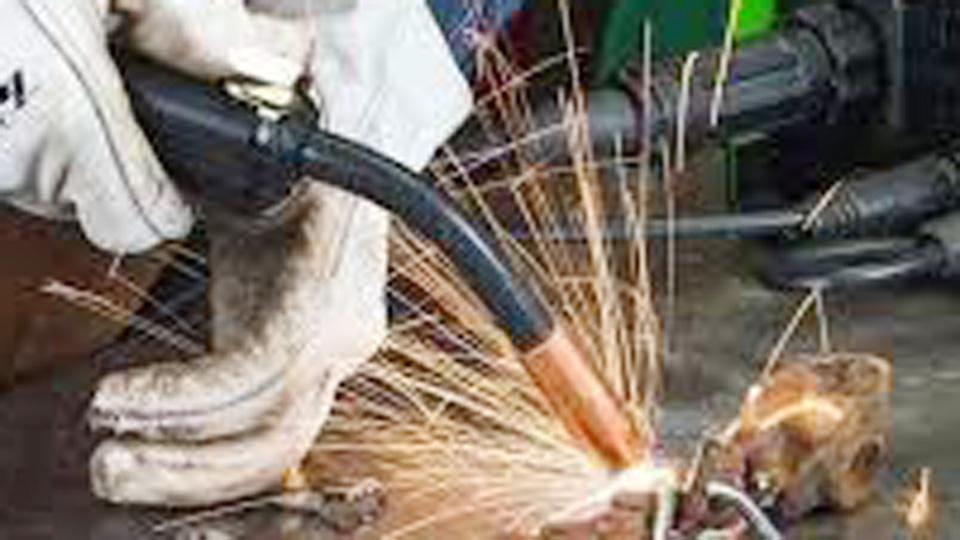
Image by workboots
Why Mastering the Fundamentals Changes Everything
Most beginners jump straight to buying a machine and burning rods without understanding the “why” behind settings and techniques. That leads to frustration. In my experience, spending time on the core principles first saves countless hours of grinding out bad welds later. Whether you’re repairing farm equipment in rural America or building custom motorcycle frames, the principles stay the same.
Understanding the Main Welding Processes
What Is SMAW (Stick Welding) and How Does It Work?
Shielded Metal Arc Welding, commonly called stick welding, uses a flux-coated electrode that melts to form the weld while the coating creates shielding gas and slag. The arc forms between the rod and the workpiece, generating intense heat that fuses the metals.
You’ll use it when portability matters or when working outdoors where wind would blow away MIG shielding gas. It excels on dirty or rusty material common in repair jobs and thick sections.
When and Why to Use Stick Welding
Choose SMAW for structural repairs, pipeline work, heavy equipment, or any job where you need to weld in awkward positions. It’s forgiving on mill scale and rust compared to MIG. The slag protects the cooling weld and must be chipped off afterward.
Practical Tips from the Shop
- Keep rods in a dry environment. Moisture causes hydrogen cracking.
- Strike the arc with a quick scratching motion, like striking a match.
- Maintain a 1/8″ to 3/16″ arc length—too long and you lose shielding; too short and the rod sticks.
Common beginner mistake: Not cleaning between passes. Slag inclusions ruin multi-pass welds.
MIG Welding (GMAW): Speed and Ease for Fabrication
Metal Inert Gas welding feeds a continuous solid wire electrode through a gun while shielding gas (typically 75/25 CO2/Argon mix) protects the puddle. It’s semi-automatic, making it faster and easier for beginners to learn consistent travel speed.
How It Works in Practice
The wire melts into the puddle as filler, and the gas keeps oxygen out. You control voltage (arc length) and wire feed speed (amperage equivalent).
Best Applications
Use MIG for automotive work, thin sheet metal, body panels, or production fabrication where appearance and speed matter. It’s my go-to for building shop fixtures or trailer frames.
Pros and Cons Comparison
| Process | Pros | Cons | Best For |
|---|---|---|---|
| MIG | Fast, clean, easy to learn, minimal cleanup | Needs gas, sensitive to wind/dirt | Indoor fab, thin to medium steel |
| Stick | Portable, works in wind, penetrates dirty metal | Slag cleanup, slower, more spatter | Repairs, outdoor, thick material |
| TIG | Precise, beautiful welds, versatile materials | Slow, requires high skill, expensive | Aluminum, stainless, thin metals, artwork |
TIG Welding (GTAW): Precision for Critical Work
Tungsten Inert Gas uses a non-consumable tungsten electrode and separate filler rod. You control the puddle with one hand and add filler with the other. It produces the cleanest, strongest welds with minimal distortion.
Why Use TIG
Choose it for aluminum, stainless steel, exhaust systems, or anything where cosmetics and strength are non-negotiable. It’s essential for food-grade or pressure vessel work.
Common Challenges
TIG demands clean metal and good hand-eye coordination. Beginners often contaminate the tungsten by dipping it into the puddle.
Choosing the Right Welding Machine for Your Needs
In the US, popular brands like Miller, Lincoln Electric, and Hobart dominate home and pro shops. For most hobbyists, a 110/220V multi-process machine offers flexibility. Start with something that handles at least 140-200 amps for decent stick and MIG capability.
Consider duty cycle—how long the machine can weld before overheating. A 20% duty cycle means 2 minutes on, 8 minutes off at max output. Fine for occasional use but limiting for heavy fabrication.
Welding Rods and Electrodes: Your Consumables Guide
Electrode Diameters and Amperage Ranges
Rod size directly affects heat input and deposition rate. Smaller diameters for thinner metal; larger for thicker.
Typical starting ranges (adjust based on position, technique, and machine):
- 3/32″ (2.4mm): 40-125 amps. Great for thin material up to 3/16″.
- 1/8″ (3.2mm): 75-165 amps. Most versatile for general fab.
- 5/32″ (4.0mm): 105-220 amps. For heavier sections.
Popular Rod Types
- E6010/E6011: Deep penetration, all-position, good for root passes and dirty steel.
- E7018: Low-hydrogen, strong, smooth beads. Excellent for structural work. Requires dry storage.
- E6013: Easy to run, light penetration, great for beginners and sheet metal.
Pro Tip on Settings
Run a test bead on scrap of the same thickness. Listen to the arc—steady crackle means good settings. Too cold and the bead sits high with poor fusion. Too hot and you burn through or get excessive spatter.
Joint Preparation: The Foundation of Strong Welds
Never skip this step. Poor prep causes 80% of weld failures I’ve seen.
Steps for Clean Joints
- Remove rust, paint, oil, and mill scale with a grinder or wire wheel.
- Bevel thick plates (over 1/4″) for better penetration.
- Fit pieces tightly—gaps over 1/16″ need filler and increase distortion risk.
- Use clamps or magnets to maintain alignment.
For aluminum, use a dedicated stainless steel brush and clean immediately before welding—oxide forms fast.
Material Compatibility and Filler Metal Selection
Always match filler to base metal chemistry. Mild steel to mild steel is straightforward, but welding dissimilar metals requires specific fillers like nickel-based rods.
Common mistakes: Using wrong polarity or incompatible rod causing cracking. For cast iron repairs, use nickel-55 or nickel-99 electrodes with preheat.
Safety Considerations Every Welder Must Know
Welding involves intense UV light, flying sparks, fumes, and electricity. I’ve seen too many guys learn the hard way.
Essential Gear
- Auto-darkening helmet with proper shade (9-13).
- Leather gloves, jacket, and boots.
- Respirator for galvanized or painted material.
- Proper ventilation or exhaust fan.
Never weld in wet conditions. Ground your workpiece properly. Keep a fire extinguisher handy—sparks can travel surprisingly far.
Step-by-Step: Running Your First Stick Weld
- Set machine to DC+ (electrode positive) for most rods.
- Clamp ground close to weld area.
- Strike arc and establish puddle.
- Travel at consistent speed—watch the puddle, not the arc.
- Maintain 10-15° drag angle.
- Chip slag and inspect for defects.
Practice on flat plate first, then move to vertical and overhead.
MIG Settings and Technique Tips
For MIG on mild steel:
- Voltage: Controls arc length.
- Wire speed: Controls amperage/heat.
- Gas flow: 15-20 CFH typical.
Start with manufacturer charts, then fine-tune. Push technique for cleaner welds; pull for deeper penetration on thicker material.
Common Mistakes and How to Fix Them
Beginners often:
- Weld dirty metal → porosity.
- Wrong travel speed → undercut or lack of fusion.
- Inconsistent arc length → spatter and poor appearance.
Pros slip up by:
- Skipping preheat on thick or high-carbon steel → cracking.
- Using wrong shielding gas for aluminum.
- Ignoring interpass temperature control.
Distortion Control
Use back-step welding, clamps, or peening. Alternate sides on long seams.
Advanced Basics: Positions and Techniques
Flat is easiest. Horizontal requires adjusting travel angle. Vertical-up builds a shelf; vertical-down is faster but weaker. Overhead demands smaller puddles and confidence.
Building Your First Projects
Start simple: Weld angle iron into a bracket. Progress to a fire pit, then trailer hitch receiver. Each project teaches new lessons about fit-up and heat management.
Welding Different Metals
Steel: Most forgiving.
Stainless: Needs low heat to prevent warping and sensitization.
Aluminum: Requires AC TIG or spool gun MIG, pure argon, and thorough cleaning.
FAQ
What’s the best welder for a beginner on a budget?
A 110/220V MIG/stick combo machine handles most home jobs. Focus on learning one process deeply before expanding.
How do I know if my amperage is correct?
The rod should burn steadily without sticking or popping excessively. The bead should have good tie-in to the base metal without undercut.
Can I weld aluminum with a standard MIG machine?
Yes, with a spool gun and 100% argon. It’s trickier than steel—practice on scrap first.
Why does my weld keep cracking?
Usually poor prep, wrong filler, rapid cooling, or high restraint. Preheat and use low-hydrogen rods for problem materials.
How long do welding rods last?
7018 rods absorb moisture quickly. Store in a rod oven or sealed container. Old flux can cause defects.
Final Thoughts
This guide equips you with the practical knowledge to move beyond trial-and-error. You now understand not just how to strike an arc, but why certain settings and preparations produce reliable results under real-world conditions.
The one pro-level tip I’d give any welder, whether just starting or with years under the hood: Slow down on setup. The best welders I know spend more time preparing than actually welding.
Clean metal, proper fit-up, and the right parameters make the actual arc time feel effortless. Get after it, stay safe, and keep laying down good beads. Your projects will thank you.


