
Selecting a fastening method directly affects structural reliability, inspection access, and long-term maintenance. What are the Advantages of Bolted Connections Over Riveted or Welded Connections is a common design question when engineers must balance strength with installation speed and serviceability.
Bolted joints provide controlled clamping force without heat input, eliminating weld-induced distortion, residual stress, or heat-affected zone cracking that can lead to premature failure.
Compared with riveted or welded assemblies, bolts allow easier alignment correction, faster site assembly, and straightforward disassembly for inspection, replacement, or retrofit—critical in bridges, pressure systems, and heavy fabrication.
In real construction and shop work, choosing bolts can reduce rework time, simplify quality verification, and lower lifecycle repair costs when future access is expected.
The discussion below explains where bolted connections outperform riveted or welded joints and how their practical advantages influence fabrication efficiency and structural performance.
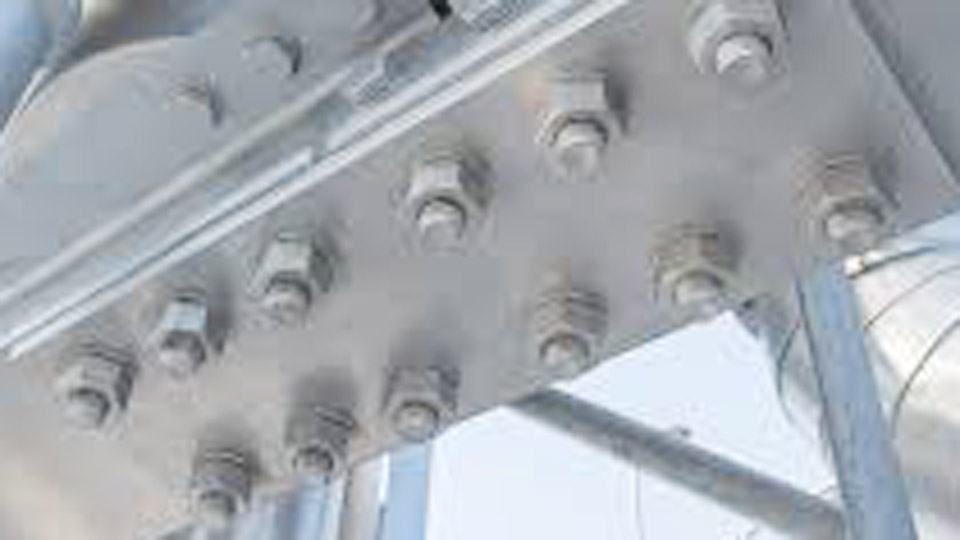
Image by ny-engineers
Overview of Structural Connection Types
To appreciate the advantages of bolted connections, it’s essential to outline the core characteristics of each method. These connections are fundamental in steel fabrication, where joint integrity determines overall structural reliability under tension, shear, and fatigue loads.
Bolted Connections
Bolted connections use threaded fasteners, typically high-strength bolts like ASTM A325 or A490, paired with nuts and washers to clamp components together. Pre-drilled holes align the parts, and torque application ensures preload, which resists shear through friction.
Common in beam-to-column joints, they allow for precise alignment with tolerances as low as 1-2 mm for hole positioning.
Riveted Connections
Riveted joints involve driving heated rivets—ductile steel pins—into aligned holes, forming heads on both ends via pneumatic hammering. Once cooled, the rivet contracts, creating a tight fit. Historically dominant in bridges and ships, rivets provide high shear resistance but require exact hole matching, with typical diameters ranging from 12-30 mm.
Welded Connections
Welded connections fuse materials using heat from processes like SMAW or GMAW, creating a continuous bond. Fillet welds are common for lap joints, offering deposition rates of 1-3 kg/hour depending on electrode diameter (e.g., 3.2 mm rods at 100-150 amps).
Groove welds penetrate deeper for butt joints, but heat-affected zones (HAZ) can reduce material strength by 10-20% in high-carbon steels.
Advantages of Bolted Connections Over Riveted Connections
Bolted connections have largely supplanted rivets in modern fabrication due to superior efficiency and adaptability. The shift began in the mid-20th century as bolting addressed rivets’ inherent limitations in installation and upkeep.
Installation speed stands out: Bolting requires simple torque tools, achieving assembly rates up to 50% faster than riveting, which demands pre-heating rivets to 1000-1200°C and noisy pneumatic tools generating over 100 dB.
This reduces on-site labor costs by 20-30%, as fewer skilled operators are needed—bolting can be handled by general technicians, whereas riveting often requires certified riveters.
Maintenance is another key edge. Bolts allow non-destructive disassembly, enabling component replacement without cutting or grinding. Rivets, being permanent, necessitate drilling out, which weakens surrounding material and increases repair time by factors of 2-3.
In vibration-prone environments, like machinery frames, bolts with locking washers (e.g., Nord-Lock) maintain clamp load better than rivets, which can fatigue at shear stresses exceeding 100 MPa over cycles.
Cost-wise, bolts lower initial expenses: Material costs for high-strength bolts are comparable, but installation avoids the energy input for heating (up to 5-10 kWh per joint) and fire risks associated with rivets. For large-scale projects, this translates to savings of 15-25% in total connection costs.
Bolts also offer better quality control. Factory-threaded bolts undergo tensile testing to standards like ISO 898, ensuring consistent strength (e.g., Grade 8.8 bolts at 800 MPa yield). Rivets depend on on-site forming, leading to variability in head integrity and potential defects like incomplete filling.
Advantages of Bolted Connections Over Welded Connections
While welding provides seamless integration, bolted connections shine in scenarios demanding reversibility and minimal material alteration, particularly in field assembly or retrofit work.
Dismantlability is paramount: Bolted joints can be undone with basic tools, facilitating modifications or inspections without compromising the base metal. Welded joints require grinding or cutting, which introduces stress risers and demands re-welding, extending downtime by 4-6 hours per joint.
This is critical in U.S. shop environments adhering to OSHA guidelines, where quick access reduces safety hazards.
Installation efficiency favors bolting in constrained sites. Pre-fabricated bolted assemblies arrive ready-to-install, cutting on-site time by 30-50% compared to welding, which needs certified welders (e.g., AWS D1.1 qualified) and equipment like 200-400 amp power sources.
No heat input means no distortion—welds can cause warping up to 2-5 mm in thin plates, requiring additional straightening.
Under dynamic loads, bolts often outperform welds in fatigue resistance. Preloaded bolts transfer loads via friction, mitigating crack initiation common in weld HAZs, where fatigue life can drop 20-40% at stress amplitudes over 50 MPa.
Using high-strength bolts, joints achieve endurance limits of 100-150 million cycles, versus welds’ 10-50 million in similar conditions.
Inspection and maintenance are streamlined with bolts. Visual torque checks or ultrasonic testing verify integrity without specialized NDT for welds, which can cost $50-100 per joint. Bolts avoid weld defects like porosity or slag inclusions, enhancing reliability in critical sectors like transportation.
From a cost perspective, bolting reduces skilled labor needs—welders earn 20-50% more than bolting crews—and eliminates consumables like electrodes (0.5-1 kg per meter of weld). However, for static loads, welds may be more economical in material use, saving 10-15% in weight.
Comparative Performance Metrics
To aid decision-making, consider this table summarizing key metrics based on typical steel applications (e.g., A36 steel, 12-20 mm thickness). Data draws from engineering standards like AISC 360.
| Metric | Bolted | Riveted | Welded |
|---|---|---|---|
| Installation Time (per joint) | 10-20 min | 30-45 min | 20-40 min |
| Cost per Joint (USD, incl. labor) | $15-30 | $25-50 | $20-40 |
| Shear Strength (MPa, avg.) | 200-300 (friction grip) | 150-250 | 250-350 (fillet) |
| Fatigue Life (cycles at 100 MPa) | 10^7-10^8 | 10^6-10^7 | 10^6-10^7 (with HAZ) |
| Maintenance Downtime (hours) | 1-2 | 3-5 | 4-6 |
| Material Compatibility | High (no heat) | Medium (heating risks) | Low (HAZ in alloys) |
Bolted connections balance speed and durability, with shear strengths rivaling welds when using pretensioned setups. Rivets lag in efficiency, while welds excel in static strength but falter in reversible applications.
Applications Where Bolted Connections Excel
In fabrication shops, bolted connections dominate for temporary structures or those under variable loads. For instance, in bridge retrofits, bolts allow segmental replacement without full shutdowns, preserving traffic flow. In machinery bases, they accommodate alignment adjustments, unlike rigid welds.
DIY welders might opt for bolts in home projects like trailer frames, where future upgrades are likely. Professional technicians in U.S. codes (e.g., IBC-compliant) favor them for seismic zones, as bolts provide ductility, absorbing energy through slip before failure at elongations of 15-20%.
One practical insight: In high-vibration setups, pair bolts with anti-loosening devices to match rivets’ vibration resistance without added weight.
Conclusion
Bolted connections offer a compelling choice when flexibility, speed, and maintenance outweigh the need for maximum static strength, outperforming rivets in nearly all modern metrics and surpassing welds in reversible or field-based scenarios.
The decision hinges on load type—opt for bolts in fatigue-heavy or modular designs to minimize costs and downtime. Welds remain superior for permanent, high-shear applications, but bolts’ adaptability makes them indispensable in evolving projects.
For advanced welders, consider hybrid approaches: Use bolts for initial assembly to verify fit-up, then add tack welds for enhanced rigidity, boosting joint efficiency by 10-15% in combined loading.
FAQs
Can bolted connections handle the same loads as welded ones?
Yes, in many cases, especially with high-strength friction-grip bolts achieving shear capacities up to 300 MPa, comparable to fillet welds. However, for ultimate tensile loads exceeding 500 kN, welds provide better continuity.
Why have rivets been replaced by bolts in most structures?
Rivets’ high installation noise (over 100 dB), fire risks from heating, and maintenance challenges make them obsolete; bolts cut costs by 20-30% and speed erection twofold.
When should I avoid bolted connections?
In corrosive environments without proper coatings, as bolts can seize; or under extreme static loads where welds’ seamless bond prevents stress concentrations.
How do I prevent bolt loosening in vibratory applications?
Employ locking mechanisms like Nord-Lock washers, which maintain preload under vibrations up to 10 Hz, extending service life by 50%.
Are bolted connections more environmentally friendly?
Potentially, yes—easier disassembly promotes recycling, reducing waste by 15-25% compared to cutting apart welded or riveted assemblies.


