
Learning how to solder copper pipe for beginners can be a real test of patience the first few times you try it. I still remember standing over a leaky joint, torch in hand, wondering why the solder just refused to flow. Turns out, it wasn’t the tools—it was my prep.
A little oxidation, not enough heat, and I had a mess instead of a seal. Once I figured out how clean surfaces, proper flux, and steady heat make all the difference, it finally clicked.
Getting this right matters for more than just stopping leaks. A good solder joint means long-lasting, watertight connections that save you from expensive repairs and frustration down the road. It’s also one of those skills that gives you instant payoff—you can see and test your success in minutes.
If you’ve ever struggled with stubborn solder or pipes that won’t seal, don’t worry—I’ve been there too. Let me walk you through the simple, foolproof steps that’ll get you clean, solid joints every time.
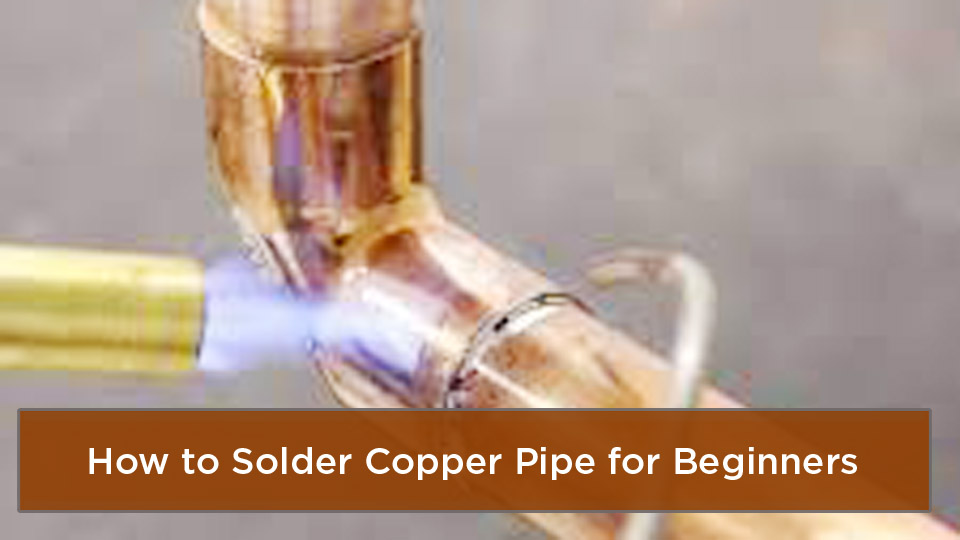
Image by satro
Why Soldering Copper Pipe Matters More Than You Think
You’re knee-deep in a kitchen remodel, and that copper supply line decides to spring a leak right before guests arrive. I’ve been there, cursing under my breath as water soaks the cabinets. Soldering copper isn’t some fancy trick—it’s the backbone of reliable plumbing in homes, shops, and even industrial setups across the US.
Copper’s a champ for water lines because it’s corrosion-resistant and flexible, but without a proper solder joint, you risk weak spots that fail under heat or vibration.
What makes it crucial? First off, safety. A bad joint can lead to bursts, especially in cold snaps when pipes freeze and expand—think Midwest winters hitting your unheated garage. Then there’s weld integrity, or in this case, solder integrity. We’re talking capillary action here, where molten filler metal wicks into the tiniest gaps for a seamless bond.
Skip the prep, and you’re gambling with pinhole leaks that waste water and spike your bills. Material compatibility seals the deal: Copper pairs perfectly with lead-free solders to comply with NSF/ANSI 61 standards for potable water, keeping toxins out of your family’s tap.
Cost efficiency? Huge. Pros charge $150 an hour for what you can knock out in 30 minutes once you’re dialed in. And for hobbyists like us, it’s empowering—turning a frustrating repair into a quick win. I’ve seen students in vocational programs light up when their first joint holds pressure without a drip.
Learning this isn’t optional if you’re serious about fabrication or home maintenance. It prevents headaches, saves cash, and lets you focus on the fun stuff, like customizing that vintage trailer.
Essential Tools and Materials for Soldering Copper Pipe
Before you fire up the torch, let’s talk gear. I always tell my trainees: Gather everything upfront, or you’ll be scrambling mid-job, which is a recipe for frustration. For beginners soldering copper pipe, you don’t need a warehouse of pro tools—just reliable basics that punch above their weight.
Start with a tubing cutter. The mini close-quarters version from brands like Ridgid is gold for tight spaces under sinks—cuts clean without crushing the pipe like a hacksaw might. Pair it with a deburring tool, basically a cheap reamer that smooths the cut edge to avoid flow restrictions down the line.
Cleaning’s non-negotiable, so grab emery cloth or a wire brush set. I swear by the nylon ones for fittings; they scrub off oxidation without gouging the copper. Flux? That’s your secret weapon—more on that soon, but a small tub of water-soluble paste flux from Oatey or RectorSeal keeps things tidy.
The heat source: A propane torch with a swirl tip. MAPP gas bumps up the temp for thicker pipes, but propane’s forgiving for starters. Don’t skimp on the self-igniting model; twisting valves mid-solder is a pain.
Solder wire: Go 95/5 tin-antimony for plumbing—lead-free, flows smooth at around 450°F, and meets code. A 1-pound spool lasts forever.
Safety kit rounds it out: Leather gloves, ANSI-rated goggles, and a fire blanket. I’ve singed more sleeves than I care to admit, so long sleeves and closed-toe boots are my rule.
Here’s a quick rundown in a table to keep it shop-friendly:
| Tool/Material | Why It Matters | Beginner Pick | Pro Tip |
|---|---|---|---|
| Tubing Cutter | Clean, burr-free cuts | Ridgid 31622 Mini | Rotate slowly; over-tighten and you’ll flatten the pipe. |
| Deburring Tool | Smooths edges for better flow | Built-in on cutters | Twist gently—aggressive reaming leaves scratches. |
| Emery Cloth/Wire Brush | Removes oxide for adhesion | 120-grit sheets | Roll into a cylinder for fitting interiors. |
| Flux Paste | Cleans and promotes flow | Water-soluble tinning flux | Thin layer only; globs block capillary action. |
| Propane Torch | Even heat without soot | Bernzomatic TS8000 | Use a pencil flame for control. |
| 95/5 Solder Wire | Code-compliant filler | 1/8-inch diameter | Bend into a hook for easy feeding. |
| Safety Gear | Burns and fumes protection | Leather gloves + goggles | Wet rag nearby for quick flux cleanup. |
This setup runs under $100 at any Home Depot, and it’ll handle 90% of jobs. I’ve hauled worse kits to remote sites—keep yours organized in a tackle box for grab-and-go fixes.
Preparing Copper Pipe and Fittings: The Foundation of a Leak-Free Joint
Ever botched a joint because the pipe looked “clean enough”? I have, and it taught me prep is 80% of the battle. Copper oxidizes fast, forming that dull patina that blocks solder from gripping. For beginners, think of this like sanding wood before paint—skip it, and nothing sticks.
First, measure twice, cut once. Lay out your run, accounting for fittings, and mark with a sharpie. That tubing cutter shines here: Score lightly, rotate 360 degrees, and deepen until it snaps free. I once rushed a basement install and left a burr—clogged the line in a week. Lesson learned.
Deburr immediately. The cut leaves a sharp lip inside and a ridge outside; hit ’em with your reamer. For the interior, fold a piece of emery cloth and twist it through like a drill bit. Outside, a quick swipe with the triangular file built into some cutters does the trick. Aim for satin-smooth copper—shiny means it’s ready.
Now, fittings: Elbows, tees, couplings—they’re your puzzle pieces. Inspect for dents; a dinged socket won’t seat right. Clean the interior with that rolled emery cloth, scrubbing until you see fresh metal.
Pro move: Dry-fit everything dry to check alignment. In tight spots, like behind a washer, a 45-degree elbow saves headaches over two 90s.
Humidity’s a sneak—work in a dry space if possible. I’ve sweated pipes in muggy Florida shops, and moisture loves to sabotage flux. Wipe everything with a rag post-cleaning. This step’s tedious, but it’s why your joint lasts 50 years, not 50 days.
Choosing the Right Flux and Solder for Your Project
Flux and solder aren’t interchangeable—pick wrong, and your joint’s toast. Let’s break it down like I’m handing you tools in the shop.
Flux is the activator: It dissolves oxides, prevents re-oxidation during heat, and creates that capillary pull. For copper pipe, tinning flux is king—it’s aggressive, leaves a tinned layer for better flow. Water-soluble versions rinse clean, ideal for potable lines to avoid corrosion later. I’ve switched to these after a acidic flux ate through a fitting in a salty coastal job.
Apply with an acid brush: Swipe the pipe end and socket interior, assemble while wet. Too much? It drips and smokes like crazy. Too little? Solder balls up instead of wicking in.
Solder selection ties to your app. 95/5 tin-antimony flows at lower temps, perfect for thin-wall Type L copper in homes. Need higher strength? 93/7 tin-silver for hot water lines or HVAC. Silver-bearing solders kick it up for pros, but they’re overkill for beginners—stick to basics.
Pros and cons table to sort it:
| Type | Pros | Cons | Best For |
|---|---|---|---|
| Tinning Flux | Strong cleaning, tins surfaces | Can be corrosive if not rinsed | General plumbing |
| Water-Soluble Flux | Easy cleanup, less residue | Less aggressive on heavy oxide | Potable water systems |
| 95/5 Tin-Antimony Solder | Low melt point, affordable | Softer than silver alloys | Cold water lines |
| 93/7 Tin-Silver Solder | Stronger, better for heat | Higher cost, needs more heat | Hot water or radiant heating |
Match to your copper type—Type K for underground, M for interiors. Always lead-free; it’s law in most states now. I keep a variety in my bench drawer—test on scrap to feel the flow.
Step-by-Step Guide: How to Solder Copper Pipe Like It’s Your First (and Last) Try
Gloves on, torch fueled—time to sweat that joint. I’ll walk you through like you’re my apprentice on a slow Tuesday. This is for a basic coupling, but scale it for elbows or tees.
Step 1: Prep and assemble. You’ve cut, deburred, cleaned, and fluxed. Slide the fitting onto the pipe till it bottoms out—about 1-inch overlap for 1/2-inch pipe. Twist a quarter-turn to spread flux evenly. Secure with a clamp if vertical; gravity’s no friend here.
Step 2: Fire up the torch. Light with a striker—click, whoosh. Adjust to a soft blue cone, about 1/2-inch long. Start heating the fitting, not the pipe—copper conducts fast, so focus where the mass is. Move the flame in circles, 360 degrees, keeping 1-2 inches away to avoid soot.
Step 3: Test for heat. After 10-15 seconds, touch your solder wire to the joint’s edge, opposite the flame. If it melts and sucks in like a straw, jackpot. Bubbles in the flux? You’re golden— that’s the party starting.
Step 4: Feed the solder. Remove the torch slightly, push wire into the joint. Let capillary do the work; it’ll draw 1-2 inches around. For a 3/4-inch pipe, use a dime-sized amount—watch for the silver ring forming. Too slow? Reheat gently.
Step 5: Cool and inspect. Kill the torch, let it air-cool— no quenching in water, or you’ll crack the joint from shock. Wipe excess flux with a damp rag while warm; it hardens like concrete otherwise. Pressure test later with air or water, but visually, that ring should be uniform, no gaps or lumps.
First time I did this on a trailer hookup, I overheated and got a blob—leaked like a sieve. Practice on two-foot scraps; it’ll click fast.
For vertical runs, heat from below and feed from the top—fights gravity. In walls? Shield with foil; one spark and you’re calling the fire department.
Common Mistakes Beginners Make When Soldering Copper Pipe (and How to Fix Them)
My biggest? Overheating till the flux charred black, turning a 10-minute fix into an hour of redo. Heat’s the silent killer; it burns flux, oxidizes copper, and weakens the bond.
Another trap: Dirty prep. That “shiny” pipe? Often hiding microscopic crud. Fix: Double-clean with fresh emery—feel the drag; smooth is your cue.
Flux faux pas: Glopping it on. Excess spits flames and clogs the joint. Thin even coat, assemble quick. And forgetting to wipe post-solder? Residue corrodes over time—rinse with hot water and baking soda for neutral pH.
Solder starvation: Not enough heat or wire. Joint looks good outside but pinholes inside. Solution: Consistent circling flame, feed till full ring. Vertical drips? Tilt and catch with a rag.
Undercut the pipe wrong? Crushed ends don’t seat, leading to gaps. Use the cutter’s wheel lightly; if dented, start over.
From shop stories, ignoring airflow matters too—fumes build in enclosed spaces. Ventilate, or you’ll taste solder for days. Track these, and your fail rate drops to zero.
Safety Considerations When Soldering Copper Pipe in Your Shop or Home
Safety isn’t a lecture—it’s survival. I’ve got a scar on my forearm from a rogue flame licking too close; don’t join that club.
Start with PPE: Flame-resistant gloves shield hands, goggles block spatter—UV-tinted for torch glare. Long cotton sleeves over synthetics; they melt on. Closed shoes prevent toe stubs from dropped tools.
Workspace: Clear flammables 3 feet out. That nearby lumber stack? Cover with a fire blanket. Got a fire extinguisher? ABC dry chem type, mounted handy. In garages, crack a window—propane’s clean-burning, but flux vapors irritate lungs.
Torch handling: Inspect hoses for cracks; leaks equal flashbacks. Light away from the joint, test flame stability. Post-job, purge lines by burning off residue in a safe spot.
For potable lines, double-check lead-free everything—California’s strict, but it’s smart nationwide. And kids/pets? Evacuate the zone; one curious paw near a hot pipe ends badly.
Hydrate and take breaks—heat builds fast. I rig a fan for airflow in summer shops. Bottom line: Treat every flame like it’ll bite. It keeps you welding another day.
Tips for Soldering Copper Pipe in Tricky Spots: Vertical, Tight, or Confined
Shops throw curveballs—vertical risers in a utility closet or elbows crammed behind drywall. I’ve jury-rigged more than a few, so here’s the playbook.
Vertical soldering: Heat bottom-up to build the puddle, feed from top. Use a heat sink like a wet rag on adjacent pipe to shield. For tall runs, tack the bottom, then work up in sections.
Tight quarters: Swivel-head torches save the day—Bernzomatic’s pencil style slips into 2-inch gaps. Mirror on a stick checks progress without contortions.
Confined walls: Pre-assemble outside if possible, or use a fish tape to thread. Shield studs with sheet metal; one ember and your insurance rates spike.
Hot water lines? Bump to MAPP gas for faster heat-up, but watch warpage on thin copper. Cold climates? Preheat pipes slightly to avoid thermal shock.
Anecdote time: On a boat refit, waves rocking the hull made verticals a nightmare. Clamped everything, worked in bursts—joint held through a hurricane season. Adapt, test, repeat.
Comparing Soldering to Other Copper Joining Methods: When to Stick or Switch
Soldering’s my go-to for most, but know your options. Press fittings? Tool’s pricey ($500+), great for no-flame zones like attics, but clips fail if not seated perfect.
Brazing? Higher temp (silver phosphor rods at 1300°F), stronger for gas lines—think HVAC pros. But it warps thin pipe and needs oxy-acetylene, overkill for water.
Threaded? Old-school, but leaks galore without tape. Crimping’s niche for PEX adapters.
Pros/cons:
| Method | Pros | Cons | Ideal Use |
|---|---|---|---|
| Soldering | Cheap, strong capillary seal | Needs flame, cleanup | General plumbing |
| Press Fittings | Fast, no heat | High initial cost | Retrofit jobs |
| Brazing | High strength, vibration-resistant | Hotter, more skill | Gas/AC lines |
| Threaded | No special tools | Prone to leaks | Temporary fixes |
For beginners, soldering builds fundamentals—flux, heat control—that transfer everywhere. I’ve phased out threading entirely; life’s too short for drips.
Real-World Applications: Soldering Copper in Home Repairs and Shop Projects
From leaky faucets to custom kegerators, copper’s everywhere. In homes, it’s supply lines—swap a corroded 1/2-inch to your fridge, solder on a shutoff valve, done in 20 minutes.
Shops? Radiant floor heating manifolds—loop Type L pipe, sweat tees for even distribution. Follow IPC codes for spacing; I’ve plumbed dozens without callbacks.
Hobbyists love it for distillers or CO2 setups—clean joints mean pure output. Students? Practice on mock-ups for AWS certs; it’s the gateway to TIG on exotics.
One gem: Repiping a vintage Airstream. Soldered every fitting vertical on blocks—held 60 PSI test like a champ. Applications endless; start small, scale up.
Machine Settings? Wait, Torch Tuning for Perfect Heat
No “dial 5” here—torches are analog beasts. But tune like this: Regulator at 5-10 PSI for propane, flame cone 1/2-inch blue, no yellow tips (incomplete burn).
For 1/2-inch pipe: 15-20 seconds heat. Thicker? Circle wider, add 5 seconds. Ambient cold? Preheat the pipe end.
Fuel mix: 50/50 propane/MAPP for versatility. I’ve tuned on the fly in windy yards—shelter the flame, or it’ll wander.
Joint Prep and Filler Compatibility: Insider Secrets
Prep’s king, but match filler to base. 95/5 loves Type M; silver for K. Preheat fluxed joints 100°F for humid days—activates faster.
Compatibility check: Flux on galvanized? Disaster—zinc reacts bad. Stick to copper/brass.
Pro hack: Tinning the pipe end pre-assembly—dip in molten 95/5, it wipes clean and primes the joint.
Conclusion: Ready to Tackle Your First Solder Job with Confidence
We’ve covered—from tools that won’t break the bank to those vertical nightmares that test your patience. Key takeaways? Prep like your project’s life depends on it (because it does), heat even and steady for that perfect wick, and always prioritize safety to keep the fun in fabrication.
You’re now armed with the know-how to create joints that laugh at pressure tests, save you from plumber roulette, and open doors to bigger builds. Whether patching a pipe or prototyping a rig, this skill’s your ticket to self-reliance in the shop or shed.
Go grab some scrap copper this weekend—torch it up, make a mess, learn from it. Your first leak-free run? Pure adrenaline.
FAQs
Can Beginners Use a Soldering Iron Instead of a Torch for Copper Pipe?
No, skip the iron—it’s too low-temp for capillary action on pipe. Torches hit 800°F+ to melt solder right; irons top at 400°F and won’t draw it in. Stick to propane for starters; it’s forgiving and code-friendly.
What’s the Difference Between Soldering and Sweating Copper Pipe?
Same thing, different lingo. “Sweating” is plumber slang for the heat making flux “sweat” and solder flow—it’s soldering through and through. I use ’em interchangeably in the shop; just know flux is key either way.
How Long Does a Soldered Copper Joint Last?
Done right? 50+ years, easy. I’ve seen 1920s pipes still kicking in old bungalows. Factors like water quality and vibration matter—rinse flux fully to dodge corrosion.
Do I Need Lead-Free Solder for All Copper Pipe Jobs?
For potable water, absolutely—federal law via Safe Drinking Water Act. Even non-drinking, it’s smart; lead alloys are phased out. 95/5 covers most; check local codes for HVAC.
What If My Soldered Joint Leaks After Cooling?
Don’t panic—likely poor prep or cold joint. Disassemble (reheat and pull), reclean, re-flux, and resolder. Test with soapy water under pressure first next time. Practice scraps fix most woes.


