
Working on a copper line tucked inside a wall is a different kind of pressure—you’ve got tight space, limited visibility, and no room for mistakes with heat. One wrong move and you’re not just fixing a joint, you’re dealing with damaged drywall or worse.
That’s exactly why learning How to Solder Copper Pipe in a Wall is so important for anyone doing plumbing repairs or home projects.
In these situations, control matters more than speed. You need the right heat, proper prep, and a steady hand to get the solder to flow cleanly without overheating nearby materials. I’ve seen joints fail—or walls get scorched—simply because the process wasn’t adjusted for the confined space.
This isn’t just about making a connection—it’s about doing it safely and cleanly. In this guide, I’ll walk you through practical steps, smart precautions, and real-world tips to help you solder copper pipe inside a wall without causing extra problems.
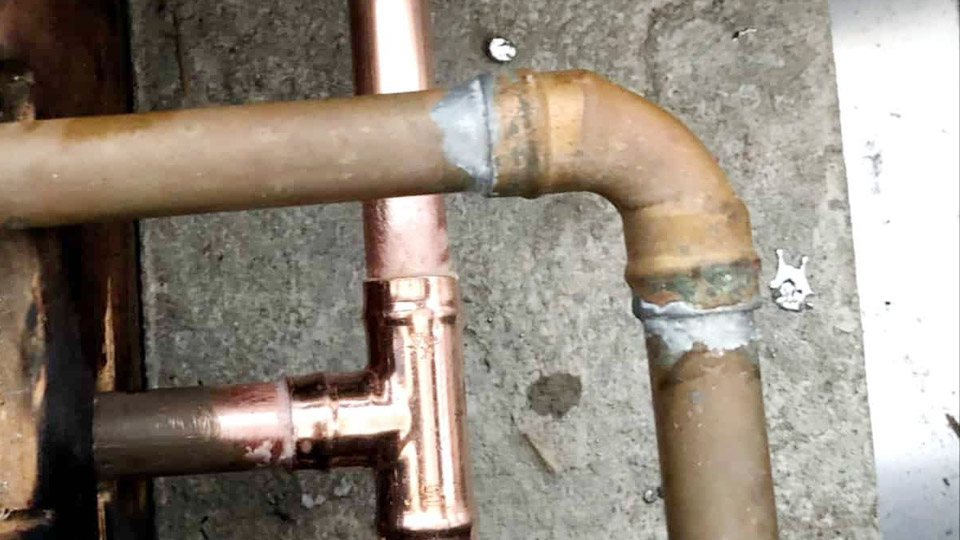
Image by mohaipod
Why Soldering in a Wall is a Different Beast Entirely
When you’re out in the open, soldering (or “sweating”) copper is straightforward. In a wall, everything changes. You aren’t just joining metal; you are managing an environment.
The Problem of Confined Heat
In a shop, heat dissipates. Inside a wall, heat reflects. The air becomes a kiln, and the surrounding wood or insulation begins to off-gas long before it actually ignites. Understanding how to solder copper pipe in a wall requires a shift from “getting it hot” to “controlling the zone.”
What it is: A specialized application of torch brazing/soldering where the work is stationary and the environment is flammable.
How it works: You use a fuel gas (typically MAPP or Propane) to heat a copper fitting until it reaches the melting point of the filler metal, drawing the solder into the joint via capillary action.
The Risk: Fire is the obvious one, but “cold joints” are actually more common in walls because welders get nervous, pull the heat too early, and fail to get full penetration into the fitting cup.
Setting the Stage: Preparation and Fire Shielding
I’ve seen guys jump straight to the torch because they’re in a rush. That’s how mistakes happen. In a wall, your “setup” is 80% of the success.
Creating the “Fire Box”
Before you even crack the valve on your tank, you need a barrier. A professional-grade flame protector cloth (a “cool shield”) is mandatory. I don’t care if you’re a 30-year vet; don’t raw-dog a flame next to old pine studs.
The Heat Shield: Use a high-temperature carbon felt or ceramic fiber blanket. Secure it behind the pipe so it covers the wood and any plastic Romex wiring.
The Spray Down: Keep a spray bottle of water nearby. Lightly mist the wood around the work area (not the joint itself). This increases the ignition temperature of the timber.
The Backup: Have a fire extinguisher within arm’s reach. Not in the truck—in the room.
Joint Preparation in Tight Quarters
If the copper isn’t shiny, the solder won’t flow. In a wall, you can’t always get a full 360-degree swing with a piece of sandpaper.
Abrasive Cloth: Use “open mesh” abrasive cloth. It’s flexible and lets the copper dust fall through rather than clogging.
Fitting Brush: Use a dedicated wire brush for the inside of the fitting.
The “Hidden” Side: Use a small inspection mirror to check the back of the pipe. Beginners always miss the back 10%, and that’s exactly where the leak will start.
Choosing Your Tools: Propane vs. MAPP Gas
In a fabrication shop, we have oxy-acetylene rigs. For wall repairs, you want something portable.
Propane (The Blue Tank)
- What it is: A standard fuel gas that burns at roughly 3,600°F in air.
- Why use it: It’s cooler and slower. If you are a student or a hobbyist, propane gives you a wider window of time before you overheat the flux.
- Practical Tip: On 1/2″ or 3/4″ pipe, propane is plenty. It’s also safer in tight spots because the “soak” is more manageable.
MAPP/Pro (The Yellow Tank)
- What it is: A stabilized methylacetylene-propadiene mixture that burns hotter (approx. 3,730°F).
- Why use it: Speed. When working in a wall, sometimes you want to get in, hit the temp, and get out before the surrounding area gets heat-soaked.
- Pro Insight: MAPP gas is the choice for 1″ pipe or larger, or if there is a slight “trickle” of water still in the line.
Step-by-Step: Sweating the Joint in the Hole
Here is the process I use when I’m tucked into a vanity cabinet or a crawlspace.
1. The Dry-Fit and Flux
Apply a thin, even layer of lead-free tinning flux to both the pipe and the fitting. Don’t go overboard; excess flux inside the pipe can cause pitting over time. Push the joint together and give it a quarter-turn to spread the paste.
2. The Torch Angle
This is where most people fail. In a wall, you often have to point the torch away from the studs, which means you might be heating the fitting unevenly.
- Heat the Fitting, Not the Pipe: Aim your flame at the center of the fitting cup. Let the heat transfer from the fitting into the pipe.
- The “Shadow” Technique: If you can only reach one side with the flame, use a heat-reflecting cap on your torch tip to wrap the flame around the back.
3. The Feed
Once the flux starts to bubble and turn clear (or “spit”), touch your solder to the joint opposite of where the flame is hitting.
- The Pull: Solder follows heat. If you heat the bottom and feed the top, gravity and capillary action work together to pull that filler metal all the way into the seat.
- The Amount: For a 1/2″ pipe, you need about 1/2″ of solder. Don’t keep feeding it until it drips; that’s just wasted material and a potential blockage.
Comparison of Filler Metals
Not all solder is created equal. For USA-based potable water systems, you must use lead-free.
| Solder Type | Composition | Melting Range | Best For |
| 95/5 Tin-Antimony | 95% Tin / 5% Antimony | 450°F – 464°F | High-pressure lines; sets quickly. |
| Tin-Silver (Stay-Brite) | Tin / Silver Alloy | 430°F | Exceptional strength; great for vibration. |
| Copper-Phosphorus | Cu / Phos (Brazing) | 1,145°F – 1,500°F | HVAC; no flux needed on copper-to-copper. |
Common Mistakes and Real-World Fixes
The “Steam Pop”
If there is even a drop of water in that line, you will never get it to temperature. The water turns to steam, creates pressure, and blows a hole through your molten solder.
- The Shop Fix: Stuff a piece of white bread up the pipe. It acts as a temporary dam, holds back the trickle, and then dissolves completely once you turn the water back on.
Over-Heating (Burning the Flux)
If you see green flames or black soot, you’ve stayed too long. The flux has charred, and solder will not bond to charred flux.
- The Fix: Pull the joint apart, let it cool, re-sand it to bright metal, and start over. You cannot “fix” a burnt joint by adding more flux.
Improper Support
In a wall, pipes are often hanging. When the copper gets hot, it expands and can shift out of the fitting.
- The Fix: Use a copper strap to secure the pipe before you heat it. This ensures the joint stays bottomed out in the fitting cup.
Safety and Atmospheric Management
Working in a confined wall space isn’t just about fire; it’s about what you’re breathing. Flux fumes contain acids that are harsh on the lungs, especially in an enclosed bathroom or closet.
- Ventilation: If you’re in a tight spot, set up a small floor fan to pull air out of the cavity.
- Eye Protection: When you’re looking up at a joint, gravity is pulling hot flux and molten solder toward your face. Wear wrap-around safety glasses.
- Post-Weld Inspection: After the joint is cool, wipe it with a damp rag. This removes residual flux which is acidic and will turn your pipe green and crusty (verdigris) over time.
Mastery of the Vertical Joint
The hardest part of learning how to solder copper pipe in a wall is the vertical “up-hand” joint. The fear is that the solder will just run out.
Pro Tip: Remember that capillary action is stronger than gravity. If the gap between the pipe and fitting is correct (roughly .003 to .005 inches), the solder will “suck” upward into the joint.
Control the Heat: If the solder is running out, the metal is too hot. Back the torch off. Use the “touch and go” method—touch the solder, see if it melts, and if it does, pull the flame away while you feed the wire.
The Path to Professional Results
Successfully soldering in a wall is a rite of passage for any serious fabricator or maintenance tech. It requires a blend of mechanical skill and environmental awareness that you just don’t get from bench-top practice.
When you can crawl into a dark corner, manage a 3,000-degree flame inches from dry timber, and produce a clean, silver ring around a fitting, you’ve reached a level of competence that sets you apart.
Final Thoughts
You are now equipped to handle the heat. By focusing on the “Fire Box” setup, choosing the right gas for the pipe diameter, and trusting the physics of capillary action over the urge to “over-torch” the joint, you’ll avoid the common pitfalls that lead to leaks and shop fires.
Always “bleed” your lines before you start. Open a faucet at the lowest point in the house and the highest. This empties the pipes of water and—more importantly—air pressure. A sealed pipe is a bomb; the air inside will expand when heated and can blow your joint apart right as you’re trying to finish it.
Frequently Asked Questions
Can I use a soldering iron for copper pipes in a wall?
No. A soldering iron doesn’t have the thermal mass or BTU output to heat a copper pipe and fitting to the required ~450°F. You must use a torch (Propane or MAPP) to get a proper structural bond.
How do I know if the solder went all the way around the back?
Use a small telescoping inspection mirror. You should see a continuous, smooth silver “fillet” around the entire circumference of the fitting. If there is a gap, you need to re-apply heat and feed a small amount of solder to that specific spot.
Is it safe to solder near fiberglass insulation?
Fiberglass itself doesn’t burn, but the paper backing (Kraft paper) is extremely flammable. Additionally, the binders in the fiberglass can release toxic smoke when heated. Always pull the insulation back at least 6–10 inches and use a flame shield.
What happens if I move the pipe before the solder cools?
You’ll create a “disturbed joint.” The solder will look grainy or crystallized instead of smooth and shiny. This joint is structurally weak and will likely leak under pressure. If the pipe moves, you need to reheat it, add a touch more flux/solder, and let it cool undisturbed.


