
Welding is not just about striking an arc and fusing metal together. It’s a process that requires careful technique, planning, and precision. One of the key factors in welding is understanding the different types of welding passes. A welding pass refers to a single progression of the welding arc along a joint. Depending on the thickness of the metal and the type of weld needed, multiple passes may be required to create a strong and durable weld.
If you’ve ever struggled with weak welds, cracks, or poor fusion, chances are that your welding pass technique needs some adjustment. If you’re a beginner or an experienced welder looking to refine your skills, I’ll break down everything you need to know about welding passes.
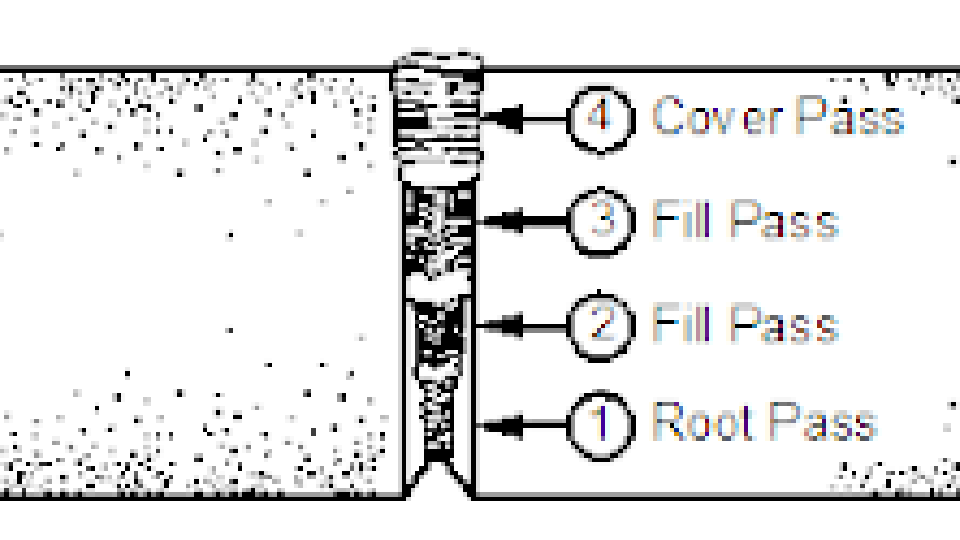
Image by metalartspress
What Are Welding Passes?
A welding pass is the movement of the welding electrode along the joint during a single run. When welding thicker materials, multiple passes are required to ensure full penetration, structural integrity, and a clean weld. Each pass has a specific role in building the weld properly.
The type and number of passes depend on several factors, including:
- Metal Thickness – Thicker metals require more passes for full fusion.
- Welding Process – Some welding processes, like TIG, may require more passes than others, like MIG.
- Joint Type – Groove welds and fillet welds require different pass strategies.
- Position – Overhead, vertical, or horizontal welding can affect how the passes are applied.
Understanding how different passes work will help you create stronger and cleaner welds.
Types of Welding Passes
Each type of welding pass plays a different role in the welding process. Let’s go over them in detail.
Root Pass
The root pass is the first weld bead placed in a joint. It’s the most important pass because it establishes the foundation for the rest of the weld. If the root pass is weak, lacks penetration, or has defects, the entire weld could fail.
To create a strong root pass:
- Use the correct heat settings to ensure proper penetration.
- Maintain a consistent travel speed.
- Ensure complete fusion between the base metals.
- Avoid excessive gaps in the joint.
Root passes are commonly used in pipe welding, structural welding, and heavy fabrication.
Hot Pass
The hot pass is applied immediately after the root pass. Its primary purpose is to reinforce the root weld, burn out any impurities, and ensure a clean fusion between layers.
Some key points for a good hot pass:
- Use slightly higher heat than the root pass to burn out slag or contaminants.
- Smooth out any irregularities left in the root pass.
- Maintain steady movement to avoid excessive buildup.
The hot pass is especially important in pipe welding, where strong and defect-free welds are critical.
Fill Pass
The fill pass, sometimes called the intermediate pass, is used to build up the thickness of the weld. It fills the groove between the base metals and ensures there are no gaps or weaknesses.
To perform a good fill pass:
- Adjust heat settings to avoid excessive reinforcement or undercut.
- Use smooth and even weaving motions for proper metal deposition.
- Remove any slag before adding additional passes.
Fill passes are necessary for multi-pass welds on thick materials, ensuring a uniform and strong weld.
Cap Pass
The cap pass is the final pass in a multi-pass weld. It provides the finished appearance and adds reinforcement to the joint. A good cap pass should have a smooth, even surface without excessive buildup or undercut.
To create a high-quality cap pass:
- Keep a steady travel speed for a uniform bead.
- Avoid excessive weaving to prevent a rough finish.
- Ensure proper heat control to prevent warping or distortion.
A well-executed cap pass not only strengthens the weld but also improves its appearance.
Welding Pass Techniques
Different welding processes require different techniques when applying passes. Here are some common approaches:
Stringer Bead Technique
A stringer bead is a straight, narrow weld pass without much side-to-side movement. It is often used for:
- Root passes to ensure deep penetration.
- Thin materials where excessive heat can cause warping.
- High-strength welds that require minimal defects.
Stringer beads work well in MIG, TIG, and stick welding, providing excellent control and precision.
Weave Bead Technique
A weave bead involves moving the welding arc side to side in a weaving motion. It is used for:
- Fill passes and cap passes to create wider coverage.
- Welding in vertical or overhead positions to control molten metal.
- Thick materials where deeper fusion is needed.
Weaving patterns vary depending on the joint and welding position, but the key is maintaining consistency for a uniform weld.
Number of Welding Passes Based on Metal Thickness
The number of passes required depends on the thickness of the metal. Here’s a general guideline:
| Metal Thickness | Approximate Passes Required |
|---|---|
| Up to 1/4 inch | 1 pass (single-pass weld) |
| 1/4 to 3/8 inch | 2-3 passes (root, fill, cap) |
| 3/8 to 1/2 inch | 3-5 passes (root, hot, fill, cap) |
| Over 1/2 inch | Multiple passes (as needed) |
Thicker metals require more passes to ensure complete fusion and structural integrity.
Problems in Multi-Pass Welding and How to Avoid Them
When working with multiple welding passes, several issues can arise. Here’s how to prevent them:
- Lack of Fusion: Ensure proper heat input and clean between passes.
- Porosity: Keep surfaces clean and use proper shielding gas or flux.
- Excessive Reinforcement: Control heat and filler metal deposition.
- Slag Inclusion: Remove slag between passes and use correct welding angle.
Proper preparation and technique are key to achieving high-quality multi-pass welds.
Why Welding Passes Matter
Understanding the different types of welding passes is essential for producing strong and reliable welds. If you’re working on structural steel, pipelines, or sheet metal, knowing when and how to use root passes, hot passes, fill passes, and cap passes will make a significant difference in weld quality.
Each pass plays a specific role, and skipping or improperly executing one can lead to weak joints, cracks, or weld failure. Mastering these passes will improve not only your skills but also the durability and safety of your welds.
Conclusion
Welding passes are a fundamental part of the welding process, especially when working with thick materials. The key to success is understanding how each pass contributes to the overall weld strength and applying the right techniques for each stage. If you’re laying down a strong root pass, reinforcing with a hot pass, building up with fill passes, or finishing with a cap pass, precision and control are essential.
If you’re new to multi-pass welding, take the time to practice on scrap metal. Experiment with different settings, techniques, and travel speeds to see what works best for you. With experience and attention to detail, you’ll be able to create professional-grade welds that are strong, clean, and visually appealing.
Frequently Asked Questions
What is the purpose of a root pass in welding?
The root pass is the first weld in a joint and is essential for establishing penetration and fusion between base metals.
How many passes are needed for a 1/2-inch thick weld?
Typically, 3-5 passes are required, depending on the welding process and joint design.
Can you use a weave technique for all welding passes?
No, weave techniques are mainly used for fill and cap passes. Root passes are usually done with a stringer bead for better penetration.
How do you prevent slag inclusion in multi-pass welding?
Clean the weld between passes and ensure proper electrode angle to avoid trapping slag.
Why does my cap pass look rough?
A rough cap pass can result from excessive weaving, improper heat settings, or inconsistent travel speed. Adjusting technique and settings can improve the final appearance.


