
Out on a grounding job, I once watched a connection fail right where it mattered most — the clamp looked fine, but the bond just couldn’t handle the load over time.
That’s when I got introduced to what-is-exothermic-welding, a process that doesn’t rely on pressure or filler wire but instead uses an intense chemical reaction to fuse metals together permanently. No arc, no machine — just heat hot enough to create a molecular bond.
In the field, especially with grounding systems and heavy-duty connections, this kind of weld isn’t just about strength — it’s about reliability that lasts for decades. Unlike standard welding methods, there’s no loose connection, no corrosion-prone joint, and no second chances if it’s done wrong.
If you’ve never worked with it before, it can feel a bit intimidating at first. But once you understand how it works and where it’s used, it becomes one of the most dependable techniques in a welder’s skill set — and I’ll break it all down step by step.

Image by dlrc.com
About Exothermic Welding
Exothermic welding is a method used to permanently join two or more metal conductors by means of a chemical reaction. This reaction produces intense heat, which melts the metals and fuses them together into a solid, joint-free bond.
The most common form of exothermic welding uses a powdered mixture of aluminum and copper oxide, sometimes called thermite. When ignited, this mixture reacts to generate temperatures over 2,500°C (4,500°F), which is much higher than traditional soldering or welding processes.
Unlike mechanical connectors or electrical soldering, exothermic welding does not require external electrical power or bulky machinery. The main energy comes from the chemical reaction itself. The result is a molecular-level bond that is very strong, corrosion-resistant, and electrically conductive.
Exothermic welds are often called “molecular bonds” because, at the joint, the metals essentially become one piece.
How Exothermic Welding Works
The process may look simple, but it’s carefully designed for safety and effectiveness. Here’s how exothermic welding is usually performed:
Preparation: Clean the metal conductors to remove oxidation, dirt, oil, and any coatings. Place them in a special graphite mold that holds them in the desired position.
Placing the Weld Powder: Add the right amount of exothermic weld powder (thermite) to the mold, along with an ignition powder on top.
Ignition: Use a flint gun or spark igniter to light the ignition powder. This starts the chemical reaction.
Chemical Reaction: The reaction between aluminum and copper oxide produces molten copper and intense heat. This molten copper flows down into the mold, melting and joining the conductors.
Cooling: After a few seconds, the reaction ends. Allow the joint to cool for 30–60 seconds. The graphite mold can then be removed, revealing a solid, permanent weld.
One thing beginners often overlook is the importance of precise mold placement and cleanliness. Even small bits of dirt or misaligned conductors can weaken the weld.
The Chemistry Behind Exothermic Welding
The core of exothermic welding is a redox reaction—a chemical process where one substance is reduced and another is oxidized. Here’s the basic reaction for copper-based thermite:
3CuO (copper oxide) + 2Al (aluminum) → 3Cu (molten copper) + Al2O3 (aluminum oxide) + heat
This reaction is highly exothermic, meaning it releases a lot of heat very quickly. That heat melts the copper and sometimes the metals being joined. The molten copper then fills the mold cavity, surrounding and fusing the conductors.
A surprising fact is that the reaction can reach temperatures up to 2,500–3,000°C. This is hotter than most welding torches and more than enough to melt steel or copper instantly.
Key Applications Of Exothermic Welding
Exothermic welding is not just for one industry. It’s a preferred method in several fields, especially where reliability and durability matter.
Electrical Grounding
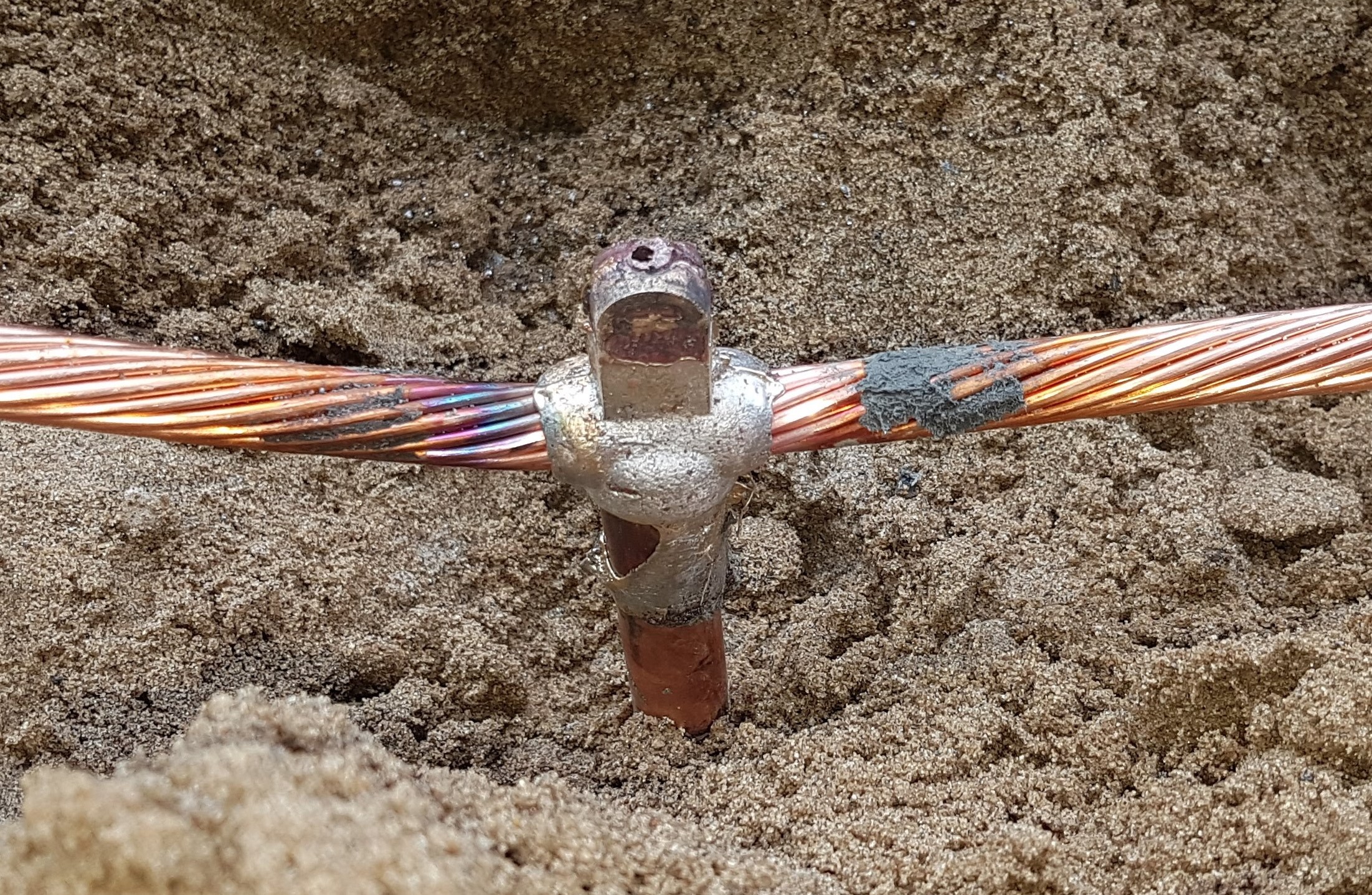
The most common use is in electrical grounding systems. Power plants, substations, and data centers rely on exothermic welding to connect copper rods, wires, and cables to grounding grids. The resulting joints have extremely low electrical resistance and will not loosen over time, ensuring safe and effective lightning and fault current dissipation.
Railway Construction
Railways use exothermic welding to join rail tracks. This process, called thermite welding, creates strong, smooth rail joints that reduce noise and wear. A properly welded rail acts as a single continuous piece, improving train safety and ride comfort.
Cathodic Protection
Pipelines, storage tanks, and marine structures are protected from corrosion by cathodic protection systems. Exothermic welding is used to attach anode wires or test leads directly to steel pipes or tanks. These connections must last for decades under harsh conditions.
Power Transmission And Distribution
Utilities use exothermic welding to connect overhead lines, grounding conductors, and transformer tap connections. The high-quality bond reduces power losses and prevents overheating.
Telecommunications
Telecom towers and data centers require reliable, low-resistance grounding. Exothermic welds ensure that lightning energy is safely diverted into the earth, protecting sensitive electronics.
Oil And Gas
In the oil and gas industry, exothermic welding is used to bond grounding and cathodic protection leads to pipelines. The process is also used in refineries and chemical plants, where safety and explosion resistance are critical.
Credit: dlrc.com
Types Of Exothermic Welding
Exothermic welding comes in several forms, depending on the metals and applications involved. The two main types are:
Copper-based (thermite) Welding
This is the most widely used type. The reaction uses copper oxide and aluminum powder, producing molten copper. It’s ideal for joining copper to copper, copper to steel, or copper to cast iron.
Steel-based Welding
In railway construction, a steel-based thermite reaction is used. Here, iron oxide and aluminum powder produce molten iron, which welds steel rails together. This process requires higher quantities of powder and larger molds.
Some systems also exist for aluminum-to-aluminum or aluminum-to-copper connections, but these are less common and require special powders and techniques.
Advantages Of Exothermic Welding
Many engineers and electricians prefer exothermic welding over other joining methods for several reasons:
- Permanent Bond: The joint is as strong as the conductors themselves, with no mechanical loosening over time.
- Low Electrical Resistance: The weld has equal or lower resistance than the conductors, ensuring efficient current flow.
- Corrosion Resistance: Joints resist corrosion, even in harsh, wet, or underground environments.
- No Need for External Power: All the energy comes from the chemical reaction—no generators or power tools required.
- Compact Equipment: The system is lightweight and portable compared to arc welding or mechanical crimping machines.
- Reliable Under Stress: Welded joints handle vibration, temperature changes, and electrical surges better than mechanical connectors.
- Long Service Life: Many exothermic welds last 50 years or more without degradation.
One insight many miss is that exothermic welding can be performed in remote locations with little equipment. This makes it ideal for field repairs or installations far from power sources.
Disadvantages And Challenges
No process is perfect. Exothermic welding has some limitations:
- Single-Use Molds: While some graphite molds are reusable, many are designed for a limited number of welds. This increases cost for small jobs.
- Preparation Time: Cleaning and setting up molds takes longer than crimping or bolting.
- Operator Skill Required: The process is not “plug and play.” Incorrect powder amounts or poor mold placement can lead to weak joints.
- Safety Hazards: The reaction produces extreme heat and molten metal, so proper safety gear is essential.
- Not Suitable for All Metals: Some alloys or coated wires may not weld properly.
- Difficult to Repair: If a joint fails, it’s hard to fix without cutting out and re-welding the conductors.
An important point: In wet or muddy areas, the mold must be kept dry to avoid steam explosions or poor weld quality.
Exothermic Welding Vs. Other Metal Joining Methods
To understand where exothermic welding fits, it helps to compare it with other common methods. Here’s a quick comparison of exothermic welding, mechanical connectors, and arc welding for electrical grounding:
| Feature | Exothermic Welding | Mechanical Connector | Arc Welding |
|---|---|---|---|
| Bond Strength | High (permanent molecular bond) | Medium (may loosen over time) | High |
| Corrosion Resistance | Excellent | Good (may require coating) | Varies (depends on material) |
| Electrical Resistance | Low (equal to or less than conductor) | Higher (contact resistance) | Low |
| Equipment Needed | Portable kit, no power | Wrenches, connector | Welding machine, power supply |
| Field Use | Excellent | Good | Poor (requires power) |
| Training Needed | Medium | Low | High |
Step-by-step Guide: Making An Exothermic Weld
If you’re curious about the practical side, here’s a typical step-by-step process for joining two copper cables for grounding:
- Gather Materials: You’ll need a graphite mold, exothermic weld powder, conductor cleaning brush, ignition tool, and safety gear (gloves, goggles, fire-resistant clothing).
- Clean Conductors: Remove dirt, oxide, and coatings from the cable ends with a wire brush.
- Place Conductors in Mold: Arrange the cables in the mold cavity according to the joint type (e.g., T-joint, cross, parallel).
- Close the Mold: Seal the mold tightly to prevent leaks.
- Add Weld Powder: Pour the measured amount of powder into the mold’s crucible. Sprinkle ignition powder on top.
- Ignite: Use the ignition tool to start the reaction from a safe distance.
- Wait for Reaction: The reaction will last a few seconds. Molten copper flows into the joint area.
- Cool Down: Wait 30–60 seconds for the weld to solidify.
- Open Mold: Remove the mold carefully. Tap off any slag (residue).
- Inspect Joint: Check for complete fusion and smooth finish.
A tip that professionals follow: Always keep the mold dry and preheat slightly if working in cold or damp conditions. Moisture can cause steam explosions.
Common Types Of Joints
Exothermic welding can be used to create many different types of connections. Some common joint types include:
- Butt Joint: End-to-end connection of two conductors.
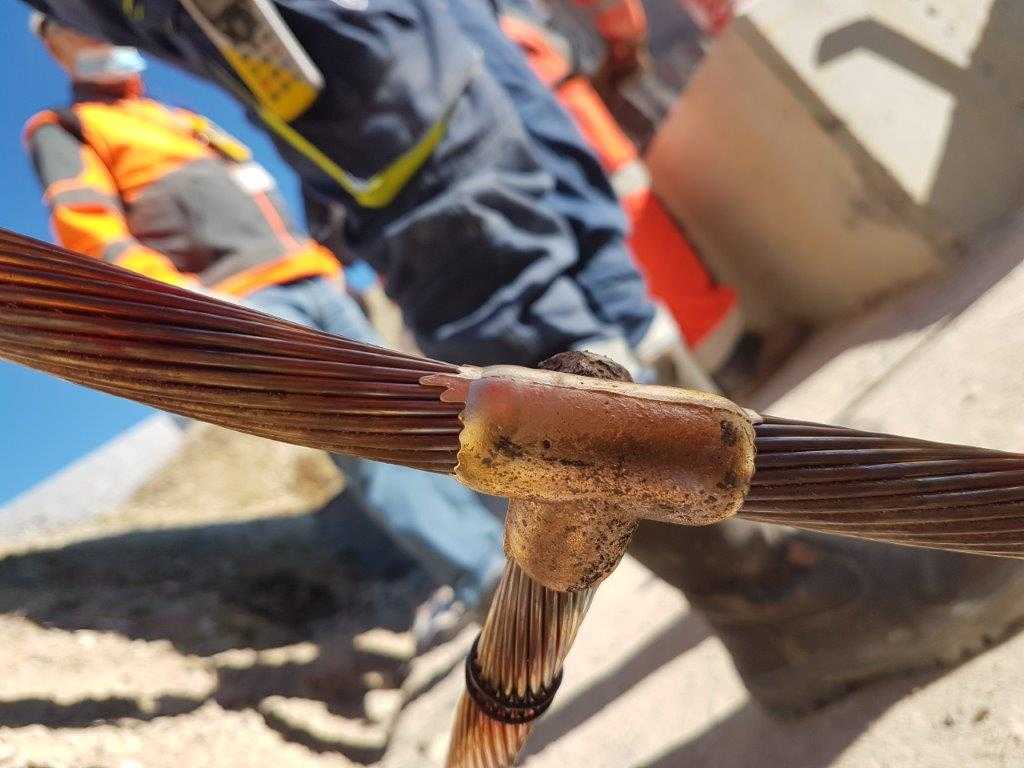
- T-Joint: One conductor joins the side of another.
- Cross Joint: Two conductors intersect at right angles.
- Parallel Joint: Two conductors are joined side by side.
Each joint requires a specific mold shape and powder amount. Using the wrong mold or powder can lead to weak or incomplete welds.
Quality Control And Inspection
Quality is critical with exothermic welding. Unlike mechanical connectors, you cannot simply tighten or adjust after the weld is made. That’s why proper inspection is important:
- Visual Inspection: Check for cracks, porosity, or incomplete filling.
- Mechanical Testing: For critical joints, pull tests or bend tests can confirm strength.
- Electrical Testing: Measure resistance with a micro-ohmmeter. The weld should have resistance equal to or less than the conductors.
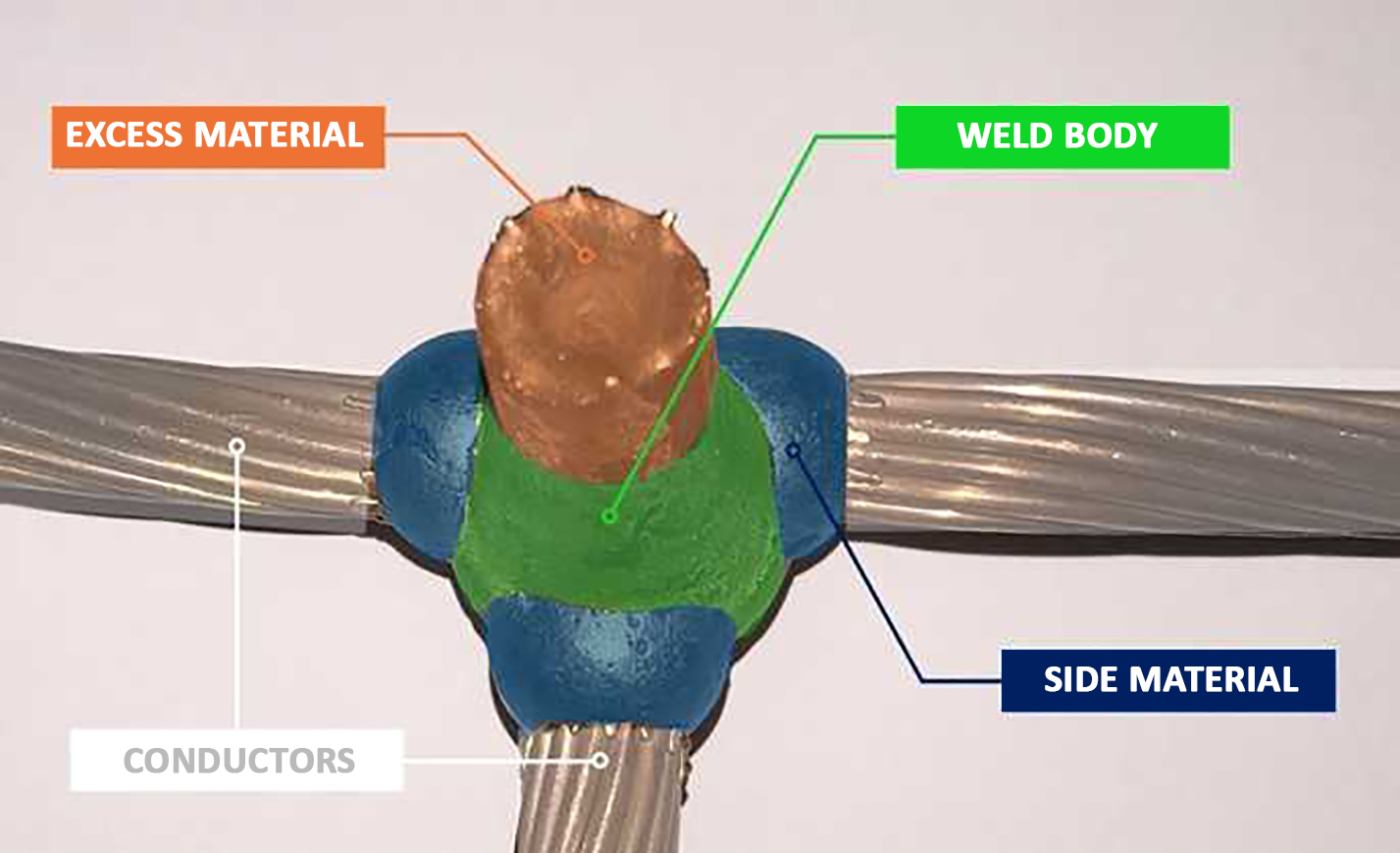
A non-obvious point: Even a small inclusion of slag or dirt can increase resistance and cause joint heating in service. This is why careful cleaning and mold maintenance are so important.
Safety In Exothermic Welding
Safety must always come first. The process involves molten metal and temperatures that can cause burns or fires if mishandled. Key safety practices include:
- Personal Protective Equipment (PPE): Use fire-resistant gloves, face shield or goggles, and long-sleeved clothing.
- Safe Distance: Ignite the mold from a distance using a proper ignition tool.
- Work Area: Keep flammable materials away. Perform the weld in a clear, well-ventilated space.
- Mold Handling: Allow the mold to cool before touching. Never open the mold immediately after the reaction.
- Powder Storage: Store weld powder in a dry place, away from sparks or flames.
If you’re working in wet areas, use extra caution. Water in the mold can turn to steam, causing dangerous splattering.
Credit: www.maltep.com
Exothermic Welding Kit: What’s Inside?
For field or workshop use, exothermic welding kits are available. A typical kit includes:
- Graphite molds (for different joint types)
- Exothermic weld powder packs (measured for each joint)
- Ignition tools (flint gun or spark igniter)
- Cleaning brushes
- Mold clamps and handles
- Safety gear (gloves, goggles)
Most kits are portable and packed in a case, making them ideal for fieldwork.
Material Compatibility
Not all metals are suitable for exothermic welding. Here’s a quick look at what can and cannot be joined:
| Metal | Can Be Welded? | Notes |
|---|---|---|
| Copper to Copper | Yes | Most common, strong bond |
| Copper to Steel | Yes | Special powder may be needed |
| Steel to Steel | Yes | Mainly for rail welding |
| Aluminum to Copper | Possible | Needs special process |
| Stainless Steel | Sometimes | May require flux or pre-treatment |
| Galvanized Steel | No | Zinc coating interferes with weld |
A beginner mistake is trying to weld metals with coatings or heavy oxidation. Always clean conductors to bare, shiny metal.
Environmental Considerations
Exothermic welding is environmentally friendly in some ways. The main by-products are aluminum oxide and small amounts of slag, both of which are inert. There’s no chemical contamination of the soil or water from the weld. The process also does not produce fumes or gases like arc welding, making it suitable for use in confined or sensitive areas.
However, the disposal of used molds and leftover powder must be managed properly. Do not leave residues on site, especially near water sources.
Industry Standards And Codes
Exothermic welding is recognized by many international standards for grounding and bonding. Some of the most important are:
- IEEE 837: Standard for qualifying permanent connections used in substation grounding.
- UL 467: Safety standard for grounding and bonding equipment.
- IEC 62561: International standard for earth electrode accessories.
Following these standards ensures that welds are safe, reliable, and compliant with local regulations. Many large projects require certified welds and periodic inspections.
Cost Considerations
Is exothermic welding expensive? The answer depends on the project scale. The initial cost for molds and powder can be higher than for mechanical connectors. However, the long-term benefits—zero maintenance, high reliability, and safety—often outweigh the upfront investment.
For small jobs, single-use molds may add to cost. For large installations, reusable molds and bulk powder packs make the process more economical.
A common mistake is trying to save money by reusing worn molds. This can lead to poor welds and costly failures later.
Real-world Examples
Tokyo Metro: Uses exothermic welding for all grounding connections in underground stations, preventing corrosion and ensuring passenger safety.
Oil Refineries in the Middle East: Rely on exothermic welds for cathodic protection because of the harsh, salty environment.
US Railroads: Almost all rail joints are made by thermite welding, supporting millions of tons of freight each year.
Credit: www.maltep.com
Innovations In Exothermic Welding
Recent years have brought improvements such as:
- Self-Igniting Powders: Remove the need for separate ignition powder, making the process faster and safer.
- Reusable Molds: New graphite materials allow for hundreds of welds from a single mold.
- Automated Systems: In factories, robots now perform exothermic welds for large-scale projects.
Wrapping Up
Exothermic welding is more than just a clever way to join metals. It’s a proven, reliable technology that has kept our power, rail, and pipeline systems running safely for decades. With the right preparation and care, exothermic welding delivers bonds that truly last a lifetime.
Frequently Asked Questions
What Is The Main Advantage Of Exothermic Welding?
The main advantage is its permanent, high-strength bond. The joint is molecular, so it won’t loosen, corrode, or increase in resistance over time. This makes it ideal for electrical grounding and structural connections.
Is Exothermic Welding Safe?
When proper safety procedures are followed, exothermic welding is safe. Always use protective gear and ignite the powder from a distance. Never use wet or damaged molds, and keep your work area clear.
Can Exothermic Welding Be Used On All Metals?
Exothermic welding works best with copper, steel, and some aluminum. Coated, heavily oxidized, or alloyed metals may require special powders or may not be suitable at all.
How Long Does An Exothermic Weld Last?
A properly made exothermic weld can last 50 years or more. Its service life usually matches or exceeds the life of the conductors themselves.
What Is The Difference Between Exothermic Welding And Regular Welding?
Exothermic welding uses a chemical reaction to generate heat and form the weld, not an electric arc or flame. This makes it portable and ideal for field use, especially for electrical connections and grounding.


