When two long metal sheets need to be joined continuously, a few tack welds just won’t cut it. That’s where understanding What is the Purpose of Seam Welding becomes crucial.
It’s not just about sticking metal together—it’s about creating a continuous, leak-proof bond that can handle stress, pressure, and repeated use.
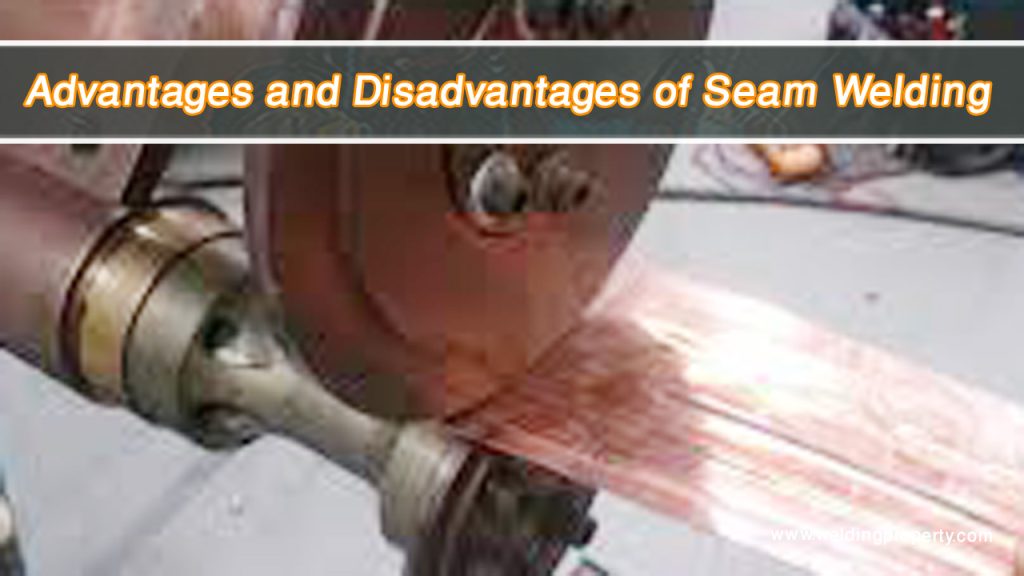
Seam welding is a type of resistance welding where overlapping metal sheets are joined along a continuous seam using wheel-shaped electrodes.
The process produces uniform welds that are strong, consistent, and ideal for tanks, pipes, automotive panels, and any application where gaps or leaks aren’t an option.
I’ll explain exactly why seam welding is chosen over spot welding in certain projects, how it works in real-world applications, and practical tips to set up and maintain your equipment so every seam comes out clean, strong, and reliable.

Image by eees.in
Understanding the Fundamentals of Seam Welding
Seam welding isn’t some fancy, high-tech trick; it’s a practical way to fuse metal along a linear joint for maximum durability.
What Exactly is Seam Welding?
Seam welding involves creating a continuous weld bead along the seam where two pieces of metal meet, either overlapped or butted. Unlike spot welding, which just tacks at points, this method fills the entire length, making it ideal for load-bearing structures or leak-proof containers.
In fabrication, especially automotive and chassis work, it’s often about reinforcing factory seams that were originally spot-welded for cost savings in production. The purpose? To eliminate weak spots that lead to fatigue cracks, vibration issues, or outright failure under stress.
From my experience, seam welding shines on mild steel, aluminum, or stainless in thicknesses from 16 gauge up to 1/4 inch. It’s not always resistance-based like in big factories; in the shop, we use arc processes to get that seamless bond.
How Does Seam Welding Work in Practice?
Picture this: you clamp your pieces tight, strike an arc, and run a steady bead along the seam, melting the base metal and adding filler as needed. The heat penetrates deep, fusing everything into one solid piece. For chassis work, you might grind down existing spot welds first, then lay in your continuous weld.
The key is control—too much heat warps the panel, too little leaves porosity. I always start with a test piece to dial in settings. It works by localized melting: the electrode (or wire) delivers the arc, amperage dictates the heat, and your travel speed ensures even penetration without burn-through.
When Should You Choose Seam Welding Over Other Methods?
Use it when strength and rigidity are non-negotiable. For a weekend warrior building a trailer, seam welding the frame seams prevents twisting under load.
Pros in auto shops do it on race cars to stiffen the unibody, improving handling by 20-30% in some cases I’ve seen. Why? Spot welds flex and crack over time; a full seam distributes stress evenly, reducing distortion and extending life.
But skip it for cosmetic work or thin sheets where heat input could cause warping—stick to tacks there. It’s perfect for repairs too, like fixing a cracked exhaust manifold by seam welding the split.
Common Applications for Seam Welding in Everyday Fabrication
I’ve used seam welding on everything from custom bumpers to boat trailers. It’s versatile, but let’s break down where it really pays off.
Seam Welding in Automotive Chassis and Frames
In race cars or off-road rigs, the purpose of seam welding is chassis reinforcement. Factory cars come with spot-welded seams for quick assembly, but that leaves flex points. By running continuous welds along door sills, engine bays, and suspension mounts, you create a monocoque that’s rigid yet lightweight.
Take a typical project: an old Mustang chassis. I’d seam weld the front subframe rails to handle more horsepower without twisting. It cuts down on vibration, improves tire contact, and prevents costly cracks during hard launches.
Using Seam Welding for Tanks, Pipes, and Containers
For leak-proof jobs like fuel tanks or hydraulic reservoirs, seam welding ensures no seepage. In my shop, I’ve fabricated custom oil pans by overlapping sheets and welding the seams solid—no filler leaks, no rework.
It’s great for HVAC ducts too, where airtight seams prevent energy loss. Why use it? It saves on sealants and reduces material waste, keeping costs low for DIYers.
Seam Welding in Structural Fabrication Projects
Think bridges, trailers, or farm gates. Here, the goal is load distribution. I’ve reinforced a flatbed trailer by seam welding the crossmembers, turning a wobbly setup into something that hauls tons without sagging. It minimizes distortion from heavy use and cuts safety risks from joint failure.
Preparing Your Workspace and Materials for Successful Seam Welding
Prep work is 80% of the job—skip it, and you’re chasing defects all day.
Joint Preparation Tips from the Shop Floor
Cleanliness is king. Grind off paint, rust, or mill scale with a flap disc to bare metal; contaminants cause porosity. For overlaps, aim for 1/2-inch minimum to avoid burn-through. Bevel edges on thicker stock (over 1/8 inch) for better penetration— a 30-degree angle works wonders.
In chassis work, drill out old spot welds if needed, then fit-up tight with clamps. Gaps lead to weak welds; use magnets or jigs for alignment.
Material Compatibility and Handling Notes
Match your filler to the base metal: ER70S-6 wire for mild steel, 4043 for aluminum. Mixing dissimilar metals? Use compatible fillers to avoid cracking. Handle sheets flat to prevent warping pre-weld; store them dry to dodge rust.
For stainless, purge with argon to prevent sugaring. Real tip: test compatibility on scraps—I’ve burned through hours fixing mismatches.
Choosing the Right Equipment for Your Seam Welding Job
A good MIG welder like the Lincoln 210MP handles most jobs; for precision, go TIG with a Miller Dynasty. US machines like these have reliable amp controls. Don’t skimp on gas—75/25 argon/CO2 for steel keeps spatter low.
Selecting the Best Welding Process for Seam Welding
Not all processes are equal for seams. Let’s compare.
MIG Welding for Fast, Efficient Seam Welds
MIG is my go-to for chassis seams—quick, with good penetration. Use 0.030-inch wire at 18-22 volts, 140-180 amps for 1/8-inch steel. Travel at 10-15 inches per minute for even beads.
Why? It’s forgiving for hobbyists, with continuous wire feed reducing starts/stops.
TIG Welding for Precision and Clean Seams
For aluminum or thin gauge, TIG rules. Set amps to 100-150 for 16-gauge, use 1/16-inch tungsten. Pedal control lets you pulse heat to minimize distortion.
It’s slower but produces show-quality welds. Anecdote: I TIG-seamed a motorcycle frame once—zero warps, perfect alignment.
When to Use Stick Welding (SMAW) for Seams
SMAW works for outdoor repairs where wind blows gas away. Use 6011 rods for dirty metal, 1/8-inch diameter at 90-120 amps. It’s chunky for seams, but great for thick frames.
Drawback: more slag cleanup. Pros use it for quick fixes on farm equipment.
Dialing in Settings: Amperage, Electrodes, and More
Settings make or break your weld. Let’s get specific.
Recommended Amperage Ranges for Different Materials
For mild steel seams: 120-200 amps depending on thickness—lower for thin, higher for thick to ensure penetration without holes.
Aluminum: 80-150 amps; it conducts heat fast, so pulse to control puddle.
Stainless: 100-180 amps, with back purging.
Real shop test: always amp up gradually on a test joint to avoid rod burn-off or under-penetration.
Electrode Diameters and Types for Optimal Results
For MIG: 0.023-inch for thin sheets, 0.035 for heavier. Stick: 3/32-inch 7018 for low-hydrogen seams.
TIG: 3/32 tungsten for most. Match diameter to amps—too thin melts, too thick lacks precision.
Tip: Store rods dry; moisture causes cracking.
Filler Metal Compatibility and Selection Advice
ER308L for stainless seams, avoids corrosion. For steel, ER70S-6 gives clean welds. Incompatible fillers crack under stress—I’ve seen it on mixed-metal jobs.
Select based on tensile strength: match or exceed base metal.
Step-by-Step Guide to Seam Welding a Typical Project
Let’s walk through seam welding a chassis section, like I do in the shop.
- Safety first: Gear up with helmet, gloves, respirator. Ventilate for fumes.
- Prep: Clean seam, clamp pieces. Tack every 6 inches to hold alignment.
- Set machine: For MIG on 1/8 steel, 160 amps, 20 volts, 350 IPM wire speed.
- Strike arc: Start at one end, weave slightly for wider coverage.
- Travel: Steady speed, watch puddle for full penetration—no undercuts.
- Overlap beads: If multi-pass, clean slag between.
- Cool: Let air cool to minimize distortion; quench if needed.
- Inspect: Grind flush, check for cracks with dye penetrant.
This process took a floppy frame and made it race-ready in my last build.
Common Mistakes in Seam Welding and How to Fix Them
Even pros mess up—here’s what I’ve learned.
Avoiding Overheating and Distortion Issues
Too high amps warp panels. Fix: Lower heat, use skip welding (weld short sections, let cool). On thin metal, back with copper to dissipate heat.
Anecdote: Warped a door skin once—had to hammer it flat. Lesson: Pulse weld.
Fixing Porosity and Weak Penetration from Wrong Settings
Porosity from dirty metal or bad gas. Clean thoroughly, check flow at 20 CFH. Weak penetration? Up amps or slow travel.
Bad weld? Grind out, re-weld. Better to fix early than rework later.
Dealing with Cracks Caused by Improper Filler or Prep
Cracks from stress or mismatch. Preheat thick stock to 200°F, post-heat if brittle. Use low-hydrogen rods.
I’ve cracked stainless seams—fixed by annealing and re-welding.
Safety Considerations Every Welder Needs to Know
Welding’s fun, but dangerous. UV rays burn eyes—always auto-dark helmet. Fumes? Use extractor or mask; zinc-coated metal causes metal fever.
Electrical: Ground properly to avoid shocks. Fire watch: Sparks ignite rags. In chassis work, disconnect batteries to prevent arcs.
Pro tip: Hydrate; heat exhaustion sneaks up.
Pros and Cons of Seam Welding in Fabrication
Pros: Ultimate strength, leak-proof, reduces fatigue failures. Improves handling in vehicles, cuts maintenance.
Cons: Time-consuming, higher heat input risks distortion. Not ideal for ultra-thin or heat-sensitive materials. Costlier in filler for long seams.
In my experience, pros outweigh for structural jobs.
Comparing Seam Welding Techniques
Here’s a quick table to help choose:
| Process | Best For | Amperage Range | Pros | Cons |
|---|---|---|---|---|
| MIG | Chassis frames | 120-200 amps | Fast, easy | Spatter cleanup |
| TIG | Precision seams | 80-150 amps | Clean, controlled | Slower |
| Stick (SMAW) | Outdoor repairs | 90-140 amps | Versatile on dirty metal | Slag, rough finish |
| Resistance (Factory) | Mass production | N/A (machine-specific) | No filler | Not shop-friendly |
This covers common US practices—pick based on your setup.
Wrapping Up
Seam welding transformed how I approach builds, giving me confidence in every joint. You’re now armed with the know-how to pick the right process, settings, and fixes, turning potential failures into rock-solid projects. Always weld in short bursts on long seams to keep heat even—it’s saved me from countless warps.
FAQs
How do I choose the right amperage for seam welding mild steel?
Start at 140 amps for 1/8-inch, adjust up for thicker. Test on scrap: good penetration shows even bead back-side without burn-through.
What’s the best way to prevent warping during seam welding?
Clamp securely, weld in 2-3 inch segments, alternating sides. Use heat sinks like wet rags on thin panels.
Can I seam weld aluminum with MIG?
Yes, use 4043 wire, 100-140 amps, pure argon. Clean oxide layer first—it’s crucial for strong bonds.
Why do my seam welds crack after cooling?
Likely hydrogen embrittlement or stress. Use low-hydrogen fillers, preheat to 150°F, and stress-relieve post-weld.
Is seam welding worth it for a daily driver chassis?
For street cars, spot reinforcements suffice; full seams can make it too rigid, affecting crash safety. Stick to race or off-road rigs.