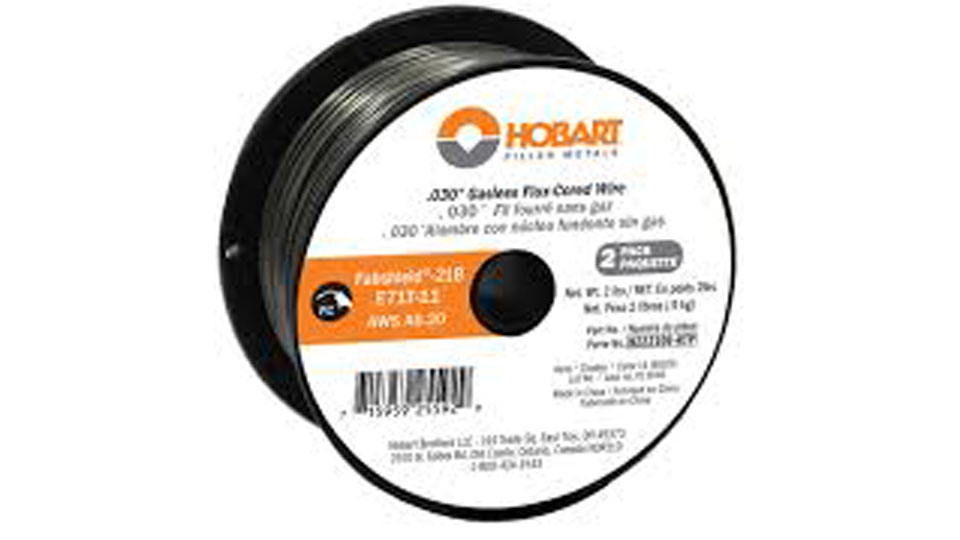
I was welding a support bracket on a deadline when my bead suddenly started looking like cold oatmeal. Wrong rod. Wrong call. Mild steel is forgiving, sure—but only if you feed it the rod it wants. I learned fast that choosing the right welding rod can be the difference between a rock-solid joint and a failure waiting to happen. If you want rods you can trust when the pressure’s on, here are the ones that have never let me down.

Image by tradeindia
Why Welding Rods Matter for Mild Steel
Welding rods, also called electrodes, are the filler material you use in stick welding (also known as Shielded Metal Arc Welding or SMAW). They’re metal rods coated with a flux that melts as you weld, creating a shield that protects the molten metal from air and contaminants like oxygen or moisture. Without a good rod, your weld can end up weak, brittle, or full of holes.
Mild steel is forgiving compared to materials like aluminum or stainless steel, but it still needs the right rod to get a strong, clean weld. The rod you choose affects the arc stability, penetration, and how the weld looks. It also plays a big role in how easy the welding process is.
I’ve had days where the wrong rod turned a simple job into a headache, with slag that wouldn’t come off or an arc that kept sticking. The right rod makes welding feel smooth and satisfying.
Here’s what a good welding rod does for mild steel:
- Protects the weld: The flux shields the molten metal from air, preventing defects like porosity.
- Controls the arc: A stable arc makes welding easier and produces a smoother bead.
- Matches the material: The rod’s metal core needs to work well with mild steel for strong welds.
- Affects weld appearance: The right rod gives you a clean, professional-looking bead.
So, what are the best welding rods for mild steel? Let’s dive into the options.
Common Welding Rods for Mild Steel
Stick welding is one of the most popular methods for mild steel because it’s versatile and doesn’t require fancy equipment. The best rods for mild steel are usually from the E60XX or E70XX series, based on the American Welding Society (AWS) classification.
The numbers tell you about the rod’s strength and characteristics. For example, “E6010” means the rod has a tensile strength of 60,000 psi, and the last two digits describe the flux type and welding position. Here’s what I’ve learned about the top rods for mild steel.
E6010
The E6010 rod is a classic for mild steel, especially for pipe welding or outdoor projects. I’ve used it a ton on rusty or dirty steel because it’s great at cutting through grime. It’s a cellulose-based electrode, which means it creates a deep, penetrating arc. This makes it ideal for root passes—the first layer of a multi-pass weld.
What I love about E6010 is its versatility. It works in all positions (flat, horizontal, vertical, and overhead), and it’s great for welding in tough conditions, like windy weather. The downside? It’s not the easiest rod for beginners. The arc is aggressive, and it takes practice to control.
I remember my first time using E6010—I ended up with a lot of spatter and a bead that looked like a rollercoaster. But once you get the hang of it, it’s a powerhouse.
E6011
The E6011 rod is similar to E6010 but a bit more forgiving. It’s another cellulose-based rod, so it has a deep-penetrating arc and works well on dirty or painted steel. I’ve used E6011 for farm repairs, like fixing gates or equipment, because it handles less-than-perfect surfaces like a champ.
One thing I like about E6011 is that it works with both AC and DC welders, so it’s great if you’re using an older machine. It’s also good for all positions.
The arc is a bit easier to control than E6010, but it still produces some spatter, so you’ll need to clean up afterward. If you’re new to welding, E6011 is a solid starting point for mild steel.
E6013
If you’re looking for an easy-to-use rod, E6013 is your best friend. It’s my go-to when I’m teaching someone new to welding because it’s so forgiving. The E6013 has a mild arc and produces a smooth, clean bead that looks great. It’s perfect for thin mild steel, like sheet metal or light fabrication work.
The flux on E6013 is titanium-based, which means it creates less spatter and the slag peels off easily. I’ve used it for projects like building small brackets or welding thin steel panels.
The downside is that it doesn’t penetrate as deeply as E6010 or E6011, so it’s not the best for thick steel or dirty surfaces. It’s also best for flat or horizontal welds, though you can use it in other positions with some skill.
E7018
The E7018 rod is a low-hydrogen electrode, and it’s my pick for high-strength welds on mild steel. I’ve used it for structural projects, like beams or heavy machinery repairs, because it produces strong, clean welds with minimal defects. The “70” in E7018 means it has a tensile strength of 70,000 psi, so it’s tougher than the E60XX series.
What makes E7018 special is its low-hydrogen flux, which reduces the risk of cracking in thicker steel. It’s great for professional jobs where quality is critical. However, it’s a bit trickier to use. You need a steady hand, and the rods must be stored properly to avoid absorbing moisture.
I learned this the hard way when I left a pack of E7018 in my damp garage—my welds ended up with tiny cracks. Keep them in a rod oven or airtight container, and you’re good to go.
E7024
The E7024 rod is less common but worth mentioning. It’s designed for high-speed welding on flat or horizontal surfaces, like filling large joints or working on thick plates.
I’ve used it for projects like welding heavy steel bases where speed was more important than precision. It lays down a lot of metal quickly, which can save time.
The catch with E7024 is that it’s not great for all positions. It’s best for flat welds, and the slag can be a bit stubborn to remove. It’s also not as strong as E7018, so I don’t use it for critical structural work. But for big, non-critical jobs, it’s a time-saver.
Choosing the Right Welding Rod for Your Project
With so many options, how do you pick the best rod for your mild steel project? It depends on a few things: the thickness of the steel, the welding position, the condition of the material, and your skill level. Here’s a table to help you decide.
| Rod Type | Best For | Strength (psi) | Positions | Ease of Use | Surface Condition |
|---|---|---|---|---|---|
| E6010 | Pipe welding, dirty steel, root passes | 60,000 | All positions | Advanced | Rusty or dirty |
| E6011 | General repairs, farm equipment | 60,000 | All positions | Intermediate | Rusty or dirty |
| E6013 | Thin steel, sheet metal, beginners | 60,000 | Flat, horizontal | Beginner | Clean surfaces |
| E7018 | Structural welds, high strength | 70,000 | All positions | Intermediate | Clean surfaces |
| E7024 | High-speed welding, thick steel | 70,000 | Flat, horizontal | Intermediate | Clean surfaces |
Steel Thickness
For thin mild steel (1/8 inch or less), I stick with E6013 because it’s easy to control and prevents burn-through. For medium thicknesses (1/8 to 1/4 inch), E6011 or E7018 work well, depending on whether you need deep penetration or high strength.
For thick steel (1/4 inch or more), E7018 or E7024 are great for filling large joints, while E6010 is perfect for root passes.
Welding Position
If you’re welding in tricky positions, like vertical or overhead, go with E6010, E6011, or E7018. These rods are designed for all-position welding. For flat or horizontal welds, E6013 or E7024 are easier to use and produce nice-looking beads.
Material Condition
Mild steel often comes with rust, paint, or grease, especially if you’re doing repairs. E6010 and E6011 are your best bets for dirty surfaces because their aggressive arc burns through contaminants. For clean steel, E6013 or E7018 give you smoother results.
Skill Level
If you’re just starting out, E6013 is the easiest to learn with. Its mild arc and easy slag removal make it forgiving. As you gain experience, try E6011 or E7018 for more versatility. E6010 is best left for advanced welders due to its tricky arc.
Welder Type
Check your welding machine. Most stick welders can handle both AC and DC, but some rods work better with one or the other. E6011 and E6013 are great for AC welders, while E6010 and E7018 prefer DC. E7024 works with both but shines on AC.
Setting Up Your Welding Rods Properly
Choosing the right rod is only part of the equation. You’ve got to set up your welder and rods correctly to get good results. Here’s what I’ve learned from years of trial and error.
Rod Storage
Moisture is the enemy of welding rods, especially E7018. If they get damp, the flux can crack or cause hydrogen-induced cracking in your welds. I store my rods in a dry, airtight container or a rod oven. For E6010, E6011, and E6013, storage is less critical, but I still keep them dry to be safe.
Amperage Settings
Each rod has a recommended amperage range, usually printed on the box. For example, a 1/8-inch E6013 rod might run between 80-120 amps, while an E7018 might need 100-150 amps. Start in the middle of the range and adjust based on how the arc feels.
Too low, and the rod sticks. Too high, and you’ll burn through the steel. I always test on a scrap piece first to dial it in.
Electrode Angle and Technique
Hold the rod at a 10-20 degree angle from vertical, leaning in the direction you’re welding. For E6010 and E6011, use a whipping motion to control the arc. For E6013 and E7018, a steady drag or weave works better. E7024 is all about speed, so keep moving to lay down a lot of metal.
Cleaning the Steel
Mild steel welds best when it’s clean. I use a wire brush or grinder to remove rust, paint, or grease. For E6010 and E6011, you can get away with a little surface dirt, but cleaner is always better. A quick wipe with acetone helps remove oils.
Common Mistakes to Avoid
I’ve made plenty of mistakes welding mild steel, and I want to save you the trouble. Here are some common pitfalls:
Using the wrong rod: A rod like E6013 on thick, rusty steel won’t penetrate enough, leading to weak welds. Match the rod to the job.
Incorrect amperage: Too much heat burns through thin steel; too little causes the rod to stick. Test your settings on scrap metal.
Poor rod storage: Damp E7018 rods can ruin a weld. Keep them dry and warm.
Dirty steel: Even a little rust or grease can cause porosity. Clean thoroughly before welding.
Bad technique: Rushing or using the wrong motion (like weaving with E6010) can lead to uneven beads or slag inclusions.
Suggestions for Welding Mild Steel
Here are some tips I’ve picked up over the years to make your mild steel welding smoother:
Start with E6013: It’s the easiest rod for beginners and works great on thin steel.
Keep a variety of rods: Stock E6011, E6013, and E7018 to cover most mild steel jobs.
Practice on scrap: Before tackling your project, weld on some scrap steel to get your settings and technique dialed in.
Invest in a rod oven: If you use E7018, a rod oven keeps rods dry and ready to use.
Clean thoroughly: A clean surface means stronger welds and less cleanup.
Watch your arc length: Keep it short (about the thickness of the rod) for better control and less spatter.
Conclusion
Welding mild steel is one of the most rewarding parts of welding, and the right rod can turn a good weld into a great one. If you’re fixing a gate with E6011, building a frame with E7018, or practicing with E6013, each rod has its place. By matching the rod to your project—considering thickness, position, and surface condition—you’ll get strong, clean welds every time.
I still remember the first time I laid down a perfect bead on mild steel. The arc was smooth, the bead was even, and the slag peeled off like butter. It felt like magic. With the right rod and a little practice, you’ll have that moment too.
FAQs
What’s the easiest welding rod for beginners welding mild steel?
The E6013 rod is the easiest for beginners. It has a mild arc, produces smooth welds, and the slag is easy to remove.
Can I use E6010 for all mild steel projects?
E6010 is great for pipe welding or dirty steel, but it’s not ideal for thin steel or beginners due to its aggressive arc. Use E6013 or E7018 for more versatility.
Do I need a special welder for E7018 rods?
E7018 works best with a DC welder, but it can be used with AC if your machine supports it. Check the rod box for compatibility.
How do I store welding rods properly?
Store rods in a dry, airtight container. For E7018, use a rod oven to prevent moisture absorption, which can cause weld defects.
What’s the best rod for welding rusty mild steel?
E6010 or E6011 are best for rusty steel. Their deep-penetrating arc burns through rust and grime, giving you a strong weld.