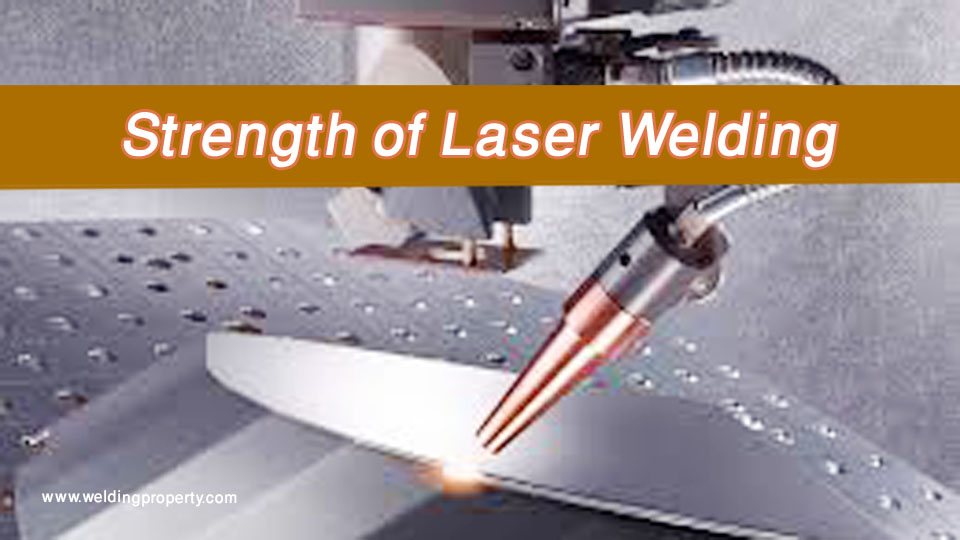
Laser welding is a precise and highly efficient joining process that has revolutionized industries like aerospace, automotive, medical device manufacturing, and electronics. Unlike traditional welding methods, which rely on electric arcs or gas flames, laser welding uses a concentrated beam of light energy to fuse materials together.

Image by accteklaser
This technology offers superior control, precision, and speed, making it an ideal choice for applications where quality and accuracy are paramount. We will explore the fundamentals of laser welding, how it works, its various applications, and the advantages it offers compared to other welding methods.
What is Laser Welding?
Laser welding is a fusion welding process that uses a highly focused laser beam to melt and join materials. The term “laser” stands for “Light Amplification by Stimulated Emission of Radiation.” This technology generates a coherent, monochromatic beam of light that can be focused to a tiny spot, allowing for high energy density and intense heat to be applied to a very small area.
When the laser beam is directed onto the workpiece, it creates a molten pool that allows for materials to fuse together upon cooling.
Laser welding is often used for metals, but it can also be applied to non-metallic materials like plastics. It is particularly effective for thin materials and small parts, making it indispensable for industries where precision and minimal heat input are critical.
How Does Laser Welding Work?
Laser welding operates on the principle of using concentrated light energy to create heat, which is then used to melt and fuse materials. The process can be broken down into several key steps:
Laser Generation
A laser source generates a focused beam of light energy. There are different types of lasers used in welding, including CO2 lasers, fiber lasers, and solid-state lasers. Each type has its own characteristics in terms of wavelength, power, and application suitability.
Focusing the Laser Beam
The generated laser beam is directed and focused onto the workpiece using mirrors and lenses. The focus point can be adjusted depending on the material thickness and the desired depth of the weld. The intense heat at the focus point causes the material to melt.
Melting the Workpiece
As the laser beam strikes the workpiece, it heats the material to its melting point. The molten pool forms at the surface where the laser is focused, and this pool allows the material to fuse together. The size and depth of the molten pool depend on factors such as the laser power, welding speed, and material properties.
Cooling and Solidification
Once the laser beam moves away from the molten area, the pool quickly cools and solidifies, forming a strong weld. Due to the precision of laser welding, the surrounding areas experience minimal heat, reducing the risk of thermal distortion or damage to adjacent components.
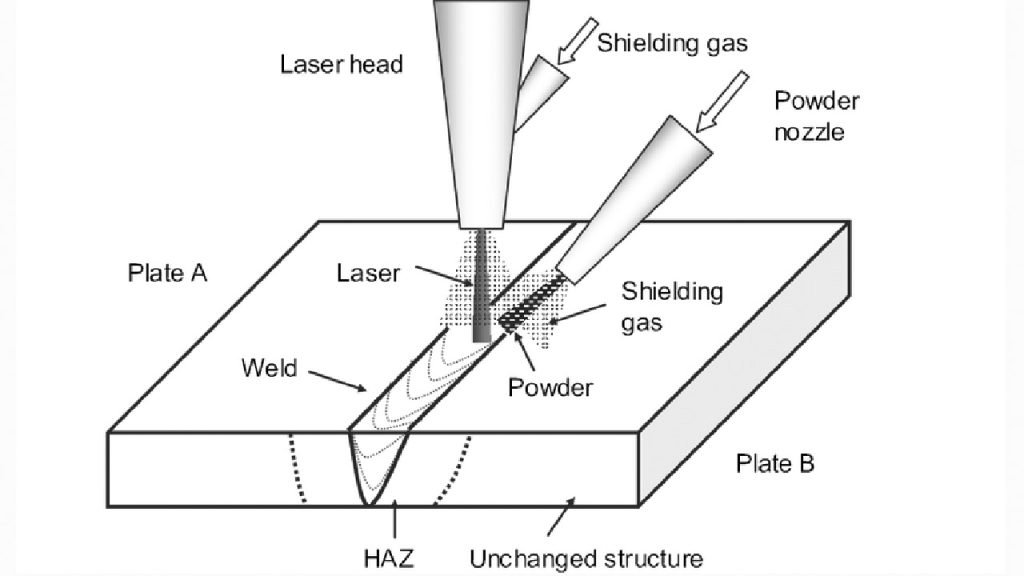
Image by researchgate
Types of Laser Welding
There are two main types of laser welding, each with distinct applications and characteristics:
Keyhole Welding
Keyhole welding is used for deep penetration welding and involves the creation of a small “keyhole” in the material. The high intensity of the laser causes the material to vaporize, creating a cavity that extends deep into the material.
As the laser moves, the keyhole is filled with molten material, forming a strong weld. This method is suitable for thick materials or when deep, narrow welds are needed.
Conduction Welding
In conduction welding, the laser energy is absorbed at the surface of the material, causing it to melt without forming a keyhole. The molten material spreads across the joint, resulting in a shallow weld. Conduction welding is typically used for thin materials and applications where aesthetic quality and precision are more important than depth.
Advantages of Laser Welding
Laser welding offers several advantages over traditional welding techniques. These advantages make it a preferred choice for applications where accuracy, speed, and minimal heat input are essential. Some of the key benefits of laser welding include:
Precision and Control
Laser welding allows for pinpoint accuracy, making it ideal for small, intricate parts. The ability to focus the laser beam on a tiny area ensures minimal heat input, reducing the risk of warping or damaging delicate components.
High Welding Speed
The concentrated energy of the laser allows for fast welding speeds, making it a highly efficient process. This speed is especially beneficial in mass production environments, such as automotive manufacturing, where large numbers of parts need to be welded quickly.
Minimal Distortion
Due to the focused nature of the laser beam, heat is confined to a small area, reducing the likelihood of thermal distortion. This is particularly important in industries where maintaining dimensional accuracy is critical.
Versatility
Laser welding can be used on a wide range of materials, including metals, plastics, and even dissimilar materials. It can also be performed in different environments, including in vacuum chambers, under water, or in air.
Automation-Friendly
Laser welding is highly compatible with automation and robotic systems, making it ideal for industries that rely on high-volume, consistent production. Automated laser welding systems can improve precision and reduce human error in the manufacturing process.
No Filler Material Required
In many cases, laser welding does not require filler material, as the laser’s high energy is sufficient to fuse the base materials together. This simplifies the process and reduces the cost of consumables.
Applications of Laser Welding
Laser welding is used across a wide range of industries due to its precision, speed, and ability to handle complex geometries. Some of the key industries that rely on laser welding include:
Automotive Industry
Laser welding is widely used in the automotive industry for joining body panels, transmission components, and exhaust systems. The ability to weld high-strength materials with minimal heat input makes laser welding an ideal choice for automotive manufacturing.
Aerospace Industry
In aerospace, laser welding is used for joining lightweight, high-strength materials such as titanium and aluminum. The precision of laser welding ensures that critical components are joined with minimal distortion and high structural integrity.
Medical Device Manufacturing
The medical industry requires precise, clean welds for components such as surgical instruments, implants, and pacemakers. Laser welding provides the necessary control to create small, precise welds without damaging sensitive materials.
Electronics Industry
Laser welding is often used in the electronics industry to join delicate components such as sensors, microchips, and batteries. The minimal heat input reduces the risk of damaging sensitive electronic parts.
Jewelry and Watchmaking
Laser welding is ideal for creating intricate and detailed welds in small components like jewelry or watches. The ability to work with precious metals and create virtually invisible welds is a key advantage in these industries.
Comparison of Laser Welding vs Traditional Welding Methods
| Feature | Laser Welding | Traditional Welding |
|---|---|---|
| Precision | Extremely high precision, small heat-affected zone | Less precise, larger heat-affected zone |
| Speed | Faster welding speeds, especially in mass production | Slower welding speeds |
| Heat Input | Minimal heat input, reduces distortion | Higher heat input, greater risk of warping or distortion |
| Material Versatility | Can weld a wide range of materials, including dissimilar ones | Mostly limited to similar metals |
| Automation Compatibility | Highly compatible with automation and robotic systems | Less automation-friendly |
| Cost | Higher initial setup cost due to laser equipment | Lower initial cost, but higher labor and material costs |
| Applications | Aerospace, automotive, electronics, medical devices | Construction, heavy machinery, general manufacturing |
Challenges of Laser Welding
While laser welding offers many advantages, it is not without its challenges. Some of the key limitations and considerations when using laser welding include:
High Initial Cost
The cost of laser welding equipment is higher than traditional welding systems. While the efficiency and precision of laser welding can lead to cost savings in the long run, the upfront investment can be significant.
Material Thickness Limitations
Laser welding is most effective for thin materials. While keyhole welding can be used for thicker materials, there are limitations to how deep a laser can penetrate. For very thick materials, traditional welding methods may be more suitable.
Reflectivity of Certain Metals
Highly reflective metals, such as aluminum and copper, can pose challenges for laser welding. The laser beam may reflect off the surface instead of being absorbed, making it difficult to achieve a good weld. Special techniques, such as using pulsed lasers or surface coatings, can help mitigate this issue.
Operator Skill
While laser welding systems are compatible with automation, manual laser welding requires a high level of skill and expertise. Operators must be trained to handle the equipment, focus the laser correctly, and adjust parameters to achieve optimal results.
Conclusion
Laser welding is a cutting-edge technology that offers unparalleled precision, speed, and control in a variety of industries. If it’s being used to join delicate electronics, create strong automotive components, or produce intricate jewelry, laser welding has become an indispensable tool in modern manufacturing.
With advantages such as minimal heat input, high welding speeds, and compatibility with automation, laser welding stands out as a superior alternative to traditional welding methods in many applications. Challenges such as high initial costs and material limitations must be considered when deciding whether laser welding is the right choice for a specific project.
Understanding how laser welding works and its potential benefits can help manufacturers make informed decisions about integrating this powerful technology into their processes.