
If you’ve been involved in welding for a while or are just getting started, you’ve probably come across the term “inverter welders.” They’re quite popular these days, but are they worth it? From my own experience with various welding machines, I can say that inverter welders come with their own set of pros and cons.
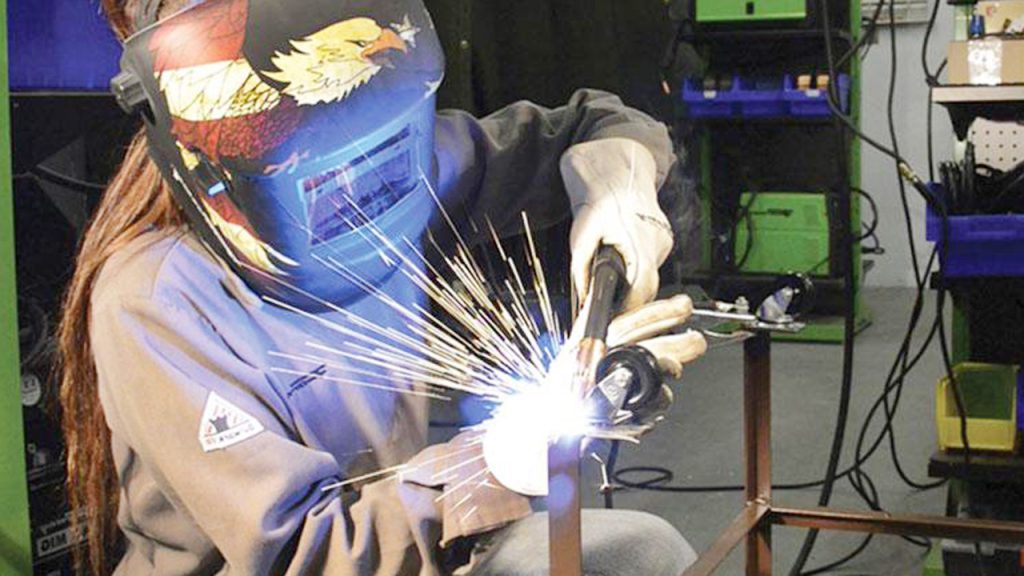
Image by thefabricator
If you’re welding at home, in a shop, or out in the field, knowing the advantages and disadvantages can help you decide if this type of welder is right for you.
I’ll walk you through the benefits and drawbacks of inverter welders, so you can make an informed decision. I’ve used both inverter welders and traditional transformer welders, and I’ll be sharing insights based on my hands-on experience with both.
What is an Inverter Welder?
Before we jump into the pros and cons, let’s quickly define what an inverter welder actually is. Inverter welders are machines that use advanced electronics to convert AC (alternating current) power into DC (direct current) power.
They use semiconductor technology to do this, which allows them to be much smaller and lighter than traditional transformer welders.
While transformer welders rely on large, heavy components to step down the voltage, inverter welders use high-frequency transformers, making them much more efficient. This makes inverter welders the go-to choice for many hobbyists and professionals alike.
Advantages of Inverter Welders
There are several key advantages to using inverter welders, especially when you compare them to older transformer models. Let’s break down the benefits.
Portability
One of the biggest selling points of inverter welders is their portability. They are much lighter and smaller compared to traditional welders. When I first switched to an inverter welder, I couldn’t believe how much easier it was to transport.
If you’re working in different areas of your shop or taking the welder to an outdoor job, the convenience is hard to beat.
For example, my old transformer welder weighed around 60-80 lbs, while my inverter welder is just 10-15 lbs. That’s a huge difference when you have to move the machine around frequently.
Energy Efficiency
Inverter welders are far more energy-efficient than traditional welders. They consume less power while producing the same amount of heat. This makes them ideal for use at home or in places where electricity costs are a concern.
In my experience, I noticed a significant reduction in my electricity bill after switching to an inverter welder, especially when working on larger projects.
The energy efficiency comes from how the machine converts electricity. Instead of using large transformers, inverter welders use microprocessors to manage power more precisely, leading to less waste.
Precision and Control
If you’re looking for more control over your welds, inverter welders are fantastic. They allow for more precise adjustments to welding parameters like amperage, making it easier to fine-tune settings based on the material you’re working with.
If you’re welding thin sheet metal or thick steel, I’ve found that an inverter welder gives me far better control than my old transformer welder ever did.
Most inverter welders come with advanced features like pulse welding, which helps with intricate jobs that require more finesse.
Versatility
Inverter welders can handle a wide variety of welding techniques. Whether you’re doing Stick, MIG, TIG, or Flux-core welding, an inverter welder is likely to have the capability to handle them all.
This versatility is great if you like to work with different types of metal or welding methods, as I often do in my workshop.
Higher Duty Cycle
Inverter welders generally have a higher duty cycle compared to traditional welders. The duty cycle is the amount of time a welder can run continuously before it needs to cool down.
With an inverter welder, you can weld for longer stretches without worrying about overheating, which is especially useful for bigger projects.
Disadvantages of Inverter Welders
While there’s a lot to love about inverter welders, they aren’t perfect. There are a few drawbacks to consider, depending on your needs and how you plan to use the machine.
Higher Initial Cost
One downside of inverter welders is that they can be more expensive upfront than traditional transformer welders.
When I first looked into buying one, I was a bit put off by the price difference. In general, inverter welders tend to cost more because they use more advanced technology.
That said, the higher price is often offset by their energy efficiency and versatility. Over time, you might save money on electricity, but the upfront cost is something to keep in mind.
Sensitivity to Dust and Moisture
Another disadvantage of inverter welders is that they are more sensitive to dust, moisture, and rough handling. The electronics inside these machines can be more vulnerable to environmental factors. If you’re working in a dusty or humid environment, you’ll need to be more careful.
I’ve learned this the hard way. My inverter welder once had some issues after being exposed to too much dust during a construction project. After that experience, I make sure to keep it in a well-ventilated, clean area and store it properly when not in use.
Complex Repairs
Because inverter welders use complex electronics, repairs can be tricky and expensive. If something goes wrong, it’s not as easy as replacing a simple part like you would in a transformer welder.
You’ll likely need a specialized technician to handle repairs, and that can lead to higher maintenance costs over time.
When my inverter welder stopped working after a power surge, it cost quite a bit to get it fixed compared to what I would have spent on repairing a transformer welder.
Less Durability in Harsh Conditions
In tough conditions—whether it’s extremely cold, wet, or dusty—transformer welders tend to hold up better. If you work in heavy-duty construction or outdoor environments where the machine might take a beating, a traditional welder could be a more durable option.
Comparison of Inverter Welders vs Transformer Welders
| Feature | Inverter Welder | Transformer Welder |
|---|---|---|
| Portability | Lightweight and compact | Heavy and bulky |
| Energy Efficiency | High (lower electricity costs) | Low (more electricity usage) |
| Precision | Highly adjustable and precise | Less control over settings |
| Versatility | Can handle various welding methods | Limited to certain types of welding |
| Initial Cost | Higher upfront cost | Lower upfront cost |
| Durability in Harsh Conditions | Less durable in rough conditions | More durable and rugged |
| Repairs | Expensive and complex | Easier and cheaper |
| Duty Cycle | High (can weld for longer) | Lower (needs more cool-down time) |
When Should You Choose an Inverter Welder?
If you’re someone who moves around a lot for work or does different types of welding, an inverter welder is a fantastic option. The portability, precision, and versatility make it an excellent choice for both hobbyists and professionals.
I’ve found it to be especially helpful when working on projects that require quick setups or when space is limited.
If you value energy efficiency and long welding sessions without breaks, an inverter welder is going to make your life easier.
When Should You Stick with a Transformer Welder?
On the other hand, if you work in heavy-duty environments or need a machine that can take a beating, a traditional transformer welder might be better. While they’re bulkier and less efficient, they tend to be more durable and can withstand tougher conditions.
If you’re not too concerned with portability or having the latest technology, a transformer welder might be a more budget-friendly option in the long run.
Conclusion
In my experience, inverter welders are absolutely worth the investment if you need portability, versatility, and energy efficiency. They offer more precision and control, and their lightweight design makes them easier to use in various settings.
However, they do come with a higher price tag, and you need to be mindful of their sensitivity to environmental factors.
If you’re looking for a modern, efficient welder that can handle a variety of tasks, go for the inverter welder. But if you’re working in harsh conditions or just need something simple and rugged, you might want to stick with a traditional transformer welder.
At the end of the day, it comes down to what you need for your specific projects. Both types have their strengths, and it’s all about finding the right fit for your work style.


