
If you’ve ever faced a cracked pipe, a broken bracket, or a small hole in metal, you know how frustrating these problems can be. In many cases, replacing the damaged part is costly and time-consuming. This is where J-B Weld SteelStik comes in—a fast, reliable way to fix metal surfaces without welding or special tools.
But to get the best results, you need to apply it the right way. This article will show you everything you need to know about using SteelStik, from preparation to finishing touches.
You’ll learn practical steps, expert tips, and even mistakes that many beginners make. Whether you’re fixing a car, a household item, or a plumbing leak, you’ll find this guide useful and easy to follow.
What Is J-b Weld Steelstik?
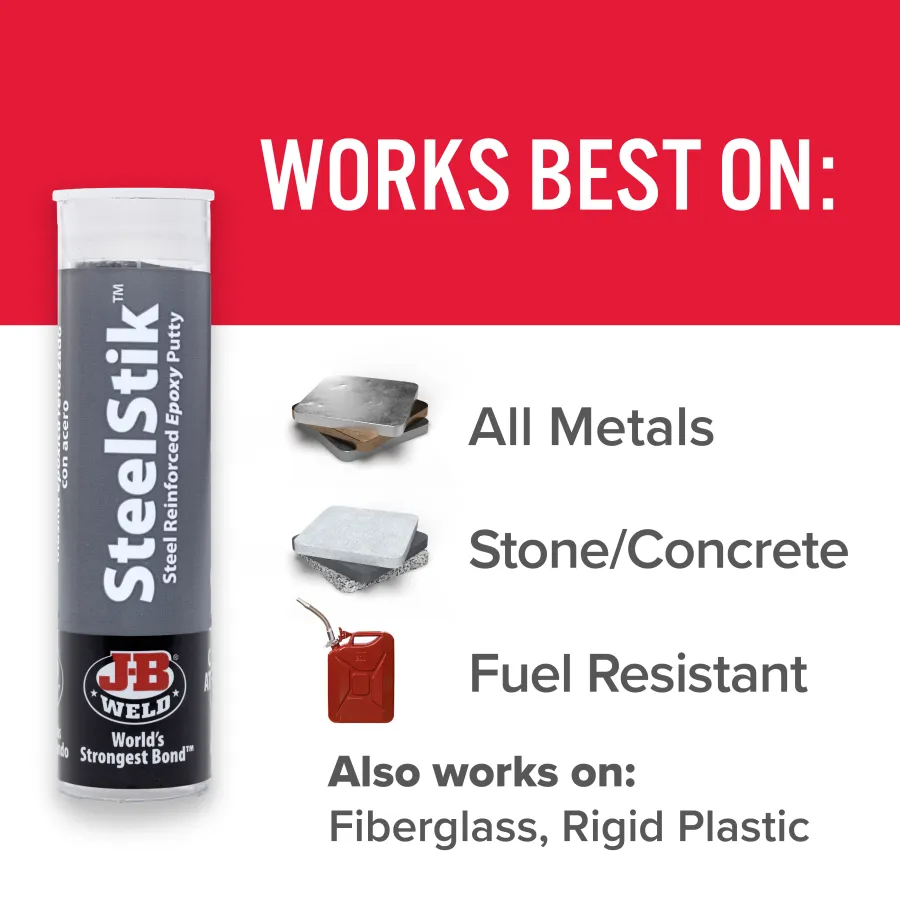
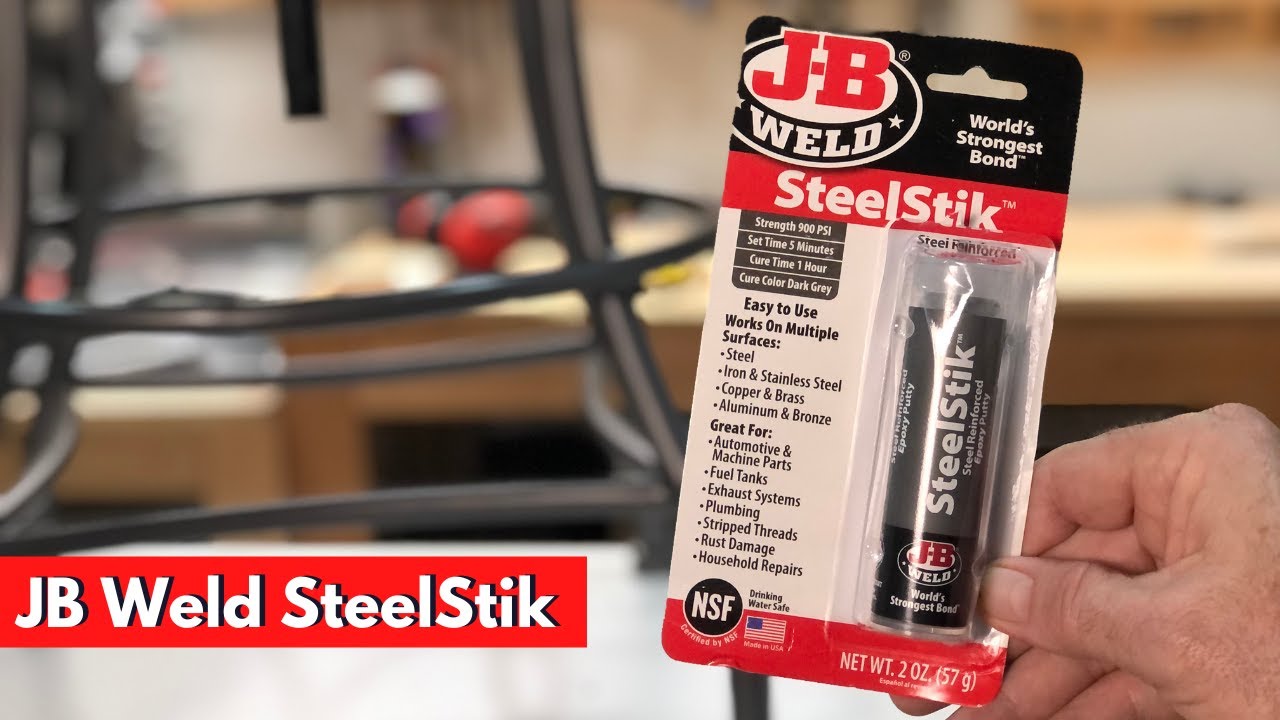
J-B Weld SteelStik is a steel-reinforced epoxy putty. It comes as a cylindrical stick, which you cut and knead by hand. When mixed, its two parts react and form a strong, metal-like bond. SteelStik is designed for metal repairs—it works on steel, iron, aluminum, copper, and even some plastics. After curing, it can be drilled, tapped, filed, sanded, and painted.
Some key features:
- Sets in 5 minutes
- Fully cures in 1 hour
- Withstands temperatures up to 300°F (149°C)
- Water, oil, and chemical resistant
- PSI strength: Up to 900 pounds per square inch
SteelStik is ideal for emergency repairs, quick fixes, and situations where welding isn’t possible. It’s often used in automotive, plumbing, and household applications.
Where Can You Use Steelstik?
Understanding where SteelStik works best helps you avoid disappointment. It’s designed mainly for metal surfaces but can also work on other materials in some cases.
Some common uses:
- Automotive repairs: Fixing radiators, fuel tanks, engine parts, exhaust pipes
- Plumbing: Sealing leaks in metal pipes, joints, faucets, and valves
- Home repairs: Mending metal furniture, tools, appliances, or door hinges
- Marine applications: Emergency fixes on boats, propellers, or metal hulls
- Industrial: Repairing machinery, metal frames, or equipment
SteelStik is not for structural welds or high-stress joints, and it doesn’t bond well to soft plastics, rubber, or flexible surfaces.
Preparing To Use Steelstik
Before you begin, proper preparation is crucial. Many first-timers skip these steps, which leads to weak or failed repairs.
Gather Tools And Materials
You’ll need:
- J-B Weld SteelStik stick
- A sharp knife or razor blade (for cutting)
- Sandpaper (80–120 grit)
- Clean cloth or paper towel
- Rubbing alcohol or acetone (for cleaning)
- Disposable gloves
- A small mixing surface (for kneading, optional)
- Masking tape (optional, for neat edges)
Clean And Dry The Surface
SteelStik sticks best to clean, oil-free, and dry surfaces. Dirt, grease, or water can prevent the putty from bonding.
- Wipe the area with a clean cloth to remove dust and debris.
- Use rubbing alcohol or acetone to remove oil or grease.
- Let the surface dry completely before applying the putty.
Roughen The Surface
Smooth metal is hard for epoxy to grip. Use sandpaper to scratch the area lightly—this gives SteelStik something to hold onto. Wipe away any dust after sanding.
Test Fit And Plan
Before mixing SteelStik, check how you’ll apply it. Will you wrap, press, or mold it into a shape? Is there enough space? Planning helps you work quickly before the putty starts to harden.
How To Mix And Apply J-b Weld Steelstik
Applying SteelStik is simple, but small details matter. Here’s the right way to do it.
Step 1: Cut The Needed Amount
Use a sharp knife to slice off only as much SteelStik as you need. Reseal the rest for future use. The putty is two colors: a gray outside and a black core. You need both parts for it to work.
Step 2: Knead The Putty
With gloves on, roll and knead the cut piece between your fingers. Mix it until the color is uniform gray, with no streaks or swirls. This usually takes 1–2 minutes. If your hands get warm, you’re mixing it right—the reaction creates a little heat.
Pro tip: If the putty is hard or crumbly, the stick may be old. Fresh SteelStik is pliable and easy to mix.
Step 3: Apply Quickly
You have about 3–5 minutes before the putty starts to set. Press and shape it onto the repair area. Push firmly so the putty fills cracks or holes. Mold or flatten it as needed; you can use wet fingers or a damp tool to smooth the surface.
Step 4: Shape And Secure
For repairs on vertical or overhead surfaces, press the putty firmly to make it stick. If you want clean edges, use masking tape around the repair. Remove the tape before the putty hardens. For leaks, build up the putty a little thicker for extra strength.
Step 5: Wait For The Cure
SteelStik sets in 5 minutes but needs at least 1 hour to fully cure. Do not move, sand, or put stress on the repair until the full cure time is reached. For best results, wait several hours before exposing the repair to water or heat.
Credit: www.jbweld.com
Aftercare: Sanding, Painting, And Using The Repair
Once SteelStik is hard, you can work with it like metal.
- Sanding: Use coarse sandpaper to smooth rough edges, then finer grit for a clean finish.
- Drilling/Tapping: Go slow and use sharp bits; the cured putty is strong but not as hard as steel.
- Painting: Use metal primer and paint if you want to match the repair to the surface.
- Polishing: For cosmetic repairs, polish gently with a soft cloth.
Data Table: Steelstik Vs. Other Metal Repair Methods
Choosing SteelStik isn’t always the only option. See how it compares with other repair methods:
| Repair Method | Strength (PSI) | Set Time | Water Resistant | Skill Level | Cost |
|---|---|---|---|---|---|
| J-B Weld SteelStik | 900 | 5 min | Yes | Beginner | Low |
| Traditional Welding | 5,000+ | Immediate | Yes | Expert | High |
| Super Glue | 200–500 | 1 min | No | Beginner | Low |
| Epoxy (liquid) | 1,000–4,000 | 5–60 min | Yes | Intermediate | Low |
As you can see, SteelStik is a great choice for quick, beginner-friendly metal repairs, especially where welding is not practical.
Credit: www.youtube.com
Common Mistakes And How To Avoid Them
Many users make errors when using SteelStik. Here are some mistakes and how to prevent them:
- Skipping surface cleaning: Dirt or oil stops the putty from sticking. Always clean with alcohol or acetone first.
- Not sanding the surface: Smooth metal is hard for epoxy to grip. Always roughen with sandpaper.
- Mixing too little/too much: Only cut what you can use in 3–5 minutes. Leftover mixed putty hardens fast and cannot be reused.
- Not mixing thoroughly: If the color isn’t uniform gray, the putty won’t cure well.
- Rushing the cure: Handling or stressing the repair before 1 hour can cause failure. Always wait for full cure.
- Using old or dried putty: Fresh SteelStik should be soft and easy to knead. If it’s hard or crumbly, replace it.
Non-obvious insight: If the pipe or surface is wet (for example, a plumbing leak), dry it as much as possible. SteelStik can be applied to damp surfaces, but results are always better on dry metal.
Advanced Tips For A Perfect Repair
Getting a strong, good-looking repair takes more than just following the basics. Here are some advanced tips:
- Shaping details: Use a wet finger or a metal tool to smooth and shape the putty before it hardens.
- Layering: For deep cracks or holes, apply in layers. Let the first layer cure, then add more for strength.
- Reinforcing: For large repairs, press a piece of metal mesh or wire into the first layer of SteelStik, then cover with more putty.
- Blending with surroundings: For visible repairs (like on a car), sand and paint carefully to match the original surface.
Example: Fixing A Leaking Metal Pipe
Let’s walk through a real repair scenario: You find a pinhole leak in a metal water pipe.
- Turn off water supply and dry the pipe with a cloth.
- Clean the area around the leak with alcohol and sand it lightly.
- Cut a piece of SteelStik, enough to cover the leak with a 1-inch margin.
- Knead the putty until uniform gray.
- Press the putty over the leak, molding it tightly around the pipe.
- Wait 1 hour before turning the water back on.
- Check for leaks. If needed, apply a second layer for extra strength.
Non-obvious insight: Sometimes, small leaks may continue for a few seconds after application. Hold the putty in place firmly for a minute—this creates a better seal.
Table: Steelstik Application Areas
For quick reference, here’s where SteelStik works best and where it doesn’t:
| Surface/Material | Works Well? | Notes |
|---|---|---|
| Steel/Iron | Yes | Excellent bond, full strength |
| Aluminum | Yes | Good bond; sand thoroughly |
| Copper/Brass | Yes | Great for plumbing |
| Plastic (hard) | Sometimes | Test first; not for flexible plastic |
| Rubber | No | Does not bond well |
| Wood | No | Use wood-specific putty |

Credit: www.youtube.com
Safety Precautions
SteelStik is generally safe to use, but a few simple precautions help protect your health and your repair.
- Wear gloves: The putty can be sticky and may irritate sensitive skin.
- Use in a well-ventilated area: The odor is mild but can be unpleasant in small spaces.
- Avoid ingestion: Do not eat, drink, or touch your face when working with the putty.
- Store properly: Reseal unused SteelStik tightly and keep out of reach of children and pets.
For more safety details, see the Safety Data Sheet on the J-B Weld official website.
When Not To Use Steelstik
SteelStik is amazing, but it has limits. Don’t use it for:
- Weight-bearing structural parts: It’s strong, but not as strong as a weld or bolt.
- High-heat areas: Above 300°F (149°C), it can soften and fail.
- Flexible or moving joints: It’s rigid after curing and may crack.
- Drinking water pipes: Although non-toxic, it’s not NSF-certified for potable water.
For these situations, look for a product designed for the specific job.
Steelstik Storage And Shelf Life
Many users don’t realize that proper storage extends the life of SteelStik.
- Seal tightly: After each use, wrap the stick in the original plastic and reseal the cap.
- Keep cool and dry: Avoid leaving it in hot cars or damp basements.
- Check for hardness: If the putty is hard or dry, it won’t mix well and should be replaced.
Unopened SteelStik can last several years on the shelf. After opening, use within 1–2 years for best results.
Real-world Success Stories
Many people have used SteelStik for quick, reliable fixes. Here are two true examples:
- A farmer repaired a cracked tractor engine block by thoroughly cleaning the area, applying SteelStik, and letting it cure overnight. The repair lasted through the harvest season.
- A homeowner sealed a leak in a copper water line under the sink. The fix was still holding six months later, saving hundreds of dollars in plumbing costs.
While not every repair is forever, SteelStik offers a fast, affordable way to solve many metal repair problems.
Troubleshooting Steelstik Repairs
If your repair fails, don’t give up. Here’s what to check:
- Did you clean and sand the surface? If not, redo with better prep.
- Was the putty fully mixed? Streaks mean incomplete mixing.
- Did you wait the full cure time? If not, wait longer before testing.
- Is the repaired area under heavy load or heat? SteelStik has limits; use a stronger method if needed.
Table: Steelstik Pros And Cons
A quick look at the main advantages and disadvantages:
| Pros | Cons |
|---|---|
| Fast set time | Lower strength than welding |
| Easy to use | Not for flexible parts |
| No special tools | Limited high-heat resistance |
| Works underwater (in some cases) | Short working time |
Final Thoughts
SteelStik is a powerful tool for quick metal repairs. With the right preparation and careful application, you can save money, avoid big repairs, and get back to work fast. Remember to follow the steps, avoid common mistakes, and always check the limits of the product for your safety. Whether you’re a DIY beginner or a seasoned repair pro, SteelStik belongs in your toolbox.
Frequently Asked Questions
Can Steelstik Be Used Underwater Or On Wet Surfaces?
SteelStik can be applied to wet surfaces and even underwater, but results are better on dry metal. If you must repair a leak while water is present, press and hold the putty in place for at least a minute to help it bond.
How Strong Is Steelstik Compared To Welding?
SteelStik has a bond strength up to 900 PSI, which is strong for most repairs but much less than traditional welding (over 5,000 PSI). It’s best for non-structural, light- to medium-duty fixes.
Can I Drill, Tap, Or Machine Steelstik After It Cures?
Yes, once SteelStik is fully cured (after 1 hour), it can be drilled, tapped, sanded, or filed. Use sharp tools and go slowly for best results.
Is Steelstik Safe For Food Or Drinking Water Contact?
SteelStik is non-toxic after curing, but it is not certified for use with drinking water or food-contact surfaces. Use only on non-potable pipes or surfaces.


