
JB Weld is a popular two-part epoxy used for bonding metals, plastics, ceramics, and more. People love it because it creates a strong, long-lasting repair. However, the normal cure time—up to 24 hours—can feel slow, especially if you need a quick fix.
If you’ve ever asked yourself, “How can I make JB Weld set faster? ” you’re not alone. There are ways to safely speed up the process without sacrificing strength.
This guide covers everything you need to know, from how JB Weld works, to practical methods, key mistakes to avoid, and expert tips that most beginners miss.
Understanding How Jb Weld Works
JB Weld is a two-part system with a resin and a hardener. When mixed together, a chemical reaction starts. This reaction is what makes the mixture turn from a sticky paste to a hard, durable solid. The cure time depends on several things:
- The temperature of your work area
- The amount of JB Weld you use
- The type of surfaces you are bonding
- The ratio of resin to hardener
JB Weld usually sets in 4-6 hours and reaches full strength in 15-24 hours at room temperature. “Set” means it’s firm to the touch and won’t move. “Cure” means the bond has reached maximum hardness and is ready for stress.
Two key insights:
- Epoxy reactions are exothermic: This means they create heat as they cure. But too much heat or too fast a reaction can weaken the bond.
- More isn’t always better: Using a thick layer of JB Weld can slow down the cure, not speed it up.
Knowing these basics helps you make smart choices about speeding things up.
Main Methods To Make Jb Weld Set Faster
There’s no magic button, but several safe and effective methods exist. Some are simple, while others need more care. Below are the main ways, with details, pros, and cons.
1. Increase The Temperature
Heat speeds up the chemical reaction in JB Weld. The best way is to raise the ambient temperature around your repair.
- Ideal range: 70°F to 150°F (21°C to 66°C)
- How to do it: Use a heat lamp, hair dryer, or a small space heater. Keep the heat source at least 6-12 inches away to prevent overheating.
- Caution: Never exceed 200°F (93°C). Too much heat can cause the epoxy to bubble, crack, or weaken.
For example, placing your repair in a warm room or near a gentle heat source can cut set time by half. In professional workshops, a low-temperature oven is used, but most people can do well with household heaters.
2. Use A Heat Gun Or Hair Dryer
Directing warm air over the repair is a fast way to add heat.
- Heat gun: Set to low or medium. Move constantly to avoid burning.
- Hair dryer: Works well for small repairs.
- Best for: Thin layers and small objects.
Never use open flames or high heat! If you see smoke or smell burning, stop immediately.
3. Work With Thinner Layers
JB Weld cures faster when applied in thin layers. Thick blobs trap heat and slow the reaction. For deep repairs, apply a thin layer, let it set, then add more.
- Maximum thickness: 1/8 inch (about 3 mm) per layer
- Tip: Spread the epoxy evenly. Don’t pile it up.
This method is often overlooked, but it makes a big difference. Even strong repairs can be built up in two or three layers.
4. Mix In A Warm Environment
The mixing temperature matters. Mix the epoxy in a room that’s at least 70°F (21°C). Cold slows the reaction, so avoid mixing outdoors on chilly days.
- If it’s cold: Warm your mixing tools (like a metal spatula) before combining the resin and hardener.
- Never microwave: Don’t heat the epoxy directly in a microwave or oven.
5. Use Jb Kwik Or Other Fast-cure Variants
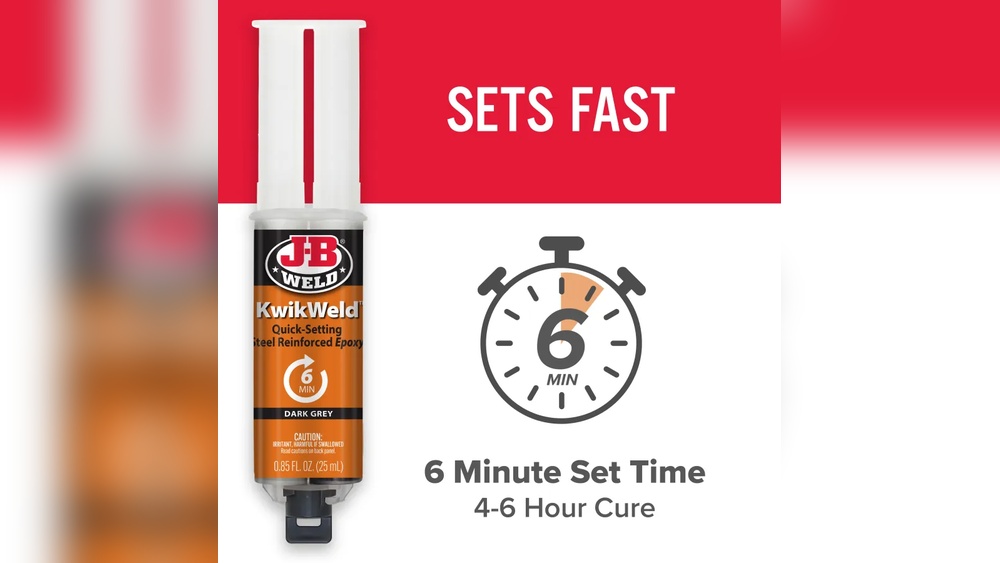
JB Weld offers a fast-setting formula called JB KwikWeld. It sets in 6 minutes and cures in 4-6 hours.
- Best for: Emergency repairs where time matters more than maximum strength.
- Trade-off: Slightly lower strength than standard JB Weld.
Here’s a side-by-side comparison:
| Product | Set Time | Cure Time | Max Strength (PSI) |
|---|---|---|---|
| JB Weld Original | 4-6 hours | 15-24 hours | 5020 |
| JB KwikWeld | 6 minutes | 4-6 hours | 3127 |
If you often need quick repairs, keep both types on hand.
6. Pre-warm The Surfaces
Warm surfaces help the epoxy spread and react faster.
- How to do it: Use a hair dryer to gently warm the metal, plastic, or ceramic before applying JB Weld.
- Why it matters: Cold surfaces draw heat away from the epoxy and slow the cure.
This is especially useful for car parts or outdoor repairs in winter.
7. Use A Small Amount At A Time
Mix only as much as you can use in 3-5 minutes. Larger batches start to cure in the mixing tray, not on your repair.
- Small batches: Cure faster and are easier to control.
- Tip: If you need more, mix a fresh batch rather than making one big mix.
8. Improve Air Circulation
A gentle fan can help. Air movement removes any fumes and keeps the temperature steady.
- Fan setting: Low. Avoid blowing dust onto the repair.
- Extra benefit: Reduces humidity, which can slow down some epoxies.
Don’t point a strong fan directly at the repair—this can cause the epoxy to sag or form bubbles.
9. Use A Warm, Dry Location
Humidity and cold slow the chemical reaction. Whenever possible, choose a spot that is warm and dry. A bathroom with a space heater, or a workshop with a dehumidifier, work well.
- Do not cure outdoors in damp or rainy weather.
- Cover the repair with a box to keep dust away.
10. Don’t Add Extra Hardener
It’s tempting to add more hardener, thinking it will speed up the reaction. But this is a mistake. The resin and hardener must be mixed in a 1:1 ratio for most JB Weld products.
- Wrong ratio: Leads to soft, weak bonds, or never cures at all.
- Follow instructions: Always measure equal parts.
Credit: www.jbweld.com
What To Avoid When Trying To Speed Up Jb Weld
Many beginners make mistakes in the rush to finish a project. Here are the most common errors, and why they hurt your repair.
Overheating
Too much heat can cause:
- Bubbles in the bond
- Cracks or weakened joints
- Burned surfaces
If you see smoke, discoloration, or a burnt smell, you’ve overheated the epoxy.
Using Open Flame
Never use a torch, lighter, or open flame to speed curing. This is dangerous and ruins the epoxy.
Mixing Incorrect Ratios
As mentioned, always use a 1:1 ratio. If you add extra hardener, the bond will be weak.
Adding Accelerators Or Solvents
Some people try to mix in chemicals like acetone or alcohol to “speed up” the reaction. This doesn’t work and can actually stop the cure or make the epoxy brittle.
Applying Too Thick
A thick layer slows the reaction and can even trap uncured epoxy inside. Always work in thin layers.
Advanced Tips For Faster, Stronger Jb Weld Repairs
Sometimes you need more than just heat. These advanced methods can help skilled users get the fastest, most reliable results.
Use Infrared Lamps
Infrared heat penetrates deeper and cures epoxy more evenly than regular light. Many professional shops use IR lamps for auto body repairs.
- Set up: Place the lamp 1-2 feet from the repair.
- Monitor temperature: Use a thermometer to avoid overheating.
Pre-heat Parts In An Oven
For metal parts that are safe to heat, warm them in an oven at 120-150°F (49-66°C) for 15 minutes before applying JB Weld. This works well for engine parts, brackets, and similar items.
- Don’t exceed 200°F (93°C)
- Never heat plastic parts—they can melt or warp.
Use A Silicone Mat
Cure your repair on a silicone mat. These mats resist heat and make it easy to remove cured epoxy.
- Why it helps: Less heat loss, easier cleanup.
- Bonus: You can peel off mistakes and start over.
Clamp Parts Firmly
Clamping the two parts together helps create a thinner glue line and better contact. This also helps the heat move through the joint more evenly.
- Use C-clamps or spring clamps
- Don’t over-tighten—just enough to hold parts together.
Monitor With A Thermometer
If you want to be precise, use an infrared thermometer to check the surface temperature. Keep it in the safe range (no higher than 150°F/66°C for most repairs).
- Too cold: Reaction is slow.
- Too hot: Risk of bubbles or failure.
Comparing Jb Weld Setting Times Under Different Conditions
Here’s a table showing how temperature and layer thickness affect set times.
| Condition | Set Time | Cure Time | Notes |
|---|---|---|---|
| Standard (70°F, 1/8” layer) | 4-6 hours | 15-24 hours | Best strength |
| Warm room (90°F) | 2-3 hours | 10-12 hours | Good for most repairs |
| Thin layer (1/16”) | 2-3 hours | 12-15 hours | Faster, still strong |
| Thick layer (1/4”) | 6-8 hours | 24-36 hours | Slowest, risk of uncured spots |
The data shows that temperature and layer thickness make a big difference.
Example: Fast Jb Weld Repair On A Metal Pipe
Let’s walk through a real-world example.
Situation: You have a leaking metal pipe and need a quick fix.
Steps:
- Clean the pipe with sandpaper and alcohol. Remove all oil and rust.
- Warm the pipe with a hair dryer for 2-3 minutes.
- Mix a small batch of JB Weld (1: 1 ratio) in a warm room.
- Apply a thin layer (no more than 1/8 inch) over the leak.
- Use a heat lamp, placed 8 inches away, to gently warm the area.
- Let it set for 2-3 hours. Test gently with a finger (should be hard).
- Wait 8-10 hours before putting pressure back in the pipe.
Result: The repair sets in half the normal time, and the bond is strong.
Common Beginner Mistakes (and How To Avoid Them)
Even after reading guides, many people still fall into these traps:
- Not cleaning surfaces: JB Weld sticks best to bare, clean metal or plastic.
- Mixing in the wrong place: Cold garages or damp basements slow the cure.
- Applying too much: Thicker isn’t better. Go thin and add layers if needed.
- Moving the repair too soon: Even if it feels hard, wait for full cure before stressing the joint.
- Touching with wet or oily hands: Oil can block the bond.
Always prep your surface and follow the instructions closely.
Safety Tips For Faster Jb Weld Use
Working faster can also mean more risk. Here’s how to stay safe:
- Wear gloves: Epoxy can irritate skin.
- Work in a well-ventilated area: Fumes can be strong, especially with heat.
- Don’t inhale dust: If sanding cured JB Weld, use a mask.
- Keep away from children and pets: Both the uncured mix and the heat sources.
When You Shouldn’t Rush Jb Weld
Some repairs need maximum strength. If you’re fixing a structural part—like a car suspension, engine mount, or something that holds weight—don’t try to speed up the process. Let the epoxy cure fully at room temperature for the best results.
Also, for surfaces that get very hot (like engine blocks), always follow the full cure time.
Practical Troubleshooting: If Jb Weld Isn’t Setting
If you’ve tried to speed up JB Weld and it’s still soft or tacky after 24 hours, here’s what to check:
- Ratio: Did you mix equal parts resin and hardener?
- Mixing: Did you stir thoroughly for at least 1 minute?
- Temperature: Was the area too cold (below 50°F/10°C)?
- Surface: Was the surface dirty, oily, or wet?
- Thickness: Was the layer too thick?
If you find a mistake, scrape off the soft epoxy, clean the area, and try again with a new batch.
Jb Weld Alternatives For Faster Setting
If time is always a problem, consider other products:
- JB KwikWeld: Sets in 6 minutes, cures in 4-6 hours.
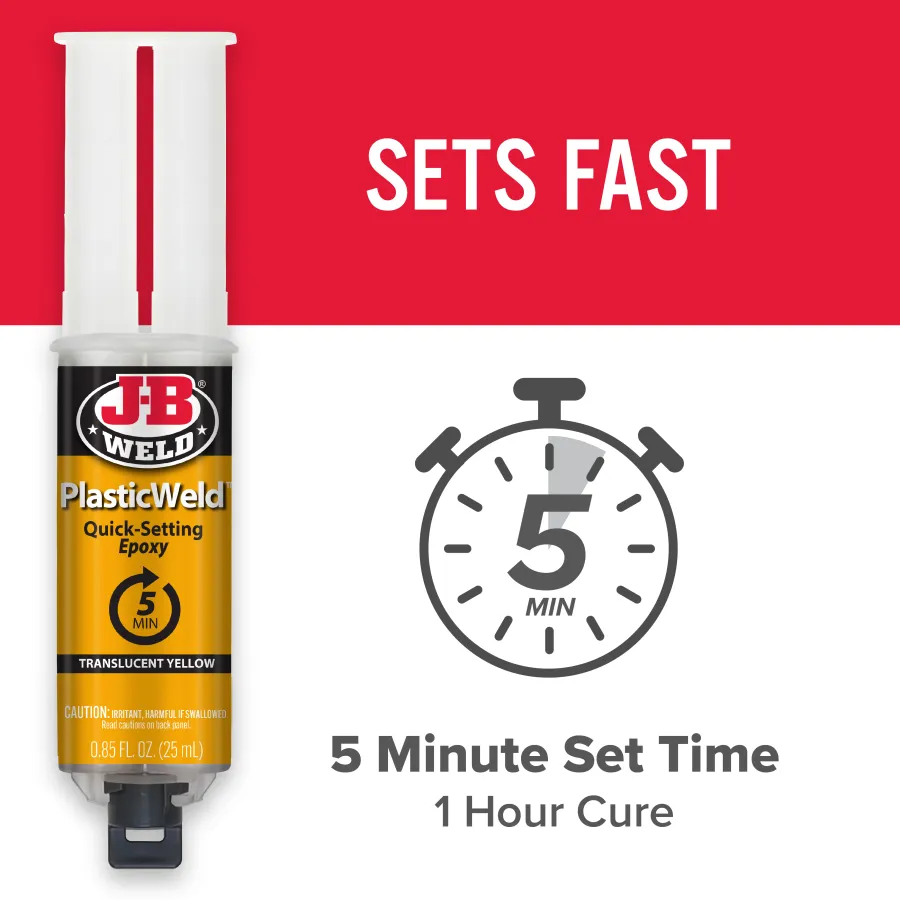
- Loctite Epoxy Instant Mix: Sets in 5 minutes, full strength in 1 hour.
- Devcon 5-Minute Epoxy: Very fast, but lower strength.
Here’s a quick product comparison:
| Brand/Product | Set Time | Cure Time | Max Strength (PSI) |
|---|---|---|---|
| JB Weld Original | 4-6 hours | 15-24 hours | 5020 |
| JB KwikWeld | 6 minutes | 4-6 hours | 3127 |
| Loctite Instant Mix | 5 minutes | 1 hour | 3500 |
| Devcon 5-Minute | 5 minutes | 1 hour | 1500 |
Choose based on your needs: speed, strength, or both.
Real-world Insights Most People Miss
Beginners often skip the importance of surface temperature and humidity. Warm, dry surfaces are the single biggest factor in speeding up cure time. Also, many users don’t realize that curing under gentle pressure (like a clamp) helps make a thinner, stronger bond that sets faster.
Finally, patience pays off. Rushing with the wrong methods can lead to weak repairs, wasted time, and even more work. It’s better to use a safe method and know your repair will last.
Final Thoughts
With the right methods, you can make JB Weld set faster and still get a strong, lasting repair. Know when to speed up, when to wait, and how to avoid common mistakes. Smart preparation and patience are your best tools for any epoxy project.
Frequently Asked Questions
How Can I Make Jb Weld Dry Faster Without Losing Strength?
Increase the temperature around the repair to 90–120°F (32–49°C) using a heat lamp or hair dryer, but avoid overheating. Apply JB Weld in thin layers, and make sure surfaces are clean and dry. Don’t change the mixing ratio or add other chemicals.
Can I Use Jb Weld In Cold Weather And Still Get A Fast Set?
Cold weather slows down the curing reaction. Try to warm both the materials and the work area first, or use a fast-setting version like JB KwikWeld. Avoid using standard JB Weld below 50°F (10°C) if you need speed.
What Happens If I Add More Hardener To Speed Things Up?
Adding extra hardener does not make JB Weld set faster. In fact, it can prevent the epoxy from curing properly, making the repair weak or soft. Always mix equal parts resin and hardener.
Is Jb Kwikweld As Strong As Original Jb Weld?
JB KwikWeld cures much faster but has slightly lower maximum strength (about 60% of the original formula). It’s great for quick repairs but not for heavy-duty or structural fixes.
Can I Use A Regular Oven To Cure Jb Weld Faster?
You can use a household oven set to low temperatures (120–150°F or 49–66°C) to pre-warm metal parts (not plastic). Never exceed 200°F (93°C), and never cure JB Weld on items with paint or electronics. Always check product safety instructions before using this method.


