Dialing in a clean TIG weld between two different steels can get tricky fast, especially when one of them is chromoly. The puddle behaves differently, heat control becomes more sensitive, and pushing it too far can weaken the joint instead of strengthening it.
That’s why understanding TIG Welding Chromoly to Mild Steel is critical when you’re working on frames, roll cages, or any load-bearing parts.
Chromoly demands respect. It’s strong and lightweight, but it reacts differently to heat compared to mild steel, and that mismatch can lead to brittle welds or hidden stress points if you’re not careful.
I’ve seen welds that looked perfect on the surface but cracked later because the process wasn’t dialed in right.
I’ll walk you through the practical approach, filler choices, heat control, and common mistakes so you can weld chromoly to mild steel with confidence and reliability.
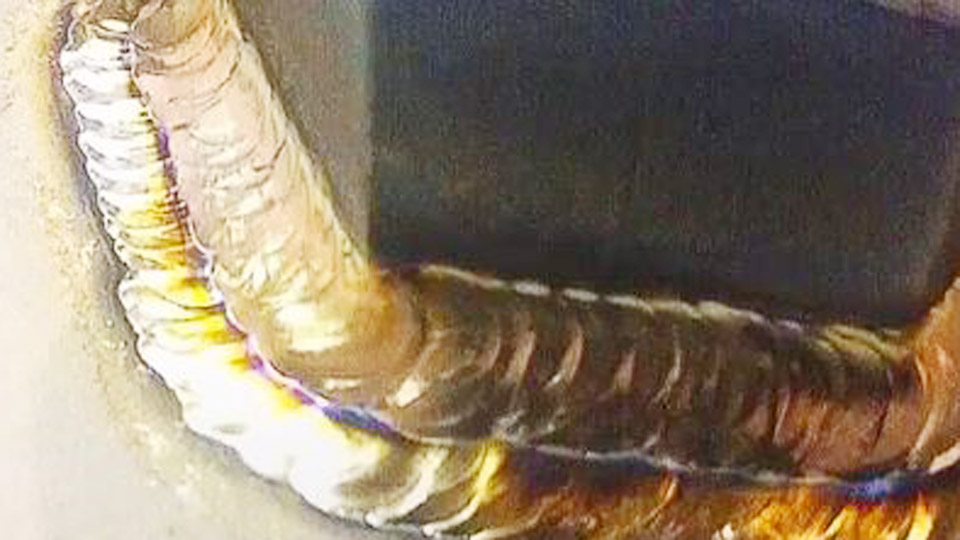
Image by weldingpros
Why TIG Is Usually the Best Choice for Chromoly to Mild Steel
TIG (GTAW) gives you the precise heat control that MIG or stick often can’t match on thin-wall chromoly tubing. You can dial in the puddle, add filler exactly where needed, and manage travel speed to minimize overall heat input.
This matters because chromoly doesn’t like rapid heating or cooling—it can form hard, brittle microstructures in the HAZ that crack under vibration or impact.
When joining chromoly tube to mild steel plate or thicker sections, TIG lets you focus heat on the joint without burning through the thinner material or overheating the chromoly side.
I’ve seen plenty of guys try MIG on these transitions for speed, and it can work on heavier sections with the right wire, but for clean, high-quality work—especially on .058″ to .120″ wall tubing—TIG is my go-to. It reduces the risk of porosity and gives better visibility for proper fusion on both sides of the dissimilar joint.
Mild steel’s higher thermal conductivity pulls heat away differently than chromoly, so you often end up directing a bit more arc toward the mild steel side to balance the puddle. Experience teaches you to watch the edges carefully.
Understanding the Materials: Chromoly vs Mild Steel in Practice
4130 chromoly contains chromium and molybdenum, which boost tensile strength and hardenability. This makes it popular for tubing in motorsports, aircraft, and high-performance fab. Mild steel (like A36 or 1018) lacks those alloys, so it’s softer, more ductile, and cheaper, but it expands and contracts differently under heat.
The challenge in TIG welding chromoly to mild steel is the metallurgical transition. The weld pool mixes elements from both base metals plus your filler. Too much chromoly dilution can make the weld stronger but potentially more brittle if cooling isn’t controlled. Too little, and you lose strength where you need it.
In real jobs—like welding a chromoly roll cage hoop to a mild steel floor plate—the joint sees shear, torsion, and fatigue. A mismatched weld can fail at the toe on the chromoly side due to a brittle HAZ or crack from residual stresses. That’s why filler choice and heat management are non-negotiable.
Choosing the Right Filler Rod for Chromoly to Mild Steel TIG Welds
Filler selection is one of the most debated topics, and for good reason. My shop-tested preference for most chromoly-to-mild-steel transitions is ER70S-2. It provides good ductility, which helps absorb stresses at the dissimilar interface, and it wets out nicely on both materials. Many fabricators use it successfully on roll cages and chassis work.
ER80S-D2 is another strong option when you want a bit more strength and better matching of the chromoly’s alloy content. It contains higher levels of molybdenum and deoxidizers, making it forgiving on slightly dirty metal and producing welds with higher as-welded tensile strength. I reach for .045″ or 1/16″ diameter depending on material thickness—smaller rod for thin stuff to avoid dumping excess heat.
Avoid using straight 4130 filler on these joints unless you’re doing full post-weld heat treatment. It can create a harder weld that doesn’t flex well with the mild steel side. Some pros swear by stainless fillers like 309 or 312 for added ductility in highly stressed areas, but I stick with the mild steel alloys for most everyday fab unless the print specifies otherwise.
Practical tip: Buy quality, copper-free or low-residual filler. Some cheap rods have coatings that can cause issues in chromoly’s microstructure. Keep rods clean and stored dry.
Joint Preparation: The Step That Prevents Most Failures
Cleanliness is everything in TIG, and it’s twice as important when mixing chromoly and mild steel. Start by removing all mill scale, rust, oil, and paint from at least 1-2 inches around the joint on both pieces. I use a dedicated flap disc or Scotch-Brite on a grinder for the chromoly side—never the same wheel you used on dirty mild steel to avoid contamination.
Wipe everything down with acetone right before tacking. Pay special attention to the chromoly; it often has a decarb layer that needs abrading away for good fusion. For tube-to-plate joints, cope or notch the tube for good fit-up with minimal gap—ideally less than 1/16″. Poor fit-up forces you to add more filler and heat, which risks distortion and weak HAZ.
Bevel thicker mild steel sections if needed for better penetration access. Tack the assembly in at least four places using the same filler and low heat to keep everything aligned. Let tacks cool naturally—no quenching.
Recommended TIG Machine Settings and Technique
Settings depend heavily on thickness, joint type, and your machine (Miller, Lincoln, Everlast inverters are common in US shops). Here’s what works in my experience:
For .058″-.083″ chromoly tube to 1/8″ or thicker mild steel plate:
- Tungsten: 3/32″ 2% lanthanated or ceriated, sharpened to a point
- Cup: #7 or #8 gas lens for better coverage
- Gas: 100% Argon at 15-20 CFH
- Amperage: Start around 60-90 amps with foot pedal control; adjust based on puddle
- Filler: .045″ ER70S-2 or ER80S-D2
- Polarity: DCEN
For .120″ wall and up, you might run 110-140 amps on the root, backing off as the puddle grows. Use the “1 amp per thousandth” guideline as a starting point for mild steel side, then watch the chromoly edge—it melts faster once the heat soaks in.
Technique pointers I’ve learned the hard way:
- Keep a short arc length—roughly equal to or less than your tungsten diameter.
- Direct the arc slightly more toward the mild steel to balance melting rates.
- Add filler rod steadily; dip it into the leading edge of the puddle to avoid oxidation.
- Use pulse if your machine has it (many modern US inverters do). Settings like 1-2 PPS with 40-60% peak time help control heat on thin sections.
- Travel speed should produce a consistent bead width about 2-3 times the filler diameter. Too slow overheats the chromoly; too fast causes lack of fusion.
On fillet welds common in these joints, push the torch angle 10-15 degrees toward travel direction for good tie-in. Pause slightly at the toes to wash in the edges without undercutting the chromoly.
Step-by-Step Guide to TIG Welding a Chromoly Tube to Mild Steel Plate
- Prep both materials — Grind, deburr, acetone wipe. Ensure good fit-up.
- Set up your machine — Pure argon, correct tungsten, pedal or fingertip control ready.
- Tack — Four solid tacks, low amps, let cool.
- Root pass — Start on the mild steel side, walk the puddle across. Add filler as needed for buildup. Watch for even fusion lines.
- Fill and cap — Multiple passes if thickness requires. Clean between passes with a stainless wire brush.
- Cool slowly — Allow natural air cooling. No fans or water. For critical parts thicker than 0.120″, consider stress relief heating to 1100-1200°F if equipment allows, holding and cooling slowly.
Inspect for cracks, especially on the chromoly HAZ. A dye penetrant test or simple visual with magnification helps.
Common Mistakes Beginners and Pros Still Make
- Overheating the chromoly: Cranking amps like you’re welding thick mild steel creates a wide HAZ that becomes brittle. Result? Cracks appear days or weeks later under load.
- Dirty joint: Skipping thorough cleaning leads to porosity or inclusions that weaken the dissimilar zone.
- Wrong filler diameter: Using 1/16″ rod on thin material forces higher heat input than necessary.
- Rapid cooling: Quenching or blowing air on the joint is a fast track to martensite formation and failure.
- Poor torch angle or arc length: Leads to tungsten contamination or lack of sidewall fusion on the mild steel.
- Ignoring differential expansion: Not accounting for how the two metals pull differently during cooling can warp assemblies if not clamped properly.
I’ve fixed more than a few “pro” welds that looked pretty on the outside but had hidden undercut or incomplete fusion on the root.
Safety Considerations in the Shop
Always wear proper PPE: shade 9-12 helmet (I prefer auto-darkening for TIG), leather gloves, jacket, and boots. Chromoly welding produces fumes with chromium compounds—good ventilation or a fume extractor is essential. Keep your workspace free of flammables, and have a fire watch if welding near vehicles or structures.
Ground your work securely. With inverters common in US garages, make sure your machine is rated for the duty cycle you’ll need on longer joints.
Pros and Cons of TIG vs Other Processes for This Joint
TIG Pros:
- Superior control and appearance
- Low heat input possible
- Excellent for thin materials
- No spatter cleanup
TIG Cons:
- Slower than MIG
- Requires more skill
- Higher operator fatigue on big jobs
MIG can work with ER70S-6 or similar on thicker sections, but you lose some precision on thin chromoly. Stick is rarely ideal here due to higher heat and slag.
Quick Comparison:
| Material Thickness | Recommended Filler | Approx. Amps (TIG) | Key Concern |
|---|---|---|---|
| .049″-.083″ chromoly to mild | ER70S-2, .045″ | 50-90 | Burn-through on tube |
| .090″-.120″ | ER70S-2 or ER80S-D2, .045″-1/16″ | 80-130 | HAZ brittleness |
| Over .120″ | ER80S-D2 | 120+ | Preheat may be needed, stress relief |
These are starting points—test on scrap matching your exact materials and machine.
When to Consider Preheat or Post-Weld Heat Treatment
For thin sections under 0.120″ and small joints, room temperature (above 70°F) is usually fine if you control heat input. Thicker material or highly restrained joints benefit from 300-400°F preheat on the chromoly side to slow cooling and reduce cracking risk. Use temp sticks or an infrared thermometer.
Post-weld heat treatment (stress relief) isn’t always practical in a hobby or small shop, but normalizing around 1500-1600°F followed by slow cool can restore properties on critical parts. Many race shops weld and “send it” with good technique and ER70S-2, relying on the ductility of the filler.
Real-World Examples from the Shop Floor
In one project, we TIG welded .095″ 4130 chromoly tubing for a roll cage to 1/4″ mild steel floor plates. Using ER70S-2, 3/32″ tungsten, and careful pedal work at 90-110 amps, the joints passed inspection and held through heavy off-road abuse. The mild steel side took the heat better, so we biased the arc there initially.
Another repair involved patching a cracked mild steel bracket to existing chromoly frame tubing. Thorough cleaning and low-heat multiple passes prevented distortion and new cracks.
Building Confidence with Practice Pieces
Grab scrap pieces of your typical thicknesses. Practice T-joints and lap joints first. Focus on consistent puddle control and filler addition rhythm. Record your settings—what works on your machine might differ slightly from mine due to torch setup or gas flow.
Over time, you’ll develop a feel for when the puddle is too cold (lack of wetting) or too hot (sinking or undercut on chromoly).
Final Thoughts
After handling dozens of these joints, the key lessons boil down to respecting heat input, prioritizing cleanliness, choosing ductile filler for transitions, and letting the weld cool naturally. You now have the practical details on filler rods, realistic amperage ranges, joint prep, and technique that separate weak welds from ones that last.
The strongest pro-level tip I can leave you with: Always bias your heat management and travel toward achieving good tie-in on the chromoly side without overheating it—watch that HAZ color and size more than anything else. A slightly “cold” looking bead that fuses properly will outperform a shiny, overheated one every time.
FAQs
Can you TIG weld 4130 chromoly directly to mild steel without issues?
Yes, it’s done regularly in fabrication and racing. Use ER70S-2 or ER80S-D2 filler, keep heat input low, ensure excellent cleanliness, and allow slow cooling. The joint can be strong if technique is sound.
What filler rod should I use for TIG welding chromoly to mild steel?
ER70S-2 is a top choice for ductility at the transition. ER80S-D2 offers higher strength. Both work well; avoid high-alloy 4130 filler unless post-weld heat treating the entire assembly.
What amperage settings for TIG welding thin chromoly tube to mild steel?
For .058″-.083″ wall, start in the 50-90 amp range with foot pedal control. For .120″ wall, 100-140 amps depending on joint and pass. Always test on scrap—watch the puddle, not just the number.
Do I need to preheat when TIG welding chromoly to mild steel?
Usually not for thin sections under 0.120″. Preheat to 300°F+ helps on thicker or heavily restrained parts to reduce cracking risk. Never quench the weld afterward.
Why do my chromoly to mild steel TIG welds crack?
Common causes: excessive heat input creating brittle HAZ, rapid cooling, poor cleaning leading to inclusions, or using the wrong filler that doesn’t handle the metallurgical mix. Improve cleaning, lower amps, and slow your travel if needed.