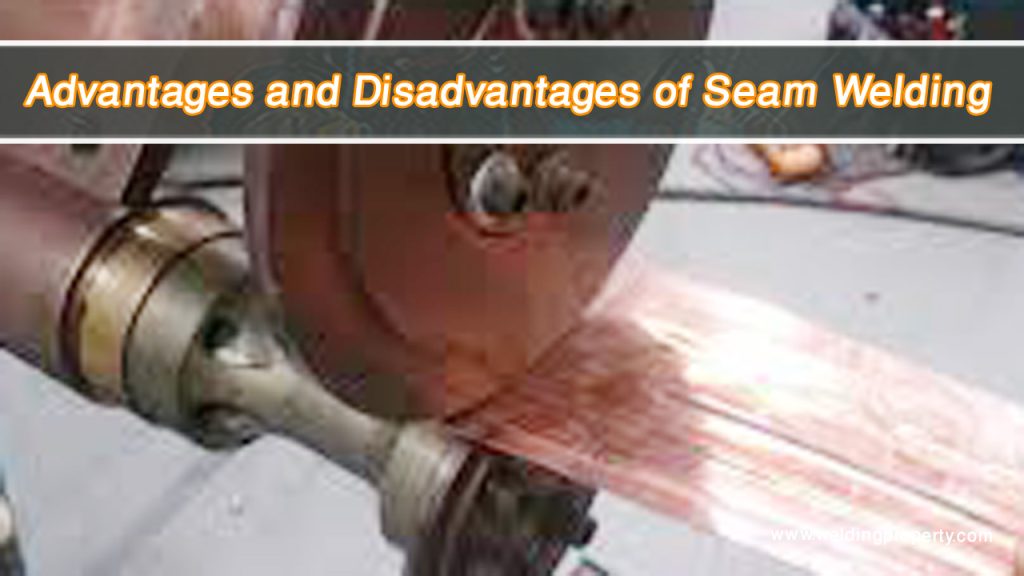
When you’re exploring seam welding, you’ll come across several methods, each having its own unique characteristics. Seam welding is a technique in which two sheets of metal are joined together using a rotating wheel-shaped electrode, creating a continuous, leak-proof joint.

Image by westermans
It’s a commonly used process in the automotive, aerospace, and manufacturing industries. Let me walk you through the different types and help you understand which one might be the best fit for various applications.
Seam Welding
Before diving into the types, let’s get a basic understanding of seam welding. Imagine you have two metal sheets, and you need to join them together without any gaps. Instead of making individual weld spots, seam welding creates a continuous weld by rolling the electrode wheels along the metal sheets.
The wheels pass a high electric current through the sheets to fuse them, leaving behind a neat and consistent joint. Let’s explore the various seam welding types. Each method has its advantages, applications, and limitations.
1. Roller Seam Welding
Roller seam welding is one of the most commonly used techniques in seam welding. In this method, wheel-shaped electrodes roll over the metal surfaces to create a continuous weld.
The rollers press the sheets together, and electrical current flows through the material to generate the heat needed for welding. It’s perfect for creating a long, uninterrupted weld along a joint.
Applications
Roller seam welding works best for materials that require a continuous, leak-proof weld, such as fuel tanks, mufflers, and sealed containers.
It’s ideal for applications where maintaining structural integrity is critical, as the continuous weld ensures strength and durability.
Advantages
- Provides a consistent weld.
- Can be automated for high-speed production.
- Ideal for thin sheet metal.
Limitations
- Not suitable for thick materials.
- Can cause heat distortion in some metals.
2. Intermittent Seam Welding
This type is similar to roller seam welding, but instead of creating a continuous weld, it forms weld spots at regular intervals. The roller moves along the metal, and the current is applied intermittently, creating a series of weld spots with small gaps in between.
Applications
Intermittent seam welding is often used in situations where a continuous weld isn’t necessary, such as when joining thin materials or when sealing isn’t required. It’s also commonly used in the automotive industry for components that don’t have to be leak-proof but still need a strong connection.
Advantages
- Reduces heat input compared to continuous welding.
- Can help prevent warping in heat-sensitive materials.
- Requires less electrical energy.
Limitations
- Not suitable for applications requiring a leak-proof seal.
- May not be as strong as continuous welds for some applications.
3. Mash Seam Welding
In mash seam welding, the sheets of metal are overlapped slightly, and the roller electrodes press them together while the electric current passes through. This method requires more pressure compared to standard roller seam welding. The process “mashes” the overlapping edges together, creating a flatter, more uniform weld.
Applications
It is particularly useful in applications where a smooth surface is necessary, like in manufacturing refrigerator panels or automotive body panels, where the aesthetics of the weld are crucial.
Advantages
- Provides a smooth, flat weld seam.
- Suitable for applications requiring minimal surface finishing.
- Can be used on thicker materials compared to standard roller seam welding.
Limitations
- Requires higher welding pressure, which may not be suitable for all materials.
- Slightly more complex setup than other methods.
4. High-Frequency Seam Welding
High-frequency seam welding is a specialized process where a high-frequency electrical current is used, typically in the range of 70,000 Hz or higher.
The high-frequency current causes the edges of the metal to heat up quickly, allowing for a faster welding process. The roller electrodes press the heated edges together, forming the weld.
Applications
This type is mainly used for welding tubes, pipes, and other cylindrical shapes. It’s also ideal for applications requiring a strong bond and high-speed production, such as in the production of steel tubing for structural and industrial use.
Advantages
- Extremely fast welding process.
- Creates strong welds.
- Ideal for cylindrical shapes.
Limitations
- Requires specialized equipment.
- Not suitable for flat sheet welding.
- May not work well with certain metals like aluminum.
5. Resistance Seam Welding
This is a standard form of seam welding, where the process relies on the electrical resistance between the metal sheets to generate heat. The roller electrodes apply pressure and an electric current, causing the metal to melt and fuse together. It is similar to spot welding but uses wheel-shaped electrodes to create a continuous weld.
Applications
Used extensively in the automotive and aerospace industries, resistance seam welding is perfect for joining sheet metals and creating airtight or watertight seals in components like tanks, radiators, and air conditioning units.
Advantages
- Consistent and strong welds.
- Suitable for a variety of metal thicknesses.
- Easy to automate for mass production.
Limitations
- Not suitable for very thick materials.
- May cause heat distortion in thin sheets.
6. Laser Seam Welding
Laser seam welding uses a focused laser beam to melt the metal along the seam, creating a continuous weld. This technique is highly precise, allowing for deep penetration and minimal distortion of the surrounding material. Laser seam welding is perfect for applications that require high precision and minimal post-weld finishing.
Applications
Ideal for high-precision welding needs such as medical device manufacturing, electronics, and aerospace components. It’s also used in cases where heat distortion needs to be kept to a minimum.
Advantages
- High precision with minimal heat distortion.
- Suitable for both thin and thick materials.
- Allows for deeper weld penetration.
Limitations
- High equipment cost.
- Requires strict control of laser parameters.
- Not as suitable for non-reflective materials.
Comparison of Different Seam Welding Methods
To make things clearer, let’s compare these types based on different factors like speed, cost, applications, and thickness of materials they can handle.
| Type of Seam Welding | Speed | Cost | Applications | Material Thickness |
|---|---|---|---|---|
| Roller Seam Welding | Moderate | Moderate | Fuel tanks, sealed containers | Thin sheets |
| Intermittent Seam Welding | Slower than Roller | Low | Automotive components | Thin sheets |
| Mash Seam Welding | Moderate | Moderate | Refrigerator panels, automotive body panels | Thin to moderate |
| High-Frequency Seam Welding | High | High | Tubes, pipes, cylindrical shapes | Thin to moderate |
| Resistance Seam Welding | Moderate | Moderate | Sheet metals, radiators, tanks | Thin to moderate |
| Laser Seam Welding | Very High | Very High | Medical devices, electronics, precision components | Thin to thick |
Choosing the Right Type of Seam Welding
When deciding on the right seam welding type, consider factors such as the thickness of the materials, the desired speed of production, the cost, and the specific application.
If you need to weld thin metal sheets for automotive parts, roller seam welding or intermittent seam welding might be ideal. If you’re dealing with high-precision applications where aesthetics matter, laser seam welding could be your best bet.
Considerations for Seam Welding
It’s not just about choosing a type, though. You also need to consider the material you’re welding. Some metals like aluminum and magnesium are more challenging to weld using traditional resistance methods due to their lower electrical resistance. In such cases, high-frequency or laser seam welding might be more suitable.
Also, think about the post-weld treatment. If a smooth finish is required, mash seam welding could reduce the need for extra grinding or sanding.
And if you’re in a high-speed production environment, like making pipes or tubes, high-frequency seam welding can save a lot of time.
My Experience with Seam Welding
From what I’ve seen, each type of seam welding has its place. In a small workshop where the cost is a factor, resistance or roller seam welding is usually the go-to choice. For specialized industries like aerospace or medical device manufacturing, laser seam welding has really taken off due to its precision.
The key is to match the method to the task at hand. I’ve found that when you do this right, not only does the quality of the weld improve, but the production process becomes much more efficient.
Final Thoughts
Seam welding is a versatile technique, and there’s a type that fits almost every need. Whether you are looking for something simple and cost-effective or a high-tech method for precision components, there is an option out there for you. I hope this breakdown helps you better understand the different types of seam welding and guides you in choosing the right one for your project.
The best advice I can give is to evaluate your needs carefully. Consider the material, the desired outcome, and of course, the budget. You’ll be able to pick the right type of seam welding that aligns with your goals. And don’t be afraid to experiment – sometimes a combination of methods can yield the best results!