Aluminum can be tricky the moment you put heat on it. One second it looks solid, the next it suddenly gives way, and if your settings aren’t right, you’re either chasing a puddle or dealing with a weak joint.
That’s usually when the question comes up: Is brazing aluminum as strong as welding?—especially when you’re looking for an easier or lower-heat option.
In real shop work, both methods have their place. Welding can create a strong, fused joint, but it demands control, clean prep, and the right equipment.
Brazing, on the other hand, is more forgiving and works at lower temperatures, making it appealing for thinner parts or quick repairs. Still, strength, durability, and long-term performance can vary a lot depending on how each method is used.
That’s why this topic matters more than it seems. Choosing the wrong process can lead to joints that fail under load or don’t hold up over time. I’ll break down the real differences between brazing and welding aluminum, so you can decide which one actually fits your job.

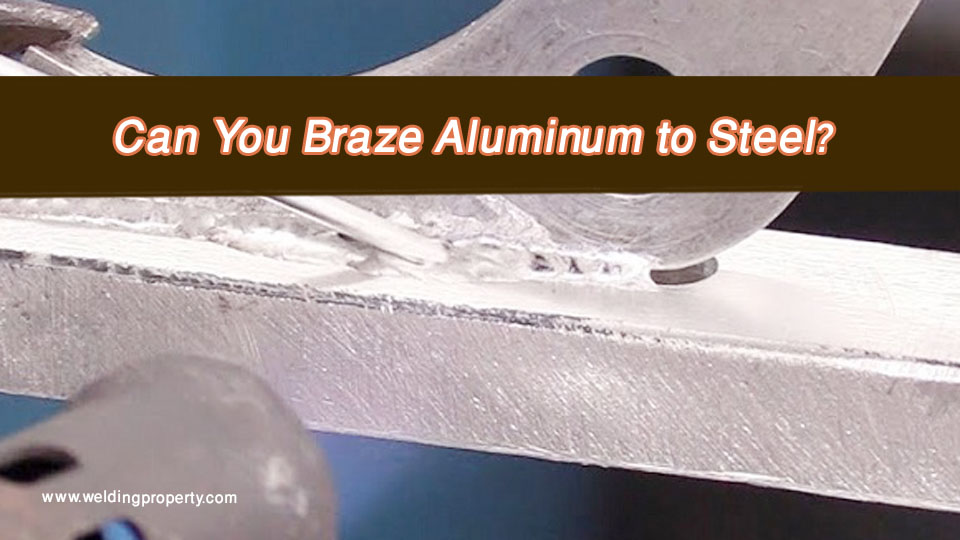
Image by welding-material
What Is Brazing Aluminum and How Does It Differ from Welding?
Brazing aluminum heats the base metal to around 600–800°F, hot enough to melt a zinc- or aluminum-silicon-based filler rod but below aluminum’s melting point of roughly 1,200°F.
The filler wets the surfaces and gets pulled into the joint by capillary action. No puddle forms like in welding—you’re essentially gluing with molten metal that alloys slightly with the surface.
Welding, whether TIG (GTAW) or MIG (GMAW), melts the edges of the aluminum and usually adds matching filler (like 4043 or 5356 rod/wire). You create a fusion zone where the metal mixes at the atomic level.
In my experience, the biggest practical difference shows up on thin stock, say 1/16″ to 1/8″ sheet. Welding demands precise heat control to avoid burn-through or lack of fusion.
Brazing lets you heat a broader area more gently, reducing distortion. On thicker sections, welding gives deeper penetration and better fatigue resistance.
When Should You Braze Aluminum Instead of Welding It?
I reach for brazing when:
- The material is thin and distortion is a killer (think radiator repairs, air ducts, or sheet metal enclosures).
- You lack a high-end AC TIG machine or don’t want to deal with argon shielding.
- You’re joining aluminum to dissimilar metals in some cases, though compatibility varies.
- The joint is a lap or sleeve design with plenty of overlap—capillary action shines here.
- Speed and cleanup matter more than ultimate tensile strength.
Welding makes more sense for butt joints under heavy load, pressure vessels, or anything needing full penetration. Structural aluminum frames on trailers or bike parts usually get TIG welded with 5356 filler for its strength and corrosion resistance.
One shop-tested insight: brazed joints often resist corrosion better in some environments because the filler can act as a barrier, and there’s less heat-affected zone (HAZ) weakening the temper of heat-treatable alloys like 6061.
Strength Comparison: Brazing vs Welding Aluminum in Real Applications
Here’s the honest truth from the bench. A properly executed TIG weld on aluminum can develop tensile strength close to the base metal—often 30-40 ksi depending on alloy and filler. The fusion zone, when done right, is as strong or stronger than the parent material away from the joint.
Brazed joints typically rate lower in pure tensile tests on butt joints, sometimes 20-30 ksi, but they shine in shear and with large overlap areas.
Manufacturers of popular aluminum brazing rods (like those zinc-aluminum alloys) claim joints “as strong as the base metal” when the overlap is sufficient—think 3-4 times the material thickness. In lap shear tests, I’ve seen brazed samples hold until the aluminum tears elsewhere.
In one repair I did on a cracked aluminum fuel tank, the braze held fine under pressure where a quick TIG attempt had warped the thin wall and leaked. On thicker plate, though, a MIG weld with spray transfer blew the braze away in bend tests.
Key factors affecting strength:
- Joint design: Lap joints favor brazing; butt joints favor welding.
- Overlap length: More surface area = stronger braze.
- Surface prep: Critical for both, but unforgiving in brazing.
- Filler compatibility: Matching alloys prevent galvanic issues.
- Heat input: Lower in brazing preserves original properties better on 6xxx series.
Pros and Cons Table
Brazing Aluminum
- Pros: Lower heat → minimal distortion and warping; easier on thin material; no need for expensive welder or gas; can join some dissimilar combos; often cleaner appearance with less post-grind.
- Cons: Generally lower strength in high-tensile or fatigue loading; requires excellent fit-up for capillary action; flux cleanup can be messy; not ideal for thick sections or high-pressure applications.
Welding Aluminum (TIG/MIG)
- Pros: True fusion for maximum strength and penetration; suitable for structural loads; better fatigue life in many cases; full range of joint types.
- Cons: Higher heat causes more distortion and potential HAZ softening; demands skill and equipment (AC balance, pulse settings on modern inverters); oxide layer fights you harder; more risk of cracking if preheat or filler isn’t right.
In practice, I’ve used both on the same project. Braze the delicate fins on a heat exchanger, then weld the heavier mounting brackets.
How to Braze Aluminum: Step-by-Step Shop Guide
I’ve taught plenty of hobbyists this process, and the secret is patience with prep and heat control. Here’s how I do it in the shop.
Clean thoroughly — Aluminum oxide is the enemy. Degrease with acetone or brake cleaner. Then mechanically clean with a dedicated stainless steel brush or flap disc (avoid carbon steel contamination). For best results, clean right before brazing—oxide reforms fast.
Fit-up — Aim for tight clearance, about 0.002–0.005″ for capillary. Lap joints work great; avoid wide gaps.
Flux application — Use a good aluminum brazing flux. Apply to joint and rod. Some rods come flux-coated.
Heat evenly — Use an oxy-acetylene torch with a neutral or slightly reducing flame, or a MAP/propane setup for smaller jobs. Heat the surrounding area first—aluminum sucks heat away. Watch for the flux to turn clear and watery; that’s your cue the temperature is right (around 700°F for many rods).
Apply filler — Touch the rod to the joint, not directly in the flame. Let it flow in. Don’t force it. Move the torch to keep heat balanced.
Cool and clean — Let it air cool. Remove flux residue with hot water and a brush—leftover flux is corrosive.
Practical tips from experience:
- Raise the workpiece on firebrick or wire to prevent the table from acting as a heat sink.
- For larger pieces, preheat broadly to 300–400°F to help flow.
- Test your flame: too oxidizing and you’ll burn the flux; too carburizing and you get soot.
- On 6061, expect some loss of temper—it’s going to be softer near the joint either way.
Common beginner mistake: heating the rod instead of the base metal. The base has to reach temperature first or the filler just balls up.
Welding Aluminum: Key Techniques and Settings for Strong Joints
For TIG on aluminum, I run AC with 60-70% electrode negative balance on most inverters like Miller Dynasty or Lincoln Power Wave. Amperage rule of thumb: about 1 amp per 0.001″ of thickness. So 1/8″ (0.125″) gets 90-130 amps depending on joint and travel speed. Use 2% thoriated or lanthanated tungsten, sharpened to a point but with a small flat.
Filler: 4043 for general purpose and castings (easier flow, less cracking); 5356 for higher strength and better color match on marine or structural work.
Joint prep: V or U groove on thicker material for penetration. Back purge with argon on pipes or tanks to prevent sugaring.
MIG aluminum needs a spool gun or push-pull system to avoid bird-nesting. Settings on a 200-250 amp machine: for 0.047″ wire, around 180-220 amps and 20-24 volts, with argon or argon-helium mix. Travel fast to avoid cold laps.
Machine settings example for common jobs (USA shop machines):
- TIG 1/8″ 6061 butt joint: 110-140A, 15-18 CFH argon, 3/32″ tungsten.
- MIG 1/4″ fillet: 180-220A, 22-25V, 0.035″ or 0.047″ wire.
Always clamp securely but allow for expansion. Tack welds help control distortion—skip weld or back-step technique.
Common Mistakes Beginners and Pros Make with Both Processes
I’ve made most of these myself over the years.
In brazing: Poor cleaning leads to no flow. Overheating burns the flux and weakens the bond. Using too little overlap. Forgetting to clean flux afterward, causing long-term corrosion.
In welding: Dirty metal or wrong polarity (DC instead of AC). Too cold—lack of fusion looks shiny but fails. Too hot—burn-through or porosity from hydrogen. Wrong filler on 5xxx series (can cause cracking). Ignoring preheat on thick sections.
Pro tip: On aluminum, contamination from grinding wheels or wire brushes used on steel will ruin both welds and brazes. Keep dedicated tools.
Material Compatibility and Filler Choices
Aluminum alloys matter. Non-heat-treatable 1xxx, 3xxx, 5xxx braze and weld nicely. Heat-treatable 6xxx and 7xxx are more sensitive to heat—brazing’s lower temp helps preserve properties.
Brazing fillers: Zinc-aluminum rods (like those “no welder” kits) work for repairs but check tensile ratings. True aluminum-silicon brazing alloys need furnace or precise torch control for production.
Welding fillers: ER4043 (silicon) wets well; ER5356 (magnesium) stronger and more ductile.
For dissimilar metals, brazing sometimes bridges aluminum to copper or steel better, but test for galvanic corrosion in service.
Safety Considerations in Your Shop
Aluminum work throws off intense UV, so helmet with good shade (10-12 for TIG) and cover your skin. Flux fumes can irritate—good ventilation or respirator. Brazing flux is often corrosive; wash hands and neutralize residue.
Fire risk is real with aluminum chips—they burn hot. Keep a Class D extinguisher handy. Eye protection for grinding and flux cleanup.
Real-World Examples from Fabrication and Repair
I once repaired an old aluminum truck bed with brazing on the thin floor panels—minimal warp, held up for years under load. On a custom race car chassis, we TIG welded all structural tubing with 5356 for crash performance.
Another job: brazing fins back onto a damaged air-cooled engine head. Welding would have warped the casting badly. The braze sealed and held thermal cycling.
In production shops, furnace brazing of aluminum heat exchangers creates hundreds of joints at once with excellent leak-tightness and minimal distortion—something torch welding can’t match.
Choosing the Right Process for Your Next Project
Think about the service conditions. Will it see vibration, impact, or pressure? Thin material or thick? Do you have the equipment and skill for TIG?
For hobbyists without a welder, quality brazing rods plus a good torch can handle many repairs surprisingly well. Professionals usually default to welding for critical parts but keep brazing in the toolbox for distortion-sensitive or quick fixes.
Test samples when possible. I still break test pieces in the vise or bend them to see where they fail.
After years of running both processes side by side, I can tell you this: neither is universally “better.” Brazing aluminum isn’t always as strong as a good weld, but in the right joint and application, it delivers reliable, low-distortion results that get the job done without fancy gear. Welding gives you that deep fusion confidence for demanding work.
The reader who understands both can walk into the shop and pick the tool that actually solves the problem instead of forcing one method. That saves time, money, and headaches.
Always design the joint first for the process. A brazed lap joint with generous overlap will often outperform a marginal butt weld on thin aluminum. Match your technique to the metal’s behavior rather than fighting it.
Clean like your life depends on it, control the heat like it’s alive, and test when the stakes are high. You’ll end up with parts that last.
FAQs
Can a brazed aluminum joint be stronger than a welded one?
In specific cases like thin material with large lap areas, yes—because the braze covers more surface and avoids weakening the HAZ as much. But in straight tensile or fatigue on butt joints, a sound fusion weld is usually superior. It depends on design more than the process itself.
What amperage settings do I need for TIG welding aluminum?
Start with roughly 1 amp per thousandth of an inch of thickness. For 1/8″ material, dial in 100-140 amps on AC, adjusting for joint type and travel speed. Use pulse if your machine has it to control heat on thin sections.
Do I need special flux for brazing aluminum?
Yes. Aluminum brazing flux is formulated to break the oxide layer at lower temperatures. Generic fluxes won’t cut it. Apply generously and clean it off completely afterward.
Is brazing aluminum suitable for structural applications?
It can be for light-duty or non-critical structures with proper overlap and design. For load-bearing frames or pressure-containing parts, most codes and experienced fabricators prefer fusion welding for its proven penetration and strength consistency.
How do I prevent distortion when working with aluminum?
Brazing helps a lot because of lower overall heat. For welding, use clamps and fixtures, tack frequently, employ back-stepping or skip welding, and consider preheat on thicker pieces. Sometimes welding in short passes and allowing cool-down between them makes the difference.