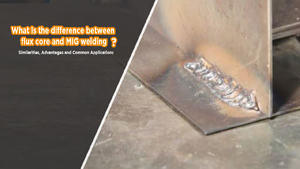
Flux core welding is one of my go-to methods when I need strong, clean welds without the hassle of using shielding gas. It’s a fantastic choice, especially for outdoor work or welding in less-than-ideal conditions.
I’ve learned over the years that getting the right Lincoln flux core welding settings makes all the difference between a smooth, solid weld and a mess of spatter and weak joints.

If you’ve ever struggled with getting your Lincoln welder dialed in just right, you’re not alone. Whether it’s too much spatter, poor penetration, or a bead that just doesn’t look right, the right settings can fix most problems.
I’ve spent a lot of time fine-tuning my Lincoln welder, and today, I want to share everything I’ve learned so you can get great results every time you weld.
Why Proper Lincoln Flux Core Welding Settings Matter
When I first started with flux core welding, I thought I could just plug in my Lincoln welder, pull the trigger, and lay down a perfect bead. I was wrong. The settings control everything—heat, penetration, spatter, and bead appearance. When they’re off, you’ll run into issues like:
- Excessive spatter that makes cleanup a nightmare
- Burn-through when welding thin metal
- Poor penetration, leaving weak welds
- An unstable arc, making it hard to control your weld
- Inconsistent bead shape, making your work look unprofessional
But when you dial in the right voltage, wire speed, and amperage, everything changes. You get cleaner, stronger welds with minimal spatter and a steady arc. That’s exactly what I want to help you achieve.
Flux Core Welding Settings on a Lincoln Welder
There are three main settings you need to focus on when welding with a Lincoln flux core machine:
- Voltage (V) – Controls the heat and arc length.
- Wire Speed (IPM – Inches Per Minute) – Determines how fast the wire feeds into the weld.
- Amperage (A) – Dictates the overall penetration and weld strength.
Every Lincoln welder has recommended settings, but small adjustments based on your specific project can make a big difference.
Lincoln Flux Core Welding Settings Chart
Here’s a helpful chart that I’ve used to get my settings dialed in for different metal thicknesses. This should work for most Lincoln welders, but always do a test weld and make small adjustments as needed.
Flux Core Welding Settings for Lincoln Welders
| Metal Thickness | Wire Diameter | Voltage (V) | Wire Speed (IPM) | Amperage Range (A) |
|---|---|---|---|---|
| 24 gauge (0.025″) | 0.030″ | 14-16V | 30-50 | 30-60A |
| 18 gauge (0.048″) | 0.030″ | 16-18V | 60-80 | 50-90A |
| 1/8″ (0.125″) | 0.035″ | 18-20V | 90-130 | 90-140A |
| 1/4″ (0.250″) | 0.045″ | 20-22V | 140-190 | 140-190A |
| 3/8″ (0.375″) | 0.045″ | 22-24V | 170-220 | 160-210A |
This is a great starting point, but adjustments might be needed based on your welding position, joint type, and workpiece condition.
Setting Up Your Lincoln Welder for Flux Core Welding
Voltage Settings
Voltage controls how deep the arc penetrates the metal and how the bead looks.
- If your voltage is too low, your weld will be too narrow with poor penetration.
- If it’s too high, you’ll get too much spatter and possibly burn-through.
For most flux core welding, I keep my voltage between 14V and 24V, depending on material thickness.
Wire Speed Settings
Wire speed controls how fast the wire is fed into the weld pool.
- Too fast, and you’ll get excess buildup and an erratic arc.
- Too slow, and your arc will be unstable, causing weak penetration.
The right wire speed depends on the thickness of the metal. Thinner metals require lower speeds, while thicker ones need higher speeds.
Amperage Settings
Amperage is controlled by both the voltage and wire speed.
- Lower amperage is best for thin materials to avoid burn-through.
- Higher amperage provides deeper penetration for thick materials.
Choosing the Right Flux Core Wire for Your Lincoln Welder
Not all flux core wires are the same. Lincoln recommends E71T-GS self-shielded flux core wire for general welding. Here’s what I use for different jobs:
| Wire Type | Best For |
|---|---|
| 0.030″ E71T-GS | Sheet metal, auto body work, thin materials |
| 0.035″ E71T-GS | General-purpose welding, 1/8” – 1/4” steel |
| 0.045″ E71T-11 | Heavy-duty welding, 1/4” and up |
If you’re welding outside, flux core is the best choice because it doesn’t require shielding gas.
Common Problems and How to Fix Them
Even with the right settings, you might still run into some welding issues. Here are the most common ones and how to fix them.
Problem: Too much spatter
- Solution: Reduce voltage slightly or lower wire speed.
Problem: Weak penetration
- Solution: Increase voltage and amperage for deeper fusion.
Problem: Burn-through on thin metal
- Solution: Lower amperage and wire speed, and weld in short bursts.
Problem: Unstable arc
- Solution: Check your wire feed tension and polarity. Make sure you’re using DCEN (Direct Current Electrode Negative) for flux core welding.
Tips for Better Flux Core Welds
- Always clean your metal before welding to remove rust, paint, or dirt.
- Test on scrap metal first to fine-tune your settings.
- Keep a steady hand and speed—too fast and the bead will be thin, too slow and it will pile up.
- Listen to the arc—it should sound like frying bacon when the settings are right.
- Use the correct polarity—flux core welding requires DCEN.
Conclusion
Getting the right Lincoln flux core welding settings takes a little trial and error, but once you nail it, your welds will be strong, clean, and professional.
If you’re working on thin sheet metal or heavy-duty structural steel, the right combination of voltage, wire speed, and amperage will make all the difference.
I’ve personally found that sticking close to the recommended settings chart, testing on scrap metal first, and making small adjustments as needed is the best way to get consistent results.
Flux core welding is a powerful and versatile process, and with the right settings, you’ll be laying down solid, clean welds every time.
Frequently Asked Questions
What is the best voltage for flux core welding?
The best voltage depends on metal thickness, but most flux core welding falls between 14V and 24V.
Why is my Lincoln flux core welder producing so much spatter?
Spatter is usually caused by too much voltage or too high wire speed. Lower one of them slightly and try again.
Do I need gas for Lincoln flux core welding?
No, flux core welding does not require shielding gas. The wire contains flux that creates its own shielding.
Can I use flux core wire in a MIG welder?
Yes, but you need to turn off the gas and switch to DCEN polarity.
If you get your settings right, welding with flux core becomes smooth, efficient, and incredibly effective.