
I’ve been working in the welding world for years now, and I’ve come across some truly fascinating materials and challenging combinations. One of the most common questions I get from folks—especially those just starting out or expanding their capabilities—is this: Can you weld titanium to aluminum? It’s a great question, and I’m glad you’re here because it’s not as simple as it might seem.
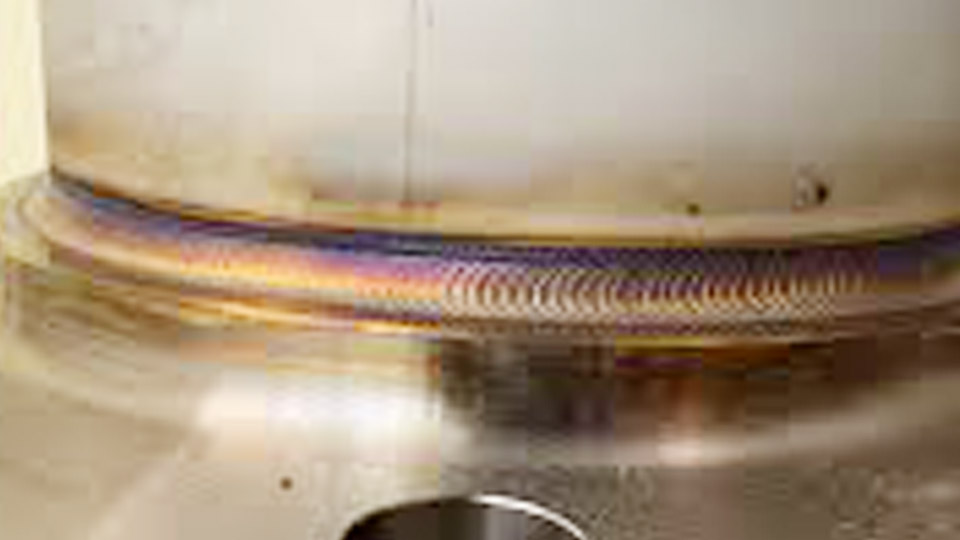
Photo @Tri-Cities Car Enthusiasts
If you’re a professional welder, a student, or just someone curious about the possibilities of metal joining, this topic will open your eyes to the complexity behind two of the most useful metals in modern manufacturing.
Let me walk you through everything you need to know, and I promise I’ll keep it simple, clear, and based on real-world experience.
Titanium and Aluminum: Two Very Different Metals
Before we even talk about welding them together, we need to understand what we’re working with. Titanium and aluminum are both lightweight and corrosion-resistant metals, but that’s where most of their similarities end.
Titanium is known for its incredible strength-to-weight ratio, excellent corrosion resistance, and high melting point. It’s widely used in aerospace, medical, and marine applications. But it’s also expensive and tricky to work with.
Aluminum, on the other hand, is more common, easier to shape, and cheaper to produce. It’s used in everything from soda cans to automotive frames.
Both metals are valuable in their own way, but they react very differently to heat, oxidation, and other elements involved in welding.
Let me break down their key properties for you in a simple table:
| Property | Titanium | Aluminum |
|---|---|---|
| Melting Point | ~3,034°F (1,668°C) | ~1,221°F (660°C) |
| Density | 4.5 g/cm³ | 2.7 g/cm³ |
| Oxidation Tendency | Forms stable oxide | Forms oxide rapidly |
| Weldability | Requires inert shielding | Relatively easy |
| Cost | High | Low |
When you look at this comparison, you can already start to see why welding these two together presents a challenge.
Why You Can’t Just Weld Titanium to Aluminum Directly
You cannot directly weld titanium to aluminum using traditional welding methods like TIG or MIG. I’ve tried, and the results aren’t pretty.
The reason comes down to metallurgy—how metals behave when they are heated, cooled, and mixed.
When you try to fuse titanium and aluminum, the result is the formation of intermetallic compounds. These are very brittle phases that form at the joint and can crack easily under stress or even during the welding process itself.
Think of it like trying to glue two materials together with something that turns into glass—it might stick for a moment, but it will shatter the first time pressure is applied.
While the idea of just melting the two together might sound logical, in practice, it leads to weak, brittle, and unusable joints.
So, Can You Join Titanium to Aluminum At All?
Yes—you can. But not by traditional welding.
There are specialized joining techniques that are used to bond titanium and aluminum successfully. These include:
- Explosion welding
- Friction welding
- Diffusion bonding
- Ultrasonic welding
- Bimetallic transition joints
I’ll walk you through each of these in a way that’s easy to understand, and I’ll also explain where each method makes sense.
Explosion Welding: Joining with Controlled Detonation
I know—this one sounds intense. But yes, explosion welding is a real and controlled industrial process.
Here’s how it works: a controlled explosive charge is used to slam one metal (usually aluminum) into another (titanium) at incredibly high speeds.
This creates a solid-state weld at the interface without melting either metal. The collision causes the atoms to mix just enough at the surface to bond without forming brittle intermetallics.
The benefits? You get a super-strong joint that holds up to extreme environments. It’s commonly used in aerospace and high-performance industrial equipment.
The downside? You need specialized equipment and safety measures, so it’s not something you’re doing in your home garage.
Friction Welding: Heat Without Melting
Friction welding is a personal favorite of mine because it’s clever and efficient.
In this method, one metal is rotated at high speed and pressed against the other. The friction between the two creates heat, which softens the metals at the surface.
It never actually melts them. This solid-state bonding helps avoid the formation of those nasty intermetallic compounds.
This method is great for round parts like rods and tubes. It’s widely used in automotive and aerospace industries where titanium-aluminum joints are needed.
Diffusion Bonding: Slow But Strong
Diffusion bonding is a quieter, more patient method.
Here, the two metals are placed in contact under high pressure and temperature for several hours. This allows the atoms from each metal to slowly diffuse into each other and form a bond.
Think of it as two pieces of bread slowly toasting and merging into one slice under a hot press.
It’s slow and expensive, but when you need precision and strength—like in satellite components or jet engines—diffusion bonding is a great choice.
Ultrasonic Welding: Vibrations That Stick
Ultrasonic welding uses high-frequency vibrations to create heat at the joint between two metals. It’s mostly used for thin materials or foils. The heat generated by the vibrations bonds the metals at a molecular level—again, without melting.
It’s used in electronics, battery manufacturing, and other fields where small, precise welds are needed. You’re not going to weld a bike frame this way, but for fine parts, it’s excellent.
Bimetallic Transition Joints: The Practical Solution
Now, if you’re working in a real-world environment and need to connect titanium and aluminum pipes, panels, or structural parts—bimetallic transition joints are probably your best friend.
These joints are manufactured using explosion welding or similar techniques, and they act as a bridge between aluminum and titanium components. You can weld aluminum to one side and titanium to the other—but only to the compatible layer.
I’ve worked with these in aerospace projects and industrial piping systems. They offer a practical, efficient, and safe way to join dissimilar metals.
Challenges of Welding Titanium to Aluminum
Even with all these advanced methods, joining titanium and aluminum isn’t easy. Here are some common challenges I’ve faced over the years:
- Oxidation: Both metals oxidize quickly, especially titanium. You need an inert atmosphere or vacuum in many cases.
- Heat Management: The huge difference in melting points means precise temperature control is critical.
- Cost: Specialized welding methods and materials like bimetallic joints are expensive.
- Skill Requirement: These processes require advanced equipment and trained professionals.
- Limited Applications: Not all industries can justify the cost and complexity of joining titanium to aluminum.
Still, when the performance demands it, these challenges are worth overcoming.
When Should You Join Titanium to Aluminum?
I usually recommend exploring titanium-to-aluminum joining only when the performance benefits outweigh the costs and complications.
Here are some scenarios where it makes sense:
- Aerospace components where weight and strength are critical.
- Marine and offshore equipment where corrosion resistance is a must.
- High-end automotive systems like hybrid engine components.
- Medical implants or devices where biocompatibility and lightweight design are required.
- Specialized heat exchangers where dissimilar metals offer performance benefits.
In these cases, using bimetallic transition joints or solid-state welding methods makes all the difference.
Can You Do This at Home?
No, you can’t weld titanium to aluminum in a standard home shop. The tools, safety procedures, and precision involved in these methods go way beyond what’s practical for a garage setup.
That said, you can still experiment with titanium and aluminum separately and learn a ton about each metal. Just don’t try to melt them together with a TIG torch—it won’t end well.
Best Practices When Working With Titanium and Aluminum
If you’re serious about working with these metals, here are a few tips from my own experience:
- Use proper shielding gas, especially with titanium. Argon is essential.
- Clean both surfaces thoroughly before any bonding.
- Avoid cross-contamination. Even a little aluminum on a titanium brush can cause weld issues.
- Invest in proper safety gear—gloves, masks, and eyewear.
- Consult professionals or engineers for large projects involving dissimilar metals.
The more you respect the properties of each metal, the better your outcomes will be.
Conclusion: It’s Possible, But Not Simple
So, can you weld titanium to aluminum? Not in the traditional sense. But with the right techniques, equipment, and understanding, you absolutely can join them effectively.
These two metals each bring something special to the table, and when bonded correctly, they can create incredibly strong and lightweight components. This isn’t something you approach casually—it takes experience, science, and the right tools.
If you’re working in aerospace, automotive, or just exploring welding for fun, I hope this guide helped you understand the full picture. Always work smart, stay safe, and never stop learning.
Frequently Asked Questions
Can I TIG weld titanium to aluminum?
No, you can’t TIG weld titanium to aluminum. The metals form brittle compounds when melted together, which makes the joint extremely weak.
What is the best method for joining titanium and aluminum?
Explosion welding or using a bimetallic transition joint is typically the most reliable and widely used method for joining titanium and aluminum.
Is friction welding safe for titanium to aluminum joints?
Yes, friction welding is a safe and effective method, especially for cylindrical parts, as it avoids melting and prevents brittle intermetallic compounds.
Can ultrasonic welding be used for large titanium and aluminum parts?
Not really. Ultrasonic welding is best for small, thin components like foils or wires. It’s not suitable for large structural joints.
How much does it cost to weld titanium to aluminum?
It varies based on the method. Explosion welding and bimetallic joints are expensive, but they’re reliable. Expect higher costs compared to standard welding jobs.
Can you bond titanium to aluminum with adhesives?
Yes, certain industrial adhesives can bond them, but they won’t have the same strength or durability as welded or bonded joints in critical applications.
Are bimetallic transition joints reusable?
No. Once they’ve been welded into place, they aren’t meant to be reused. They are custom-manufactured for specific applications.


