How much does a nuclear welder make? Nuclear welders rank among the highest-paid professionals in the welding industry due to the precision, safety, and expertise their work demands.
These specialists handle critical tasks in nuclear power plants, submarines, and other high-stakes environments where accuracy is non-negotiable. Their earnings reflect both the risks involved and the advanced certifications required for the job.
In this guide, you’ll learn about the average nuclear welder salary, the key factors that influence pay, and how experience, training, and location can boost your income potential. If you’re aiming for a rewarding and high-paying welding career, nuclear welding is a field worth exploring.
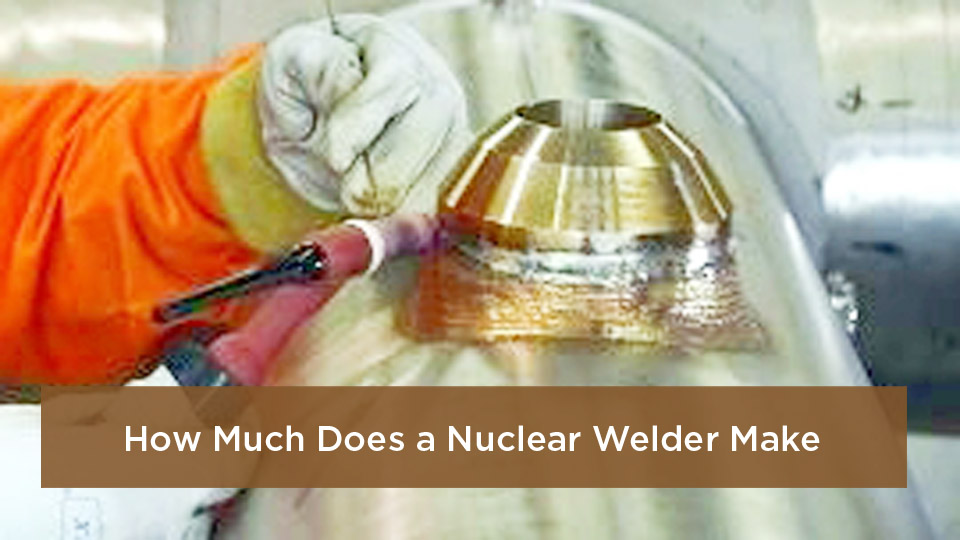
Image by chinadaily
What Is a Nuclear Welder and Why Does It Matter?
A nuclear welder is the backbone of power plants, handling the fusion of metals that hold radioactive materials in check. We’re talking stainless steel pipes, pressure vessels, and heat exchangers that have to withstand insane temperatures and pressures without a single pinhole leak. It’s not your backyard MIG setup; this is precision work where every pass counts toward nuclear safety codes like ASME Section IX.
Why does this matter in the real world? Simple: weld integrity here isn’t optional—it’s life-or-death. A bad weld could lead to radiation exposure or plant shutdowns costing millions. I’ve seen crews shut down for weeks over a suspect root pass, and it hits home how your hands-on skill keeps communities powered safely.
For DIY welders dipping toes into fab work or pros eyeing a specialty, understanding this builds respect for the trade. It’s about material compatibility too—exotic alloys like Inconel don’t forgive sloppy prep—and cost efficiency, since rework in a nuclear setting eats budgets faster than a plasma cutter through scrap.
The Everyday Role of a Nuclear Welder
You’re suited up in your FR coveralls, dosimeter clipped on, stepping into a plant’s hot zone. Your day kicks off with blueprint reviews—reading complex schematics for pipe runs that snake through concrete mazes. Then it’s joint prep: grinding bevels to 37.5 degrees for that perfect V-groove, ensuring no mill scale hides contaminants.
Once the fit-up’s tight (tack it with a finger every 2-3 inches to avoid distortion), you fire up the TIG torch. Helium shielding gas at 15-20 CFH, AC balance dialed to 60% for cleaning oxides on aluminum-clad sections. You’re laying 1/16-inch passes, interpass temps under 350°F to dodge cracking. Between runs, it’s NDT checks—maybe a dye penetrant or UT scan—to verify no inclusions.
Breaks? Quick, with rad surveys. End of shift: log everything for QA records. It’s methodical, but that rhythm keeps you sharp. I once spent eight hours on a single elbow joint—tedious, but seeing it pass hydro at 1,500 PSI? Pure satisfaction.
Why Nuclear Welding Stands Apart from Regular Welding
Regular welding? You might slap a fillet on a trailer frame and call it good. Nuclear? Every weld’s qualified under strict regs like 10 CFR 50. It’s not just stronger; it’s traceable. You document filler rod heat numbers (ER308L for austenitic stainless, say) and welder quals down to the wire diameter.
Safety amps up too—radiation badges, confined space entry, and lockout/tagout on steroids. Material-wise, you’re dealing with low-carbon steels to avoid carbide precipitation, or duplex alloys for corrosion resistance in coolant loops.
Cost efficiency shines here: proper technique means no rejects, saving shops thousands per repair.
Common mistake? Rushing cleanup. I learned the hard way early on—left a thumbprint smudge on a prep edge, and it caused porosity.
Fix: Always wipe with acetone, then alcohol, and inspect under blacklight. Pro tip: Invest in a good borescope for internal checks; it’ll save your bacon on those hard-to-reach fittings.
Average Salary for Nuclear Welders in the USA
The meat of it: how much does a nuclear welder make? Based on the latest shop talk and job boards as of late 2025, the national average hovers around $60,000 a year. That’s about $29 an hour for a 40-hour week, but factor in overtime and it’s more like $70,000-$80,000 for most folks grinding it out.
This isn’t pulled from thin air—it’s from real postings in states with plants, like South Carolina or Pennsylvania. Entry-level might start lower, but with quals, you climb fast. Let’s break it down so you can see where you fit.
Entry-Level Pay: Kicking Off Your Nuclear Career
Fresh out of a welding program? Expect $45,000-$55,000 annually, or $22-$27 per hour. That’s for helpers or C-ticket welders assisting on non-critical welds. In my first nuclear gig, I pulled $24/hour shadowing a lead on steam generator repairs—decent for 22, but the real money came after my first qual test.
Why the range? Union shops like those under the UA (United Association) bump it up with benefits packages worth 30% more. Non-union? Might be straight time, but travel per diem adds $100/day. Tip for newbies: Nail your 6G pipe cert on carbon steel first—it’s the gateway drug to nuclear pay.
Mid-Career Earnings: The Sweet Spot for Most
With 3-7 years under your belt, you’re looking at $65,000-$85,000. That’s $31-$41 hourly, especially if you’re B-ticket qualified for stainless or exotics. I hit $75k around year five, working turnarounds at a Midwest plant—12-hour shifts, but double time on Sundays padded the check.
Semantic shift: Think “certified nuclear pipe welder salary” here; those with AWS D1.1 and ASME IX stamps command the high end. Overtime’s king—nuclear outages mean 60-70 hour weeks at 1.5x, pushing effective hourly to $45+.
Top Earners: Crossing into Six Figures
The elite? $90,000-$120,000+, or $43-$58/hour. These are A-ticket welders with 10+ years, maybe supervising or tackling reactor vessel work. In high-demand spots like Washington state, I’ve heard of $110k base plus bonuses for flawless quals.
What sets them apart? Multi-process mastery—TIG, SMAW, even laser hybrids—and clean audit records. One buddy retired at 55 on $115k/year; he specialized in inconel overlays for erosion protection. Mistake to avoid: Burnout from constant OT. Fix: Rotate shifts and hit the gym—welding’s physical, and fatigue leads to sloppy arcs.
What Factors Affect How Much Nuclear Welders Make?
Salary isn’t one-size-fits-all; it’s a puzzle of where you are, what you know, and how you hustle. Location swings pay by 20-30%, experience adds layers, and those extra hours? They turn good into great. Let’s unpack it like we’re troubleshooting a unstable arc.
Location Matters – Hotspots for High Pay
Nuclear plants cluster in the Southeast and Midwest, driving premiums. Top payers: Washington ($75k avg), South Carolina ($72k), and Pennsylvania ($70k). Alaska’s wild at $85k+ due to remote site work, but COL eats half.
Texas lags at $62k—plenty of oil money, but fewer reactors. I chased a gig to Georgia once; $5/hour bump, but family time tanked.
Tip: Use apps like Indeed for “nuclear welder jobs near me” filtered by pay. Relo packages often cover moves—worth it for 15% raises.
| State | Average Annual Salary | Hourly Rate | Key Factor |
|---|---|---|---|
| Washington | $75,200 | $36 | Hanford site demand |
| South Carolina | $72,500 | $35 | VC Summer plant expansions |
| Pennsylvania | $70,100 | $34 | Multiple reactors, union strong |
| Texas | $62,300 | $30 | Oil crossover, but fewer nuke gigs |
| National Avg | $60,000 | $29 | Baseline for comparison |
Experience and Certifications That Boost Your Paycheck
Years on the torch matter—rookies at $50k, vets at $90k. But certs? They’re rocket fuel. AWS Certified Welder is table stakes; add ASME Section IX for nuclear, and you’re up 10-15%.
Nuclear-specific like NQA-1 training or CNSC quals open doors to $80k+ roles. I upgraded to a 6G TIG on duplex stainless—took two weeks of practice on scrap pipe—and my rate jumped $8/hour overnight.
Common pitfall: Letting certs lapse. Fix: Schedule annual recerts; shops reimburse if you’re valuable. Pro know-how: Practice on mock-ups with actual plant specs—better than classroom filler.
Shift Work and Overtime: Extra Cash in Your Pocket
Nuclear runs 24/7, so night differentials add $2-$5/hour, and OT? 1.5x after 8, double on holidays. A 10-day outage at 12s? That’s $10k in two weeks.
But it’s a grind—I pulled 80-hour weeks once, arc eye from poor hood fit. Safety first: Use auto-darkening helmets with side shields, and hydrate like it’s desert welding. Efficiency tip: Prep joints off-shift; it cuts OT needs and shows initiative for raises.
How to Become a Nuclear Welder: Your Step-by-Step Guide
Dreaming of that nuclear paycheck? It’s not overnight, but with grit, you can qual up in 1-2 years. I started as a fab helper, but here’s the roadmap I wish I’d had—straight from the job site.
Build Your Base Skills: Enroll in a community college welding program (6-12 months) focusing on SMAW and GTAW. Practice 6G positions on pipe—aim for 100% penetration without burn-through. Cost: $5k-$10k, but many shops sponsor.
Get Core Certs: Pass AWS D1.1 for structural steel. Then ASME IX for pressure piping. Test on 2-inch sch 40 pipe, ER70S-6 wire at 120-140 amps. I failed my first bend test—too hot, caused cracking. Lesson: Dial voltage slow, 22-24V.
Gain Field Experience: Land a general welding gig—piping in construction or shipyards. Log 6 months minimum; nuclear quals need documented hours.
Pursue Nuclear-Specific Training: Hit up programs like those at Tulsa Welding School or plant apprenticeships. Cover rad safety, blueprint reading, and NDT basics. Expect background checks—clean record required.
Qualify and Apply: Take the plant’s welder performance qual (WPQ)—TIG a test coupon, section it, and etch for fusion. Nail it, and you’re in. Job hunt via UA locals or sites like Monster.
Prep tip: For joint design, always chamfer edges 30 degrees and use ceramic backing for root protection. Filler compatibility? Match to base metal—308L for 304 stainless to avoid hot cracking.
Essential Skills Every Nuclear Welder Needs
Beyond the torch, nuclear demands a toolkit of smarts and steadiness. Precision arc control is non-negotiable—hold that puddle steady for 18-inch runs without weave deviation. Blueprint literacy? You read isometric drawings like a novel, spotting tolerances down to 1/32 inch.
Safety savvy tops the list: Know your ALARA principles (As Low As Reasonably Achievable) for rad exposure. Gear up with lead aprons for hot work near sources, and never skip air monitoring.
Soft skills? Communication—explaining a discontinuity to an inspector can save a teardown. I botched a handoff once, vague notes led to mismatched fillers. Fix: Use digital logs with photos; apps like WeldEye keep teams synced.
Machine settings cheat sheet: For TIG on 316L, start at 90 amps, ramp to 120, argon at 18 CFH. Post-flow 10 seconds to shield the crater. And always purge lines with argon—oxidation in ID is a killer.
A Day in the Life: What It’s Really Like on the Job
Dawn at the plant gate: Badge swipe, rad scan (clean, good). Coffee in hand, you hit the pre-job brief—today’s a valve repair on the secondary loop. Suit up: Respirator, gloves rated for 1,000°F, and that ever-present dosimeter chirping softly.
Morning: Mock-up a test weld on scrap inconel. Arc strikes clean, no spatter—supervisor nods. Afternoon: Real deal, confined space entry. Torch hums, beads stack true. Lunch? 20 minutes, scarfing a sandwich while reviewing X-rays from yesterday.
End: Decon shower, log hours. Home by 7, muscles aching but wallet fatter. My favorite memory? Fixing a cracked header during a storm—team effort, zero leaks, plant back online by midnight. The rush? Better than any hobby weld.
Pitfalls: Complacency on PPE. I skipped hood adjustment once—flash burn. Now? Daily checks, and UV-protective sleeves under coveralls.
Pros and Cons of Being a Nuclear Welder
Weighing the scales? Nuclear pays well but tests your mettle. Here’s the straight dope.
| Pros | Cons |
|---|---|
| High pay with OT potential ($70k+ easy) | Radiation exposure risks (monitored, but real) |
| Job security—plants run forever | Strict regs mean paperwork overload |
| Travel perks (per diem, sometimes) | Shift work disrupts family life |
| Pride in critical infrastructure | Physical toll—crawling pipes wears you down |
| Union benefits (pensions, health) | Background checks limit entry |
Upside: That sense of purpose. Downside: Holidays nuked by outages. Balance tip: Bank OT for downtime; use it for family fab projects.
Job Outlook: Is There a Future in Nuclear Welding?
Yes, steady as a DCEN arc. BLS pegs welder growth at 2% through 2032, but nuclear’s brighter—aging plants need repairs, and small modular reactors (SMRs) are popping up. Expect 5-7% bump in demand, especially in renewables crossover.
Challenges? Automation nibbles at routine welds, so upskill in robotics oversight. Opportunities? Green energy mandates mean more hires. I see apprentices flooding in—smart money’s on this track for the next decade.
Wrapping It Up: Your Next Move in Nuclear Welding
The real scoop on how much a nuclear welder makes, from $50k starts to $100k peaks, all tied to the sweat you put in on quals and joints. You’ve got the lay of the land now: why precision pays off, how to qual up, and the daily grind that makes it worthwhile. You’re more prepared than most to chase this path, whether you’re a hobbyist eyeing pro work or a journeyman ready for the big leagues.
It’s not just about the check—it’s the craft that powers the future. Go get that cert, practice that 6G till your arms scream, and step into the zone confident. You’ll weld better knowing the stakes. Always carry a spare collet on-site—one seized tip mid-outage, and you’re the hero with spares.
FAQs
What Certifications Do Nuclear Welders Need?
Start with AWS Certified Welder for basics, then ASME Section IX for pressure vessels. Nuclear plants often require NQA-1 training and site-specific quals. Renew every 3 years with performance tests.
How Dangerous Is Nuclear Welding Really?
Safer than headlines suggest—rads are monitored to under 2 rem/year (well below limits). Risks are from heat, heights, or confined spaces, not meltdowns. Follow ALARA, use PPE, and it’s routine.
What’s the Nuclear Welder Salary by State?
Varies: Top in Washington ($75k avg), South Carolina ($72k), bottom in Texas ($62k). Factor COL—Alaska pays $85k but living costs soar. Check local postings for real-time.
Can DIY Welders Transition to Nuclear Work?
Absolutely—build TIG skills on stainless pipe at home, get AWS cert, then shadow in fab shops. Nuclear needs 1-2 years experience, but your hobby foundation speeds it up.
How Does Overtime Work for Nuclear Welders?
Standard 1.5x after 8 hours, double on Sundays/holidays. Outages mean 50-70 hour weeks, adding $20k/year. Unions cap it at 60, but voluntary bumps pay big.