
A MIG welder going dead in the middle of a job can bring everything to a stop—especially when you’re halfway through a clean bead and suddenly lose wire feed or trigger response.
In many cases, it’s not the machine that’s completely failed, but internal wiring that’s worn out, loose, or damaged over time. That’s why learning how to rewire a MIG welder becomes a real practical skill instead of just technical knowledge.
Inside most MIG units, heat, vibration, and constant movement slowly take a toll on the wiring harness, switches, and connections.
I’ve opened up machines that looked fine on the outside but had brittle insulation, burnt connectors, or loose terminals causing inconsistent performance and arc issues. Ignoring those signs usually leads to bigger failures later.
Understanding the rewiring process matters because it can restore performance, improve safety, and extend the life of your machine without buying a new unit.
I’ll walk through what typically goes wrong, how to approach rewiring step by step, and what to check so your MIG welder runs smoothly and reliably again.
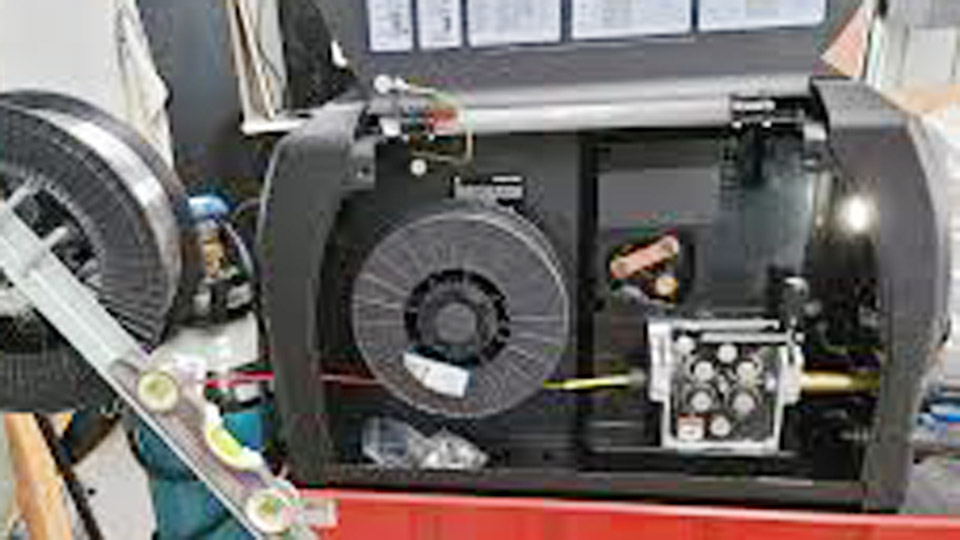
Image by UNIMIG Welders Club
Why Proper MIG Wire Setup and Cable Maintenance Matter
MIG (GMAW) relies on continuous wire feed for a stable arc. Unlike stick welding, there’s no flux coating to hide problems—everything shows in the puddle.
A kinked liner, wrong tension, or damaged torch cable causes wire slip, burn-back, spatter, and weak welds that fail inspection or break under load.
In real shops, I’ve seen guys lose hours on thin auto body panels because the wire was feeding inconsistently. On thicker fabrication, poor grounding or loose power connections from the torch lead create heat buildup and voltage drop, leading to lack of fusion. Doing it right saves wire, gas, tips, and your patience.
Safety first: Always unplug the welder before opening it or handling internal connections. Wear gloves and eye protection. High voltage inside the machine can kill you—don’t mess with the main power wiring unless you’re a qualified electrician.
Understanding MIG Welder Wire Feed Components
Before touching anything, know the path the wire takes:
- Spool holder: Holds the wire coil, usually 10- or 30-pound spools.
- Drive rollers: Pinch and push the wire forward. Sized for your wire diameter (.023″, .030″, .035″ common for mild steel).
- Tension arm: Applies pressure—too much flattens the wire, too little causes slip.
- Liner: Teflon or steel tube inside the torch cable that guides the wire smoothly.
- Contact tip: Transfers current to the wire at the end of the gun.
- Torch cable: Carries wire, gas, power, and trigger signals.
Common US machines like Miller, Lincoln, or Hobart use similar setups, often with Euro-style torch connections on better models.
Step-by-Step: How to Load and Feed New MIG Wire
This is the core of “rewiring” for most welders.
Prepare the machine — Unplug the welder or turn it off and release drive roller tension. Remove the old spool if empty. Cut the old wire near the rollers and pull it out from the torch end to avoid jams.
Install the new spool — Place it on the spindle so wire unwinds from the bottom (prevents tangles). Secure it and set light spool brake tension—just enough to stop overrun but not drag.
Straighten and trim the wire — Cut the first 6-12 inches at an angle with sharp wire snips. File any burrs smooth. This prevents liner damage.
Thread through the drive system — Open the drive roller cover. Make sure rollers match your wire size (swap if needed). Push the wire into the inlet guide, over the groove, and into the torch-side guide tube. Close the tension arm lightly.
Feed through the torch — Straighten the torch cable as much as possible. Pull the trigger (with gas off or low) while guiding the wire. It should glide through without binding. Adjust tension until the wire feeds smoothly without slipping or crushing.
Pro tip from the shop floor: Feel the wire with bare fingers (machine off) as it feeds. You want consistent pressure. If it bird-nests, back off tension and check for liner kinks.
Choosing the Right Wire and Settings for Your Job
Wire diameter and type dictate everything downstream:
- .023″ — Thin materials, low heat, clean sheet metal.
- .030″ — Versatile all-rounder for auto repair and light fab.
- .035″ — Thicker plate, higher deposition, outdoor or flux-cored.
Match to your machine’s output. On 110V home units, stick to .030″ max for decent penetration. 220V machines handle .035″ easily.
Typical settings (mild steel, C25 gas):
- .030″ wire: 18-22V, 200-350 IPM wire speed depending on thickness.
- Test on scrap. Listen for a steady sizzle, not popping or humming.
Always match polarity—DCEP (reverse) for solid wire.
MIG Torch Cable Repair and Replacement
If the cable is worn, stiff, or feeding poorly, “rewiring” means replacing or repairing the lead.
Signs it’s time:
- Wire hangs up intermittently.
- Visible cracks, burns, or exposed copper.
- Gas leaks or trigger issues.
- Cable gets hot during use.
Basic repair steps (for replaceable liners):
- Remove consumables from the gun.
- Pull old liner.
- Measure and cut new liner slightly long.
- Insert carefully—no kinks.
- Reassemble and test feed.
For full torch replacement on common 14AK or Euro guns:
- Disconnect power, gas, and control wires at the machine end.
- Match pinouts carefully (trigger wires are usually simple).
- Secure all connections tightly to prevent arcing.
On hard-wired torches, shortening the cable is sometimes possible but tricky—new assemblies are often cheaper and safer.
Common Mistakes and How to Avoid Them
Beginners often overtighten rollers, creating flat spots that cause erratic feeding and poor conductivity. Pros sometimes ignore liner wear until it’s too late, especially with flux-cored wire that leaves residue.
Other pitfalls:
- Rusty wire: Cleans poorly and abrades the liner.
- Leaving wire in the machine between jobs: It rusts fast.
- Kinked torch cable during storage.
- Wrong drive roller groove or pressure for aluminum wire (use U-groove, lower tension).
Joint prep reminder: Clean metal to bare shiny surface. No paint, rust, or oil. Good fit-up reduces amperage needs and spatter.
Troubleshooting Wire Feed and Electrical Issues
No wire feed? Check:
- Power to the feeder motor.
- Trigger connections.
- Obstructions in liner or tip.
- Drive roller gap.
Arc starts but sputters? Inspect ground clamp, power cable connections, and contact tip recess. Loose lugs inside the machine cause voltage drop—tighten them when the unit is unplugged.
For power cord issues on 220V setups, ensure proper gauge wire and grounded outlet. Don’t daisy-chain extension cords.
Safety Considerations Every Time
Unplug before any internal work. Discharge capacitors if opening the case. Use proper circuit protection—MIG machines pull serious amps. Keep cables off the floor where they’ll get run over. Inspect your ground clamp daily; a poor ground turns good settings into garbage welds and shock hazards.
Wear dry gloves, proper jacket, and helmet. Shielding gas displaces oxygen—ventilate confined spaces.
Comparison: Solid Wire vs Flux-Cored (Self-Shielded)
| Aspect | Solid Wire + Gas | Flux-Cored (Gasless) |
|---|---|---|
| Penetration | Cleaner, controllable | Deeper, more forgiving |
| Outdoor use | Wind affects gas | Excellent |
| Cleanup | Minimal spatter | More slag/spatter |
| Feed sensitivity | Higher (liner critical) | More tolerant |
| Typical wire size | .023-.035″ | .030-.045″ |
Choose based on your shop conditions. Many dual-gas machines switch easily.
Advanced Tips for Consistent Results
- Store spools in a dry cabinet.
- Use quality wire—cheap stuff feeds poorly.
- For aluminum, dedicated gun or spool gun prevents contamination.
- Check contact tip every few hours of arc time.
- Run the wire speed up and trigger to clear jams safely on scrap.
On real repair jobs, like patching truck frames, I dial voltage a bit higher for better wetting and watch travel speed to control the puddle.
Material notes: Mild steel is forgiving. Stainless needs tri-mix gas and right wire (308/316). Aluminum requires push technique and pure argon.
Reflection: Building Reliable MIG Habits
Once you nail wire loading, torch maintenance, and basic troubleshooting, your MIG welder becomes a dependable tool instead of a frustration. You’ll spend more time laying beads and less chasing problems. The difference shows in stronger welds, less spatter cleanup, and fewer burned tips at the end of the day.
The biggest pro-level tip I can give: Treat the wire path like a precision instrument. A few extra seconds checking tension, liner condition, and connections prevents hours of headache and delivers welds you can trust under load.
FAQ
How do I know if my MIG liner needs replacement?
If wire feeds rough even after cleaning the tip and adjusting tension, or you see dark residue or kinks, replace it. Pull the old one and compare—new liners make a night-and-day difference in feed quality.
Can I rewire a MIG welder for 220V myself?
Only if you’re experienced with electrical work and follow the manual exactly. Wrong wiring risks fire or electrocution. Most dual-voltage machines have clear internal jumpers—double-check against the schematic and test voltage carefully.
Why does my wire keep bird-nesting at the drive rollers?
Usually excessive tension, wrong roller size/groove, or a restriction further down the line (kinked liner or clogged tip). Release tension, clear the path, and refeed slowly.
What’s the best way to store MIG wire between jobs?
Remove the spool and keep it in a sealed bag with desiccant, or at least cover the machine well. Rusty wire is abrasive and causes feed issues fast.
How often should I replace contact tips?
Every few hours of arc time or when you notice burn-back, poor arc start, or spatter buildup. Keep spares in your toolbox—they’re cheap insurance for smooth welding.


