
Dialing in a MIG welder for stainless steel isn’t something you want to guess your way through. One wrong setting and you’re dealing with excess spatter, poor penetration, or that dull, sugary-looking bead that screams contamination. That’s exactly why understanding How to Set Up a MIG Welder for Stainless Steel is so important before you even strike an arc.
In real shop work, stainless behaves differently than mild steel—it holds heat longer, reacts quickly to improper shielding gas, and shows every mistake in your settings. I’ve seen solid joints turn weak just because the wire type or gas mix wasn’t right, even when the technique looked fine.
Getting the setup right makes everything smoother—from arc stability to bead appearance and long-term corrosion resistance.
I’ll walk you through the exact settings, tools, and practical adjustments you need so you can weld stainless steel cleanly, consistently, and without the usual frustration.
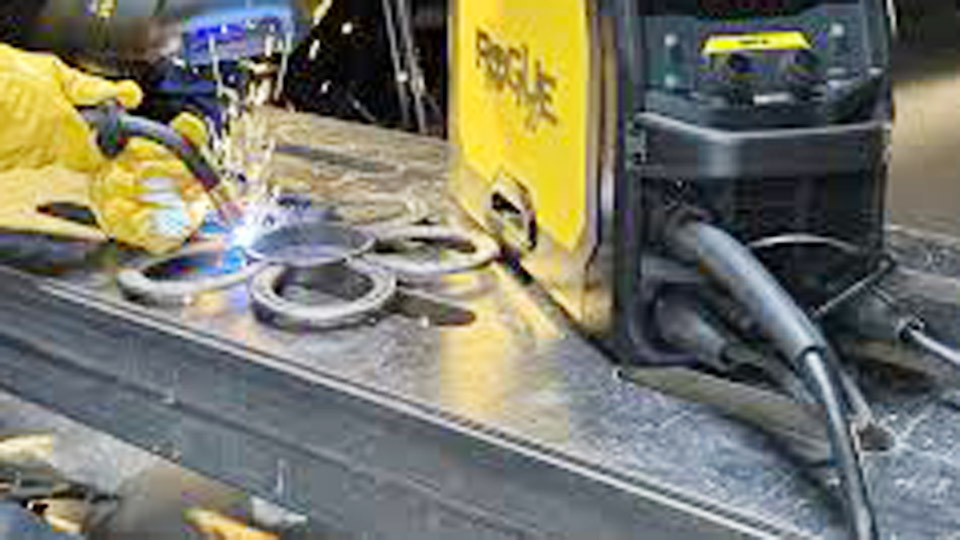
Image by esab
Why MIG Welding Stainless Steel Requires Different Setup Than Mild Steel
Stainless steel grades like 304 and 316 conduct heat differently and form a protective chromium oxide layer that you must preserve. MIG (GMAW) works great for production speed on material 1/16″ and thicker, but it demands the right wire, gas, polarity, and parameters to avoid issues like sugaring (oxidation on the back side), porosity, or reduced corrosion resistance.
In my experience, the biggest difference shows up in heat management. Stainless pools differently— it wets out more but can warp if you linger too long.
Setup mistakes that barely show on carbon steel become glaring on stainless. That’s why dedicated practices pay off: cleaner welds, less post-grind cleanup, and parts that pass inspection or hold up in service.
Choosing the Right Filler Wire for Stainless MIG Welding
Start with matching or slightly over-alloyed wire. For 304 or 304L base metal, ER308L is the go-to—low carbon “L” grade prevents carbide precipitation and sensitization that kills corrosion resistance. For 316/316L, use ER316L because the added molybdenum improves pitting resistance in chloride environments.
When joining stainless to mild steel, ER309L handles the dilution better and reduces cracking risk. I keep spools of 0.030″ and 0.035″ on hand. The 0.030″ shines on thinner material (up to about 1/8″) for better control and less heat input. The 0.035″ gives higher deposition on thicker sections or when you need faster travel.
Practical tip: Stainless wire is harder and springier than mild steel wire. Use V-knurled drive rolls instead of standard V-groove—they grip without deforming the wire.
Clean the liner and rolls regularly; cross-contamination from carbon steel wire will cause rust spots later. Many shops dedicate a separate MIG gun or liner for stainless only.
Common beginner mistake: Grabbing whatever wire is in the machine. I’ve seen beautiful-looking beads on 304 that started rusting in weeks because someone used ER70S-6 mild steel wire. Match the chemistry or go higher—never lower.
Selecting the Best Shielding Gas for Stainless Steel MIG
Gas choice directly affects arc stability, bead shape, penetration, and final corrosion performance. Never use straight CO2 or high-CO2 mixes (like 75/25) meant for mild steel—they introduce too much carbon and oxygen, leading to porosity or compromised passivation.
Recommended options:
98% Argon / 2% CO2: Excellent for short-circuit transfer on thin material. Stable arc, minimal spatter, good wetting.
Tri-mix (90% Helium / 7.5% Argon / 2.5% CO2): My favorite for most shop work. Helium adds heat for better penetration and flatter beads without excessive voltage. Works well in short-circuit and some spray modes.
98% Argon / 2% Oxygen: Another solid choice for spray transfer, though less common in small shops.
Flow rate: Set 20-30 CFH depending on draft and cup size. I usually run 25 CFH and bump it higher with helium-heavy mixes because helium is lighter and escapes faster. Use post-flow (10-15 seconds) to protect the cooling puddle—crucial for stainless to prevent oxidation.
When to use each: Thin sheet or out-of-position? Lean toward argon/CO2 for control. Thicker plate or needing deeper penetration? Tri-mix shines. Test on scrap; gas makes or breaks the look and strength.
Pro insight: High CO2 content might weld “okay” but your welds can lose corrosion resistance. Customers notice when stainless starts rusting months later.
Preparing Your MIG Welder Machine Settings
Power on, set polarity to DCEP (DC Electrode Positive)—standard for solid wire MIG. Most US machines like Lincoln or Miller have door charts, but stainless often needs tweaking because it runs cooler at the same settings as mild steel.
Step-by-step machine setup:
- Install stainless wire spool and proper drive rolls/liner.
- Connect tri-mix or chosen gas; purge lines.
- Set voltage and wire feed speed (WFS). WFS primarily controls amperage/deposition; voltage controls arc length and bead profile.
- Inductance (if available): Lower for crisp short-circuit; higher for softer arc.
- Trigger or spot controls if doing tacks.
Start on scrap of the same thickness and grade. Listen for a steady “frying bacon” sound in short-circuit mode—not popping or hissing. Adjust until the puddle flows nicely without undercut or excessive convexity.
Recommended Voltage, Wire Speed, and Amperage Settings for Stainless Steel
Settings vary by thickness, wire diameter, gas, and transfer mode. Here’s a practical starting guide compiled from real shop use (short-circuit transfer unless noted). Always fine-tune on test coupons.
For 0.030″ ER308L/316L wire (common for hobby/pro work):
- 16-18 gauge (~0.062″): 16-18V, 150-250 IPM WFS (~40-80A)
- 1/8″ (0.125″): 18-20V, 200-300 IPM (~80-130A)
- 3/16″ (0.187″): 19-22V, 250-350 IPM (~110-160A)
For 0.035″ wire:
- 1/8″: 17-21V, 180-280 IPM (~90-150A)
- 1/4″: 20-24V, 250-400 IPM (~140-200A) — consider spray transfer above ~180-200A with proper gas/voltage.
Spray transfer (higher voltage ~24-29V, higher WFS) gives smoother beads and higher speed on thicker material but requires good fit-up and flat/horizontal positions. Short-circuit is more forgiving for all positions and thinner stuff.
Starting Settings for Common Thicknesses (0.030″ wire, Tri-mix gas)
| Thickness | Voltage | Wire Feed Speed (IPM) | Approx. Amps | Notes |
|---|---|---|---|---|
| 0.060″ sheet | 16-18 | 180-250 | 50-90 | Short-circuit, push technique |
| 1/8″ | 18-20 | 220-320 | 80-130 | Watch for burn-through on thin edges |
| 3/16″ | 19-22 | 280-380 | 120-170 | Good penetration without excessive heat |
| 1/4″+ | 21-24+ | 300+ | 150+ | Consider pulsed or spray if machine allows |
These are ballpark figures. Machines differ—Miller Multimatic series or Lincoln often run a bit higher voltage on stainless for better wetting. I increase voltage 1-2V over mild steel charts to help the puddle flow and reduce convexity.
Tip from the booth: If the bead is ropey or cold-lapped, raise voltage. If it’s burning through or spattering wildly, drop wire speed or increase travel. Test, tweak, test again.
Joint Preparation and Material Handling for Stainless MIG
Stainless is intolerant of dirt, oil, mill scale, or fingerprints. Clean thoroughly:
- Degrease with acetone or dedicated stainless cleaner.
- Remove oxides with a dedicated stainless steel wire brush or flap disc (never one used on carbon steel).
- For thicker material, bevel edges for better penetration in multi-pass welds.
- Clamp securely to control distortion—stainless expands and contracts more dramatically.
Back-purge with argon on pipes or tanks to prevent sugaring inside. For sheet, copper backing bars help sink heat and reduce warping.
Common pro mistake: Rushing prep on “clean-looking” stainless. Even light surface oxidation can cause inclusions. I’ve redone jobs because someone skipped brushing.
Welding Techniques That Deliver Consistent Results
Use a push technique (torch angled 5-15° in travel direction) for flatter beads and better gas coverage. Pull (drag) only in specific vertical-down situations when you need more penetration.
Maintain 3/8″ to 1/2″ stick-out. Shorter for thin material; slightly longer in spray. Travel speed: Fast enough to stay ahead of the puddle but not so fast you lose fusion. On stainless, I often move quicker than on mild steel because heat builds fast.
Stringer beads work best; weave sparingly on wider joints to control heat. Tack frequently with proper spacing, then weld in short segments, alternating sides on thin sections to balance shrinkage.
For vertical: Short-circuit mode with slight whipping or pause technique. Overhead: Lower settings and steady push.
Safety first: Stainless fumes contain chromium—use proper ventilation, respirator if needed, and always wear leather, gloves, and eye protection. Keep your workspace clean; sparks on stainless can embed carbon and start rust.
Common Mistakes Beginners and Pros Make with Stainless MIG
I see these repeatedly:
- Using carbon steel gas or wire → rust later.
- Insufficient cleaning or cross-contamination → porosity or inclusions.
- Wrong settings (too much heat) → distortion, burn-through, or heavy discoloration.
- No post-flow → oxidation on the bead.
- Poor ground or loose connections → erratic arc.
- Welding too slow → excessive heat input and warping.
Fix: Dedicate equipment, test settings, and slow down on prep. Pros sometimes get lazy on thin stuff and crank amps for speed—then fight distortion for hours.
MIG vs TIG for Stainless Steel: When Each Makes Sense
MIG excels for speed and thicker material or long production runs. It’s easier to learn for consistent fillets. TIG gives superior control on thin metal, root passes, or when appearance and minimal heat are critical (like food service or aerospace).
Use MIG when you need deposition rate and can tolerate a bit more cleanup. Switch to TIG for precision on 20-gauge or when distortion must be near zero. Many shops use both: MIG for fill passes, TIG for roots.
Step-by-Step Guide: Setting Up and Welding Your First Stainless Project
- Gather materials: Matching wire, correct gas, clean base metal.
- Load wire, set drive tension lightly (just enough to feed without slipping).
- Hook up gas, set flow, purge.
- Dial initial settings from the table above.
- Tack your joint, check fit.
- Weld on test piece—adjust voltage/WFS until arc sounds right and bead looks flat with good tie-in.
- Run the job with consistent technique.
- Clean after welding: Stainless brush or pickling paste to restore corrosion resistance.
Practice on coupons first. I still do this on unfamiliar machines or thicknesses.
Real-World Examples from the Shop
Building a 304 stainless sink: 0.060″ sheet, 0.030″ ER308L, tri-mix at 17V/220 IPM. Push angle, quick travel—clean beads with almost no cleanup.
Repairing a 316 exhaust manifold: Thicker sections, 0.035″ wire, higher settings around 20V/300 IPM. Beveled joints, back-purged—held up in heat cycling.
Food trailer fabrication: Multiple passes on 1/8″ angle. Alternating welds kept distortion minimal. Customers loved the shiny, sanitary look.
Taking Your Stainless MIG Skills Further
Once basics click, experiment with pulsed MIG if your machine offers it—lower average heat, great control on thin or out-of-position work. Track what works in a notebook: machine model, thickness, settings, gas, result. Patterns emerge fast.
Key Takeaways for Successful Stainless MIG Welding
You now know the wire must match the base (ER308L for 304, ER316L for 316), gas should be low-CO2 tri-mix or argon blends, settings run slightly hotter voltage than mild steel charts, and prep is non-negotiable.
Avoid cross-contamination, use push technique, control heat input, and always test settings. Common pitfalls like wrong gas or lazy cleaning cause most failures, but they’re easy to sidestep with shop discipline.
Here’s the pro-level tip I give every trainee: Treat stainless like it remembers every mistake. Clean like your weld depends on it—because it does. A few extra minutes brushing and purging beats hours of grinding or explaining rust spots to a customer.
FAQ
Can I use the same MIG gas for stainless as I do for mild steel?
No. High CO2 mixes (75/25 or higher) will weld but can reduce corrosion resistance and cause porosity. Stick with 98/2 argon/CO2 or tri-mix for reliable results.
What voltage and wire speed should I start with on 1/8″ stainless?
Try 18-20V and 220-320 IPM with 0.030″ wire (roughly 80-130A). Fine-tune on scrap until the puddle flows smoothly without burn-through or cold laps.
Why is my stainless MIG weld turning black or rusty?
Usually poor shielding (no post-flow, drafts, or wrong gas), contamination from carbon steel tools/wire, or excessive heat causing heavy oxidation. Clean thoroughly and protect the back side.
Do I need a special liner or drive rolls for stainless wire?
Yes. Stainless wire feeds better with a Teflon liner and V-knurled rolls. Using carbon steel components risks feeding issues and contamination.
Is MIG good for very thin stainless steel?
It works down to about 20-22 gauge with low settings and good technique, but TIG often gives better control and less distortion on ultra-thin material. Practice helps MIG perform well.


