
When you need a bond that rivals welding but don’t have a welder, J-B Weld is a popular choice. This two-part epoxy has helped millions repair broken engines, cracked pipes, or even household items.
But while J-B Weld is strong, many people find their repairs break or do not hold as long as expected. Why? Most often, it’s because the process or surface was not optimized for maximum strength.
If you want your J-B Weld repairs to be as tough as possible, there’s good news: you can take clear steps to make the bond much stronger. With some smart preparation, the right application techniques, and a few expert tricks, your J-B Weld can reach its maximum holding power.
This guide walks you through everything you need—whether you’re fixing a lawnmower, patching a fuel tank, or making a permanent household repair.

Understanding J-b Weld’s Strength
Before you start, it helps to know how J-B Weld creates its strength. J-B Weld is a two-part epoxy. When you mix the resin and hardener, a chemical reaction starts. This reaction forms strong polymer chains that adhere to surfaces and to themselves.
J-B Weld’s original formula can handle up to 5020 PSI (pounds per square inch) of tensile strength after curing for 24 hours. However, real-world strength depends on how well you prepare and apply it.
Here’s what affects its maximum strength:
- Surface preparation
- Mixing ratio
- Application method
- Clamping and curing
- Environmental factors
If you skip any of these, you risk a weak repair.
Surface Preparation: The Foundation For Strength
A strong bond starts with the surfaces you’re joining. J-B Weld needs a clean, rough, and dry surface to grip tightly. Skipping these steps is the number one reason for failed repairs.
1. Cleaning The Surface
Dirt, oil, paint, and rust can block J-B Weld from sticking. Even invisible oil can ruin your bond.
Steps for best cleaning:
- Wipe the area with a degreaser, like acetone or isopropyl alcohol.
- Remove any loose rust or paint with a wire brush.
- For greasy surfaces, repeat cleaning until a white paper towel stays clean.
Expert insight: Some people only use soap and water, but solvents like acetone break down oils that soap can leave behind. Always let the surface dry fully before moving on.
2. Removing Paint And Rust
Paint and rust act as weak layers. Even if J-B Weld sticks to them, these layers can peel off under stress.
- Use sandpaper (80–120 grit) or a wire brush to reach bare metal or plastic.
- For heavy rust, a rotary tool with a brush attachment works best.
- Wipe away dust after sanding.
Non-obvious tip: On aluminum, a thin oxide layer forms quickly after sanding. Apply J-B Weld soon after roughing up the surface for best adhesion.
3. Roughening The Surface
Epoxies like J-B Weld grip better on rough, not smooth, surfaces.
- Sand in a crosshatch pattern, not just straight lines.
- Aim for a surface that feels “toothy,” not glassy smooth.
- On smooth plastics or glass, use 80-grit sandpaper or a file.
Common mistake: Polished or shiny metal looks nice but gives poor adhesion. Always roughen, even if the crack is small.
Mixing J-b Weld Properly
Great strength requires proper mixing. J-B Weld comes with two tubes: resin and hardener. They must be mixed in equal parts (1:1 ratio) for the reaction to work.
1. Measuring Correctly
- Squeeze out equal lengths (not volumes) of both parts onto a disposable surface.
- For large jobs, use a scale if possible.
Beginner error: Guessing or “eyeballing” the mix can result in soft, sticky, or brittle bonds.
2. Mixing Thoroughly
- Mix the two parts with a stick or spatula for at least 1–2 minutes.
- Scrape the sides and base to ensure full blending.
- The mixture should be uniform in color and texture.
Non-obvious tip: Incomplete mixing can leave weak spots. Even small streaks of unmixed resin or hardener can fail under stress.
3. Avoiding Contamination
- Do not mix with oily or dirty tools.
- Avoid using your fingers to mix; skin oils can affect curing.
Expert trick: Use a clean, stiff plastic or wood spatula each time.
Application Techniques For Maximum Bond
How you apply J-B Weld makes a big difference in final strength.
1. Applying Enough Product
- Apply a thick enough layer to fill gaps and cover the repair area.
- For butt joints, create a small “fillet” or bead around the seam for extra strength.
Common mistake: Applying too little product, which leads to weak joints.
2. Pressing Into The Surface
- Work J-B Weld into scratches and pores with a small stick or brush.
- Press firmly so the epoxy makes full contact with both surfaces.
Tip: For porous materials (like cast iron), work the epoxy into pores to prevent air pockets.
3. Layering For Extra Strength
- For deep cracks, apply in thin layers, letting each partly cure before adding the next.
- Each layer bonds to the one before, creating a solid mass.
Beginner insight: Trying to fill a deep gap in one go can cause sagging or air pockets.
4. Avoiding Air Bubbles
- Mix slowly to avoid whipping in air.
- Tap the applied area gently to let bubbles rise and pop.
Advanced tip: Warming the repair gently with a hair dryer (not too hot) can help bubbles escape.
Clamping And Holding J-b Weld
J-B Weld is much stronger when the parts are held together tightly during curing.
1. Using Clamps
- Use C-clamps, spring clamps, or even tape to hold parts together.
- Apply steady, even pressure but not so much that all epoxy is squeezed out.
2. Aligning Parts
- Make sure the parts are in the final position before J-B Weld sets.
- Check alignment after clamping, since parts can shift.
3. Holding Time
- Keep clamped for at least 4–6 hours for initial set.
- Do not stress or move parts for at least 15–24 hours (full cure).
Pro insight: For repairs under stress or weight, 36–48 hours is even better before use.
Curing Conditions: The Hidden Factor
The environment where J-B Weld cures changes the strength a lot.
1. Temperature
- J-B Weld cures best at room temperature (60–90°F or 16–32°C).
- If it’s colder, curing slows and strength drops.
- Use a space heater or lamp to gently warm the area if needed.
2. Humidity
- J-B Weld is less sensitive to moisture than some glues, but very humid conditions can slow curing.
- Try to cure in a dry, indoor area if possible.
3. Vibration
- Avoid moving or vibrating the repair during the first 6 hours.
- If fixing a car part, let it cure off the vehicle if possible.
Choosing The Right J-b Weld Product
There are different types of J-B Weld for different jobs. Picking the wrong one can mean a weak repair.
Here’s a comparison of key J-B Weld products:
| Product | Max Strength (PSI) | Set Time | Full Cure | Best For |
|---|---|---|---|---|
| Original J-B Weld | 5020 | 4-6 hrs | 15-24 hrs | Metal, wood, plastic |
| J-B KwikWeld | 3127 | 6 mins | 4-6 hrs | Quick fixes, small repairs |
| J-B MarineWeld | 3960 | 4-6 hrs | 15-24 hrs | Wet/underwater repairs |
| J-B PlasticWeld | 3500 | 5 mins | 1 hr | Plastic, PVC, fiberglass |
Expert tip: Always match the J-B Weld type to the material and environment for best results.
Special Techniques For Different Materials
Different materials need different tricks to get the strongest bond with J-B Weld.
Metal
- Clean with acetone or brake cleaner.
- Sand to bare, rough metal.
- For aluminum, apply soon after sanding.
Plastic
- Use J-B PlasticWeld for best results.
- Sand with 80-grit paper.
- For very smooth plastics (like polyethylene), flame-treat quickly with a lighter to help adhesion (be careful! ).
Wood
- Make sure the wood is dry.
- Clamp tightly to avoid gaps.
- Sand both surfaces before applying.
Ceramic, Glass, Stone
- Roughen with a diamond file or sandpaper.
- Clean with alcohol.
- For glass, use a transparent epoxy if appearance matters.
Non-obvious insight: Some plastics (polyethylene, polypropylene) are very hard to bond. Even J-B Weld may need extra surface prep—look for a “flame treatment” video for these.
Increasing J-b Weld Strength Even More
If you want to go beyond standard strength, try these advanced strategies.
1. Add Mechanical Support
- Drill small holes (“rivet holes”) on both sides of a crack, then fill with J-B Weld.
- Use screws or pins across the break, then cover with epoxy.
- For pipes, wrap wire or mesh around the repair, then epoxy over it.
2. Reinforce With Fiberglass Or Mesh
- Lay fiberglass cloth or steel mesh over the repair, then saturate with J-B Weld.
- This method is common in auto and marine repairs for extra toughness.
3. Use Heat For Curing (with Caution)
- After initial set, gently heating (120–150°F or 49–66°C) can increase strength by making polymer chains tighter.
- Do NOT overheat; too much heat can ruin the bond.
Pro warning: Only use heat if you know the material can handle it and if you are experienced.
Testing And Confirming Strength
After your repair, it’s smart to test before putting full stress on it.
- Press lightly at first to check for movement.
- Tap with a tool to listen for a solid sound.
- For critical repairs, test with moderate force before full use.
Advanced insight: J-B Weld is strongest in shear (side-to-side) and weaker in peel (pulling apart). Design your repair to avoid peeling forces.
Common Mistakes That Weaken J-b Weld
Even experienced users sometimes make errors. Avoid these for maximum strength.
- Not cleaning surfaces well enough.
- Skipping sanding or roughening.
- Mixing the two parts poorly.
- Using the wrong ratio (not 1: 1).
- Applying too thin or too thick a layer.
- Not clamping or holding tightly.
- Removing clamps before full cure.
- Using in very cold or wet conditions.
- Choosing the wrong product for the material.
- Trying to fix oily, greasy, or flexible plastics without special prep.
Non-obvious mistake: Using J-B Weld on moving parts that flex a lot—it’s not flexible and may crack.
Real-world Examples
Let’s look at a few examples where following these tips makes a big difference.
Car Radiator Repair: A user tried patching a crack with J-B Weld but didn’t clean off all antifreeze residue. The patch failed. After cleaning with acetone, sanding, and clamping overnight, the repair lasted for years.
Broken Metal Bracket: Two metal pieces joined with only light sanding and no clamping broke after a few uses. When the user drilled small holes, cleaned, sanded, and clamped, the repair held over 100 pounds.
Plastic Pipe Leak: Using the wrong J-B Weld type (original, not PlasticWeld) led to a weak bond. After switching to the correct product and roughening the surface, the leak stopped permanently.
When Not To Use J-b Weld
While J-B Weld is strong, some situations need other solutions.
- Flexible parts that bend or vibrate a lot.
- High-temperature areas above 550°F (for most types).
- Food-contact surfaces (unless labeled safe).
- Pressurized pipes over 300 PSI (check product rating).
- Some plastics (polyethylene, polypropylene) without special treatment.
For these, consider welding, special adhesives, or replacing the part.
Maintenance And Long-term Durability
J-B Weld is very durable if applied right, but you can make it last even longer.
- Avoid exposing the repair to solvents (gasoline, acetone) unless the product is rated for it.
- Check the repair after a few weeks for any cracks or lifting.
- For outdoor repairs, paint over the cured epoxy to protect from UV light.
Pro tip: Some epoxies yellow or chalk in sunlight. A simple coat of spray paint keeps them looking new.
Data Table: Strength Comparison With Other Adhesives
To see how J-B Weld compares to other common adhesives:
| Adhesive Type | Max Strength (PSI) | Best Use | Flexibility |
|---|---|---|---|
| J-B Weld Original | 5020 | Metal, hard plastics | Low |
| Super Glue (cyanoacrylate) | 3500 | Small rigid parts | Low |
| Epoxy (standard) | 4000 | General repairs | Medium |
| Polyurethane Glue | 3000 | Wood, porous materials | Medium |
| Silicone Adhesive | 600 | Sealing, flexible joints | High |
Key takeaway: J-B Weld outperforms most common glues for rigid, high-stress repairs.
Useful Tools And Supplies
To get the best results with J-B Weld, keep these tools handy:
- 80–120 grit sandpaper
- Wire brush or rotary tool
- Acetone or isopropyl alcohol
- Disposable mixing sticks and trays
- Clamps or strong tape
- Gloves (to keep hands clean)
- Small brush for spreading epoxy
Pro tip: Dedicated prep tools (like a sanding sponge) are cheap and make a big difference.
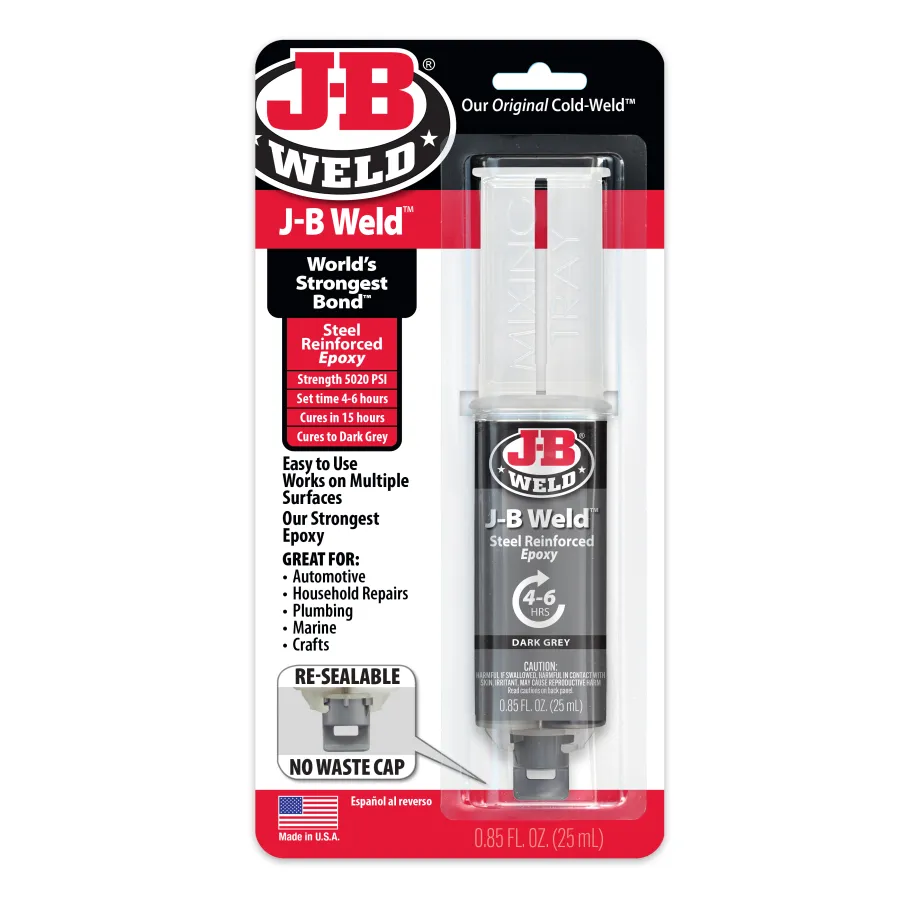
Credit: www.jbweld.com
Final Thoughts
With these strategies, you can get the strongest possible bond from your J-B Weld repairs. Taking a little extra time with preparation, mixing, and curing will pay off with repairs that last for years. Whether you’re fixing tools, cars, or household items, following these steps ensures your J-B Weld is as tough as it can be.
Frequently Asked Questions
How Long Does J-b Weld Take To Fully Cure?
Most J-B Weld products cure in 15–24 hours at room temperature, but initial set happens in 4–6 hours. For maximum strength, wait at least 24 hours before putting stress on the repair.
Can I Speed Up J-b Weld Curing With Heat?
Yes, gentle heat (up to 150°F/66°C) can help the epoxy cure faster and get stronger, but avoid overheating. Too much heat can weaken the bond or cause cracking.
Will J-b Weld Stick To Plastic?
Some J-B Weld products work on plastic. Use J-B PlasticWeld for best results, and always roughen and clean the surface before applying. Very slick plastics may need special prep like flame treatment.
Is J-b Weld Waterproof?
Yes, most J-B Weld types are fully waterproof after curing. MarineWeld is designed for wet or underwater repairs. Make sure to cure fully before exposing to water.
How Strong Is J-b Weld Compared To Welding?
While J-B Weld is very strong (up to 5020 PSI), it’s not as strong as real metal welding for structural parts. It’s great for repairs, but don’t use it where true welding is required for safety.


