
I was halfway through welding a steel roll cage when my Lincoln welder wire feed motor suddenly stopped feeding. One moment everything was smooth, the next I was staring at a stubborn, frozen spool while sparks danced around me.
If you’ve ever dealt with a wire feed motor that won’t cooperate, you know the frustration—and the risk of ruined welds or wasted material.
I’ve learned that understanding why a Lincoln welder wire feed motor not working can save you time, money, and a lot of headache. Ignoring the problem only leads to inconsistent welds and more downtime.
In this guide, I’ll walk you through the exact steps I use to troubleshoot, fix, and prevent motor issues, so your welds stay clean, steady, and safe.
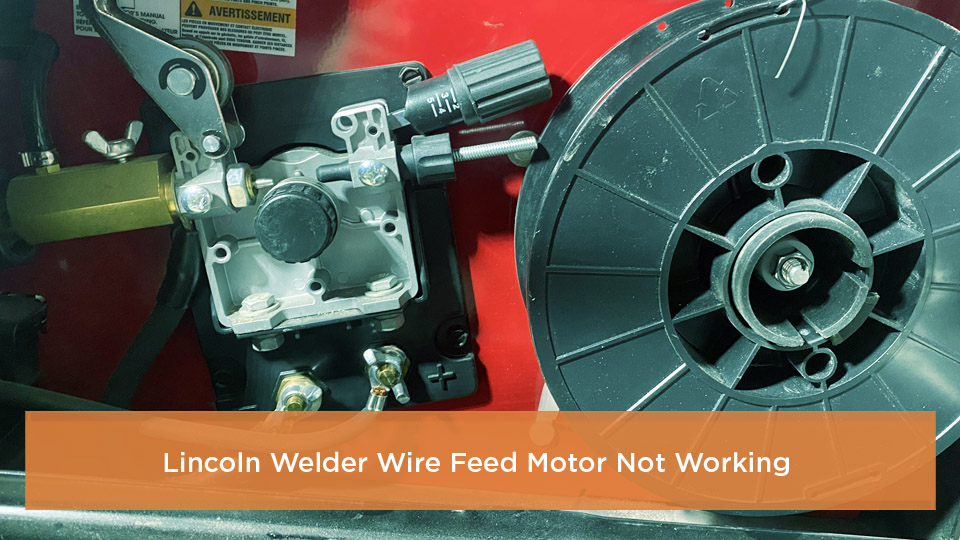
Image by reddit
Why Is My Lincoln MIG Wire Feed Suddenly Not Turning?
It’s a crisp Saturday morning, and you’re knee-deep in repairing your buddy’s truck bed. You spool up fresh ER70S-6 wire, tweak the voltage to 18, set the speed dial humming at 200 inches per minute, and… nothing.
The fan whirs, the contact tip’s ready, but the motor’s on strike. I’ve been there more times than I’d like, and it always boils down to a handful of culprits in the wire feed system.
First off, understand how this setup works in a Lincoln like the Power MIG 140 or 210 MP. The wire feed motor is a compact DC unit, typically 24-volt, geared to those knurled drive rolls.
When you squeeze the trigger on your gun, it sends a signal through the control board, which ramps up the motor to push wire smoothly through the liner and out the tip. It’s all about that precise push—too slow, and you get a stuttering arc; too fast, and you’re bird-nesting spools everywhere.
But when it’s not turning, it’s often not the motor itself giving up the ghost. In my experience, nine times out of ten, it’s electrical gremlins upstream: a tripped fuse, a sneaky loose wire, or even the simplest oversight like forgetting to flip the welder out of stick mode.
Why does this hit so hard in the real world? Because MIG’s your go-to for quick, clean joins on mild steel frames or aluminum patches, and a dead feed turns a 30-minute fix into a half-day headache.
Plus, inconsistent feeding can lead to porosity in your welds, weakening joints that need to meet AWS D1.1 codes on structural work. Don’t sweat it—we’ll cover the whys and hows next.
Common Causes of Wire Feed Motor Failure in Lincoln Welders
I’ve chased this issue across dozens of Lincolns, from dusty garage units to fleet rigs on construction sites. The motor might seem like the prime suspect, but let’s break down the usual suspects. Think of it as a chain: one weak link, and the whole feed stops.
Start with power supply hiccups. Your Lincoln draws from a 120- or 240-volt outlet, stepping down to feed the motor. A blown fuse—often a 5-amp slow-blow in the control circuit—can kill the signal without a peep. I’ve popped more of these than I can count after a power surge from flipping extensions in a crowded shop.
Then there’s the trigger circuit. That gun switch? It’s a simple momentary contact, but wear from constant squeezing frays wires inside the cable. Pull the trigger, and if there’s no continuity, the board thinks you’re off the pedal.
I once spent an hour on a new guy’s rig only to find the trigger lead had chafed through from being coiled too tight—classic rookie wrap.
Control board woes sneak up too. These PCBs handle voltage selection and speed control, but dust, moisture, or a voltage spike can fry a trace. On a 180 MIG-Pak I fixed last summer, the board was outputting peanuts—0.1 volts to the motor instead of the full 24. Burn marks? Dead giveaway.
Don’t overlook mechanical binds. If the drive rolls are overtightened or the liner’s kinked, the motor stalls out. And yeah, sometimes the motor brushes wear flat after 500 hours of fab work, but that’s rarer than you’d think.
Here’s a quick rundown in a table to spot ’em fast—grab your coffee and scan this while the machine cools.
| Common Cause | Signs to Spot | Quick Check |
|---|---|---|
| Blown Fuse | No hum from motor, lights on but dead feed | Multimeter on continuity across fuse terminals |
| Faulty Trigger | Trigger feels mushy, works on another gun? | Continuity test: Squeeze and probe switch leads |
| Loose Wires/Connections | Intermittent feed, buzz but no spin | Visual inspect inside panel, tug on harnesses |
| Control Board Failure | Low voltage output, burnt smell | Probe motor leads for 24V with trigger pulled |
| Mechanical Bind | Rolls won’t turn by hand | Loosen tension knob, spin freely? |
| Bad Motor | Everything else checks out, no spin on direct power | 12V battery jump—spins? Good. No? Replace. |
This table’s saved me hours—pros: catches 80% of issues visually; cons: misses deep board faults without tools. Now, let’s gear up for diagnostics.
Essential Tools and Safety Prep Before Diving In
Before we crack open that Lincoln case, let’s talk gear and grounding—because nothing derails a fix like a zap or a stripped bolt. I’ve got scars from skipping steps, so listen up: Safety first keeps you welding, not in the ER.
You’ll need basics: A digital multimeter (Fluke 117 if you’re investing), needle-nose pliers, wire strippers, and a 12-volt battery (car or jump pack). For deeper dives, a schematic—print one from your model’s manual; it’s gold for tracing circuits. And gloves, eye pro, no loose sleeves around spinning parts.
Prep like this: Unplug the welder—120 volts bites hard. Ground yourself if it’s humid; static zaps boards. Clear the bench: Lay out parts on cardboard to avoid losing tiny screws. Ventilate if you’re in a garage—welding fumes linger, and solder smells ain’t dinner.
Why bother? A prepped setup cuts diagnosis time in half and prevents cross-contamination, like dropping a fuse in the liner. I once fried a rectifier chasing a loose lead in the dark—lesson learned. With that squared, you’re ready to troubleshoot step by step.
Step-by-Step Guide to Diagnosing Your Wire Feed Motor Issue
Roll up your sleeves—let’s methodically hunt this down. I’ll walk you through like I’m right there with you, coffee in hand, peering over your shoulder. This sequence works for most Lincolns: 140, 180, 210. Takes 20-45 minutes if you’re steady.
Step 1: Basic Power and Settings Check
Power on, but don’t strike an arc yet. Verify the outlet: 120V humming steady? Flip breakers, reset GFCIs—I’ve seen whole shops trip from a neighbor’s saw.
Now settings: Voltage knob not between gears? On my 140, it stuck once mid-B and C, starving the feed. Wiggle it, set to MIG mode. Wire speed at zero? Crank to 150 IPM. Tension knob loose? Tighten finger-tight—too much binds, too little slips.
Pull the trigger: Fan spins? Good. No feed? Proceed.
Step 2: Inspect Fuses and Breakers
Pop the side panel—four screws usually. Locate the fuse holder near the board; it’s a glass or ceramic tube, 5A rated. Pull it, eyeball for blackening. Multimeter on ohms: Infinite resistance? Blown. Swap with a matching one—hardware store special.
Check the main breaker too, that red reset button. Press firmly. Anecdote time: On a job site 180, a kid overloaded with stick rods; fuse popped, feed died. Five bucks and five minutes fixed it. Pro tip: Carry spares in your toolbox.
Step 3: Test the Trigger and Gun Continuity
Disconnect the gun at the euro connector—careful, spring-loaded. Set multimeter to continuity (beep mode). Probe trigger leads: Squeeze gun, beep across? Solid. No beep? Disassemble the handle: Unscrew, inspect switch for corrosion or breaks.
Trace the cable: Uncoil straight, flex while probing—intermittents show as flickers. I’ve cut and respliced more 16-gauge trigger wires than MIG liners. If it’s toast, grab a replacement gun; $50 at Tractor Supply beats downtime.
Step 4: Voltage Check at the Motor Leads
Back inside: Find the two wires to the motor—usually red/black, tucked near the drive rolls. Power up, pull trigger (gun connected). Probe for DC volts: 20-24V expected. Low like 0.2V? Board’s not sending.
If zero, jump to board tests. But if voltage’s there and no spin, motor’s suspect. Common mistake: Probing AC instead of DC—double-check settings.
Step 5: Direct Motor Test
Unplug again. Disconnect motor leads, clip a 12V battery positive to one, negative to the other. Spins smooth? Motor’s fine—issue upstream. Jerks or nothing? Brushes worn or windings shot. Replacement motors run $80-120 from Lincoln parts; easy swap, four screws and plug.
I did this on a buddy’s 210 last month—spun fine on battery, traced to a corroded board connector. Cleaned with Deoxit, back in business.
Step 6: Control Board and Wiring Deep Dive
If voltage’s absent, schematic time. Probe board inputs: 24V from rectifier? Check terminals 1-6 for line voltage. Burnt spots? Resolder or replace—$150 board, but DIY if you’re handy.
Wiggle harnesses: Loose crimp? Tug test. Moisture? Dry with compressed air. In humid Florida shops, I’ve sealed boards with conformal spray post-fix.
Wrap-up: Log what you find—patterns emerge over time.
Quick Fixes for the Most Frequent Lincoln Wire Feed Glitches
Once diagnosed, fixes are often plug-and-play. Let’s hit the big ones with pros, cons, and shop smarts.
Blown fuse? Swap and test. Pros: Cheap, instant. Cons: Recurs if surges persist—add a protector. Setting tweak? Voltage selector clean with contact spray. I’ve revived three rigs this way; no parts needed.
Trigger bad? Splice or replace switch—$10 part. Pros: Restores feel. Cons: Cable length limits mobility; shorten if possible.
Board fried? New one’s drop-in. Pros: Like-new performance. Cons: Downtime shipping. Interim: Borrow a unit, but match amps.
Motor replace: Align gears, lube lightly. Pros: Handles heavier gauges post-swap. Cons: Gear wear if old spools were gritty.
For mechanicals: Readjust drive rolls—U-groove for solid wire, V for flux-core. Tension: Pinch test—wire slips slow with fingers? Spot on. Overtight? Strips knurls fast.
Real talk: These fixes boost uptime 90%, but always match filler to base—like SuperArc L-56 for galvanized repairs.
When to Call in a Pro for Your Lincoln Welder Repairs
I’m all for DIY—fixed a fleet of 175s solo last year—but know your limits. If board traces are spaghetti or rectifier diodes are belly-up, that’s tech territory. Signs: Persistent low volts post-fuse, acrid smells, or error codes flashing (on digital models).
In the US, Lincoln-authorized shops follow factory specs, ensuring warranty holds. Cost? $100-300 diagnostic/repair. Pros: Expert tools like oscilloscopes. Cons: Wait times, shipping hassles.
My rule: If it’s beyond multimeter magic or you’re prepping for code-inspected work, dial ’em. Better safe than scrapped.
Preventive Maintenance to Keep Your Wire Feed Humming
An ounce of prevention? Keeps you from chasing motors weekly. Weekly ritual: Clean liner with old wire—push through till shiny. Lube sparingly; too much gums up.
Monthly: Inspect rolls for grooves—swap at 10k feet. Check cables for frays, coil loose. Store dry; cover that 140 in the shed.
Anecdote: Ignored tension on a site unit; bird-nest city, wasted a spool. Now, I demo the pinch test to apprentices—saves wire bucks.
For longevity, match settings: 0.035 wire at 18V/180 IPM on 1/4-inch steel. Preheat joints, grind clean—preps pay dividends in arc stability.
Advanced Tips for Smoother Wire Feeding in Everyday Welding
Once fixed, level up. For hobby fab, try knurled rolls for aluminum—grips without shredding. Pros on thin sheet? Pulse mode if your Lincoln has it—reduces spatter, cleaner beads.
Settings sweet spot: Chart your runs—volts, speed, gas (75/25 Ar/CO2 standard). Log for repeats; my notebook’s full of ’em.
Joint prep: Bevel thick stock 30 degrees, tack every 4 inches. Filler compat: ER308L for stainless patches. Safety: Ground clamps tight, no wet floors—shocks sneak in.
I’ve mentored students this way; turns shaky starts into pro beads.
Conclusion: Get Back to Welding with Confidence
We’ve covered the gamut—from that gut-punch when your Lincoln welder wire feed motor not working stalls your flow, to pinpointing fuses, triggers, and boards, all the way to maintenance that keeps it purring. Start simple—power, settings, fuses—then layer in tests with a multimeter.
Most fixes are under $50 and an hour, restoring that smooth push for welds that last. You’re now armed to diagnose like a vet, dodging downtime and dodgy joints that could fail under torque.
The big win? Confidence in your setup means bolder projects, whether patching a Jeep frame or prototyping shelves. Grab that trigger knowing you’ve got the know-how. After any fix, run a test bead on scrap—dial it in hot, then cool; it’ll reveal hidden gremlins before the real work.
FAQ
What if my Lincoln welder powers on but the wire won’t feed at all?
Double-check the mode switch—ensure it’s MIG, not stick. Then test trigger continuity; a faulty switch blocks the signal. If that’s good, probe for voltage at the motor—low output points to a board issue.
How do I know if the drive rolls are causing the wire feed problem?
Loosen the tension knob and try feeding by hand. If it binds, inspect for burrs or misalignment. Worn grooves? Swap to fresh U-groove rolls matched to your wire diameter, like 0.030 for mild steel.
Can a dirty liner stop the wire feed motor from working?
Absolutely—kinks or buildup jam the path, overloading the motor till it stalls. Clear it by pushing a spare wire through, or replace the liner every 6 months. Straighten your gun cable too; bends pinch inside.
Is replacing the wire feed motor on a Lincoln 140 expensive?
Not bad—around $100 for the part, 30 minutes to swap. But test first; motors rarely fail outright. If it spins on a battery but not in-circuit, chase wiring instead to save cash.
How often should I check fuses in my MIG welder to avoid feed issues?
Every three months, or after storms/power blips. Pop the panel, test with your meter—it’s quicker than a dead feed mid-job. Stock 5A slow-blow types; they’re your first line against surges.


