
My old Lincoln welder once decided to quit right in the middle of a job, sparks flying and deadlines closing in. I needed to order a replacement part fast—but the manual said I’d have to find the serial number first. That’s when I realized I had no idea where the serial number on a Lincoln welder was hiding. I wiped off layers of dust, checked every panel, and still came up empty-handed.
It might seem like a small detail, but when your machine’s down, that little tag can mean the difference between getting back to work or wasting a whole day chasing part numbers. After years of tinkering with different Lincoln models, I’ve figured out the quickest ways to track it down without the headache.
If you’ve ever been stuck like that, don’t sweat it—here’s exactly how to find it, step by step.
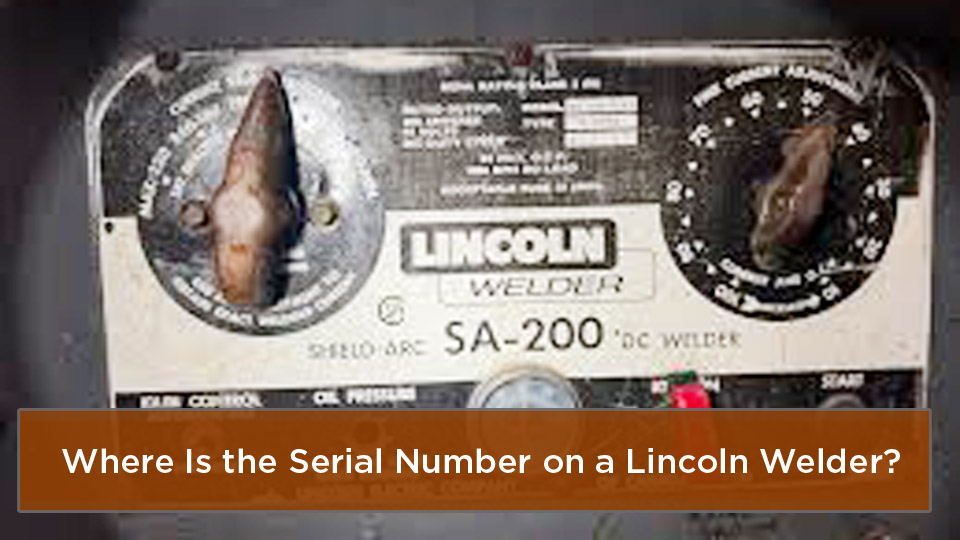
Image by Vintage Lincoln Welders
Why Tracking Down Your Lincoln Welder’s Serial Number Is a Game-Changer
It’s a Friday afternoon, and your Lincoln Power MIG 210 is humming along on a fabrication gig, laying down clean beads on some 1/4-inch mild steel. Suddenly, the wire feed starts acting up, and you need a replacement drive roll. You grab the manual—nothing. Call the supplier? They’ll ask for the serial number first. Without it, you’re dead in the water, burning daylight and blowing budget.
In my early days as a fab shop apprentice in Ohio, I once spent half a shift hunting for that number on an old Idealarc DC-600 because our foreman needed it for a recall check. Turns out, it was a straightforward fix, but the delay cost us a rush order fee.
Lesson learned: The serial number isn’t just a string of digits; it’s your ticket to tailored support, from Lincoln’s parts lookup to verifying if your setup matches the original factory specs for optimal shielding gas flow or electrode compatibility.
From a safety angle, it’s huge. U.S. welding standards like those from the American Welding Society emphasize knowing your equipment inside out to prevent issues like overheating or improper grounding. If your welder’s from the ’90s, that serial might flag updates for better arc control, reducing spatter and burn-through risks on thinner materials.
For DIYers tinkering with automotive repairs, it ensures you’re not voiding warranties or using incompatible consumables that could weaken your joints.
Cost-wise? Spot on. I’ve saved hundreds by cross-referencing serials to snag OEM rebuild kits instead of generic knockoffs that fizzle out mid-job. And for students hitting the books at a trade school, memorizing this habit builds pro-level habits early.
It’s about efficiency in a world where every minute counts, whether you’re welding up a gate for the ranch or prepping for a pressure vessel cert.
Common Places to Look for the Serial Number on Lincoln Welders
Lincoln Electric builds tough machines, but they don’t always slap the serial number in your face. Depending on the model—whether it’s a compact benchtop like the Easy MIG or a workhorse engine-driven like the Ranger—locations vary. I’ve torn apart dozens over the years, from pipeline sites in Texas to custom shops in California, and here’s the lowdown based on what I’ve seen across their lineup.
Start with the basics: Most serial numbers live on a metal data plate, etched or stamped for durability against shop grime and heat. It’s usually a combo of letters and numbers, like “U12345678,” tying back to the build date and factory. Clean off any flux residue or paint overspray first—I’ve used a brass wire brush and WD-40 for stubborn spots without scratching the plate.
Serial Number Spots on Portable MIG and Stick Welders
For everyday heroes like the Lincoln Electric Power MIG series or the Invertec V275-S, the serial’s often right where you need it—accessible without flipping the whole unit. Check the rear panel first, near the power cord entry. It’s typically a rectangular plate bolted on, about 2×4 inches, listing voltage ratings alongside the serial.
I remember wrestling with a Power MIG 140C in my garage during a snowblower frame repair. The plate was tucked behind the gas hose fitting, half-hidden by a coiled cable.
Pro tip: Swing the front panel down like you’re changing the spool—sometimes the serial peeks out there too, stamped directly into the frame. These spots make sense for quick access during setup, especially when you’re dialing in wire speed for aluminum or stainless.
If it’s an older stick welder like the Idealarc, look on the side housing, near the output studs. Lincoln riveted these plates in the ’80s and ’90s to withstand rough handling on construction sites. Common mistake? Assuming it’s on the bottom—flip it if you must, but prop it safely to avoid tipping and pinching fingers.
Finding It on Engine-Driven Lincoln Welders
Now, if you’re running a Ranger 305G or Outback series—these diesel or gas-powered beasts for remote jobs—the serial’s built for the field. Head to the fuel tank side or the control box cover. On my old Ranger 250, it was engraved on a stainless plate under the hour meter, right by the engine serial for easy cross-referencing during service.
Why here? Engine-drives see mud, rain, and vibration, so Lincoln shields it from the elements. I’ve pulled serials off units caked in pipeline clay in North Dakota by just popping the side access panel—takes 30 seconds with a quarter-turn fastener. For multiprocess models like the Big Blue, it’s often on the front frame rail, visible even when trailered.
Hobbyists love these for off-grid fabricating, but watch for faded stamps on pre-2000 models. A quick rub with a pencil eraser brings ’em back without damage. And if you’re prepping for a weld on structural steel, confirming the serial ensures your alternator output matches the duty cycle for sustained arcs without overheating.
Hidden Gems: Serial Numbers on Multi-Operator and Submerged Arc Units
Bigger setups like the Lincoln NA-5 controller or Commander 400 get trickier. The serial might be on the top enclosure, near the ventilation slots, or inside the wire feeder compartment. I once debugged a submerged arc system on a shipyard job in Seattle—serial was tucked behind the flux hopper access door, only visible after swinging it open.
These locations prioritize workflow: You can grab it mid-run without shutting down. For pros in heavy fab, this means less downtime verifying flux compatibility or tractor drive settings. Students, note this for lab reports—locating it teaches you about machine anatomy, from lead connections to cooling systems.
Step-by-Step Guide to Locating and Recording Your Serial Number
Alright, let’s make this hands-on. Grab a flashlight, notepad, and maybe a Sharpie—I’ve sketched mine on workbench scraps more times than I care to admit. This process works for 90% of Lincoln rigs, from suitcase feeders to pipeline tractors.
Power Down and Inspect the Exterior: Unplug or kill the engine first—safety 101, folks. No live arcs while you’re poking around. Walk around the unit clockwise, eyes peeled for any metal tag or stamped area. Shine that light into crevices; shadows hide more serials than you’d think.
Check Prime Spots by Model Type: MIG/stick? Rear or side panel. Engine-drive? Control box or frame. Multi-op? Enclosures and feeders. Refer to your user manual’s diagram if handy—Lincoln prints exploded views that pinpoint it.
Access Internal Panels if Needed: For stubborn ones, loosen thumbscrews or Phillips heads. On a Lincoln Square Wave TIG 200, I had to drop the base cover once—serial was on the inverter board frame. Wear gloves; internals get dusty.
Record and Verify: Snap a photo or jot it down exactly—no shortcuts on those digits. Cross-check online via Lincoln’s site (search by model) to confirm it matches build eras. Common fix for errors? Double-check for leading letters like “K” for Korean builds.
Clean and Protect: Wipe the plate with isopropyl alcohol. I’ve taped a laminated copy inside the lid for quick grabs—saves lives on rush jobs.
This routine’s gold for DIYers upgrading home shops or pros logging maintenance under API 1104 codes. Takes under five minutes but pays dividends in smoother operations.
Using Your Serial Number for Smarter Welding Maintenance and Upgrades
Got the number? Now it’s your superpower. I’ve used mine to score free software updates on a digital inverter welder, tweaking pulse settings for titanium work without a hitch.
Start with registration: Punch it into Lincoln’s owner portal for warranty extensions and recall alerts. Essential for U.S. shops hitting ISO 3834 standards—keeps your liability low.
Parts hunting? Serial narrows it to exact matches, like the right contact tip for .035 ER70S-6 wire on galvanized steel. Avoid generics; I’ve burned through cheap ones, causing bird-nesting and uneven penetration.
For troubleshooting, it flags common issues by era. Pre-2010 models might need capacitor swaps for stable DC output—I’ve fixed arc wander on a DC-400 that way, saving a tow to the dealer.
Upgrades? Serial guides compatible add-ons, like adding a water cooler for TIG on aluminum alloys. Pros, think efficiency: Matched components mean tighter beads, less post-weld grinding.
Essential Welding Processes and Settings for Lincoln Machines
While we’re geeking out on your Lincoln, let’s talk shop floor reality—dialing in processes that play nice with your model’s specs. Knowing the serial helps confirm voltage/amperage ranges, preventing overloads.
Take MIG welding, my go-to for fabrication speed. On a Power MIG 256, start with 18-22 volts for 1/8-inch plate, using 75/25 Ar/CO2 gas. Serial verifies if it’s got the synergic controls for auto-adjust—huge for hobbyists learning on scrap.
Stick welding with Fleetweld 37 rods? Crank to 90-120 amps for root passes on pipe. I’ve shared this with trainees: Preheat to 150°F on carbon steel to dodge cracks, per ASME Section IX.
TIG? For precision on stainless, use 2% lanthanum electrodes at 80-100 amps DCEN. Serial check ensures pulse capability for heat-sensitive joints.
Common mistake: Ignoring duty cycle. A 60% at 200 amps means 6 minutes on, 4 off—push it, and you’re blue-lighting windings. Fix: Cycle breaks, or upgrade cooling.
| Welding Process | Recommended Lincoln Model | Typical Settings (for 1/4″ Mild Steel) | Pros | Cons |
|---|---|---|---|---|
| MIG (GMAW) | Power MIG 210 | 18-20V, 150-180A, 75/25 gas | Fast, clean; low spatter | Needs gas; wind-sensitive |
| Stick (SMAW) | Idealarc DC-400 | 90-110A, E7018 rod | Versatile, outdoors OK | Slag cleanup; skill-dependent |
| TIG (GTAW) | Square Wave TIG 200 | 100-120A DCEN, 15-20 CFH argon | Precise control; pretty beads | Slower; foot pedal learning curve |
| Flux-Cored | Ranger 305G | 18-22V, E71T-1 wire, no gas | Portable, all-position | More smoke; post-weld brushing |
This table’s from my notebook—tweak based on your serial’s output curve for spot-on results.
Picking the Right Filler Rods and Materials for Your Lincoln Setup
Filler choice ties back to your machine’s DNA, uncovered via serial. Wrong rod? Hello, porosity and weak welds.
For mild steel, ER70S-6 is king—pairs with most Lincolns for automotive fab. I once botched a trailer hitch with ER308 by mistake; brittle as glass. Fix: Always match alloy—serial confirms electrode holder ratings.
Stainless? ER308L at 1/16-inch diameter, 90 amps on a V350 Pro. Preheat? Skip for thin gauge, but hit 200°F on thicker per AWS D1.6.
Aluminum? ER4043 with 100% argon, AC balance at 70% electrode negative. Serial ensures your TIG box handles the cycles without spitting.
Practical tip: Store rods in a dry box—humidity kills flux cores. I’ve salvaged wet E7018 by baking at 500°F for an hour; game-saver on rainy sites.
Joint prep’s non-negotiable: Bevel to 30 degrees, clean with acetone. For pros, this means V-grooves yielding 1G cert-worthy passes.
Safety First: Grounding, PPE, and Shop Best Practices with Lincoln Welders
Safety isn’t a checkbox—it’s what keeps you welding tomorrow. Serial numbers help here too: They flag grounding lug locations and recall any arc flash risks.
Always ground your workpiece—Lincoln’s charts by serial show clamp amps to avoid voltage drop. I’ve zapped myself ignoring that on a hasty repair; now I double-check.
PPE lineup: FR jacket, auto-darkening hood (shade 10-13), leather gloves. For engine-drives, earplugs against the rumble.
Ventilation? CO2 buildup’s sneaky—use a fume extractor on indoor MIG. OSHA 1910.252 mandates it; I’ve seen headaches turn to hospital runs.
On a bridge retrofit in Kentucky, our Ranger’s serial revealed a belt tension update—prevented a throw that could’ve sparked a fire. Inspect hoses weekly; cracks mean leaks.
For students: Practice shutdowns—cooling fans run post-weld to protect internals.
Troubleshooting Common Lincoln Welder Issues and Quick Fixes
Even bulletproof Lincolns hiccup. Serial speeds diagnosis via Lincoln’s hotline.
Erratic arc? Check serial for firmware—update fixes inverter glitches. Clean tips; I’ve filed .030 orifices back to life.
No output? Fuse by serial rating—10A for controls. Ground test: Multimeter from clamp to work.
Overheating? Duty cycle breach—let it breathe. My fix: Add a box fan during long runs on 6061 aluminum.
Wire bird-nesting? Tension too tight—loosen to 3-5 lbs. Serial confirms feeder motor torque.
Pros, log hours via serial for predictive maintenance—catches brushes before they wear.
Advanced Tips for Maximizing Your Lincoln Welder’s Lifespan
Longevity’s in the details. Oil engine-drives per serial interval—I’ve hit 5,000 hours on a neglected Outback with just that.
Clean internals quarterly: Vacuum dust from fans. For inverters, thermal paste refresh every 1,000 hours.
Upgrade paths: Serial guides retrofit kits, like digital meters for precise volt/amp reads on exotic alloys.
DIYers: Build a rolling cart—eases access for serial checks and storage.
Industry workers: Integrate with weld data monitoring for AWS traceability.
Conclusion
We’ve covered the map from hunting that elusive serial number on your Lincoln welder to wielding it like a pro tool for maintenance, settings, and safety. It’s your machine’s backstory—use it to match fillers, dial processes, and dodge pitfalls that kill efficiency or integrity. You’re now equipped to tackle anything from a backyard gate to a certified pressure vessel, with confidence that comes from real-shop smarts.
Go fire it up, buddy—grab that serial, register it, and lay down some beads that hold. Keep a “welder journal” with your serial front and center; it’ll be your best friend on the next midnight fix.
FAQs
Where Do I Find Replacement Parts for My Lincoln Welder Using the Serial Number?
Head to Lincoln’s parts portal or a certified dealer—input the serial for exact matches, like drive rolls or cables. It’ll list superseded parts too, saving guesswork. Expect OEM quality for longevity.
How Does the Serial Number Affect Warranty on Lincoln Welders?
It ties directly to the build date and coverage start—most are 3 years from purchase, but serial confirms extensions or pro-rated repairs. Register ASAP to lock it in.
Can I Use the Serial Number to Check for Recalls on My Lincoln Welder?
Absolutely—Lincoln’s site has a recall lookup by serial. I’ve caught free fixes this way, like updated grounding straps for older MIGs.
What’s the Difference Between Model and Serial Number on a Lincoln Welder?
Model (e.g., K2185-1) describes the type and features; serial is unique to your unit, like a VIN. Both needed for full support.
How Do I Clean the Serial Number Plate on My Dusty Lincoln Welder?
Gentle brass brush and mild soap—avoid abrasives. For engraves, a soft cloth revives without wear. Do it during routine checks to keep it readable.


