
A few years ago, I walked into my basement and noticed a faint green streak running down one of the copper pipes — a telltale sign something wasn’t right. Weeks later, a tiny pinhole leak appeared, spraying water like a miniature fountain. That was my wake-up call: even tough copper pipes can corrode, and when they do, it’s not just frustrating — it’s expensive.
I used to think corrosion was only caused by age or bad water. But after dealing with several plumbing repairs and digging deep into the causes, I realized corrosion is more complex than it seems. From water chemistry to stray electrical currents, and even how the pipes were installed — there’s a lot that can go wrong behind your walls.
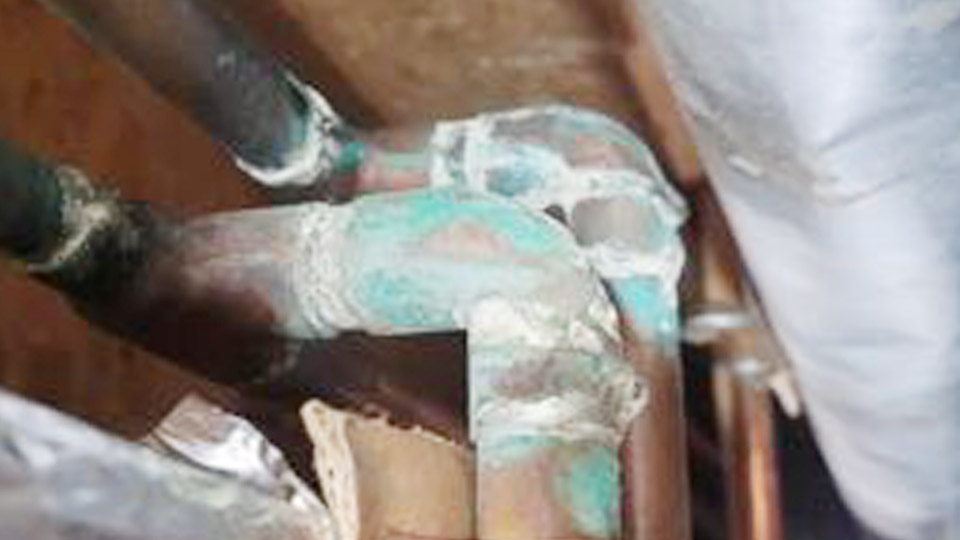
Image by reddit
I’ll share what I’ve learned from firsthand experience and professional insight, so you can understand what’s really eating away at your copper pipes — and what you can do to stop it.
Why Copper Corrosion Matters to Welders
As a welder, you’ll run into copper pipes in plumbing, HVAC, and even decorative projects. Corrosion isn’t just a plumbing issue—it’s a welding one, too. A corroded pipe weakens solder joints, makes brazing trickier, and can lead to costly rework. I’ve seen DIYers try to patch a corroded pipe only to have it leak again because they didn’t address the root cause.
For pros, understanding corrosion helps you advise clients and make lasting repairs. For hobbyists, it’s about keeping your copper projects looking sharp and functional. Plus, nobody wants green stains or contaminated water in their home.
Understanding Copper Pipe Corrosion
Corrosion is when a metal reacts with its Dolores, breaking it down over time. Copper water pipes develop a green or blue-green patina—copper oxide or carbonate—when exposed to water, oxygen, or other elements. This can happen inside or outside the pipe, but internal corrosion is a bigger issue for water pipes because it affects water quality and pipe integrity.
I’ve cut open corroded pipes and seen pitting that turned a solid pipe into Swiss cheese. Corrosion can cause pinhole leaks, reduced water pressure, and even health risks if copper levels get too high.
Common Causes of Copper Water Pipe Corrosion
What causes copper water pipes to corrode? From my experience, it’s a mix of water chemistry, installation mistakes, and environmental factors. Here’s what I’ve seen on the job.
Acidic or Low pH Water
Water chemistry is a big player. Acidic water with a low pH—below 7—eats away at copper pipes faster than neutral water. I worked on a job in a rural area with well water that had a pH of 6, and the copper pipes were riddled with pinholes after just 10 years.
Acidic water strips away the protective oxide layer on copper, exposing it to further corrosion. High dissolved oxygen in water can also speed up this process, especially in hot water lines.
High Mineral Content (Hard Water)
Hard water, loaded with calcium and magnesium, can cause trouble. I’ve seen pipes in areas with hard water develop limescale buildup, which traps moisture and creates tiny corrosion cells. This is common in places like Texas or Florida, where water is mineral-heavy.
The scale can also cause internal pitting, weakening the pipe over time. I once repaired a hot water line caked in scale, and the inside was pitted so badly it collapsed under pressure.
High Water Velocity
Fast-moving water can erode the protective oxide layer inside copper pipes, a problem called erosion corrosion. I’ve seen this in homes with undersized pipes or high-pressure pumps, where water moves faster than 8 feet per second in cold lines or 5 feet per second in hot lines.
Elbows and fittings are especially vulnerable because turbulence disrupts the oxide layer. I fixed a system where an elbow had a pinhole leak due to high velocity from a poorly designed pump.
Improper Installation
Sloppy installation is a killer. Excess flux left after soldering is acidic and can corrode copper from the inside out. I’ve seen green stains around joints where flux wasn’t cleaned properly. Another issue is failing to deburr pipe ends after cutting, which causes turbulence and erosion corrosion. I always use a deburring tool to smooth pipe ends—it’s a small step that saves big headaches.
Galvanic Corrosion
When copper pipes touch dissimilar metals like steel or iron, galvanic corrosion can occur. I once worked on a system where a copper pipe was connected to a steel fitting without a dielectric union, and the copper was pitted where they met.
This happens because the two metals create an electrochemical reaction in the presence of water, corroding the less noble metal (and sometimes the copper, too).
Microbial Activity (Biocorrosion)
Bacteria like sulfate-reducing or iron bacteria can cause biocorrosion, especially in well water systems. I helped a client with a well whose copper pipes had hemispherical pits covered in green mounds—a classic sign of microbial corrosion. These bacteria produce corrosive byproducts that eat away at the copper, often in soft water with low disinfection levels.
Stray Electrical Currents
Stray currents from improper electrical grounding can turn copper pipes into anodes, causing electrochemical corrosion. I’ve seen this in older homes where pipes were used as grounding points. One job had a copper water line near a faulty HVAC unit, and the stray current caused pitting. Always check grounding with a multimeter before soldering in older buildings.
Here’s a table summarizing these causes:
| Cause | Description | Common Scenarios |
|---|---|---|
| Acidic Water | Low pH water strips protective oxide layer | Well water, rural areas |
| Hard Water | Mineral buildup creates corrosion cells | Areas with high calcium/magnesium |
| High Water Velocity | Fast water erodes oxide layer | Undersized pipes, high-pressure pumps |
| Improper Installation | Excess flux or un-deburred pipes cause corrosion | Poor soldering, rushed jobs |
| Galvanic Corrosion | Contact with dissimilar metals | Steel/iron fittings without unions |
| Microbial Activity | Bacteria produce corrosive byproducts | Well water, low disinfection |
| Stray Currents | Electrochemical corrosion from grounding issues | Older homes, faulty wiring |
Signs of Copper Pipe Corrosion
Spotting corrosion early can save you from major repairs. Here’s what I look for:
Blue-Green Stains: Green or bluish stains on sinks or fixtures often mean copper is leaching into the water.
Pinhole Leaks: Tiny holes in pipes are a dead giveaway. I’ve seen these in elbows and horizontal runs where corrosion is worst.
Reduced Water Pressure: Corrosion can narrow pipes internally, slowing water flow. I’ve fixed systems where pressure dropped due to pitting.
Metallic Taste: If water tastes metallic, copper levels might be high. The EPA’s limit is 1.3 mg/L—above that can cause health issues.
Green Patina: A green coating on the pipe’s exterior often signals internal issues, too, especially in damp areas.
Preventing Copper Pipe Corrosion
Prevention is way easier than fixing leaks. Here’s how I keep copper pipes corrosion-free.
Test and Treat Water
Water quality is critical. I always test pH and mineral content before starting a job. If the pH is below 7, I recommend a neutralizer to bring it to 7–8. For hard water, a water softener reduces mineral buildup. I helped a client install a softener in Arizona, and their copper pipes stayed clean for years.
Proper Installation Techniques
When soldering, I use just enough flux to cover the joint and clean it thoroughly with water and a brush afterward. Lead-free solder is a must for potable water lines—it’s safer and less reactive. I also deburr pipe ends to prevent turbulence and use dielectric unions when connecting copper to steel or iron.
Insulate Pipes
Insulation prevents condensation and temperature swings that accelerate corrosion. I wrap copper pipes with foam insulation in damp areas like basements. For hot water lines, I use high-temperature insulation to handle the heat. This simple step can double a pipe’s lifespan.
Control Water Velocity
I design systems to keep water velocity below 8 feet per second for cold water and 5 feet per second for hot water (2–3 feet per second above 140°F). If I’m retrofitting a system, I check pump settings and pipe sizes to avoid high velocity. I once resized a client’s hot water line to reduce velocity, and it stopped their pinhole leaks.
Use Corrosion Inhibitors
In some cases, I recommend corrosion inhibitors like orthophosphate, which form a protective film inside pipes. This is common in municipal water systems but can be added to private wells, too. I’ve seen it work wonders in high-risk areas.
Regular Inspections
I check my own home’s pipes every six months, looking for green spots or leaks. For clients, I recommend annual inspections by a pro plumber. Early detection catches small issues before they become disasters.
Fixing Corroded Copper Pipes
When corrosion strikes, here’s how I handle it, depending on the damage.
Minor Corrosion
For light green patina, I clean pipes with a paste of equal parts vinegar and salt, scrub gently, and rinse thoroughly. Baking soda and water work, too. Dry the pipe completely to prevent further oxidation. I’ve used this on decorative copper projects to restore their shine.
Pinhole Leaks
Pinhole leaks mean it’s time to cut out the damaged section. I use a tubing cutter to remove the bad piece, clean and deburr the ends, and solder in a new piece of Type L copper pipe with lead-free solder. I always pressure-test the system afterward to ensure no leaks. If you’re new to soldering, practice on scrap pipe first.
Severe Corrosion
If corrosion is widespread, especially in older homes, I recommend repiping with PEX or Type L copper. I helped a friend replace a 30-year-old copper system with PEX—it’s corrosion-resistant, cheaper, and easier to install. For high-pressure systems, I stick with copper for its durability.
Real-World Applications for Welders
Copper pipe corrosion affects all kinds of welding projects:
DIY Plumbing Repairs: Soldering a leaky copper water line. I always check for corrosion first to ensure a strong joint.
Hobbyist Projects: Crafting copper sculptures or furniture. Corrosion can ruin the finish, so I clean and coat them with clear lacquer.
Professional Jobs: Maintaining HVAC or refrigeration systems. I’ve repaired corroded copper lines in industrial chillers, where water chemistry was the culprit.
Troubleshooting Corrosion Issues
Here’s how I fix common corrosion problems:
- Pinhole Leaks: Cut out the damaged section and solder a new piece. Check water pH to prevent recurrence.
- Green Stains: Clean with vinegar or baking soda paste and address moisture sources like leaks or condensation.
- Low Water Pressure: Inspect for internal corrosion or scale buildup. A water softener or larger pipes might be needed.
- Metallic Taste: Test water for copper levels. If above 1.3 mg/L, install a filter or neutralizer.
My Go-To Setup for Copper Pipe Repairs
For most copper water pipe repairs, here’s my approach:
- Tools: Tubing cutter, propane torch, lead-free solder, flux brush, deburring tool.
- Materials: Type L copper pipe, dielectric unions for mixed-metal connections.
- Process: Test water pH, cut out damaged sections, deburr and clean pipes, use minimal flux, solder cleanly, and rinse thoroughly.
- Prevention: Insulate pipes, recommend a water softener, and schedule follow-up inspections.
This setup has saved countless pipes from corrosion failure, from small DIY fixes to big commercial jobs.
Keep Your Copper Pipes Strong
What causes copper water pipes to corrode? It’s a mix of water chemistry, installation errors, and environmental factors, but you can beat it with the right knowledge. Test your water, use proper soldering techniques, insulate pipes, and keep an eye out for early signs like green stains or pinholes.
Whether you’re a DIYer patching a leak, a hobbyist crafting a copper masterpiece, or a pro tackling a commercial system, these tips will keep your pipes in top shape.
FAQ
Why do my copper pipes have green stains?
Green stains are copper oxide or carbonate, caused by water, oxygen, or acidic conditions. I clean them with a vinegar-salt paste and check for leaks or poor water quality. Insulating pipes and balancing water pH can prevent recurrence.
Can corroded copper pipes make water unsafe?
Yes, if corrosion releases too much copper into the water. Levels above 1.3 mg/L can cause health issues like stomach problems. I test water with a copper test kit and install filters or neutralizers if needed.
How do I know if my copper pipes are corroding?
Look for blue-green stains on fixtures, pinhole leaks, low water pressure, or a metallic taste. I inspect pipes with a flashlight and mirror to spot pitting or green patina. Regular checks catch problems early.
Should I replace corroded copper pipes with PEX?
PEX is corrosion-resistant and cheaper, making it great for repiping older homes. I’ve used it for whole-house repiping jobs. But for high-pressure or hot water systems, Type L copper is more durable. Consider your budget and needs.
How can I prevent copper pipe corrosion?
Test water pH and mineral content, use proper soldering techniques, insulate pipes, and keep water velocity low. I also recommend annual inspections and corrosion inhibitors like orthophosphate for high-risk systems.


