
Ion plating is a surface-coating process used to improve corrosion resistance, wear life, and appearance on stainless components. What Is Ion Plated Stainless Steel refers to stainless steel that has received a thin, vacuum-applied metallic coating bonded through ionized particles, creating a much harder and more adherent surface than conventional electroplating.
In real fabrication and finishing work, this matters because untreated surfaces can discolor under heat, scratch during handling, or fail cosmetic inspection after welding and polishing.
Ion plating helps reduce surface damage, improves oxidation resistance, and maintains consistent color on architectural, automotive, and decorative metal parts.
For welders and metalworkers, understanding this finish is important when planning joint prep, heat input, grinding, or post-weld cleaning, since improper processing can damage the coating or create visible repair zones. The following explanation clarifies how ion plating works, where it’s used, and how it affects fabrication decisions.
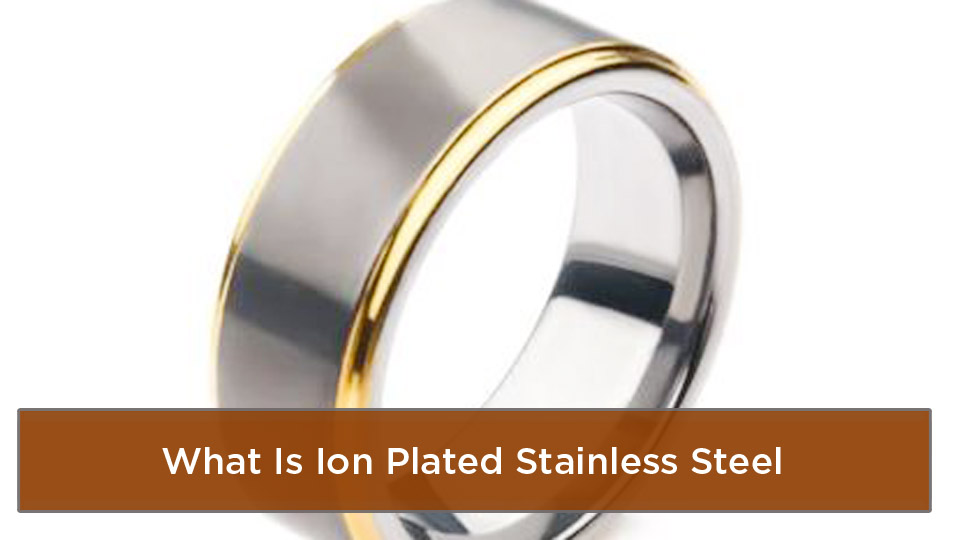
Image by inoxjewelry
The Ion Plating Process Explained
Ion plating applies a durable layer to stainless steel using a vacuum environment. The process starts by placing the stainless steel piece in a chamber where air is removed to create a vacuum.
A target material, often titanium nitride or another metal compound, is vaporized into ions. These ions are accelerated toward the stainless steel surface under an electric field, bonding at a molecular level.
This method differs from traditional electroplating, which uses a liquid solution and electric current to deposit metal. Ion plating avoids chemicals, resulting in a cleaner application.
The coating thickness typically ranges from 0.2 to 2 micrometers, thin enough to preserve the steel’s flexibility but strong enough for added protection.
In fabrication shops, ion plated stainless steel appears in items like handrails, kitchen fixtures, or tool components. The process ensures the coating adheres tightly, reducing the chance of peeling during handling or assembly.
Key steps include:
- Surface cleaning: The stainless steel is polished and degreased to remove contaminants.
- Vacuum setup: Pressure drops to about 10^-3 to 10^-5 torr.
- Ion bombardment: Argon gas ionizes to clean the surface further, improving adhesion.
- Deposition: The coating material evaporates and deposits evenly.
This structured approach yields consistent results, making it reliable for batch production in welding environments.
Core Components of Ion Plated Stainless Steel
Stainless steel forms the substrate, usually grades like 304 or 316 for their corrosion resistance and weldability. The ion plating adds a layer, often titanium-based, to modify surface traits.
Common coating materials:
- Titanium nitride (TiN): Provides a gold-like finish with high hardness.
- Chromium nitride (CrN): Enhances wear resistance.
- Zirconium nitride (ZrN): Offers a brass tone.
The base stainless steel retains its mechanical properties, such as tensile strength around 500-700 MPa for 304 grade, while the coating boosts surface hardness to 1500-2500 Vickers, far exceeding uncoated steel’s 150-200 Vickers.
In terms of composition, the coating integrates without creating a sharp boundary, forming a gradient interface. This reduces stress points, which is useful in welded assemblies where vibration or flexing occurs.
For welders, note that the coating is non-conductive in some cases, but it doesn’t significantly affect electrical grounding during welding setups.
Properties and Performance Characteristics
Ion plated stainless steel combines the toughness of stainless steel with enhanced surface qualities. The primary property is improved durability against scratches and abrasion. Tests show ion plated surfaces withstand up to eight times more wear than electroplated ones, based on Taber abrasion standards.
Corrosion resistance increases, especially in humid or salty conditions. The coating seals the steel, preventing oxidation. For example, 316 stainless steel with ion plating can resist salt spray for over 5000 hours, compared to 1000 hours for standard plating.
Hypoallergenic traits make it suitable for medical or food-contact fabrications. The smooth, dense layer minimizes nickel release from the base steel.
Thermal stability is another key: the coating holds up to 500°C without degrading, which matters in welding where heat-affected zones form.
Mechanical properties remain largely unchanged in the bulk material, but surface friction drops, aiding in assemblies with moving parts.
In fabrication, this means longer-lasting welds in exposed environments, as the coating protects against environmental damage post-weld.
| Property | Uncoated Stainless Steel (304) | Ion Plated Stainless Steel |
|---|---|---|
| Hardness (Vickers) | 150-200 | 1500-2500 |
| Corrosion Resistance (Salt Spray Hours) | 200-500 | 1000-5000+ |
| Scratch Resistance | Moderate | High |
| Thermal Stability (°C) | Up to 800 | Up to 500 for coating |
| Friction Coefficient | 0.5-0.6 | 0.3-0.4 |
This table highlights measurable differences, guiding material selection in shop settings.
Applications in Welding and Fabrication
Ion plated stainless steel fits various fabrication tasks. DIY welders might use it for custom brackets or enclosures where appearance matters. Students and hobbyists encounter it in kit builds for automotive or marine parts.
Professional welders apply it in architectural work, like railings with a gold or black finish. Shop technicians in the U.S. handle it for equipment housings in food processing, where sanitation and durability are priorities.
In these cases, the material’s weldability allows for strong joints, but the coating requires protection during welding to avoid discoloration.
Common uses:
- Structural supports with aesthetic coatings.
- Piping systems in corrosive settings.
- Custom tools or fixtures.
The coating’s thin nature means it can be welded through, but planning for touch-up is key.
Welding Techniques for Ion Plated Stainless Steel
Welding ion plated stainless steel follows standard stainless steel practices, with adjustments for the coating. Use TIG (Tungsten Inert Gas) for precise control, as it minimizes heat input and protects the surrounding coating.
Amperage ranges: For 1/16-inch rod on 0.125-inch thick material, set 80-120 amps DCEN (Direct Current Electrode Negative) polarity. This ensures good penetration without excessive heat.
Material compatibility: Match filler to the base, like ER308L for 304 stainless. Avoid high-carbon fillers to prevent cracking.
Joint preparation: Clean edges with acetone to remove oils. Bevel joints at 30-45 degrees for full penetration. Protect adjacent coated areas with heat-resistant tape or gel to prevent burn-off.
Arc characteristics: Stable with argon shielding gas at 10-15 CFH. The coating may cause slight spatter if not cleaned, but it’s minimal.
Deposition rate: Similar to uncoated steel, around 1-2 pounds per hour for manual TIG.
Slag behavior: None in TIG, but if using SMAW (Shielded Metal Arc Welding), choose low-hydrogen electrodes like E308L-16.
Position usability: All positions work, but overhead requires lower amps to control the pool.
Travel speed: 4-6 inches per minute to avoid overheating the coating.
Common failure causes: Overheating leads to coating delamination. Quantify: Keep interpass temperature below 150°C.
For MIG (Metal Inert Gas), use 0.030-inch wire at 18-22 volts, 150-200 amps, with argon/CO2 mix. This suits thicker sections.
Challenges and Solutions in Welding
The main challenge is preserving the coating near the weld. Heat can vaporize the thin layer, causing discoloration or loss over 1-2 inches from the joint.
Solution: Use pulsed TIG to reduce heat input by 20-30%. Monitor with infrared thermometers.
Another issue: Potential for porosity if the coating contaminates the weld pool. Clean thoroughly.
In dissimilar welds, like ion plated to uncoated steel, match thermal expansion to avoid warping.
Post-weld: Grind the weld bead flush, then consider re-coating the area if aesthetics matter. Use cold processes like brush plating for small repairs.
Safety note: Fumes from burning coating may include metal oxides; use ventilation.
Comparing Ion Plated to Other Coated Steels
Ion plated stainless steel outperforms electroplated in durability. Electroplating offers 10-50 microns thickness but weaker adhesion, prone to chipping.
Powder coating provides thicker protection (50-200 microns) but less hardness and poor conductivity for electrical applications.
Decision framework: Choose ion plating for high-wear, aesthetic needs. For heavy corrosion, opt for galvanizing, but it alters dimensions more.
| Coating Type | Adhesion Strength (MPa) | Thickness (Microns) | Wear Resistance |
|---|---|---|---|
| Ion Plating | 50-300 | 0.2-2 | High |
| Electroplating | 10-50 | 5-20 | Moderate |
| Powder Coating | 20-100 | 50-200 | Low to Moderate |
This comparison aids in selecting for specific fabrication goals.
Maintenance and Long-Term Care
To extend life, clean with mild soap and water. Avoid abrasives that could scratch the coating.
In welded assemblies, inspect joints periodically for corrosion at uncoated weld zones. Apply sealants if needed.
For shop storage, keep in dry conditions to prevent moisture buildup.
This ensures the material performs as expected in practical use.
Wrapping Up
The core understanding of ion plated stainless steel centers on its enhanced surface without compromising the base metal’s weldability. It provides a balance of strength and protection for demanding fabrications.
As an advanced insight, when welding thin sections under 0.062 inches, incorporate backing gas to prevent oxidation on the root side, enhancing joint corrosion resistance in coated applications.
FAQs
Is ion plated stainless steel the same as PVD-coated steel?
Ion plating is a specific type of PVD process, focusing on ion bombardment for better adhesion. It results in harder, more uniform coatings than general PVD methods.
Can you weld ion plated stainless steel without removing the coating?
Yes, but the coating will burn off in the heat-affected zone. Protect nearby areas and plan for post-weld refinishing.
What filler rod is best for welding 316 ion plated stainless steel?
Use ER316L filler for low carbon content, reducing carbide precipitation and maintaining corrosion resistance.
Does ion plating affect the steel’s strength?
No, the thin coating doesn’t alter bulk mechanical properties like yield strength, which remains around 200-300 MPa for common grades.
How does ion plating impact cost in fabrication?
It adds 10-20% to material costs but reduces long-term maintenance, making it economical for high-use items.


