A while back, I was working on a stainless steel railing project in my garage. It wasn’t something massive—just a couple of handrails for a friend’s porch—but I wanted it to be solid and clean. Welding would’ve been the traditional route, but in this case, the parts were too thin and already finished.
I needed something just as strong, but without the sparks. That’s when I started digging into the world of epoxies for stainless steel. If you’re like me—always tinkering, repairing, or crafting with metals—you’ve probably faced the same question: what is the best epoxy for stainless steel? It’s a simple question, but the answer can be tricky.

There are tons of products out there, and not all of them live up to the hype. I spent weeks testing, researching, and experimenting, and I’m here to share everything I’ve learned with you.
This article will walk you through the best epoxy choices for stainless steel, what makes them effective, when to use them, and what to avoid. If you’re fixing a crack, bonding two parts, or making a permanent joint—I’ve got you covered.
Why Use Epoxy on Stainless Steel?
You might wonder, why not just weld it? Good question.
Welding stainless steel is great, but it’s not always practical. Maybe you don’t have a welder handy. Maybe the area is hard to reach or heat-sensitive. Or maybe you just want a quick and clean solution that holds strong without needing specialized equipment.
That’s where epoxy comes in.
Epoxies are two-part adhesives that create an incredibly tough bond once cured. For stainless steel, the right epoxy can give you a connection that resists heat, water, chemicals, and pressure—without damaging the material or altering its look.
From repairing appliances to building metal frames or fixing automotive parts, epoxy opens the door to strong, reliable metal bonds—no torch required.
Features to Look for in Epoxy for Stainless Steel
Not all epoxies are created equal. Some are more suited for plastic or wood. Others are too brittle, or they just don’t cure properly on metal. Here’s what I look for when choosing an epoxy specifically for stainless steel:
- High tensile strength: Stainless steel is a tough material. You need an epoxy that matches its strength.
- Metal-to-metal bonding capability: Some epoxies are formulated specifically for metal surfaces.
- Chemical resistance: For industrial or automotive use, make sure it can resist oils, fuels, and solvents.
- Heat resistance: Ideal if you’re bonding something near engines or heating elements.
- Waterproofing: A must for outdoor or marine use.
- Cure time: Faster isn’t always better. Sometimes a slow cure equals a stronger bond.
Let’s take a closer look at some of the top products on the market that meet these criteria.
Top 5 Epoxies for Stainless Steel (Tested and Reviewed)
Here’s a comparison table of my top choices before we dive into each one in detail:
| Epoxy Brand | Bond Strength | Cure Time | Heat Resistance | Waterproof | Ideal For |
|---|---|---|---|---|---|
| J-B Weld SteelStik | 900 PSI | 3–5 mins (set), 1 hr (cure) | 300°F | Yes | Repairs, emergency fixes |
| Permatex Steel Weld | 4500 PSI | 4 mins (set), 24 hrs (cure) | 300°F | Yes | Automotive, heavy-duty |
| Loctite Epoxy Metal/Concrete | 3500 PSI | 6 mins (set), 24 hrs (cure) | 300°F | Yes | General use, metal bonding |
| Devcon Plastic Steel Epoxy | 2500 PSI | 1 hr (set), 16 hrs (cure) | 250°F | Yes | Industrial repairs |
| PC-7 Epoxy Paste | 2150 PSI | 60 mins (work time), 24 hrs (cure) | 200°F | Yes | Large gaps, versatile use |
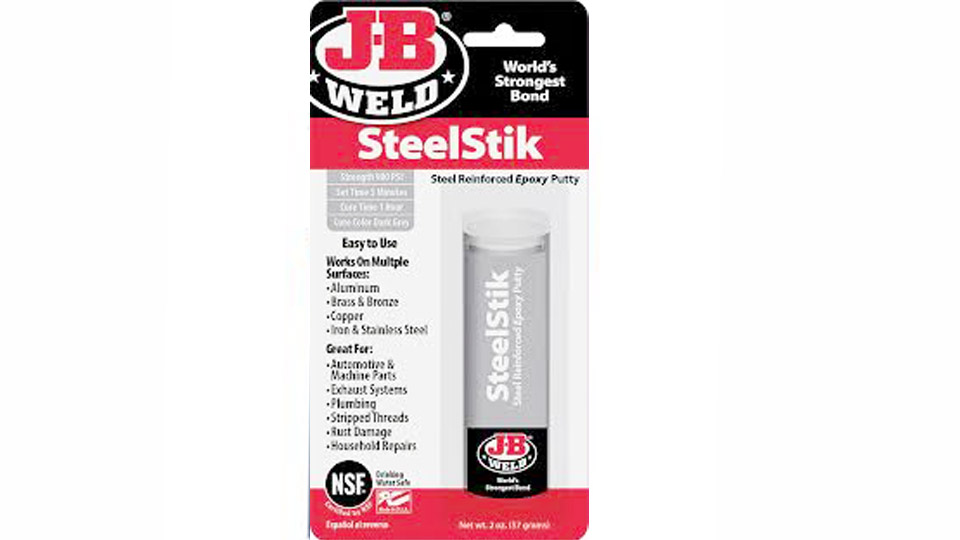
J-B Weld SteelStik – Best for Quick Repairs
This one’s always in my toolbox. J-B Weld’s SteelStik is a steel-reinforced epoxy putty. You knead it by hand, mold it into shape, and stick it where it needs to go. It sets fast—within minutes—and cures in about an hour.
I use this for emergency fixes. It bonds like a rock to stainless steel and can even hold under pressure and heat. It’s water and chemical-resistant, too, which makes it great for plumbing and automotive repairs. Perfect when you don’t have time to wait overnight.
Pros:
- Super quick cure
- Can apply underwater
- No tools required
Cons:
- Not as strong as liquid epoxies for large surface areas
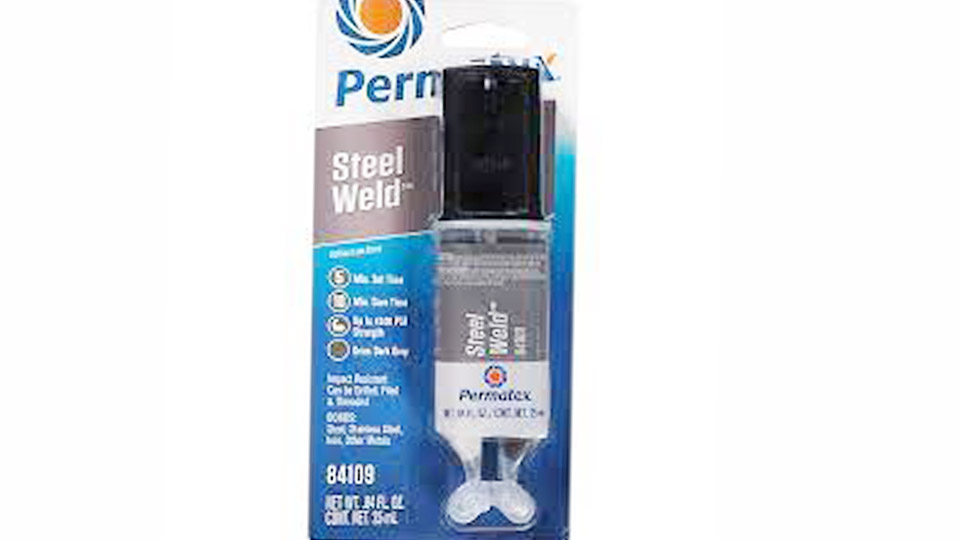
Permatex Steel Weld – Best for Automotive and Heavy Duty Use
If you’re fixing a stainless steel muffler, engine block, or any part that gets hot and oily—this is your go-to. Permatex Steel Weld has incredible strength and stays tough under stress.
I’ve used this for bonding brackets and patching stainless panels. It holds tight, even in high-vibration areas. You do need to let it cure for 24 hours for the best results, but it’s worth the wait.
Pros:
- High strength
- Works well on oily and greasy parts
- Excellent durability
Cons:
- Longer cure time
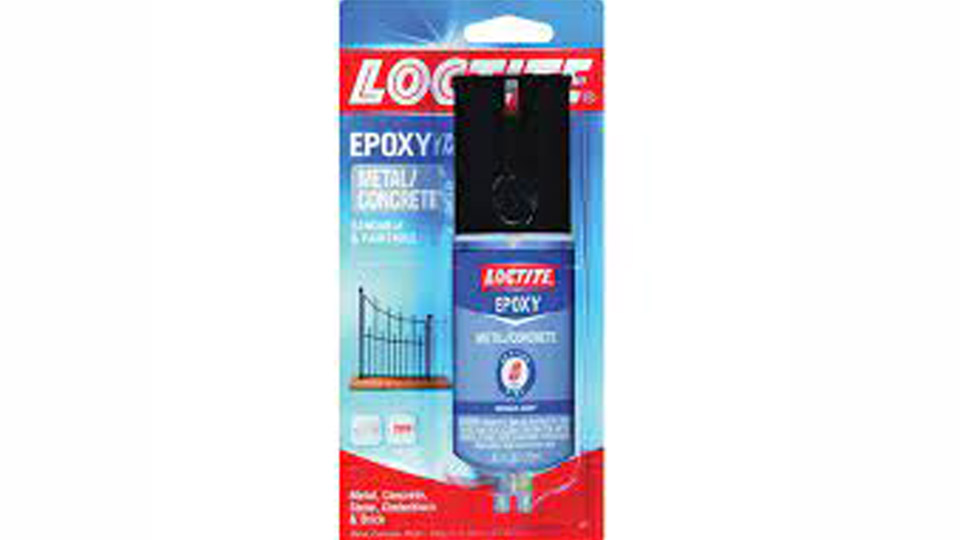
Loctite Epoxy Metal/Concrete – Best for General Metal Bonding
This one is ideal for bonding stainless steel to other metals or concrete. It’s a versatile, easy-to-use formula that comes with a dual syringe for precise mixing.
I like this for general-purpose shop use. It doesn’t expand or shrink, and it cures to a hard, machinable finish. You can sand it, paint it, or drill it. And it sticks like a champ.
Pros:
- Smooth application
- Bonds well to mixed materials
- Easy to sand and machine
Cons:
- May require surface roughening for max adhesion
Devcon Plastic Steel Epoxy – Best for Industrial Strength Repairs
If you’re working on heavy stainless steel equipment or structural elements, Devcon’s Plastic Steel Epoxy is a powerhouse. It has metal fillers for better bonding and reinforcement.
It takes longer to set, but once it’s cured, it’s nearly as strong as welding. I’ve used this in commercial settings where welding wasn’t possible, and it’s held up to vibration, pressure, and constant use.
Pros:
- Extremely strong
- Great for large or structural repairs
- Excellent chemical resistance
Cons:
- Requires precise mixing
- Higher cost

PC-7 Epoxy Paste – Best for Filling Gaps and Non-Standard Shapes
Sometimes stainless steel surfaces aren’t perfect. You’ve got gaps, dents, or uneven edges. That’s when I reach for PC-7. It’s a thick paste that fills and bonds at the same time.
You’ve got a full hour of working time before it sets, which is nice when positioning parts. It’s not the fastest to cure, but once it sets, it’s waterproof and tough as nails.
Pros:
- Long working time
- Fills and bonds
- Works on vertical surfaces
Cons:
- Not ideal for fine or clean edges

How to Apply Epoxy to Stainless Steel (Step-by-Step Guide)
If you’ve never used epoxy on stainless steel, don’t worry. It’s simple when you follow the steps. Here’s how I usually do it:
- Clean the surface thoroughly – Use a degreaser or rubbing alcohol to remove oil, dirt, and fingerprints.
- Roughen the surface – Stainless steel is smooth, so I lightly sand it with 80–120 grit sandpaper for better grip.
- Mix the epoxy – Follow the instructions carefully. With two-part systems, equal mixing is key.
- Apply evenly – Spread a thin, consistent layer on both surfaces.
- Clamp or hold in place – Use a clamp, tape, or simple weight to keep the parts in position while curing.
- Cure fully – Give it time. Even if it feels hard after an hour, wait the full cure time listed on the label for maximum strength.
When Not to Use Epoxy on Stainless Steel
As good as epoxy is, there are a few situations where it’s not the best option:
- High-temperature environments over 300°F
- Structural load-bearing parts (always better to weld)
- Flexible joints or moving parts
- Polished or untreated smooth surfaces (unless you roughen them)
If you’re in any of these cases, consider other mechanical or thermal bonding methods.
Conclusion
So, what is the best epoxy for stainless steel? The answer depends on your needs.
If you want fast, go with J-B Weld SteelStik. For heavy-duty and high-stress areas, I recommend Permatex Steel Weld or Devcon Plastic Steel. For general repairs, Loctite Epoxy Metal/Concrete is reliable. And when you need to fill and bond at the same time, PC-7 Epoxy Paste is a great choice.
No matter which one you choose, applying epoxy to stainless steel can be a game changer. It’s clean, fast, and impressively strong when done right.
I’ve fixed everything from garden tools to engine mounts with epoxy, and if you take the time to prep and apply properly, you’ll be amazed at how well it holds. It’s like welding, just without the flame and fuss.
FAQs
What kind of epoxy works best on stainless steel?
Two-part metal epoxies designed specifically for high-strength bonding, such as J-B Weld, , and Loctite, are the best choices for stainless steel.
Can epoxy stick permanently to stainless steel?
Yes, with proper surface prep and curing, epoxy can create a permanent bond on stainless steel.
Is epoxy stronger than welding?
Not usually. Welding is stronger for structural applications, but epoxy offers a strong, chemical-resistant bond where welding isn’t practical.
How do I prepare stainless steel for epoxy bonding?
Clean it thoroughly with a degreaser, then roughen the surface using sandpaper to help the epoxy grip better.
Can I use epoxy outdoors on stainless steel?
Yes, as long as the epoxy is waterproof and weather-resistant. Many industrial-grade epoxies are perfect for outdoor use.