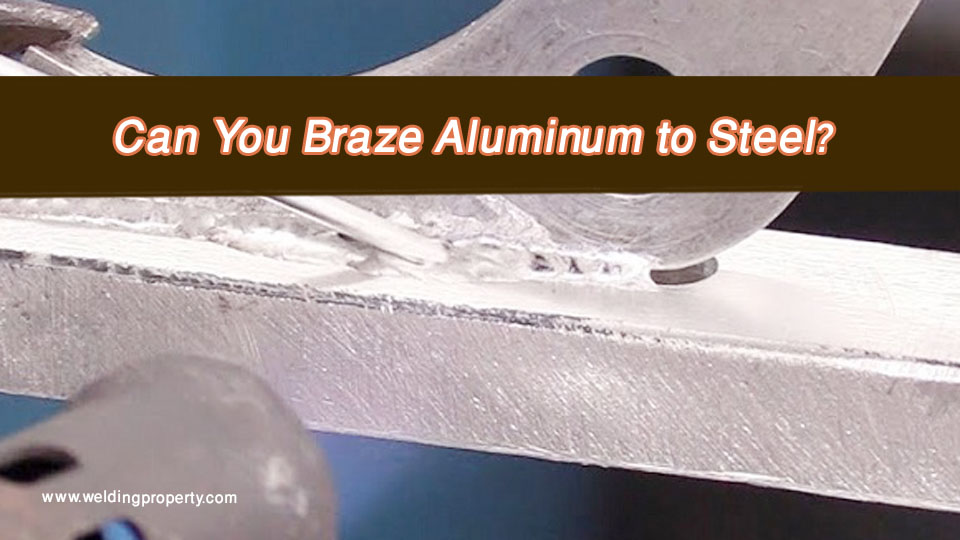
Dialing in aluminum on a machine set to DC is one of those moments that quickly exposes the limits of your setup. The arc might strike, but instead of a stable puddle, you often end up fighting poor cleaning action, erratic behavior, and welds that just don’t want to flow right.
That’s exactly why the question Why Can’t You Weld Aluminum with DC comes up so often in real shop conversations.
In practical welding work, aluminum behaves very differently from steel. It forms a tough oxide layer and needs the right electrical balance to break that layer effectively during welding.
DC doesn’t provide the alternating cleaning action needed, which is why the arc struggles to maintain a clean, stable fusion on the surface.
Understanding this matters because it saves a lot of wasted time and confusion in the shop. Once you know how aluminum responds to current type, choosing the right setup becomes much easier. I’ll break down what actually happens with DC on aluminum and what you should use instead for consistent, strong welds.
Image by weldingtipsandtricks
The Invisible Enemy: Understanding the Aluminum Oxide Layer
To understand the power source requirements, we have to look at the chemistry of the material sitting on your bench. Aluminum isn’t just one metal; it’s a soft, low-melting-point core wrapped in a high-temperature “skin.”
What is the Oxide Layer?
Every piece of aluminum exposed to air immediately forms a layer of Aluminum Oxide ($Al_2O_3$). While pure aluminum melts at roughly 1,221°F, that oxide layer doesn’t melt until it hits a staggering 3,700°F.
Why Direct Current (DC) Fails
When you weld with DCEN—the standard setting for steel—the heat is concentrated on the workpiece. This sounds good in theory, but that 3,700°F oxide layer won’t budge.
The aluminum underneath melts and turns to liquid, but it remains trapped inside the oxide skin. You end up with a “pouch” of molten metal that refuses to fuse with your filler rod.
If you flip to DCEP (Direct Current Electrode Positive), you get “cleaning action” where the electrons jump from the plate to the tungsten, blasting off the oxide. However, this puts about 70% of the heat onto your tungsten.
In a matter of seconds, your electrode will melt into a ball and fall into your puddle. This is exactly why can’t you weld aluminum with DC effectively—you either get no cleaning (DCEN) or a melted torch (DCEP).
How AC Solving the “Cleaning vs. Penetration” Problem
Alternating Current is the compromise that makes aluminum welding possible. By switching back and forth between Positive and Negative polarities 60 times a second (or more on modern inverters), you get the best of both worlds.
The Mechanism of the AC Cycle
The Positive Half (Cleaning): Electrons flow from the work to the tungsten, physically stripping away the oxide layer. This is called cathodic cleaning.
The Negative Half (Penetration): Electrons flow from the tungsten to the work, providing the deep heat needed to melt the base metal and create a puddle.
Modern Inverter Controls
If you’re using a modern US-made machine like a Miller Dynasty or a Lincoln Aspect, you have “Balance Control.” This allows you to adjust what percentage of the time the machine spends in the cleaning phase versus the penetration phase.
- Practical Tip: Most pros set their balance to about 70-75% EN (Electrode Negative). This provides enough cleaning to keep the puddle shiny while putting enough heat into the metal to move fast and reduce distortion.
SMAW on Aluminum: Can You Stick Weld It?
While TIG is the gold standard, sometimes you’re in the field and all you have is a stick welder. This is where the “DC rule” gets a little blurry, but the physics remains the same.
Using Aluminum Electrodes (E4043)
You actually can stick weld aluminum with DC, but it requires DCEP (Electrode Positive). Because the electrode is covered in a heavy chemical flux, that flux does the “cleaning” work that the AC arc usually does.
Practical Shop Tips for Stick Aluminum:
- Amperage Ranges: For 1/8″ material, you’ll want roughly 90-120 Amps.
- Speed: Aluminum stick welding is incredibly fast. You don’t “weave” like you do with steel; it’s a high-speed stringer bead.
- The Struggle: The slag is corrosive. If you don’t chip and wire-brush every bit of it off, your joint will rot from the inside out within months.
The Step-by-Step Guide to Joint Preparation
In the welding world, “Cleanliness is Godliness,” but for aluminum, it’s the law. If your prep is lazy, your AC arc will struggle, and you’ll find yourself wishing you had more DC-style heat.
Mechanical Cleaning: Use a stainless steel wire brush. Crucial: Use a brush that has never touched steel. If you cross-contaminate with carbon steel particles, your aluminum weld will develop “rust” spots.
Chemical Degreasing: Wipe the joint down with Acetone. Avoid brake cleaners, as some contain chlorinated solvents that turn into phosgene gas when hit by UV light—that stuff is lethal.
Edge Prep: For material thicker than 3/16″, grind a 45-degree bevel. Aluminum is a massive heat sink; it sucks heat away from the joint faster than steel. Beveling ensures you get that root fusion.
Choosing the Right Rod: 4043 vs. 5356
Choosing the wrong filler is a common rookie mistake that leads to cracking during the cooling phase (hot shortness).
4043 Aluminum Rod
- What it is: An aluminum-silicon alloy.
- When to use: Best for general purpose, 6061-T6 fabrication. It flows better and has a “shinier” finish.
- Downside: It doesn’t anodize well; the weld will turn dark gray if you send the part out for coating.
5356 Aluminum Rod
- What it is: An aluminum-magnesium alloy.
- When to use: Use this when strength is the priority or if the part will be anodized. It’s “stiffer” in the puddle.
- Practical Tip: 5356 is the go-to for marine applications because of its superior corrosion resistance in saltwater.
Setting Up Your Machine: A Pro’s Cheat Sheet
If you’re standing at your machine right now, use these baseline settings for 1/8″ (3.2mm) 6061-T6 Aluminum.
| Setting | Recommended Range | Why? |
| Amperage | 125–150 Amps | You need a “cold start” burst, then back off with the pedal. |
| AC Frequency | 100–120 Hz | Higher frequency narrows the arc, making it easier to aim. |
| AC Balance | 70% EN | Maximum penetration with just enough cleaning action. |
| Tungsten | 3/32″ 2% Lanthanated | Handles AC heat better than pure tungsten (Green). |
| Shielding Gas | 100% Argon | 15-20 CFH. Don’t use CO2; it will destroy the metal. |
Safety Considerations: The Hidden Dangers of Aluminum
Welding aluminum isn’t just “steel but lighter.” The safety risks change significantly.
UV Radiation: Aluminum is highly reflective. The UV rays from the arc bounce off the metal and can give you a “welder’s sunburn” under your chin or on your arms much faster than steel. Wear a full leather apron and a bib on your helmet.
Ozone: The high frequency and AC arc create more ozone gas. Ensure your shop has active ventilation or a fume extractor.
The Heat Sink Effect: An aluminum part doesn’t change color as it gets hot. A piece of aluminum at 500°F looks exactly like a piece at 70°F. Always use “hot” tongs or pliers; never assume a part is cool just because it isn’t glowing red.
Common Mistakes to Avoid
1. “Rounding” the Tungsten Too Much
In the old days, we used pure tungsten and let it form a large ball. On modern inverters, you want a slight taper with a blunted end. If the ball gets too big, your arc will start wandering like a garden hose.
2. Flicking the Rod
Beginners often “flick” the filler rod into the puddle. This introduces air into the shielding gas envelope. Keep the tip of your rod close to the puddle, tucked inside the gas flow.
3. Ignoring the “Crater”
Aluminum is prone to “crater cracks” at the end of a weld. Don’t just let off the pedal instantly. Slowly taper the amperage down and add a final dab of filler to “bridge” the crater.
Mastering the “Cleaning” Zone
When you start your arc, you’ll see a white, etched area around the bead. This is the “frosting” or the cleaning zone. If this zone is too wide, your balance is set too high on the Positive side (too much cleaning).
If there is no white zone and the puddle looks “peppery” (black dots floating in it), you don’t have enough cleaning action. Adjust your balance until that white zone is about 1/8″ wide on either side of the bead.
Reflections on Modern Aluminum Fabrication
Taking the time to understand why DC doesn’t work for aluminum is the first step toward becoming a truly versatile fabricator. It shifts your perspective from “just melting metal” to managing oxides and thermal conductivity.
Wrapping Up
We’ve discusses the physics of the oxide layer, the necessity of the AC cycle for cleaning and penetration, and the practical settings you need to get a bead that holds.
You now know that while DC stick is a “field fix” for emergency repairs, a properly tuned AC TIG machine is the only way to achieve aerospace-grade results.
You’re now equipped to handle aluminum’s unique quirks—from the deceptive melting points to the critical importance of filler rod selection and joint hygiene.
If you’re struggling with the puddle “stalling” out on long seams, pre-heat your aluminum to about 200°F with a propane torch. It breaks the thermal “chill” and allows you to use lower amperages, which drastically reduces the risk of warping your workpiece.
Frequently Asked Questions
Can I use a DC-only TIG welder for aluminum if I’m desperate?
Technically, you can use DCEP, but you will melt your tungsten electrode almost instantly, even at low amps. It is not a viable method for anything beyond a 1-second “tack,” and even then, the weld quality will be extremely poor and likely contaminated with tungsten.
Why is my aluminum weld turning black?
This is usually caused by two things: lack of cleaning (AC balance too low) or contaminated shielding gas. Check for leaks in your gas line and make sure you are using 100% pure Argon. Also, ensure you’ve removed all oils and greases with acetone before welding.
Do I need a foot pedal for aluminum?
While not strictly “required,” a foot pedal is highly recommended. Aluminum absorbs heat so fast that you need a lot of power to start the puddle, but once the part gets hot, you need to “back off” the heat to prevent the metal from falling through. A foot pedal gives you that real-time control.
Can I weld aluminum with a standard MIG welder?
Yes, but you usually need a “spool gun.” Aluminum wire is too soft to be pushed through a standard 10-foot MIG torch liner; it will bird-nest at the drive rolls. A spool gun puts the wire right at the torch head, and you’ll need to switch to 100% Argon gas and DCEP polarity.