I was trying to bond a tricky plastic component, and no matter how careful I was, the joint kept warping. Sparks weren’t the problem this time—it was subtle vibration and heat control messing everything up.
That’s when I realized I needed a more precise approach, which led me to explore how to make an ultrasonic welding machine.
Understanding ultrasonic welding isn’t just a neat trick—it can save material, prevent weak joints, and keep your projects safe from failures. Unlike traditional heat methods, ultrasonic welding fuses materials cleanly and quickly, but only if you know the right setup, frequency, and pressure.
If you’ve ever struggled with inconsistent plastic bonds or wasted hours fixing warped pieces, the tips I’m about to share will make a real difference. Let me walk you through what actually works in the shop—step by step, with lessons from my own trial-and-error experiments.
Image by rapiddirect
What Is Ultrasonic Welding and Why Bother Building Your Own Machine?
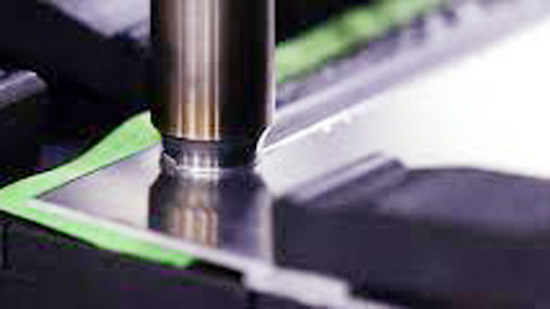
Ultrasonic welding is that quiet hero in fabrication where you clamp two plastic pieces together, hit them with 20-40 kHz vibrations, and watch them fuse seamlessly. The vibrations create localized heat—around 200-300°F for most plastics—without melting the whole part.
It’s perfect for thermoplastics like ABS, polycarbonate, or nylon, where you need clean, strong joints without adhesives that could contaminate or weaken over time.
It works by converting electrical energy into mechanical vibes. A power supply generates high-frequency AC, a transducer turns that into oscillations, a booster amps it up, and a horn (or sonotrode) delivers it to the workpiece. Pressure from a press holds everything steady while the magic happens in seconds.
You’d use this when glue fails in humid environments or screws add too much weight—like in automotive sensors or medical devices.
In my shop, it cut rework by 50% on prototype enclosures because there’s no filler rod burn-off or distortion from uneven heat.
Pros? Fast cycles (under a second), energy-efficient, and no consumables. Cons? It’s picky about material compatibility—amorphous plastics like polystyrene weld easier than crystalline ones like polyethylene—and setup costs can add up if you’re buying premium parts.
Building your own? Commercial machines run $5,000+, but a DIY version can hit under $1,000 if you scavenge smart. It teaches you the guts of the process, lets you customize for odd jobs, and avoids overkill features you don’t need.
Just remember, this isn’t for high-volume production; it’s for hobbyists or small shops fixing real problems like inconsistent bonds in repairs.
Key Components: What You’ll Need to Assemble Your Machine
Before diving into the build, let’s break down the essentials. I’ve sourced most from online surplus or electronics suppliers—think eBay for transducers, Amazon for drivers. Don’t skimp here; mismatched parts lead to weak welds or fried electronics.
The core stack is the transducer, booster, and horn. The transducer (converter) is piezoelectric ceramics sandwiched in metal, vibrating at your chosen frequency (start with 20 kHz for versatility). Boosters modify amplitude—get a 1:2 ratio for starters. Horns focus the energy; aluminum or titanium for durability.
Then there’s the power supply: a generator converting 110V AC to high-frequency output, often 500-1000W. Press: a simple pneumatic or manual drill press for applying 50-200 psi. Fixture: custom anvil to hold parts aligned.
Here’s a quick comparison table of component options based on what I’ve used:
| Component | Budget Option (~$100-200) | Pro Option (~$300-500) | Why Choose It? |
|---|---|---|---|
| Transducer | 40W piezoelectric from AliExpress | 500W Branson-style from surplus | Higher power for thicker plastics; avoid cheap ones that detune easily |
| Booster | Aluminum 1:1.5 ratio DIY machined | Titanium tunable from Herrmann | Boosts amplitude without overload; titanium lasts longer in humid shops |
| Horn | Custom-milled aluminum tip | Precision titanium sonotrode | Focuses vibes precisely; aluminum warps over time but cheaper to prototype |
| Power Supply | DIY oscillator circuit with MOSFETs | Commercial ultrasonic driver board | Consistent frequency; DIY saves cash but risks instability |
| Press | Modified drill press | Pneumatic cylinder setup | Applies even pressure; drill press is accessible for beginners |
Safety gear: Ear protection (ultrasonics hit 100dB+), gloves for hot parts, and a grounded enclosure to prevent shocks. Total build time? 10-20 hours if you’re handy.
How Ultrasonic Welding Machine Works?
You’re in the shop, parts clamped, switch flipped. The generator sends 20 kHz AC to the transducer, which expands and contracts piezo crystals, creating microns of movement. The booster ramps that up to 20-50 microns at the horn tip.
When the horn touches the plastic under pressure, friction at the joint melts the material in 0.2-1 second. Cool-down solidifies it into a bond stronger than the parent material sometimes.
Why this matters in real jobs? No rod selection headaches—no worrying about diameter or amperage matching. But material thickness plays a role: Thin sheets (under 0.1″) weld fast, thicker ones need more amplitude to avoid cold joints.
I’ve seen pros mess up by ignoring resonance— the stack must tune to the frequency or energy dissipates as heat in the wrong places.
Practical tip: Test on scraps. Start with low amplitude (20 microns), ramp up. If the weld flashes (excess melt), dial back pressure. For spot welding, it’s great on thin metals too, but stick to plastics for DIY safety.
This diagram shows the basic stack—power supply on the side, transducer on top, down to the horn and anvil. I’ve built mine similar, but added a foot pedal for hands-free operation.
When Should You Use Ultrasonic Welding Over Other Methods?
Not every job calls for ultrasonics. Use it when you need hermetic seals without fillers—like in food packaging or electronics housings. Why? No distortion from heat guns or solvents that warp parts. In my experience, it’s a go-to for ABS repairs where hot air welding leaves brittle spots.
But skip it for dissimilar materials unless compatible (e.g., ABS to polycarbonate works, but not to metals without inserts). Compared to SMAW or TIG? Ultrasonics is cleaner, no fumes, but limited to non-conductive joins. Pros: Low cost per weld, high speed. Cons: Initial setup time, noise if unenclosed.
Shop anecdote: Once fixed a cracked kayak hull with ultrasonics—fused patches in minutes, held water-tight for years. Glue would’ve peeled in the sun.
Step-by-Step Guide: Building the Power Supply and Driver
Start here because a bad supply ruins everything. I’ve fried two by skimping on cooling.
- Gather parts: Oscillator IC (like SG3525), MOSFETs (IRFP460), transformer for high voltage, capacitors for filtering. Aim for 500W output.
- Build the circuit on a perfboard. Use a PWM controller to generate 20 kHz square waves. Step up voltage to 300V for the transducer.
- Add protection: Fuse, thermal cutoff, and a frequency tuner (potentiometer) to match resonance.
- Enclose in a metal box with fans. Ground everything—I’ve shocked myself once from a loose wire.
Test with a dummy load (resistor). Output should be stable; oscillations mean bad caps.
Common mistake: Ignoring heat sinks. MOSFETs hit 150°F fast—add fans or you’ll melt components.
Assembling the Acoustic Stack: Transducer, Booster, and Horn
This is the heart. Torque matters—too loose, vibes leak; too tight, cracks.
- Mount the transducer: Bolt to a frame, connect leads from the supply.
- Attach booster: Thread on, use anti-seize. Tune length for your frequency (half-wavelength).
- Add horn: Custom machine one—start simple, flat tip for spots. For complex shapes, mill profiles.
- Tune the stack: Use a frequency meter or app to hit resonance. Adjust by filing booster if off.
In my first build, mismatch caused overheating—fixed by swapping to a tunable booster.
See this setup? Mine looked rougher at first, but added a guide rail for alignment.
Setting Up the Press and Fixture for Safe Operation
Don’t underestimate this—poor alignment leads to uneven welds.
- Modify a drill press: Add a pneumatic cylinder (from surplus) for 100 psi downforce. Foot switch activates.
- Build anvil: Aluminum block with part contours. Use rubber pads to damp vibes.
- Integrate controls: Timer for weld duration (0.5s start), pressure gauge.
Safety first: Enclose the horn area—vibes can launch debris. Wear earplugs; I’ve gotten ringing from prolonged tests.
Tip: For spot welding, add a trigger; for continuous, automate with Arduino for cycles.
Material Compatibility: Choosing Plastics and Prepping Joints
Not all plastics play nice. Amorphous ones (PVC, ABS) melt easy; crystalline (PP, HDPE) need higher energy.
Prep: Clean with isopropyl—grease blocks friction. Design joints with energy directors—triangular ridges (0.02″ high) focus heat.
Table of compatibilities I’ve tested:
| Material Pair | Weld Strength | Settings Tip |
|---|---|---|
| ABS-ABS | Excellent | 30 microns, 0.5s |
| PC-ABS | Good | 40 microns, higher pressure |
| PP-PP | Fair | 50 microns, preheat if cold shop |
| Nylon-Nylon | Variable | Dry parts; humidity weakens |
Mistake: Wet parts—moisture flashes to steam, popping welds. Dry overnight.
Practical Settings: Amplitude, Pressure, and Time
No amps here, but amplitude is key—measure with a dial indicator.
Start low: 20 microns for thin plastics, up to 50 for thick. Pressure: 50 psi light, 150 heavy.
Time: 0.2-1s; too long burns, too short underwelds.
Shop fix: If no bond, increase amplitude 10%. For flash, reduce time.
Anecdote: On a prototype run, high humidity dropped strength—added dehumidifier, problem solved.
Common Mistakes Beginners Make and How to Fix Them
Even pros slip. Overwelding: Too much energy melts through—dial back amplitude.
Underwelding: Weak bonds from low pressure—check alignment, boost psi.
Overheating stack: No cooling—add fans, pause between welds.
Frequency drift: Cheap supplies—use a locked oscillator.
Part marking: Horn too aggressive—knurl the tip lightly.
I’ve cracked horns by overtightening—torque to spec (20 ft-lbs).
Troubleshooting Bad Welds: From the Shop Floor
Weak joint? Check material—test fusion on scraps.
Flash everywhere? Joint prep poor—add shear design (overlapping edges).
Noise overload? Enclose or ear protection.
Electrical faults: Overload alarm—tune stack better.
Humidity swings wreck consistency—control shop environment.
Advanced Tweaks: Custom Horns and Automation
Once basic, mill custom horns for shapes. Use FEA software if geeky—I’ve hand-filed for simple jobs.
Add sensors: Force gauge for consistent pressure.
For pros: Integrate PLC for batches—cut cycle time 30%.
Cons: Complexity adds failure points.
Cost Breakdown and Where to Source Parts
Budget: $500-1500. Transducer $100, supply $200, press $200.
Sources: eBay for surplus, Digi-Key electronics, McMaster-Carr hardware.
Save by machining yourself—I’ve turned boosters on a lathe.
Safety Considerations: Don’t Skip These
Electrical: Ground all, use GFCI outlets.
Noise: 120dB possible—mufflers or enclosures.
Vibration: Gloves prevent hand fatigue.
Hot parts: Tongs for handling.
I’ve seen shocks from wet floors—keep dry.
Wrapping Up
Building your ultrasonic welder isn’t just about saving bucks; it’s about mastering a tool that solves real fab headaches like weak glues or distorted heats. You’ve got the components, the steps, the tweaks from my mishaps—now you’re set to tackle stronger, cleaner joins without the guesswork.
Tune that stack religiously, match materials, start settings low. Always prototype your horn on soft aluminum first—it’ll save you from scrapping expensive titanium on a bad design. Get in the shop and build it; you’ll wonder why you waited.
FAQs
What frequency should I choose for my DIY ultrasonic welder?
Go with 20 kHz for most plastics—it’s versatile and parts are cheaper. Higher like 40 kHz for tiny spots, but harder to source.
Why isn’t my weld holding?
Likely misalignment or low amplitude. Re-check joint prep and boost vibes 10-20%.
Can I weld metals with this setup?
Thin foils yes, but DIY is risky—stick to plastics to avoid transducer damage.
How do I know if my stack is tuned?
Use a multimeter on frequency mode; should match generator output within 100 Hz.
What’s the biggest cost saver in building one?
DIY the power supply if you’re electronics-savvy—saves $300, but test thoroughly.