
Porosity is one of those weld defects that looks small but can cause big problems. Everything might seem fine while you’re running the bead, but once the slag comes off, those tiny holes tell you something went wrong. I’ve dealt with this plenty of times, and understanding What is the Cause of Porosity in Arc Welding? usually comes down to what’s contaminating the weld before or during the arc.
Most porosity issues I’ve seen came from dirty base metal, moisture in electrodes, or poor shielding. Rust, oil, paint, or even damp rods introduce gas into the molten puddle, and that gas gets trapped as the weld cools. The result is a weaker weld that may crack or fail under stress—especially on structural or pressure-related work.
If porosity has been showing up in your welds and you’re not sure why, don’t worry—it’s a common problem with clear fixes. Let me break down the real causes and show you how to eliminate them step by step.
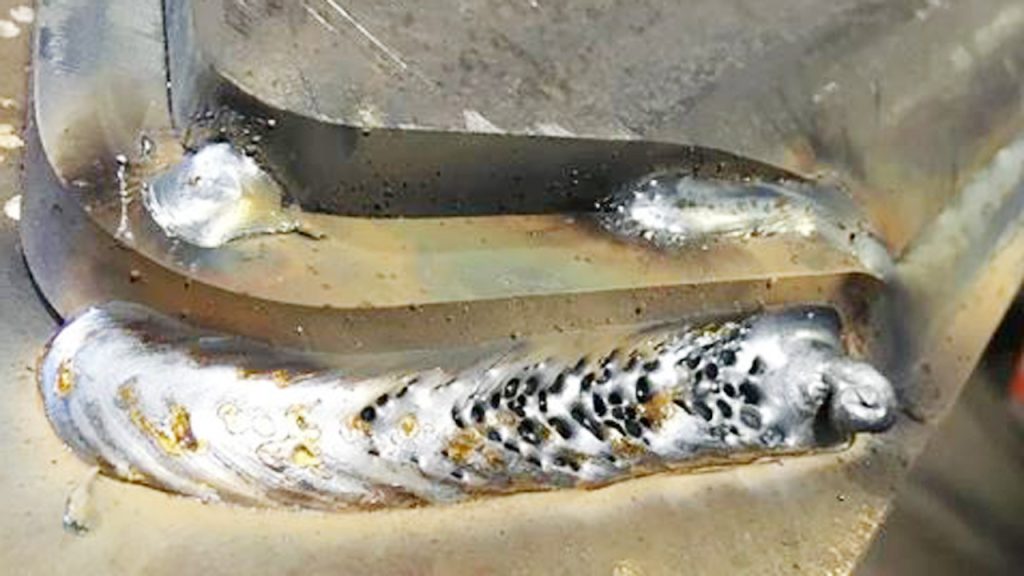
Image by reddit
Understanding Porosity in Arc Welding
Porosity isn’t some mysterious curse—it’s a direct result of gases getting trapped during the welding process. In arc welding, the intense heat creates a molten pool where the base metal and filler material mix.
If gases like hydrogen, nitrogen, or oxygen sneak in and can’t escape before the pool cools, they form bubbles that harden into pores. These can be surface-level, like wormholes visible to the naked eye, or subsurface, requiring X-rays to detect.
How does this play out in practice? Take SMAW, for example—your electrode’s flux coating is supposed to shield the weld from atmospheric gases, but if it’s compromised, porosity creeps in. In GMAW, it’s often about the shielding gas flow; too little, and air contaminates the arc. I’ve noticed it more in outdoor jobs where wind disrupts the gas shield, turning a straightforward weld into a pitted mess.
You should watch for porosity whenever you’re welding in damp conditions, on rusty materials, or with inconsistent machine settings. It’s not just a cosmetic flaw— in high-stakes applications like pipeline welding or structural steel fabrication, it can void certifications and lead to liability issues.
Why use this knowledge? To build confidence in your welds. Early in my career, I ignored a slight hiss in the gas line during a MIG setup, and the resulting porous bead on a trailer hitch taught me a hard lesson about double-checking everything.
Always inspect your welds under good lighting right after cooling. If you spot clusters of tiny holes, note the conditions—was it a new rod batch or a humid day? That insight prevents repeats.
Common Causes of Porosity
Diving deeper, porosity doesn’t happen in a vacuum. It’s usually a combo of factors, but let’s break down the main culprits. I’ve grouped them based on what I’ve encountered most in US shops using common machines like Lincoln or Miller welders.
Moisture and Contaminants on Materials
Moisture is enemy number one for porosity. Water on your base metal or electrodes turns to steam in the heat, creating hydrogen gas that bubbles out as pores. Contaminants like oil, paint, rust, or even fingerprints introduce hydrocarbons that vaporize and trap gases.
This works by the contaminants breaking down under the arc’s heat, releasing gases that dissolve into the molten metal. As the weld cools rapidly, those gases can’t diffuse out, forming voids. It’s especially problematic in SMAW with low-hydrogen rods like E7018, which are sensitive to moisture pickup.
Use this prevention when prepping for any weld, but especially on carbon steels or in rainy climates. In my experience, skipping cleaning on a quick repair job often backfires—I’ve had to grind out porous sections on exhaust pipes because of overlooked grease.
Bake your electrodes in a rod oven at 250-300°F for an hour before use if they’ve been exposed. For base metals, wire brush or grind to bright metal, then wipe with acetone. Beginners often forget this, thinking a light sand is enough, but pros know contaminants hide in pores. If you’re welding aluminum, which is prone to oxide layers, use a stainless brush dedicated to it to avoid cross-contamination.
Improper Gas Shielding in GMAW and FCAW
In gas-shielded processes, the shielding gas—argon, CO2, or mixes—creates a protective blanket over the weld pool. If that shield fails, atmospheric gases like oxygen and nitrogen invade, leading to oxidation and porosity.
How it happens: Turbulence from high winds, wrong nozzle angles, or low flow rates lets air in. Too high a flow can cause eddy currents that suck in contaminants. I’ve seen this on FCAW jobs where the flux core provides some protection, but inadequate gas turns the weld spongy.
Apply this when welding outdoors or in drafty shops. It’s crucial for stainless steels, where porosity can lead to corrosion pits. A solid shield ensures deep penetration without defects, saving on filler wire and reducing distortion.
Set your gas flow to 20-30 CFH for most indoor MIG work; bump to 35-40 CFH outdoors. Position your nozzle at a 10-15 degree push angle to maintain coverage.
A common mistake? Clogged nozzles—clean them after every few beads. I once had a trainee crank the flow too high on a CO2 setup, creating turbulent porosity that looked like Swiss cheese. Lesson: Test on scrap first.
Wrong Welding Parameters and Settings
Amperage, voltage, travel speed—these dials control everything. Too high amperage boils the pool, trapping gases; too low, and the weld doesn’t penetrate, leaving subsurface pores. Electrode diameter mismatches amplify this.
It works through heat input: High heat volatilizes impurities, while improper arc length lets in air. For SMAW, a 1/8-inch E6010 rod at 90-120 amps works for root passes, but crank it to 140 amps on thicker plate without adjusting, and porosity ensues.
Use these settings for consistent results in fabrication or repairs. In US shops, sticking to AWS guidelines helps, but real testing trumps charts.
For mild steel GMAW with 0.035-inch wire, aim for 18-22 volts and 140-180 amps at 300-400 IPM wire speed. Too slow travel? Pores from overheating. Pros adjust on the fly—listen to the arc; a steady sizzle means good, crackling means trouble. I’ve fixed many bad welds by dropping amperage 10-15% on humid days.
Material Issues and Incompatibilities
Base metals with high sulfur or phosphorus content release gases during welding. Mismatched filler metals introduce alloys that react poorly, creating porosity.
This occurs as impurities outgas or alloys form brittle phases. Aluminum is notorious—its oxide layer traps moisture if not removed.
Address this when selecting materials for jobs like auto body work or structural beams. Why? Compatible materials ensure weld strength and minimize rework costs.
Insight: Match filler to base—ER70S-6 for mild steel MIG. For cast iron, nickel rods reduce cracking risks.
A beginner error: Using the wrong rod on galvanized steel, leading to zinc vapors causing massive porosity. Strip the coating first or use ventilation.
How to Identify Porosity in Your Welds
Spotting porosity early saves time. Visually, look for pinholes or clusters on the surface—sometimes they ooze slag. Subsurface ones feel rough or show up in bends as cracks.
In practice, use dye penetrant tests for non-destructive checks: Clean, apply dye, wipe, develop—red indications mean pores. For critical welds, ultrasonic testing reveals hidden voids.
Do this after every pass on multi-layer welds. It’s essential in industries like aerospace or pressure vessel fab, where porosity voids inspections.
I always chip and brush aggressively. Once, on a pipeline mockup, surface pores hid deeper issues—grinding revealed a honeycomb effect from contaminated flux.
Preventing Porosity: Best Practices
Prevention beats cure. Let’s cover hands-on strategies that work in real shops.
Proper Material Preparation
Start clean. Grind or brush to remove scale, rust, oil. For joints, bevel edges for better penetration.
How: Use angle grinders with flap discs for steel; chemical cleaners for aluminum. This expels contaminants before they gasify.
When: Always, but double on reused materials. Why? Clean preps reduce rod burn-off and distortion.
Choosing the Right Shielding Gas
Argon-CO2 mixes (75/25) for steel MIG provide stable arcs. Pure argon for aluminum.
It displaces air, preventing oxidation. Flow rates matter—too low, pores; too high, turbulence.
Use for all gas-shielded work. In shops, stock versatile mixes.
Advice: Check regulators for leaks. A pro mistake: Mixing gases wrong—straight CO2 on thin sheet causes spatter and pores.
Setting Up Your Welding Machine Correctly
Dial in amps based on material thickness. For 1/4-inch steel SMAW with 5/32-inch rod, 120-160 amps.
Parameters balance heat and speed. Voltage affects bead shape—high for flat, low for vertical.
Setup before starting. Why? Consistent settings mean reliable welds.
Use machine charts as starts, then tweak. On my Lincoln Idealarc, I drop amps for overhead to avoid sagging pools.
Technique Tips from the Shop Floor
Maintain short arc lengths—1/8-inch for SMAW. Weave slightly for wider beads but not excessively.
Good technique lets gases escape. Drag for SMAW, push for MIG.
Apply on all positions. Beginners whip too fast; pros pause at edges.
Training a hobbyist, his long arcs caused porosity on fence posts. Shortening fixed it instantly.
Step-by-Step Guide to a Porosity-Free Weld
- Inspect materials: Clean and dry everything.
- Select electrode: Match diameter to thickness—3/32-inch for thin, 1/8-inch for medium.
- Set machine: Amps per rod size, gas at 25 CFH.
- Prep joint: Bevel if over 1/4-inch.
- Strike arc: Steady, short.
- Weld: Consistent speed, watch pool.
- Inspect: Chip, check for pores.
- Fix if needed: Grind out, reweld.
This guide works for most arc processes.
Comparison of Common Arc Welding Processes and Porosity Risks
| Process | Typical Electrodes/Wire | Amperage Range (for 1/8-inch) | Common Porosity Causes | Pros | Cons |
|---|---|---|---|---|---|
| SMAW | E6010, E7018 | 80-140 amps | Moisture in flux | Versatile, portable | Slag cleanup needed |
| GMAW | ER70S-6 wire | 120-200 amps | Gas flow issues | Fast, clean | Wind-sensitive |
| FCAW | E71T-1 flux-core | 150-250 amps | Contaminants | Deep penetration | More spatter |
Fixing Porosity When It Happens
Grind out affected areas to sound metal, then reweld with proper settings. For small pores, peening can close them, but grind for reliability.
In repairs, preheat to avoid cracks. I’ve salvaged frames by grinding deep and multi-passing.
Use lower amps on rewelds to control heat.
Real-World Examples and Lessons Learned
On a truck frame repair, humidity caused porosity—baking rods fixed it. Another time, wrong wire on aluminum led to pits; switching to 5356 resolved.
Common mistake: Rushing preps. Pros plan ahead.
These stories show experience pays off.
Wrapping Up
I’ve welded everything from sculptures to heavy equipment, and tackling porosity head-on has made my work stand out. You now know the causes—from moisture to settings—and how to prevent them with practical steps like proper preps and machine tweaks.
This equips you to produce stronger, safer welds, whether you’re fixing a gate or building a rig. Remember, the best welds come from patience and attention to detail. Always run a test bead on scrap matching your job material before the real thing—it catches issues early and saves material.
FAQ
How Do I Choose the Right Amperage to Avoid Porosity?
Match amperage to electrode size and material thickness. For 1/8-inch E7018 on mild steel, start at 110-130 amps. Test on scrap; if the bead pits, drop 10 amps to reduce boiling.
What Shielding Gas Mix Works Best for Reducing Porosity in MIG Welding?
A 75% argon/25% CO2 mix is ideal for carbon steel—stable arc, good penetration. For aluminum, pure argon. Set flow to 20-25 CFH indoors; adjust up for drafts.
Can Porosity Be Fixed Without Grinding the Entire Weld?
For minor surface pores, yes—chip slag, wire brush, and seal with a cover pass at lower amps. But for strength, grind to sound metal and reweld to avoid hidden weaknesses.
Why Does Porosity Happen More in Humid Weather?
Humidity introduces moisture that turns to hydrogen gas in the arc. Store rods in ovens, preheat metals, and weld in controlled areas. I’ve skipped outdoor jobs on muggy days to prevent it.
Is Porosity More Common in Certain Metals?
Yes, aluminum and galvanized steels are prone due to oxides and coatings. Clean thoroughly—use dedicated brushes—and select low-hydrogen fillers to minimize risks.


