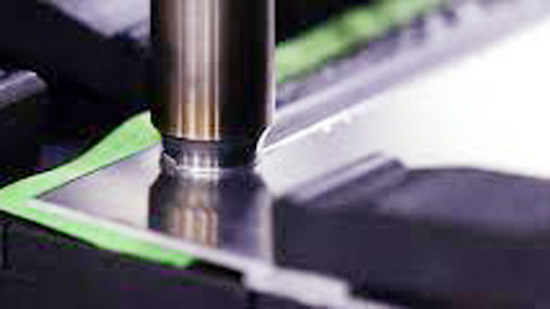
I was setting up an ultrasonic welder for a tricky plastic joint, adjusting the machine carefully, when I realized the bead wasn’t forming correctly. The parts weren’t fusing like they should, and I kept asking myself: “What is amplitude in ultrasonic welding, and why does it make such a difference?”
Amplitude in ultrasonic welding is basically how much the horn vibrates up and down per cycle. It directly affects how much frictional heat is generated at the weld interface. Too low, and the parts won’t bond properly; too high, and you risk melting or deforming the material.
Understanding amplitude isn’t just technical—it’s the key to strong, precise welds that don’t fail on the job. I’ll explain how to measure, adjust, and optimize amplitude so your welds come out clean, strong, and consistent every time.
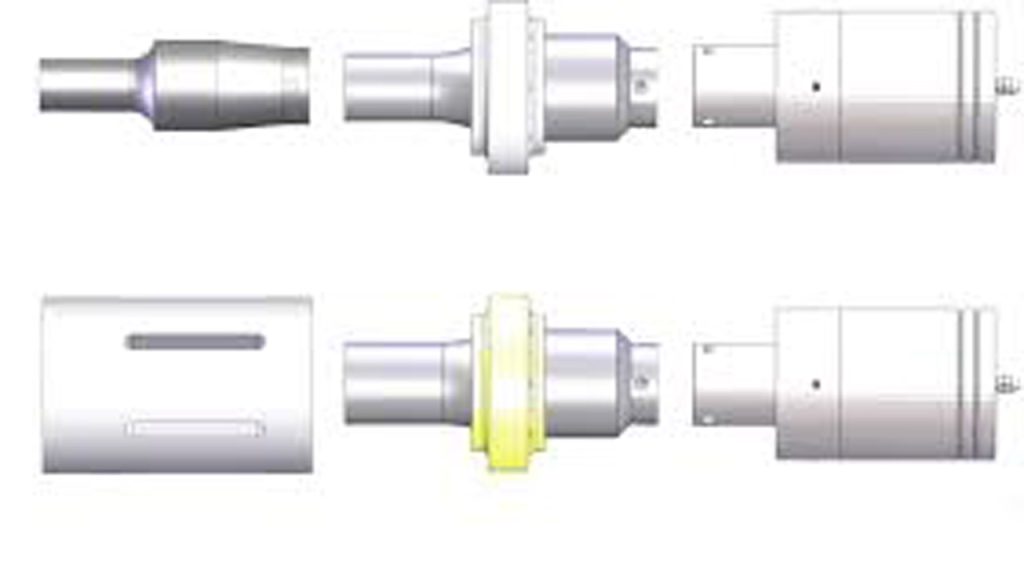
Image by ultrasonic-resonators
The Basics of Ultrasonic Welding
Ultrasonic welding has been my go-to for joining plastics and thin metals since I started in the industry two decades ago. It’s fast, clean, and doesn’t require adhesives or heat from flames, making it ideal for everything from medical devices to consumer electronics.
How Ultrasonic Welding Works
At its core, ultrasonic welding uses high-frequency vibrations to create friction between two parts, melting them at the interface without affecting the rest of the material. The machine’s transducer converts electrical energy into mechanical vibes, which get amplified through a booster and focused by the horn onto your workpiece.
Pressure holds the parts together while the vibrations do their thing, and once it stops, the melt solidifies into a bond. No fillers, no mess—just pure, molecular-level fusion.
This process shines in shop environments where speed matters. I’ve used it on assembly lines cranking out hundreds of parts per hour, and it’s reliable as long as your setup is dialed in. For hobbyists, it’s forgiving if you’re working with compatible thermoplastics like ABS or polycarbonate.
Key Parameters in Ultrasonic Welding
Success hinges on a few main settings: amplitude, weld time, pressure (or force), and sometimes frequency or energy input. Amplitude stands out because it directly controls the intensity of those vibrations. Get it wrong, and you’re looking at under-welded spots that crack or over-welded blobs that ruin aesthetics. Pressure ensures intimate contact, time lets the heat build, but amplitude? That’s your throttle for energy delivery.
In my experience, starting with manufacturer-recommended values for your machine—like those from Branson or Dukane here in the US—gets you 80% there. Then, fine-tune based on the job.
Diving Deep into Amplitude
Amplitude is the star of the show in ultrasonic welding, and once you grasp it, your welds will level up.
What Exactly Is Amplitude?
Simply put, amplitude in ultrasonic welding is the peak-to-peak displacement of the horn during its vibration cycle. Measured in microns (μm) or mils, it represents how far the horn moves back and forth—typically from 10 to 100 microns.
It’s not the frequency (that’s how fast it vibrates, usually 20-40 kHz), but the size of each vibe. Think of it as the swing of a hammer: bigger swing means more impact.
On your machine, amplitude comes from the transducer’s output, boosted by the booster’s gain, and shaped by the horn’s design. For instance, a 20 kHz system might start with a tiny 0.0008 inches from the converter, then amplify it to 0.0024 inches at the horn face with the right boosters.
How Amplitude Affects Your Welds
Amplitude drives heat generation by controlling friction at the joint. Higher amplitude means more intense vibes, faster melting, and stronger energy diffusion into the material. It’s squared in the heat equation, so small changes pack a punch—doubling it quadruples the heating rate.
In practice, low amplitude might leave you with cold welds that peel apart, while high can cause marking, flash, or even part deformation. I’ve seen it on polypropylene enclosures: too low, and the bond fails stress tests; too high, and you get unsightly melt overflow.
When and Why to Use Different Amplitude Levels
Use low amplitude (20-50 μm) for amorphous plastics like ABS when you need precision and minimal marking, especially on thin or visible parts. Ramp up to 60-100 μm for semi-crystalline ones like nylon, where you need extra energy to overcome their higher melt points.
Why adjust? For safety, it prevents overheating that could release fumes or damage tools. For efficiency, it cuts cycle times on tough jobs. And for quality, it ensures consistent bonds without rework costs.
Shop tip: Always test on scrap first. I keep a log of settings for each material—saves me headaches later.
Choosing the Right Amplitude for Different Materials
Material type dictates amplitude more than anything. Amorphous resins soften gradually, so they weld well at moderate levels. Semi-crystalline ones need a kick to melt properly.
For plastics like polystyrene or polycarbonate, aim for 30-70 μm. Polyethylene or polypropylene? Push to 80-120 μm. Metals are trickier—ultrasonic metal welding uses lower amplitudes (10-50 μm) for thin foils or wires, focusing on solid-state bonding without full melt.
Here’s a quick comparison table of amplitude ranges for common materials:
| Material | Type | Recommended Amplitude (μm) | Ease of Welding (1=easy, 5=hard) | Notes |
|---|---|---|---|---|
| ABS | Amorphous | 30-60 | 1 | Low amplitude prevents marking |
| Polycarbonate | Amorphous | 40-70 | 2 | Balance for clarity |
| Nylon | Semi-crystalline | 60-100 | 3 | Higher for proper flow |
| Polypropylene | Semi-crystalline | 80-120 | 4 | Watch for flash |
| Aluminum (thin) | Metal | 20-50 | 3 | Solid-state, no melt |
| Copper (foil) | Metal | 10-40 | 4 | Precise control needed |
From my shop: On a recent battery pack job with PP, starting at 90 μm gave perfect hermetic seals without distortion.
Matching Amplitude to Joint Designs
Energy directors or shear joints change things. Shear needs higher amplitude (up to 20% more) to generate enough friction along the sides. For spot welding, medium levels work to punch through without cracking.
Prep your joints clean—no oils or mold release. A quick wipe with isopropyl alcohol does wonders.
Amplitude for Plastics vs. Metals
Plastics melt; metals don’t in ultrasonic welding—they bond via friction scrubbing oxides away. For plastics, amplitude heats to fusion; for metals like aluminum tabs in electronics, it’s about displacement to create intermetallic bonds. US shops often use it for EV battery assemblies—keep amplitudes low to avoid fatigue.
Tip: If switching materials, recalibrate your machine. Dukane models let you profile amplitude mid-cycle for hybrids.
Common Mistakes with Amplitude Settings and How to Fix Them
Beginners crank amplitude too high, thinking more is better. Result? Overheating, part warping, or horn wear. Pros sometimes go too low, leading to weak bonds that fail in the field.
One anecdote: A trainee set 120 μm on ABS—melted right through. Lesson: Match to material.
Fixes: Use amplitude profiling—start high to initiate melt, drop low for consolidation. Boosts strength by 20-30% in my tests. Ignore machine drift; check with a gauge monthly.
Another pitfall: Ignoring frequency. At 20 kHz, amplitudes are larger; 40 kHz needs finer tuning for precision work.
Step-by-Step Guide to Setting Amplitude on Your Machine
Ready to dial it in? Here’s how I do it on a standard US machine like a Branson 2000 series.
- Power up and select your mode—time, energy, or distance.
- Install the right booster and horn for gain—gold boosters for 1.5x, silver for neutral.
- Set initial amplitude based on material—say 50% (around 40 μm) for starters.
- Clamp parts with moderate pressure (100-300 psi).
- Run a test weld, inspect for penetration and flash.
- Adjust: Up 10% if weak; down if marked. Repeat until optimal.
- Log it: Include part geometry, as thicker sections absorb more.
- For advanced: Use profiling—high for 0.5s, low for hold.
This process takes 10-15 trials but pays off in consistent runs.
Safety Considerations in Ultrasonic Welding with Amplitude
Safety first—ultrasonic vibes are mechanical, not radiation, so no long-term health risks like with arcs. But high amplitude can generate noise (wear earplugs if over 85 dB) and heat.
Never touch the horn mid-cycle—vibes can burn or pinch. Use guards on automated setups. For DIY, ensure stable fixturing to avoid slips.
In shops, ventilate for any fumes from overheated plastics. I’ve added extraction hoods on high-amplitude jobs with nylons.
Pro tip: Amplitude affects tool life—too high wears horns faster, so balance for longevity.
Pros and Cons of High vs. Low Amplitude
High amplitude pros: Faster welds, better for tough materials, deeper penetration. Cons: More flash, potential damage, higher energy use.
Low amplitude pros: Cleaner finishes, safer for delicates, less marking. Cons: Slower, may not bond crystalline plastics well.
Comparison table:
| Aspect | High Amplitude (80+ μm) | Low Amplitude (30-50 μm) |
|---|---|---|
| Weld Speed | Fast | Slower |
| Strength | High if controlled | Consistent but lower max |
| Material Suitability | Semi-crystalline, metals | Amorphous plastics |
| Risk of Damage | Higher (flash, warp) | Lower |
| Energy Consumption | More | Less |
| Common Applications | Automotive housings | Electronics enclosures |
Choose based on job—high for production speed, low for precision.
Real-World Insights from the Shop Floor
Back in ’05, I was on a medical device run with polycarbonate filters. Amplitude at 60 μm gave spotty bonds—turns out, mold release residue damped vibes. Cleaned ’em, dropped to 50 μm, perfect.
Common mistake: Forgetting booster gain. Swapped to a higher one without recalibrating—overwelded a batch. Cost us $500 in scrap. Fix: Always measure output with a micrometer.
For hobbyists: On home 3D-printed parts, start low to avoid melting thin walls. I’ve fixed bad welds by sanding joints flat and retrying at reduced amplitude.
In fabrication repairs, like fixing cracked ABS panels, medium amplitude with shear joints holds up to vibrations better than glue.
Advanced Tips for Optimizing Amplitude
Once basics are down, try amplitude stepping: High initial burst to start melt, then low to refine. Increases entanglement for stronger bonds.
Monitor with sensors—some machines track power draw; spikes mean wrong amplitude.
For metals: Keep under 50 μm to avoid cracking; focus on force.
Compatibility: Test dissimilar pairs—ABS to PC works at 50-70 μm, but PP to metal needs specialized horns.
Joint prep: Bevel edges for better flow; chamfer 0.5mm.
US machine note: Dukane’s iQ series allows digital amplitude control—game-changer for fine tweaks.
I’ve pushed limits on thick PP—100 μm with slow downspeed avoided voids.
Remember, amplitude interacts with pressure: High amp, low pressure for delicates; reverse for robust.
Wrapping Up
Grasping amplitude transforms your ultrasonic welding from guesswork to precision craft. You’ve now got the tools to pick settings that match your materials, avoid pitfalls that waste time and money, and produce welds that hold up in real-world abuse.
Whether you’re a student experimenting in class or a pro on the line, this knowledge equips you to troubleshoot faster and innovate smarter.
Always profile your amplitude on critical jobs—it’ll boost weld strength without extra effort, keeping your shop efficient and your clients happy.
FAQs
How Do I Know If My Amplitude Is Too High?
Look for signs like excessive flash, part deformation, or surface marking. In my shop, if the weld looks burnt or the horn overheats quickly, dial it back 10-20% and retest. Measure with repeated pulls—strength drops if over-melted.
What Amplitude Should I Use for Welding Thin Plastics?
Stick to 20-50 μm for thin films or sheets to avoid punching through. For example, on PET packaging, I’ve found 30 μm with light pressure gives clean seals without tears.
Can I Weld Metals with the Same Amplitude as Plastics?
No—metals need lower, around 10-50 μm, for solid-state bonding. Too high causes fatigue cracks. Test on scrap aluminum tabs at 30 μm first.
Why Does My Weld Fail Even with Correct Amplitude?
Check other factors: Poor joint prep, mismatched materials, or inconsistent pressure. Clean surfaces and ensure fixturing is level—I’ve fixed many by just aligning parts better.
How Often Should I Calibrate Amplitude on My Machine?
Monthly, or after 500 hours of use. Use a displacement gauge on the horn face. If off by 10%, replace boosters—prevents sneaky quality drops.