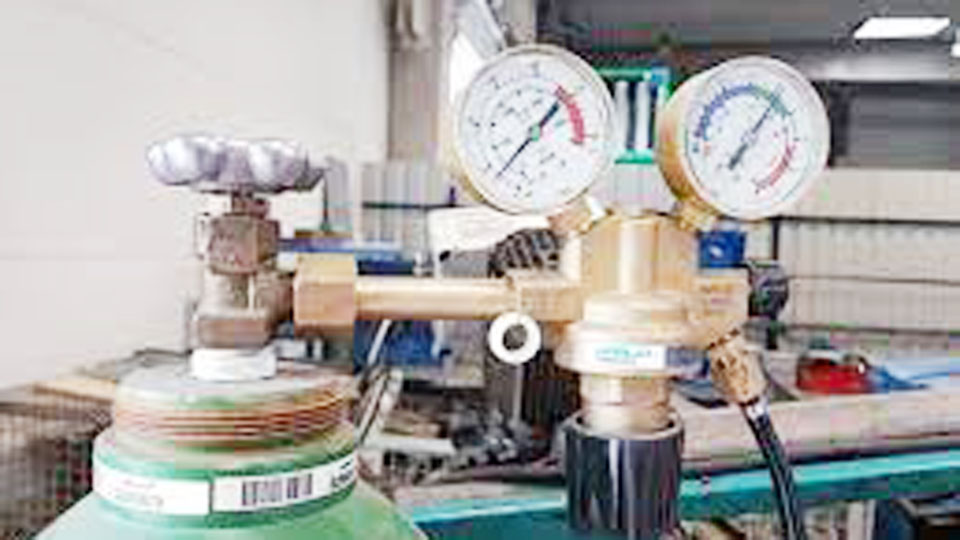
If you’re new to welding or tackling projects around the house, one of the most common questions is: what is the best gas for MIG welding mild steel? The answer matters because the right shielding gas not only affects the strength of your welds but also how clean and smooth the finish will be.
Selecting the right gas can save you time, reduce mess, and improve results. We’ll explore the top gas choices for MIG welding mild steel and explain how they make your work easier, cleaner, and longer-lasting.

Image by vernlewis
Understanding Shielding Gas in MIG Welding
Shielding gas is that invisible blanket that protects your molten weld pool from the air around it. Without it, oxygen and nitrogen sneak in, causing all sorts of trouble like porosity—those tiny holes that weaken your joint—or oxidation that makes the bead look rusty before it’s even cool.
How does it work? As you pull the trigger on your MIG gun, the gas flows out through the nozzle, pushing away contaminants and stabilizing the arc. For mild steel, which is basically low-carbon steel that’s super common in everything from car parts to furniture frames, the gas needs to balance inert properties (like argon for stability) with active ones (like CO2 for penetration). I’ve run jobs where skipping the right gas led to welds that failed inspection—trust me, you don’t want that headache.
When should you use shielding gas? Pretty much always for clean, indoor MIG work on mild steel. If you’re outdoors with wind, flux-core wire might be your fallback, but for controlled shop environments, gas is king. Why? It gives you better control over the bead shape and reduces post-weld grinding. In my early days as a fabricator, I tried skimping on gas quality, and it showed in brittle joints that snapped during testing. Lesson learned: invest in good gas for integrity that lasts.
Practical know-how? Check your regulator before every session—set it to 20-25 cubic feet per hour (CFH) for most setups. Too low, and you’ll get porosity; too high, and you’re wasting gas and money. Semantic-wise, think terms like arc stability and weld pool protection—these are what make or break your results.
Common Gases Used for MIG Welding Mild Steel
I’ve tested a bunch in my garage and on job sites, and here’s what stands out for mild steel.
The Go-To: 75% Argon / 25% CO2 Mix (C-25)
This is the mix I reach for 90% of the time. It’s a blend of argon for that smooth, stable arc and CO2 for deeper penetration into the mild steel.
How it works: Argon keeps the spatter down and the bead looking pretty, while CO2 adds heat to melt through without burning holes in thinner stock.
When to use it? For general fabrication like building shelves, repairing fences, or even automotive work. Why? It handles short-circuit transfer mode perfectly, which is what most hobbyists and pros use for mild steel up to about 1/4 inch thick. In one project, I was welding up a custom ATV rack—thin tubes meeting thicker plates—and C-25 let me dial in settings without constant adjustments.
Practical insights: Prep your mild steel by grinding off rust or mill scale for better fusion. Set your machine to 18-20 volts and 150-200 amps for 1/8-inch material, with wire speed around 250 inches per minute using ER70S-6 filler.
Common mistake? Running too hot and getting undercut—fix it by dropping amps and increasing travel speed. Tip: If you’re a student or new trainee, practice on scrap; this mix forgives small errors better than others.
Budget-Friendly Alternative: 100% CO2
Pure CO2 is the old-school choice, and I’ve used it plenty when costs were tight. It works by providing a hotter arc for excellent penetration, especially on thicker mild steel like beams or plates over 1/4 inch.
How it functions: CO2 is active, breaking down in the arc to create more heat, but it can lead to a rougher bead and more spatter. When to pull it out? For heavy-duty structural work where appearance isn’t priority, like farm equipment repairs. Why? It’s cheaper—often half the price of mixes—and readily available at most US suppliers.
From my shop: I once fixed a plow frame with CO2 because I was out of C-25, and it punched through the rust like butter. But cleanup took forever due to spatter.
Settings tip: Bump voltage to 20-22 and amps to 180-220 for similar material; flow at 25-30 CFH to compensate for its reactivity. Mistake to avoid: Using it on thin sheets—it’ll warp or blow through. Fix? Switch to C-25 or add a chill bar.
Other Mixes Like 90% Argon / 10% CO2 or Tri-Mixes
For specialized jobs, I’ve dabbled with higher argon blends. 90/10 gives even less spatter and is great for spray transfer on thicker mild steel, creating flat, wide beads.
How they work: More argon means cooler arc, better for thin or galvanized mild steel to avoid zinc fumes. When? In auto body work or when you need premium finish. Why? Less cleanup, but it’s pricier.
On a hobby project restoring an old truck bed, 90/10 prevented burn-through on the thin panels. Tri-mixes (argon, CO2, helium) add helium for hotter penetration without spatter—use for stainless transitions to mild steel.
Tip: For US codes like AWS D1.1, check if your mix complies for structural welds. Common error: Mixing gases yourself—don’t; buy pre-blended for consistency.
Pros and Cons of Different Gases for MIG Welding Mild Steel
To make this easy, here’s a quick comparison. I’ve put it in a table like I’d sketch on a notepad in the shop.
| Gas Mix | Pros | Cons | Best For |
|---|---|---|---|
| 75% Argon / 25% CO2 (C-25) | Minimal spatter, stable arc, good bead appearance, versatile penetration | Slightly more expensive than pure CO2, can carbonize sensitive alloys | General mild steel fab, thin to medium thickness |
| 100% CO2 | Cheap, deep penetration, great for thick stock | High spatter, erratic arc, rougher finish | Budget jobs, heavy structural welds |
| 90% Argon / 10% CO2 | Low spatter, excellent for thin metal, smooth beads | Higher cost, less penetration on thick material | Auto body, galvanized mild steel |
| Tri-Mix (e.g., Argon/CO2/Helium) | Hot arc with low spatter, deep fusion | Expensive, harder to source | Advanced apps like stainless to mild steel joints |
From experience, C-25 wins for most folks because it balances cost and quality. I’ve had projects where switching from CO2 to C-25 cut my grinding time in half.
When to Choose Which Gas for Your MIG Welding Project
Choosing gas isn’t one-size-fits-all—it’s about your setup and job.
For Thin Mild Steel Sheets
If you’re working on 16-gauge or thinner, like sheet metal repairs, go with higher argon mixes like 90/10 or even C-25 dialed low. Why? Less heat input prevents warping. How? Prep joints with clean edges, use push technique for better coverage.
Tip: Set flow to 15-20 CFH to avoid turbulence. Mistake: Using CO2 here— it’ll distort the metal. Fix by practicing on scraps and adjusting wire speed down.
For Thick Mild Steel Plates
On 1/4-inch and up, like building frames, pure CO2 or C-25 shines for penetration. When? Structural work per US codes. Why? Ensures full fusion without voids.
Welding a gate post, CO2 got me through 3/8-inch plate effortlessly, but I had to grind spatter. Settings: Higher amps, slower travel.
Indoor vs Outdoor Welding Considerations
Indoors, any mix works with good ventilation—fumes from CO2 are harsher, so mask up. Outdoors, wind blows gas away, so bump flow to 30 CFH or switch to flux-core. Why? Maintains shield integrity for safety and strength.
Practical: In my mobile jobs, I’ve added wind shields for consistency.
Setting Up Your MIG Welder for Mild Steel with the Right Gas
Here’s a step-by-step like I’d show a new guy in the shop.
- Gather gear: MIG welder (like a Miller Millermatic), ER70S-6 wire (0.030-inch for versatility), gas cylinder, regulator, safety stuff—helmet, gloves, respirator.
- Install gas: Hook up your C-25 cylinder, set regulator to 20-25 CFH. Purge the line by triggering without wire.
- Prep material: Clean mild steel with grinder or wire brush—remove paint, rust for better adhesion.
- Set machine: For 1/8-inch mild steel, try 18 volts, 180 amps, wire speed 300 IPM. Test on scrap.
- Weld technique: Hold gun at 15-degree angle, push for flat beads. Watch puddle—adjust if it’s too cold (beady) or hot (undercut).
- Post-weld: Check for porosity; if present, increase gas flow or clean nozzle.
Dirty tips causing erratic feed—clean or replace often. Tip: For US equipment like Lincoln or Hobart, consult the chart inside the door.
Common Mistakes When Choosing Gas for MIG Welding Mild Steel and How to Fix Them
I’ve made ’em all, so learn from my blunders.
Mistake 1: Using pure argon on mild steel—leads to poor penetration and wandering arc. Fix: Switch to C-25; argon is for aluminum.
Mistake 2: Ignoring flow rates—too low causes porosity. Fix: Use a gauge and test beads.
Mistake 3: Not matching gas to wire—ER70S-3 likes lower CO2. Fix: Read wire specs.
Anecdote: Early on, I used CO2 on thin exhaust—warped it bad. Now, I always mock up first.
Safety note: Poor gas means more fumes—ventilate or use extractors to avoid headaches or worse.
Practical Tips and Tricks from Years in the Welding Shop
Here’s some shop wisdom. For machine settings, always start low and creep up—better under than over.
Prep work: Bevel joints on thick mild steel for better penetration; use anti-spatter spray to ease cleanup.
Anecdote: On a job site, wind was killing my shield—I taped cardboard as a barrier, saved the day.
For students: Practice tacks first; they hold everything while you bead.
Filler compatibility: Stick with ER70 series for mild steel—S-6 for dirty stock.
Cost tip: Buy gas in bulk if you’re a pro; for hobbyists, smaller cylinders suffice.
In tough spots, like overhead welding, C-25’s stability helps control the puddle.
Safety Considerations When Using Gas for MIG Welding
Can’t skip this—I’ve seen accidents from lax habits. Always store cylinders upright, chained. Check hoses for leaks with soapy water.
Fumes: CO2 mixes produce more; use a fume extractor, especially indoors.
Eye and skin: Auto-darkening helmet (shade 10-12), leather gloves, long sleeves.
Electrical: Ground properly to avoid shocks.
In my shop, we do weekly checks—prevents big issues.
Equipment Recommendations for MIG Welding Mild Steel
For US folks, a Miller Multimatic or Lincoln Power MIG handles C-25 flawlessly. Wire: 0.035-inch for thicker work.
Regulators: Dual-gauge for precise control.
Upgrades: Spool gun for longer runs.
Advanced Techniques: Spray Transfer vs. Short-Circuit with Different Gases
For pros, spray transfer with 90/10 argon/CO2 gives high-speed, low-spatter on mild steel. How? Higher voltage (24+), faster wire.
Short-circuit: C-25 for dipping arc, great for thin stuff.
Tip: Practice transitions—saved me on a pipeline job.
Cost Efficiency: Balancing Gas Choices with Budget
C-25 costs more upfront but saves on rework. CO2 for bulk jobs.
Shop around US suppliers like Airgas.
Real-World Applications and Examples
In fabrication: C-25 for shop benches—clean joints.
DIY: Repairing lawnmower frames with CO2—quick and cheap.
Pro: Structural beams per AWS—mixes ensure code compliance.
Built a smoker grill; C-25 gave perfect seals, no leaks.
Troubleshooting Weld Issues Related to Gas Choice
Porosity? Increase flow or check for drafts.
Excess spatter? Switch from CO2 to C-25.
Poor bead? Adjust mix or clean gas cup.
I’ve troubleshot hundreds—gas is often the culprit.
Conclusion
The key takeaway is that for MIG welding mild steel, a 75/25 argon/CO2 mix is your best bet for reliable, high-quality results that balance performance and ease. We’ve covered the why, the how, and the pitfalls, from setups to shop tips.
You’re now geared up to pick the right gas, avoid common goofs, and lay down beads that’ll hold strong—whether you’re a DIYer fixing up your garage or a pro on the job site. Feel more confident? Good, because welding’s about building skills one weld at a time.
FAQ
What gas mix is ideal for thin mild steel sheets in MIG welding?
For thin sheets like 18-gauge, stick with a higher argon mix like 90/10 or C-25 to minimize heat and prevent burn-through. It keeps the arc stable and beads smooth.
Can I use pure CO2 for all my mild steel MIG projects?
Sure, but it’s best for thicker material where deep penetration matters more than finish. Expect more spatter, so factor in extra cleanup time.
How do I set the gas flow rate for MIG welding mild steel?
Aim for 20-25 CFH on most setups. Too low leads to porosity; too high wastes gas. Adjust based on wind or nozzle size.
What’s the difference between C-25 and C-100 for weld quality?
C-25 (75/25 argon/CO2) gives cleaner, less spattery welds with better appearance, while C-100 (pure CO2) penetrates deeper but is rougher and messier.
Is helium ever used in gas mixes for MIG welding mild steel?
Rarely on its own, but in tri-mixes with argon and CO2, it adds heat for thicker or specialized joints, though it’s pricier for everyday work.