Switching shielding gases can feel like switching welders altogether. One minute you’re running smooth, clean beads, and the next you’ve got extra spatter, a hotter arc, and a puddle that suddenly wants to behave differently.
The first time I jumped from argon to straight CO₂, I honestly thought something was wrong with my machine—turns out it was just the gas changing the whole personality of the weld.
CO₂ and argon each bring their own strengths and quirks, and knowing when to use which one saves you from ugly beads, weak penetration, and a whole lot of frustration. The difference isn’t subtle—it’s something you feel instantly in the arc.
Let’s break down how each gas affects heat, puddle control, penetration, and bead quality, so you can pick the right one for the job every time.
Image by hobartbrothers
Why Shielding Gas Even Matters in the First Place
Before we get into the bottles, you’ve got to understand what the gas is actually doing. When that arc hits 11,000°F, the air around it is full of oxygen and nitrogen that want nothing more than to ruin your puddle. Shielding gas pushes that garbage away and creates a little protective bubble.
Use the wrong gas and you’ll get porosity that looks like Swiss cheese, oxidation that turns good metal black, or spatter that’ll make you sand for days. Get it right and you walk away with clean beads, stronger joints, and a lot less grinding. That’s real money and real safety on the line.
Pure CO2 – The Tough, Cheap Workhorse
I still remember my first real job out of high school running .035 wire on pure CO2 doing trailer frames. The bottle was cheap, the penetration was stupid deep, and the shop owner loved it. That’s still the story today for a lot of structural and ag fabrication shops.
Pure carbon dioxide is an active gas. When the arc breaks it apart, it releases oxygen and carbon that actually add extra heat to the arc. You feel that the second you pull the trigger — hotter, louder, and a lot more violent than argon mixes. That extra heat digs the weld in deep, which is why CO2 is king on thick carbon steel where you need penetration above everything else.
The downside? Spatter city. You’ll be chipping balls off the table and the nozzle looks like a moon crater in ten minutes. The bead profile is also more convex, almost crowned, and you can get a little more distortion on thinner stuff because of all that heat.
Typical settings I run on a Lincoln Power MIG 260 or a Miller Multimatic 220 with .035 ER70S-6 wire and pure CO2:
- 3/8” plate: 24–26 volts, 280–320 ipm wire speed, 25–35 cfh flow
- 1/4” material: drop to 21–23 volts, 220–260 ipm
Straight Argon – The Clean Prince of Non-Ferrous
Now swing the bottle cart over to the aluminum side of the shop. Pure argon is a completely inert gas — it doesn’t react with anything. That’s why TIG welders and anybody doing aluminum or stainless MIG live on it.
The arc is calmer, almost quiet compared to CO2. You get that nice stacked-dimes look on TIG, super smooth spray transfer on MIG aluminum, and almost zero spatter. Cleanup is a joke — usually just a quick wipe with acetone and you’re ready for paint or powder.
I was spooling up 5356 on a buddy’s boat transom last summer in 100% argon and we laid down 40 feet of fillet in about 20 minutes with no grinding afterward. That’s the kind of job that makes customers smile.
Common settings for short-circuit MIG on steel with 100% argon (yes, some guys do it):
- Not ideal, but if you’re stuck: 17–19 volts, 150–180 ipm, .035 wire — super cold, flat beads, almost no penetration.
The Magic Mixes – 75/25, 90/10, and Tri-Mixes
Here’s where most professional shops actually live. Straight CO2 is cheap but messy. Straight argon is beautiful but expensive and lacks penetration on steel. So we blend them.
75% argon / 25% CO2 (commonly called 75/25 or C25) is the gold standard for short-circuit MIG on carbon steel up to about 3/8”. You still get decent penetration, but spatter drops dramatically and the bead wets out way nicer. That’s what I keep on my everyday welder 90% of the year.
90/10 (90% argon / 10% CO2) or 92/8 starts leaning toward spray transfer territory on thicker stuff. You can push higher voltage and wire speed and get that beautiful fluid spray arc with almost no spatter at all. Downside — the bottle costs more and you need enough amperage to stay in true spray or it globes up.
Tri-mix (usually helium, argon, CO2) is mostly a TIG thing for thick aluminum or stainless, but some high-end pulse MIG machines love it too.
How Travel Speed and Technique Change With Each Gas
This is the part nobody tells you in school. Same machine, same wire, swap the gas and you have to weld completely differently. With pure CO2 I travel slower and often drag the gun (stinger angle 5–15° push toward the work) because the puddle is hotter and more fluid. Push too fast and you get that ropey, undercut look.
With 75/25 I switch to slight push (10–15°) and can run 20–30% faster because the arc is more stable and the puddle freezes quicker. With 100% argon on aluminum I’m usually pushing 15–25° and whipping or walking the cup on TIG to keep heat input controlled.
Material Compatibility Breakdown
Let’s make it dead simple:
- Mild steel, thick stuff, short-circuit MIG → pure CO2 or 75/25
- Mild steel, anything you care about looking good → 75/25 or 90/10
- Aluminum MIG or TIG → 100% argon (sometimes argon/helium on really thick stuff)
- Stainless MIG → argon with 2–5% O2 or tri-mix (He/Ar/CO2)
- Stainless TIG → 100% argon all day
Cost Realities in 2025
I just swapped bottles last week. A 330 cu ft bottle here in Ohio:
- CO2: about $45 refill
- 75/25: $78–85
- 100% argon: $110–125
That CO2 bottle will last longer on heavy work because flow rates are similar but you’re usually running lower cfh (20–30) compared to argon mixes (25–40 cfh). Still, when you figure spatter cleanup and grinding time, 75/25 almost always wins on cost per finished foot for anything but the nastiest structural work.
Common Mistakes I Still See Every Week
- Guys run pure CO2 on thin auto body and wonder why everything warps and burns through.
- Newbies hook straight argon to a regular steel MIG gun and get globbing and no penetration.
- Forgetting to bump voltage up 2–3 volts when switching from CO2 to 75/25 — the weld instantly looks cold and ropey.
- Running argon mixes at 50+ cfh thinking more is better — you just waste money and can pull air in.
Quick Reference Comparison
| Property | Pure CO2 | 75/25 Ar/CO2 | 100% Argon |
|---|---|---|---|
| Cost per cu ft | Lowest | Medium | Highest |
| Spatter | High | Low | Almost none |
| Penetration | Deepest | Good | Shallow |
| Best for | Thick steel, structural | General fab, auto | Aluminum, stainless |
| Arc stability | Good | Excellent | Excellent |
| Bead appearance | Convex, rough | Flat, smooth | Very smooth |
| Typical flow | 20–35 cfh | 25–40 cfh | 15–35 cfh (TIG higher) |
When I Personally Reach for Each
- Pure CO2: building hay wagons, repairing heavy equipment in the field, anything 1/2” and up where looks don’t matter.
- 75/25: 95% of my daily work — roll cages, brackets, repair jobs, anything from 16 gauge to 3/8”.
- 100% Argon: aluminum boats, motorcycle frames, food-grade stainless, any TIG job.
Final Settings Cheat Sheet I Keep on the Wall
For .035 ER70S-6 on mild steel:
- Pure CO2, 1/4” material: 22V, 240 ipm, 25 cfh
- 75/25, 1/4” material: 23–24V, 280–320 ipm, 30 cfh
- 90/10 spray, 3/8”+: 28–30V, 450–550 ipm, 35–40 cfh
The Bottom Line
After twenty-plus years of twisting knobs and burning wire, here’s what it boils down to: CO2 gets the job done cheap and deep when you’re stacking ugly but strong welds. Argon and its mixes let you go home with clean hands and proud beads that pass inspection the first time.
Most of us live on 75/25 because it’s the sweet spot of cost, penetration, and appearance for real-world American fabrication.
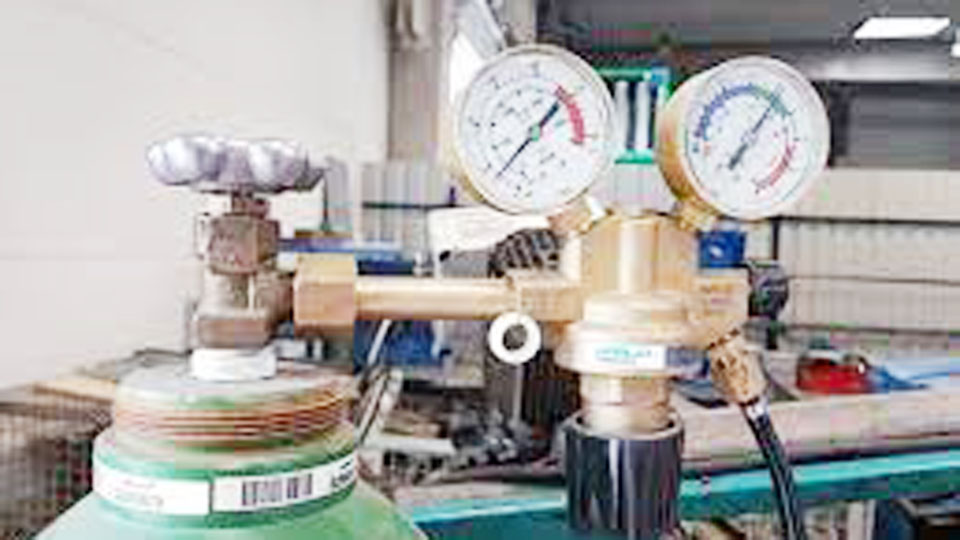
Pro tip that’s saved me thousands: keep a spare regulator preset for 75/25 and another for straight argon. Swapping bottles takes thirty seconds instead of ten minutes of dialing in pressure every time.
FAQs
Can I use 100% CO2 for stainless steel?
Nope. CO2 adds carbon to the weld and you’ll get carbide precipitation that ruins corrosion resistance. Stick to argon/O2 or tri-mix for stainless MIG.
Will 75/25 work on aluminum?
Technically yes, but the weld will oxidize instantly and look terrible. Aluminum needs pure argon (or argon/helium on thick stuff).
Is pure argon better than mixed gas for regular steel?
Only if you love cold, lack-of-penetration welds and wasting money. Mixed gas with some CO2 is almost always better on carbon steel.
How do I know if my gas is running out of spec?
If you suddenly get porosity even though everything else is dialed in, or the arc starts sounding angry and spitting, 9 times out of 10 the bottle is low or you’ve got a leak. Change it — don’t fight it.
Can I run helium mixes on a regular MIG welder?
You can, but helium flows different and most basic machines don’t have the power supply to handle the higher voltage needed. Leave tri-mix and high-helium blends to pulse machines or TIG.