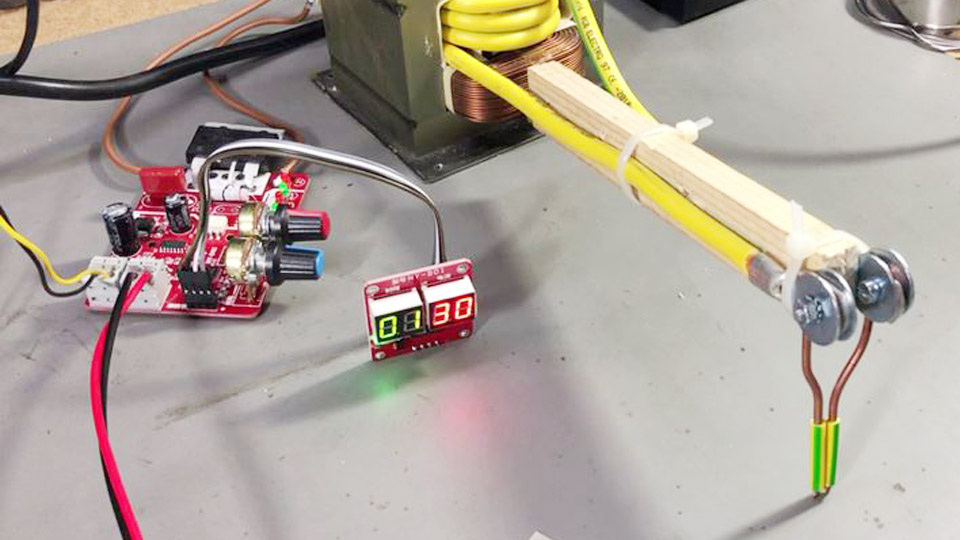
When I first started learning about spot welding, I was surprised to discover how many different factors are involved in making a good weld. It’s not just about putting two pieces of metal together and applying heat—there’s a lot more to it.

Image by howtoresistanceweld
One of the key factors I kept coming across was “squeeze time.” At first, it sounded pretty straightforward, but the more I explored it, the more I realized how crucial it is to the spot welding process.
If you’re new to welding or just trying to understand what squeeze time is and why it matters, I’ve got you covered. I’m going to break it down in simple terms, share what I’ve learned, and explain why getting the squeeze time right is so important.
Spot Welding
Before diving into squeeze time, let’s take a quick look at what spot welding is. Spot welding is a type of resistance welding where heat is generated by passing a high electric current through two or more metal surfaces. The metals melt at the spot where they’re joined, and then they’re fused together as they cool.
This technique is commonly used in industries like automotive manufacturing because it’s fast and efficient. Spot welding works well for joining sheets of metal, especially when you need a strong bond in a short amount of time.
But here’s where the process gets a little tricky—there are different stages in spot welding, and each stage plays a role in determining the quality of the weld.
Role of Squeeze Time in Spot Welding
So, what exactly is squeeze time?
Simply put, squeeze time is the period during which the welding electrodes are pressed together with the metal pieces before the welding current is applied.
During this time, the electrodes are squeezing the metal surfaces tightly, ensuring there is proper contact and enough pressure to create a good weld once the current flows.
Why is squeeze time important?
- It allows the electrodes to apply the necessary force to hold the metal pieces in place.
- It ensures there’s proper contact between the metal surfaces and the electrodes.
- It reduces any gaps or unevenness between the materials, which is critical for a strong, clean weld.
I remember the first time I learned about squeeze time, I didn’t realize how important that initial “squeeze” is. It’s the foundation of the whole process.
If the electrodes don’t apply enough pressure or don’t stay in contact long enough, the weld can be weak or have defects. So, in a way, squeeze time sets the stage for everything that follows.
How Squeeze Time Affects Weld Quality
When I first experimented with spot welding, I learned the hard way that improper squeeze time can lead to poor welds. If the squeeze time is too short, the electrodes might not be pressing the metals together firmly enough. This can cause the weld to be weak, and you might end up with defects like incomplete fusion or poor bonding.
If the squeeze time is too long, it can slow down the process unnecessarily and, in some cases, even affect the material negatively due to excessive pressure. The key is finding that sweet spot, which will depend on the materials you’re working with and the thickness of the metal.
Here’s what I noticed
- Too short squeeze time: The weld didn’t hold up, and I had visible gaps between the metals.
- Too long squeeze time: The process felt inefficient, and there was too much force on the metal, which could lead to unnecessary wear on the electrodes.
Factors That Influence Squeeze Time
Several factors come into play when determining the right squeeze time. I found that different materials and metal thicknesses required me to adjust the squeeze time accordingly.
The general rule is that thicker materials require longer squeeze times to ensure proper contact, while thinner materials need less.
Factors to consider:
Material thickness: Thicker materials usually need more squeeze time to ensure the pressure is distributed evenly across the surface.
Type of metal: Different metals conduct heat and electricity differently, so this can affect how long you need to apply pressure before starting the weld.
Electrode size and shape: Larger or differently shaped electrodes may require more or less squeeze time to create the right amount of pressure on the workpiece.
I remember welding two different types of metal—stainless steel and aluminum—and noticing how the squeeze time had to change between the two. Aluminum is a softer metal, so I needed less squeeze time compared to the stainless steel, which is harder and requires more pressure.
How to Adjust Squeeze Time in Spot Welding
Now that you understand what squeeze time is and why it matters, you might be wondering how to adjust it for different materials. Most modern spot welding machines have settings that allow you to control the squeeze time.
You can program the machine to apply the right amount of pressure and hold it for the correct duration before the current flows.
How I adjusted squeeze time
Start with the manufacturer’s recommendations: Most machines come with a default squeeze time for common materials. I used these settings as a starting point.
Experiment and observe: For me, it took a few test welds to get the squeeze time just right. I’d do a weld, check the strength and quality of the bond, and then adjust accordingly.
Keep an eye on the electrodes: If I noticed wear on the electrodes or any inconsistencies in the welds, I’d tweak the squeeze time to make sure I wasn’t applying too much pressure for too long.
Squeeze Time vs Other Welding Times
To give you a clearer idea of how squeeze time fits into the whole spot welding process, let’s compare it to other key times involved in the weld:
| Welding Time Stage | What Happens | Purpose |
|---|---|---|
| Squeeze Time | Electrodes press the metal together before current flows | Ensures proper contact and pressure for a good weld |
| Weld Time | Electric current passes through the metal to create the weld | Heats the metal, causing it to melt and fuse together |
| Hold Time | Electrodes stay pressed after the weld is complete | Allows the weld to cool and solidify without separating |
| Release Time | Electrodes are released from the metal | Ends the welding process and allows removal of the workpiece |
As you can see, squeeze time is just one part of the overall spot welding cycle, but it plays a crucial role in ensuring the other stages go smoothly. Without the right squeeze time, the weld time won’t produce the desired results, and the hold time may not be as effective.
Mistakes to Avoid with Squeeze Time
When I first started, I made a few mistakes with squeeze time that caused issues with my welds. I want to share these with you so you can avoid the same pitfalls:
Not adjusting for material thickness
As I mentioned earlier, different thicknesses need different squeeze times. If you’re switching between materials, always remember to adjust the squeeze time accordingly.
Skipping test welds
Don’t assume the default settings will work perfectly for your specific project. I learned the importance of doing a few test welds to make sure the squeeze time was right for the job.
Ignoring electrode wear
Your electrodes will wear down, and this can affect how well they apply pressure during squeeze time. I found that regularly checking and maintaining my electrodes helped keep my welds consistent.
Impact of Squeeze Time on Spot Welding Efficiency
One thing I noticed after mastering squeeze time is how much it can affect the efficiency of the entire welding process. When you get it just right, the welding process feels smooth and fast. But if your squeeze time is off, it can slow you down, cause rework, or even lead to equipment damage in the long run.
By optimizing squeeze time, I was able to speed up my workflow without sacrificing weld quality. This was especially important when working on larger projects where every second counted.
Final Thoughts on Squeeze Time in Spot Welding
If you’re getting into spot welding or just trying to improve your skills, understanding and mastering squeeze time is crucial. It’s the foundation that sets up the rest of the welding process for success.
I learned that taking the time to get it right—by adjusting for different materials, experimenting with settings, and avoiding common mistakes—can make all the difference in the quality of your welds.
Don’t underestimate the power of squeeze time. It may seem like a small part of the overall process, but it has a huge impact on the strength and reliability of your welds.
Take the time to fine-tune it, and you’ll see better results in no time. If you have any questions or need more tips, feel free to ask—I’ve been there and am happy to help!