If you’ve ever tried flux core welding and noticed strange, worm-like lines on the surface of your weld, you’re not alone—these marks, known as worm tracks, are a common frustration for many welders.
Much like stubborn stains on a bathroom surface or grease marks in the kitchen, worm tracks can ruin the look and quality of an otherwise solid weld. So, what actually causes them? Factors like excessive heat, trapped gas, or incorrect wire settings often play a role.
Just as proper cleaning tips and stain removal methods keep your home spotless, the right welding techniques can help prevent these surface defects and give your project a smooth, professional finish. Understanding the causes of worm tracks is the first step to fixing them—saving you time, frustration, and costly rework.
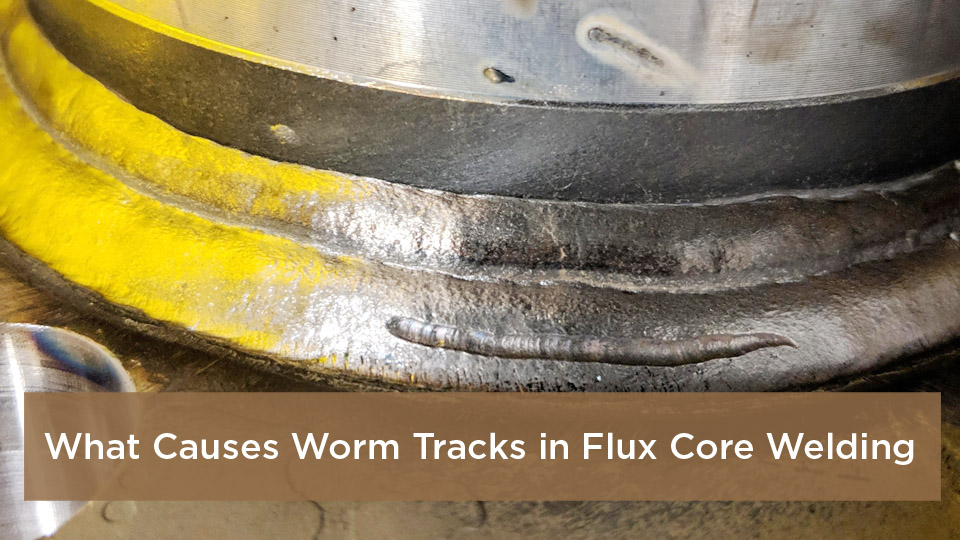
Image by reddit
Worm Tracks in Flux Core Welding
Worm tracks show up as these narrow, elongated grooves or ridges running parallel to your bead, usually right down the center. They’re not your typical round porosity pits; think more like a worm burrowed through the surface, leaving a trail.
I’ve seen them on everything from 1/4-inch plate to beefy 1-inch beams, and they love flat and horizontal positions where gravity doesn’t help push the slag out.
At the heart of it, flux core arc welding (FCAW) relies on that powdered flux packed inside the wire tube. As the arc melts the wire, the flux does double duty: it shields the puddle from air, deoxidizes impurities, and generates gases to float the slag to the top.
But when those gases—mostly hydrogen from moisture or carbon dioxide from the flux itself—don’t escape fast enough, they get trapped under the freezing slag. Boom: worm tracks as the weld solidifies unevenly.
Why does this hit flux core harder than, say, straight MIG? The self-generated shielding from the flux means more gas production right in the puddle. In gas-shielded FCAW (dual shield), you’re adding external gas like 75/25 argon-CO2, which can amplify things if it’s not balanced.
Self-shielded? No external gas, but the flux cranks out even more to compensate, so tracks can sneak in from uneven flux breakdown.
From my bench, I’ve learned they’re sneaky—might run fine for 20 feet, then bam, on a curve or in a breeze. It’s a red flag for weld integrity, hinting at hydrogen cracking risks or reduced ductility. But don’t sweat it; once you know the triggers, you can weld circles around ’em.
Common Causes of Worm Tracks in Flux Core Welding
I’ve burned enough wire to know worm tracks don’t just appear out of spite—they’re symptoms. Pinpointing the cause is half the battle, and it’s usually a combo platter. Let’s run through the big ones I’ve wrestled with, from shop floor to field repairs.
First up: moisture in the flux. This is enemy number one. Flux core wire is hygroscopic, meaning it sucks up humidity like a sponge. If your spool’s been sitting open in the garage during a rainy week, or even if the factory seal was iffy, that absorbed water turns to steam in the arc, pumping hydrogen gas into the puddle.
I once had a whole pallet of E71T-1 wire go bad because we left it under a leaky shop roof—tracks everywhere, and the welds tested brittle as old rebar.
Then there’s electrical stickout—the distance from your contact tip to the workpiece. Too short (under 3/4 inch for .045 wire), and the flux doesn’t preheat enough to fully activate. Those protective gases don’t break down properly, leaving pockets that etch tracks as they try to escape.
I remember dialing in a new guy’s setup on a Miller Multimatic; his inch-long stickout was choking the flux, turning buttery beads into worm-riddled messes.
Voltage creep is another sneaky bastard. Crank it too high for your wire feed speed—say, 26 volts on a 250 IPM setup—and your arc stretches, widening the puddle. The slag freezes quicker on the edges, trapping center gases. I’ve chased this on vertical ups, where gravity pulls the slag down fast anyway.
Don’t sleep on shielding issues, especially in dual shield. A gusty shop fan or low flow (under 30 CFH) lets air mix in, oxidizing the flux and spiking gas production. Outdoors? Forget it without wind blocks. And technique? Pushing the gun instead of dragging, or too slow a travel speed, lets the puddle stew too long, bubbling up tracks.
Base metal prep ties it all together. Mill scale, rust, or oil residue releases extra gases when heated. I always hit joints with a grinder or acetone wipe—skipping that step bit me on a rush fence job once.
| Cause | Why It Happens | Quick Spot Check |
|---|---|---|
| Moisture in Flux | Wire absorbs humidity, creates hydrogen gas | Spool feels damp; tracks appear suddenly after storage |
| Short Stickout | Flux doesn’t preheat; gases don’t activate | Measure from tip to work—aim for 3/4-1 inch |
| High Voltage | Arc too long; slag freezes unevenly | Bead looks flat and wide; spatter increases |
| Poor Shielding | Drafts or low flow disrupt gas cover | Tracks worse in wind; porosity clusters nearby |
| Dirty Base Metal | Impurities vaporize, add gases | Visible rust/oil; uneven fusion along edges |
Spot these early, and you’re golden. It’s all about that chain: prep, params, and pull.
How Moisture Leads to Worm Tracks in FCAW
Let’s zero in on moisture, ’cause it’s the low-hanging fruit that trips up even seasoned hands like mine. Picture this: you’re in humid Florida, spools stacked in the corner without covers. That flux—rutile or basic powders designed to stabilize the arc—starts pulling in H2O molecules overnight. Come morning, you fire up the welder, and as the arc hits 5,000 degrees, that water flashes to steam and hydrogen.
Hydrogen’s a troublemaker; it’s tiny, so it diffuses into the molten iron fast but loves to cluster and form bubbles as things cool. In FCAW, the slag’s supposed to float those out, but if there’s too much, it overwhelms the system. Result? Gases punch through the semi-solid weld face, carving those telltale tracks before the slag fully covers.
I learned this the hard way on a bridge repair gig. We had E71T-11 self-shielded wire exposed during a downpour—next day, every pass had herringbone patterns like bad corduroy. Baking the wire at 450°F for a couple hours fixed it, but that’s downtime you can’t always afford.
Prevention’s simple: store spools in sealed bags with desiccant packs, like those silica gel buddies in shoeboxes. For opened rolls, wrap ’em tight or use a rod oven. In high-humidity shops, I keep a dehumidifier humming—costs pennies, saves headaches. And always check expiration; old wire’s a moisture magnet.
Pro tip: If tracks show mid-job, pause and extend your stickout a tad. That extra preheat burns off trace moisture in the wire itself. Keeps you welding instead of wondering.
Role of Welding Parameters in Creating Worm Tracks
Parameters are your weld’s DNA—get ’em wrong, and mutations like worm tracks creep in. I’ve dialed thousands of charts on Lincoln and Miller boxes, and here’s the real talk: voltage and wire feed speed (WFS) are the dynamic duo.
Voltage controls arc length and heat input. Too high, and your puddle spreads thin, cooling fast at the edges while gases boil in the middle. For .035 E71T-1 dual shield on 1/4-inch plate, I stick to 22-24 volts at 200-300 IPM. Push to 26, and watch the tracks snake in. Low voltage? Ropey beads, but fewer tracks—though you risk cold laps.
WFS ties to amperage; faster feed means more heat and deposition. Mismatch it—like 350 IPM at 20 volts—and the wire floods the puddle without enough flux activation. Gases backlog, etching paths.
Travel speed’s the wildcard. Too slow (under 10 IPM on flats), and you overheat, volatilizing flux into excess CO2. Too fast? Shallow penetration, but gases escape better. Aim for that sweet spot where ripples form evenly.
From experience, always start with the wire maker’s chart—Hobart or Lincoln print ’em right on the spool. Test on scrap: lay a bead, chip the slag, inspect. Adjust in 0.5-volt increments. I once fixed a fab shop’s chronic tracks by bumping WFS 20 IPM and dropping voltage half a tick—beads went from grooved to glassy.
And shielding gas flow? 35-45 CFH for 75/25 mix. Too low, turbulence sucks in air; too high, it aspirates the puddle. In windy spots, I shield with plywood—old-school but effective.
Tweak these, and worm tracks become a ghost story.
Technique Mistakes That Cause Worm Tracks and How to Fix Them
Technique’s where the rubber meets the road—or the gun meets the steel. I’ve coached apprentices through more “oops” beads than I care to admit, and worm tracks often trace back to hand position.
Biggest culprit: gun angle. In FCAW, you drag at 10-15 degrees back, keeping the nozzle perpendicular-ish to the plate. Push it forward like MIG, and you blast gases ahead, trapping them under incoming slag. I see this with GMAW converts— they push out of habit, and tracks follow like a bad shadow. Fix: “Drag it if it slags it.” Practice on flat bar; feel the pull.
Stickout ties in—hold that 3/4-1 inch steady. Dip too close, flux chills; stretch too far, voltage drops. My trick: tape a mark on the gun handle for muscle memory.
Travel speed and weave: Slow drags stew the puddle; wide weaves trap slag pockets. Keep it linear or slight C-weave, 8-12 IPM. On curves, like that firebox you mentioned once, ease up—tension makes you rush, spiking tracks.
Common mistake: inconsistent starts. Cold starts without backstepping let gases vent unevenly. Always tack, preheat the wire end, and fill craters by pausing and reversing a hair.
Anecdote time: Early on, I was welding a trailer hitch in a breeze, gun tilted wrong. Tracks galore. Flipped to drag, blocked the wind with my body—clean as a whistle. Technique’s free insurance.
Choosing the Right Flux Core Wire to Avoid Worm Tracks
Wire choice ain’t glamorous, but it’s your first defense. Not all flux core’s created equal—E71T-1 for gas-shielded versatility, E71T-8 for self-shielded outdoors. Rutile fluxes (common in all-position wires) slag easier but can track if moist; basic fluxes resist hydrogen better but need drier conditions.
For minimal tracks, go E71T-1M dual shield—stable arc, low hydrogen. Avoid cheap imports; uneven flux fill causes spotty gas release. Hobart Fabcor or Lincoln Innershield—proven in US shops.
Match to base: On A36 carbon steel, E70T-1 penetrates deep without excess gas. For galvanized? Deoxidized wires cut zinc fumes and tracks.
Storage matters most—sealed, dry, FIFO. I’ve swapped brands mid-job to dodge bad lots; worth the five bucks.
Pros of premium wire: Smoother beads, less post-weld cleanup. Cons: Pricey, but beats rework.
Pick smart, and tracks stay theoretical.
Step-by-Step Guide to Preventing Worm Tracks
Ready to weld worm-free? Here’s my shop-tested routine for a 1/2-inch butt joint on mild steel with .045 E71T-1 dual shield.
- Prep the Joint: Grind edges to bright metal, 60-degree bevel. Wipe with acetone. No mill scale— that’s gas bait.
- Wire Check: Inspect spool for moisture (feel for clumping). Bake if suspect at 250°F for 1 hour. Load fresh.
- Machine Setup: Set WFS to 280 IPM, voltage 24V per chart. Gas: 40 CFH 75/25. Stickout: 7/8 inch—measure it.
- Test Bead: Scrap plate, flat position. Drag at 10 IPM, 15-degree push angle? Wait, drag. Chip slag—smooth ripples, no tracks? Go.
- Weld It: Start with tack, backstep into run. Maintain angle, steady hand. If tracks peek, drop voltage 0.5V, extend stickout.
- Cool and Inspect: Air cool—no quenching. Chisel slag, eyeball for grooves. Grinder if light; reweld deep ones.
- Cleanup: Vacuum spatter, log params for next time.
Do this, and you’re 90% there. Adapt for vertical: Whip up, slower speed.
Comparing Self-Shielded vs Gas-Shielded FCAW for Worm Track Risks
Self-shielded (E71T-8) vs. dual shield (E71T-1)—which wins on tracks? Both shine in US fab, but risks differ.
Self-shielded: Flux generates all gas—no bottles. Pros: Portable for field work, wind-resistant. Cons: Higher gas volume means more track potential if flux’s off. Great for outdoors, but store ultra-dry.
Dual shield: External gas stabilizes. Pros: Cleaner beads, less spatter, tunable for low tracks. Cons: Wind kills coverage; needs 35+ CFH.
| Aspect | Self-Shielded | Gas-Shielded |
|---|---|---|
| Track Risk | Medium (flux-heavy) | Low (balanced gas) |
| Best For | Field, dirty jobs | Shop, precision |
| Setup Ease | Simple, no reg | Needs flow check |
| Cost | Lower wire | Gas adds up |
I lean dual for shop; self for trailers. Match to need—both can track, but params rule.
Machine Settings for Clean Flux Core Welds
Settings are personal—machine, wire, joint all play. But here’s a starter table for .035-.045 on Miller or Lincoln, mild steel.
| Material Thickness | Wire Feed Speed (IPM) | Voltage | Gas Flow (CFH) | Stickout (in) |
|---|---|---|---|---|
| 1/8-1/4 in | 150-250 | 20-23 | 30-40 (75/25) | 3/4 |
| 1/4-1/2 in | 250-350 | 23-26 | 35-45 | 7/8 |
| 1/2+ in | 300-400 | 25-28 | 40-50 | 1 |
Start low, tweak up. Monitor arc sound—crisp crackle, not hiss. For self-shield, drop voltage 1-2V, no flow.
My go-to: 24V/300 IPM for most fab. Logs everything—patterns emerge.
Safety Considerations When Dealing with Worm Tracks
Worm tracks scream “inspect me.” Trapped gases weaken welds, inviting cracks under stress—think AWS code violations or liability on that DIY trailer.
Always PPE: Hood, gloves, respirator for fumes (flux loves manganese). Ventilate—hydrogen’s no joke.
If tracks run deep, grind out, VT/PT test. Don’t weld over; hydrogen diffuses in.
Safe shop: Ground clamps tight, no frayed leads. And hydrate—long days grinding tracks dehydrate you fast.
Real-World Applications and Examples from the Shop
Worm tracks hit everywhere: Structural beams under D1.1, auto frames, even art sculptures. On a recent gate fab, humid day, short stickout—tracks on every horizontal. Fixed with bake and 1-inch extension—passed fab inspection clean.
Field repair on a busted excavator arm: Self-shielded, windy—tracks from draft. Plywood shield, drag technique: Solid.
Hobby tip: Welding a bike rack? Prep rules—clean tube, right params, no tracks marring your pride.
US codes like ASME Section IX demand low-hydrogen for pressure vessels—moisture control’s non-negotiable.
These stories? Proof params and prep pay off.
Troubleshooting Worm Tracks: When and How to Reweld
Tracks spotted? Don’t panic—assess depth. Surface only? Grind flush, blend with 7018 if code allows. Deep/porous? Vee out with die grinder, reweld.
Steps: Stop, note params. Clean groove, reset (longer stickout, lower V). Backstep start. Post-weld: Chip, inspect, dye pen if critical.
I’ve saved jobs this way—better than starting over.
Advanced Tips for Professional Welders on Worm Track Prevention
Pros, level up: Use wire with low-diffusible hydrogen (H8 rating). Preheat thick plate 100°F in damp shops. Monitor with ultrasonic for hidden tracks.
Weave control: Tight figure-8 minimizes gas traps. And log data—apps like WeldCloud track params over jobs.
One hack: Add 5% O2 to shielding for basic fluxes—binds hydrogen better.
Stay sharp; experience slays gremlins.
Conclusion
Prep like your rep depends on it (it does), dial params to the wire’s spec, drag that gun steady, and store wire like fine whiskey—sealed and dry. Whether you’re a DIYer patching a gate, a student burning practice beads, or a pro chasing certs, nailing this means stronger joints, fewer redos, and that satisfying “thunk” when slag chips clean.
You’re now armed to spot, stop, and stomp worm tracks before they steal your flow. Fire up the machine, lay that bead, and own it—confident welds build empires, one pass at a time. Always end with a backstep crater fill. Traps gases, smooths the tie-in, and it’s saved me from end-of-pass tracks more than once.
FAQ’s
How Do I Know If Worm Tracks Are a Big Deal?
If they’re surface scratches with no porosity underneath (check by grinding or X-ray), they’re cosmetic—grind and go. But if dye penetrant shows cracks or the weld’s brittle (hammer test), reweld fully. In load-bearing work, treat ’em serious—better safe than sorry under code.
What’s the Best Stickout for Flux Core to Prevent Tracks?
Aim 3/4 to 1 inch for .035-.045 wire. Too short, flux chills; too long, arc wanders. Measure from contact tip to work—tape a guide on your gun. I’ve found 7/8 inch gold for most dual shield on plate.
Can Worm Tracks Happen in Self-Shielded Flux Core?
Yep, even more common since all shielding’s from flux—extra gas to manage. Causes same: moisture, params. Prevention: Dry storage, steady drag. Great for wind, but watch that stickout closer.
How Does Voltage Affect Worm Tracks in FCAW?
High voltage (over 1-2V from spec) stretches the arc, quick-freezing slag over bubbling gases—tracks galore. Drop it 0.5V increments till ripples smooth. Low voltage? Ropier beads, fewer tracks, but check fusion.
Is There a Quick Fix for Worm Tracks on a Job Site?
Grind ’em out if shallow, but root cause first: Extend stickout, block wind, rebake wire if moist. Test on scrap before resuming. Saved a rainy-day repair once—keeps the boss happy.