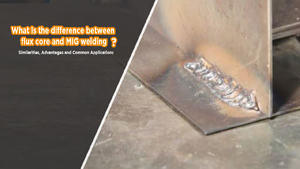
Wire welding with flux core wire is a fast, efficient, and beginner-friendly method for tackling home and DIY metal projects. Whether you’re fixing a broken gate, creating custom furniture, or reinforcing metal frames, learning how to wire weld with flux core wire ensures strong, reliable, and long-lasting welds.
Many newcomers face common challenges like excessive spatter, uneven weld beads, or weak joints—but with the right tips, proper setup, and practice, these issues can be easily avoided.
Just as effective cleaning techniques protect your home from stains, dirt, and germs, mastering flux core welding protects your projects from structural weaknesses and costly mistakes. In this guide, we’ll cover step-by-step instructions, troubleshooting advice, and expert tips to help you weld safely and confidently.

Image by mig_stick_welder92
What Is Flux Core Wire Welding and How Does It Work?
Picture this: you’re out in the yard on a breezy afternoon, no gas cylinder in sight, and your MIG gun’s humming along, laying down a solid bead on some weathered steel. That’s flux core wire welding in action—also called flux-cored arc welding or FCAW.
At its heart, it’s a semi-automatic process where a continuous tubular wire electrode feeds through your welder, melts into the joint, and fuses your metals together with an electric arc.
The magic’s in the wire itself. Unlike solid MIG wire, flux core has a hollow center packed with flux—a powdered mix of deoxidizers, slag formers, and gas generators. As the arc hits, that flux does double duty: it burns off to create a shielding gas that protects the molten puddle from air contamination, and it leaves a slag layer that slows cooling for better penetration. No external gas needed for self-shielded versions, which is why it’s a go-to for windy job sites or mobile fab work.
How it works step-by-step? Your welder’s constant-voltage power supply pushes direct current (usually electrode negative polarity) through the wire. The arc jumps from the wire tip to your workpiece, heating everything to puddle temps around 6,000°F.
The wire melts in, the flux shields and cleans, and boom—filler metal bonds your pieces. It’s like stick welding but continuous and faster, with deposition rates up to 25 pounds per hour on thicker stock.
I remember my first outdoor repair on a neighbor’s trailer hitch—flux core let me ignore the gusts that would’ve ruined a gas-shielded MIG run. It’s straightforward physics, but nailing the arc stability takes practice. For DIYers or students hitting the books on AWS D1.1 structural codes, understanding this basics means fewer rejects and more confidence.
Flux Core Wire vs Solid MIG Wire: Which One for Your Project?
Let’s talk shop: if you’re debating flux core against solid wire MIG, it’s like choosing between a rugged truck for off-road hauls and a sedan for smooth highway cruises. Both get you there, but the right pick depends on your setup, environment, and what you’re welding.
Flux core edges out in penetration and forgiveness— that flux core digs deep into rusty or primed steel, making it ideal for heavy fab like structural repairs or pipeline work. No gas means portability; I’ve hauled my spool gun setup to remote sites without dragging a 50-pound cylinder. Costs? Flux wire runs 20-30% more per pound but skips gas bills, so it evens out for outdoor gigs.
Solid wire, though, wins on clean finishes and speed indoors. It feeds smoother with argon-CO2 mixes, spits less spatter, and gives that pretty stack-of-dimes bead for auto body panels or ornamental gates. But wind? Forget it—gas dissipates, and you get pinholes. Plus, it demands spotless prep; mill scale laughs at it.
Here’s a quick side-by-side from my bench notes—pulled this together after testing both on 1/4-inch mild steel laps:
| Aspect | Flux Core Wire | Solid MIG Wire |
|---|---|---|
| Shielding | Self-generated from flux (gasless option) | External gas (argon/CO2 mix) |
| Best For | Outdoor, dirty/rusty metal, thick stock | Indoor, clean metal, thin sheets |
| Penetration | Deep, forgiving on gaps | Shallow to medium, precise |
| Spatter/Slag | Higher spatter, slag cleanup needed | Low spatter, no slag |
| Cost Efficiency | Higher wire cost, no gas expense | Cheaper wire, recurring gas costs |
| Weld Appearance | Rougher bead, more post-work | Smooth, aesthetic |
| Polarity | Usually DCEN (electrode negative) | DCEP (electrode positive) |
Pros of flux core: unbeatable for field repairs, like when I fixed a buddy’s excavator bucket on-site—deep fusion without wind woes. Cons? That slag means chipping after each pass, and fumes are thicker, so vent well.
Solid’s pros: quicker cleanup for shop fab, like custom racks I’ve built—looks pro without grinding. Downside: setup hassle for mobile work.
Bottom line? If your project’s in the garage on pristine aluminum, go solid. But for real-world USA fab—think farm gates or trailer hitches—flux core’s your workhorse. I’ve switched mid-project more than once; keep both spools handy.
Essential Equipment for Flux Core Welding
Gear up right, or you’re fighting the process from the start. For flux core, you need a MIG welder capable of constant-voltage output—most 110/220V units like my Miller Multimatic or even a budget Harbor Freight handle it fine for hobby thicknesses up to 3/8 inch.
Core kit: MIG gun with a liner sized for your wire (V-groove for solid, knurled for flux to grip without crushing). Wire feeder tension set just right—too tight birds-nests the spool; too loose, and it stutters. Ground clamp? Magnetics work for quick tacks, but clamp it solid on clean metal to avoid arcs jumping.
Wire choice is king: 0.030-inch for thin stuff like auto panels, 0.035 for everyday mild steel up to 1/4 inch. Brands like Lincoln Innershield or Hobart Fabshield—E71T-GS classification for all-position versatility. Store it dry; moisture in the flux causes popcorn welds.
Don’t skimp on consumables: Copper contact tips (one size up from wire diameter to reduce burnback), and no gas nozzle for self-shielded—bare tip for better visibility. Add a spool gun if you’re pushing long runs; reduces resistance.
From my kit: angle grinder with wire wheel for prep, chipping hammer and brush for slag, and a good auto-darkening hood. Total setup? Under $500 for beginners, scaling to pro rigs like Lincoln Power MIG 210 for $1,500. I’ve burned through cheap tips chasing a stable arc—invest in quality, save headaches.
Safety Considerations When Wire Welding with Flux Core
Safety isn’t a checkbox; it’s what keeps you welding tomorrow. Flux core throws more heat, spatter, and fumes than gas MIG—I’ve got the leather patches to prove it. Start with PPE: ANSI Z49.1-compliant auto-darkening helmet (shade 9-13), flame-resistant jacket and gloves (FR cotton or leather), and boots that cover your ankles. Sparks fly far; tuck in pants and cover skin.
Ventilation’s non-negotiable. Self-shielded flux burns off manganese and other nasties—fumes can hit OSHA limits fast in enclosed shops. I run a shop fan or portable extractor; outdoors, it’s less issue but watch drift. Respirator with P100 filters for tight spots—don’t breathe that stuff long-term.
Electric shock? Ground faults kill. Insulate from the workpiece, wear dry gloves, and check cables for frays. Fire watch: flux core’s slag stays hot 30 seconds; keep extinguishers and wet rags handy. I’ve singed more rags than I care to count.
Eye on codes: For structural work, follow AWS D1.1—preheat thick steels to avoid cracks. And ergonomics—drag technique saves your wrist. Treat it like loading a gun: respect it, and it’ll serve you well. One close call with a hot slag glob taught me: gear first, weld second.
Step-by-Step Guide to Setting Up Your Welder for Flux Core Wire
Alright, let’s get your machine humming. I’ve dialed in countless rigs, from student loaners to site beasts—here’s the no-BS walkthrough for a clean start.
First, swap polarity: For self-shielded flux, flip to DCEN (gun negative, work positive). Pop the welder cover—most have pigtails or terminals inside. My old Hobart? Two bolts and a swap; done in five minutes. Wrong polarity? Wire burns erratic, like I learned the hard way on a fence post.
Load the wire: Unspool 12-18 inches, straighten it, feed through the liner to the gun tip. Trim burrs—jagged ends arc unstable. Install knurled drive rolls (U-groove crushes flux less). Tension test: Gloved hand pinches wire at tip; medium squeeze stops feed without flattening.
Nozzle off for gasless—bare copper tip reduces resistance. Set voltage and wire speed per your chart (inside feeder door). For 0.035 on 1/8-inch mild steel: 18-20 volts, 150-200 IPM feed. Too hot? Bubbles and blow-through; dial back voltage half a volt at a time.
Ground clean: Scrape paint, clamp tight. Test arc on scrap—steady sizzle like bacon frying means you’re golden. Burnback? Increase feed 10 IPM. My pro tip: Mark your sweet spot with Sharpie on the dials; every machine’s quirky.
Prep your joint: Bevel thick edges 30 degrees, gap 1/8 inch for penetration. Tack opposite ends to avoid warp. Fire it up—short bursts first. You’ve got this; first bead’s just practice.
Preparing Your Workpiece for Strong Flux Core Welds
Prep’s where pros separate from hack jobs. Flux core forgives dirt better than solid wire, but skip it, and porosity sneaks in like uninvited guests. Grind or wire-brush rust, mill scale, or primer—aim for bright metal. I’ve salvaged oily I-beams by degreasing with acetone first; residue boils off mid-weld otherwise.
Joint design matters: Butt joints under 1/4 inch? Single vee bevel. Fillets? 45-degree included angle. For DIY trailer frames, I lap 1/16-inch overlap—flux penetrates easy. Clean between passes; slag traps gas if left.
Heat control: Preheat thick carbon steel to 150°F per AWS to dodge cracks. Clamp for distortion—I’ve used C-clamps and magnets to hold T-joints steady. One story: Rushed prep on a gate hinge, got worm tracks from trapped flux. Lesson? 10 minutes grinding saves hours reworking.
For hobbyists, start flat; vertical’s trickier with slag drag. Solvent wipe final—no oils. Good prep’s 80% of a sound weld—treat it like seasoning steak before the grill.
Basic Techniques for Laying Down Flux Core Weld Beads
Technique’s your brushstroke—steady hand, right drag, and watch that puddle like a hawk. Flux core demands pulling the gun (drag technique)—push, and you get shallow, spattery mess. Aim 10-15 degrees back from perpendicular, 15-20 degrees off vertical for flat beads.
Start with stringer beads: Steady travel, 1/2-inch per second on mild steel. Whip-pause for vertical up—quick side whip fills toes, pause lets puddle set. I’ve built shelves this way; consistent speed avoids humps.
Stickout’s key: 3/4 to 1 inch—shorter heats wire more, longer cools arc. Listen: Smooth crackle good; staccato means adjust voltage. Angle into corners for tie-ins.
Personal hack: Practice on 1/4-inch plate stacks—mimic laps. First project? A simple toolbox; taught me bead stacking without pressure. Keep gun steady; weave only for wide fillets. Master this, and multi-pass builds flow easy.
Optimizing Machine Settings for Different Materials and Thicknesses
Settings ain’t set-it-and-forget-it; tune per job, or your weld’s toast. Base on wire diameter, material thickness, and position—charts are starters, ears confirm.
For 0.030-inch flux on 16-gauge sheet (auto panels): 16-18V, 100-140 IPM—low heat avoids burn-through. I’ve paneled trucks this way; feather edges first.
Bump to 0.035 on 1/4-inch mild: 19-22V, 180-250 IPM. Deeper penetration for frames—my go-to for trailer tongues. Stainless? Drop voltage 2 points; flux’s aggressive.
Thick structural (1/2-inch+)? Preheat, multi-pass, 24-26V, 300 IPM with 0.045 wire. Follow AWS D1.1 amps: 200-300A for E70XX rods equivalent.
Outdoor windy? Slightly higher voltage stabilizes arc. Test on scrap: Puddle size walnut, bead convex slight crown. My anecdote: Over-volted a beam once—worm tracks everywhere. Dial half-volt increments; sound trumps numbers.
For students: Log settings per thickness; builds muscle memory. Pro rigs with synergic controls auto-sync—game-changer for fab shops.
Common Mistakes in Flux Core Welding and How to Fix Them
We all botch beads—it’s how we learn. Biggest culprit? Wrong polarity—DCEP on self-shielded flux spits like fireworks. Fix: Double-check DCEN every spool change. I flipped mine mid-fence; lost half a day.
Porosity pocks? Rusty wire or poor prep. Dry storage, grind clean—I’ve chased ghosts from damp spools. Birdnesting: Overtight tension flattens flux. Pinch-test fix; looser than solid wire.
Burnback fuses tip—short stickout or slow feed. Bump IPM 20, extend 1/4 inch. Slag inclusions: No interpass clean. Chip vigorous; wire brush between layers.
Spatter city? High voltage—dial down 1V, add anti-spatter spray. One job, rushed tacks blew holes; slowed travel, added backing bar. Track defects: Log ’em, tweak one variable. Turns rookies pro fast.
Advanced Tips for Clean, Professional Flux Core Welds
Once basics click, level up. Multi-pass strategy: Weave stringers for fat fillets—avoids undercut. Vertical down? Rare for flux, but light drag works on thin stock.
All-position mastery: Overhead, short arc, quick travel—slag floats up, don’t let it trap. I’ve overhead-rigged joists; gravity’s enemy, but fast-freeze flux helps.
Filler compatibility: Match tensile—E71T-11 for 70ksi mild. Alloy steels? Consult Hobart charts; wrong flux cracks under stress.
Pro know-how: Pre-flow none, post-flow irrelevant— but cool slowly for ductility. Anecdote: Shop boss showed me “listen welding”—arc tells health. Stutter? Clean ground. Clean beads post-slag? Angle grinder with flap disc; satin finish.
For industry workers: Certify per ASME—destructive tests build cred. Hobbyists, experiment: Add deoxidizers for galvanized.
Real-World Applications: Flux Core Projects for DIYers and Pros
Flux core’s playground? Anywhere portable power hits. DIYers, start simple: Weld a fire pit ring from 1/4-inch plate—tack, bead, grind smooth. Or trailer mods—reinforce tongue with box sections; penetrates rusty frames like butter.
Hobby fab: Custom bike racks from square tube—miter corners, flux fills gaps. I’ve built deer stands; lightweight, wind-proof.
Pros: Structural steel per AISC—beams, columns. Shipyards love it for hull repairs; salt air? Flux shrugs. Farm equipment: Tractor buckets, harrow frames—deep dig on worn edges.
Student project: Mock bridge truss—teaches joints, codes. Real app: My neighbor’s gate—flux core fixed sagging chain-link post in an hour. Versatile beast for USA trades.
Conclusion
Whew, we’ve covered a lot of ground—from flipping that polarity switch to dragging beads on a windy site. Key takeaways? Flux core wire welding’s your ticket to tough, efficient joins without gas hassles: prep smart, set right, drag steady, and clean ruthless. Whether you’re a DIYer patching a gate or a pro chasing AWS certs, it builds integrity into every run—deep penetration, material forgiveness, cost smarts.
You’re more prepared now because you see the why: flux shields like a pro, but technique seals the deal. No more guessing—grab scrap, spool up, and lay that first bead. You’ll mess up (we all do), but each fix sharpens you.
One pro tip: Always chip slag while warm—cools brittle, chips harder. Now go weld something solid; your shop’s waiting.
Can Beginners Use Flux Core Wire for Welding?
Absolutely, but start small. Flux core’s forgiving on dirty metal and easy to learn—great for garage tacks or trailer fixes. Grab 0.030 wire, practice drags on 1/8-inch plate. Wear full PPE; fumes bite. In a week, you’ll bead steady. I’ve taught newbies; they hook fast.
What’s the Difference Between Self-Shielded and Gas-Shielded Flux Core?
Self-shielded (FCAW-S) generates gas from flux—no cylinder, perfect outdoors. Gas-shielded (FCAW-G) uses CO2/argon mix for cleaner beads, less spatter—shop kings. Self for field, gas for precision. I swap for indoor fab; both punch strong.
How Do I Avoid Porosity in Flux Core Welds?
Porosity’s trapped gas—rusty wire or poor vent. Store wire dry, grind prep bright, ensure good airflow. Drag technique lets gases escape. Test: Smooth bead, no pinholes. Fixed a porous run once with desiccant packs—solid ever since.
Best Wire Size for Home Flux Core Welding Projects?
For DIY mild steel up to 1/4 inch, 0.035-inch E71T-GS—balances speed and control. Thinner panels? 0.030. Thicker frames? 0.045. Match your amp output; my 140A rig loves .035 for gates and racks. Check spool labels—versatile all-positioner.
Is Flux Core Welding Strong Enough for Structural Work?
Yes, when done right—meets AWS D1.1 for buildings if certified. Deep penetration beats thin MIG on beams. But multi-pass, inspect for cracks. I’ve fabbed per code; slag removal’s key. For load-bearing, test bends—flux holds if prepped.